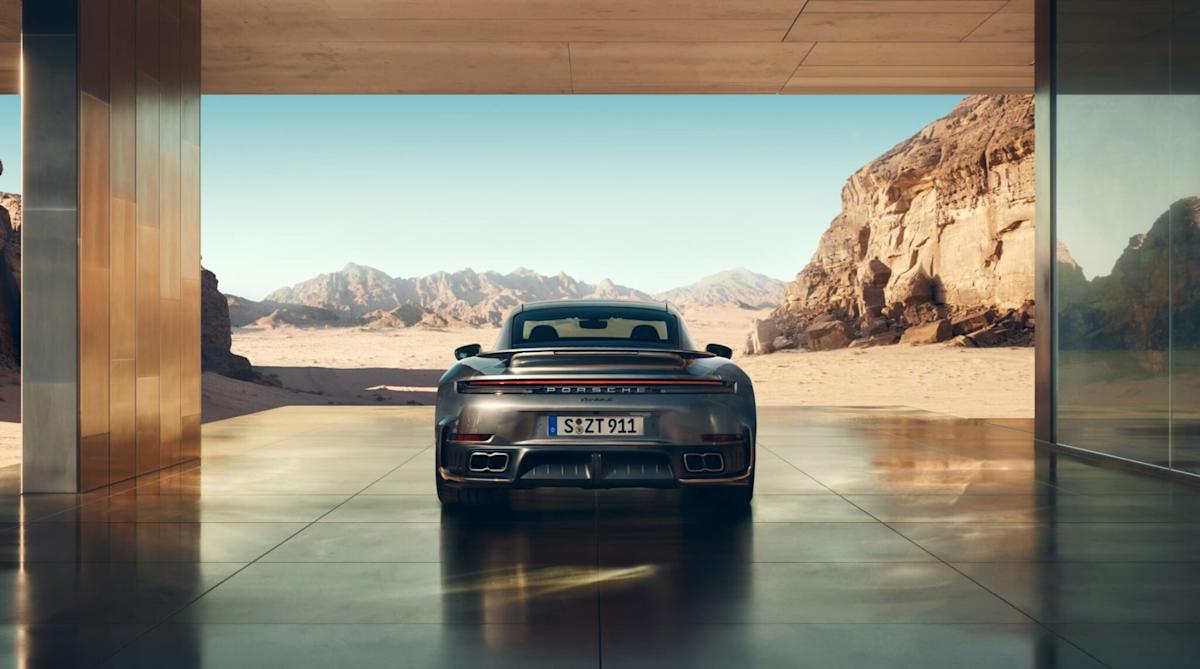
In an automotive world racing headlong toward electrification, where even Ferrari and Lamborghini are plugging in, Porsche is drawing a line in the sand with its most sacred nameplate. The 911 will not become a plug-in hybrid. Not now, not on their watch, and possibly not ever — unless physics decides to cooperate.
This isn’t stubbornness for stubbornness’ sake. It’s engineering pragmatism wrapped in the kind of brand philosophy that’s kept the 911 relevant for over six decades.
Some of us just aren’t ready for a full-on electric takeover. At least not when it comes to our favorite performance cars.
The Package Problem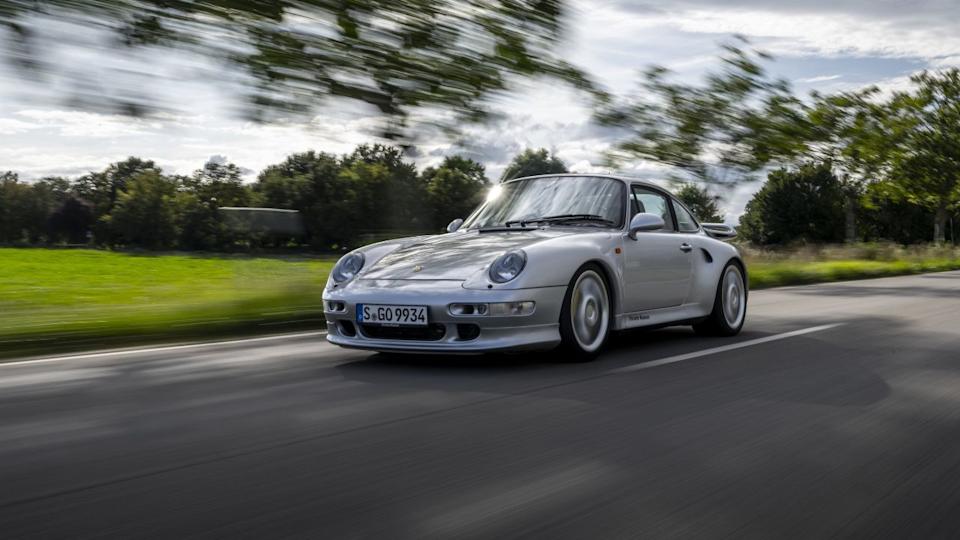
Image Credit: Porsche.
Frank Moser, Vice President of Porsche’s 911 and 718 division, recently explained the reasoning to Australian media, and his logic is refreshingly straightforward: the 911’s packaging is sacred ground, and cramming in a plug-in hybrid system would be automotive sacrilege.
“It shouldn’t grow any larger,” Moser stated, addressing the elephant — or rather, the battery pack — in the room.
It makes sense, honeslty. Proper PHEV system requires substantial hardware. You need a sizable battery for meaningful electric range, charging equipment, electric motors, power electronics, and cooling systems. All of this bulk has to go somewhere, and the 911’s engine-in-the-rear, cabin-forward design doesn’t exactly offer spare cubic footage.
The 911 has certainly evolved over the years — it’s grown wider, longer, and considerably more luxurious than its 1963 ancestor. But there’s a difference between evolution and transformation. Adding a PHEV system wouldn’t be tweaking the recipe; it would be rewriting it entirely.
The Performance Hybrid Compromise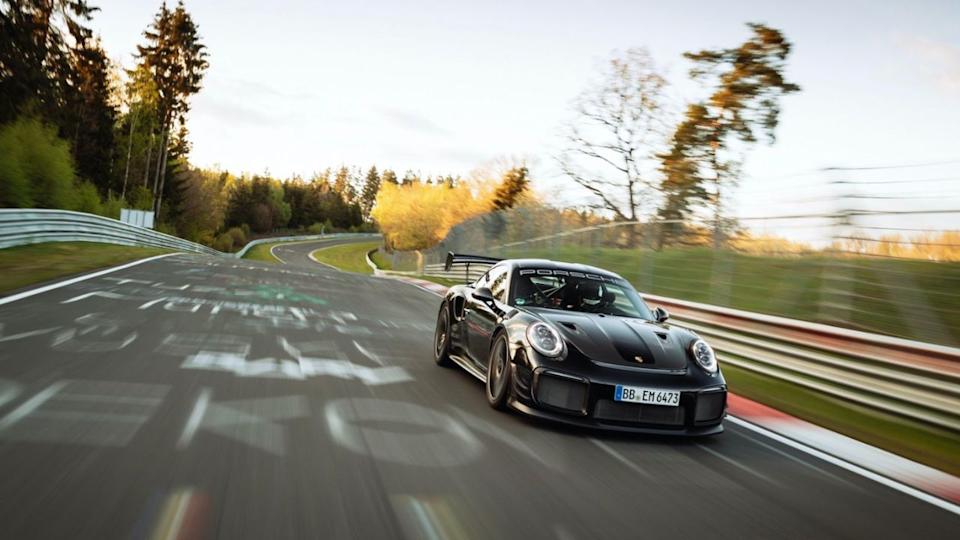
Image Credit: Porsche.
So what’s a heritage-obsessed automaker to do when regulators and market forces demand electrification? Get creative within constraints.
Porsche’s solution was the performance hybrid: a system that enhances power and responsiveness without fundamentally altering the 911’s DNA. The engineering team had to work within the existing architecture, which meant no expanding the chassis, no relocating major components, and definitely no turning the frunk into a battery bay.
The clever bit? They managed to shoehorn a 400-volt battery into the exact footprint of the conventional 12-volt battery that already lived in the front trunk. Same location, same dimensions, vastly different capability. It’s sorta like replacing your studio apartment’s murphy bed with one that also contains a home office.
“We were limited to using the same position due to identical package requirements,” Moser explained, “but we found the optimal solution within those engineering constraints.”
This isn’t just about maintaining weight distribution — though that’s crucial in a rear-engine sports car where balance can mean the difference between poetry and terror. It’s about preserving the proportions that make a 911 instantly recognizable from three blocks away.
The Future Might Be Flexible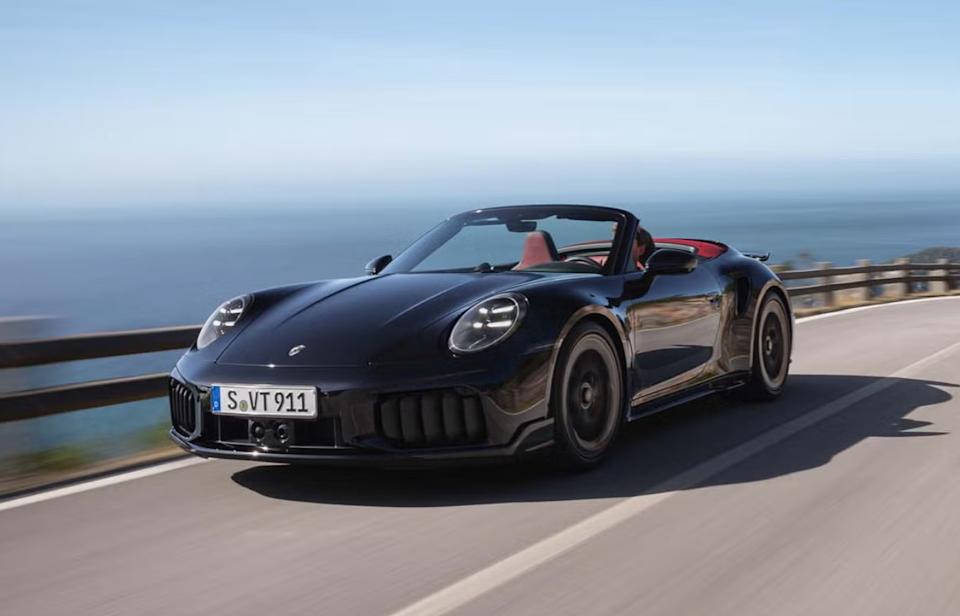
Image Credit: Porsche.
Still, Porsche isn’t completely closing the PHEV door. It’s just waiting for battery technology to slim down enough to fit through it.
Moser hinted that if battery density improves dramatically—think solid-state technology or next-generation lithium chemistry — the calculus could change. Smaller, lighter batteries that deliver meaningful electric range without requiring architectural surgery might eventually make a 911 PHEV feasible.
Translation: “We’re not saying never. We’re saying not with today’s tech.”
The Turbo S: Proof of Concept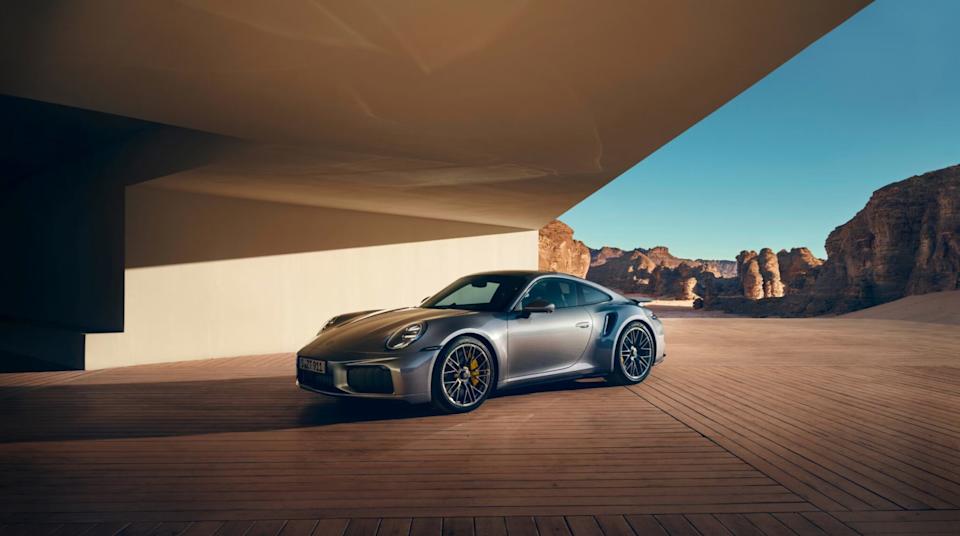
Image Credit: Porsche.
Meanwhile, Porsche is already proving that hybridization and performance aren’t mutually exclusive. The upcoming 2026 911 Turbo S will pack a T-Hybrid system delivering 701 horsepower — the most powerful series-production 911 ever built.
The company has also filed patents for compact axial-flux motor technology, which offers superior power density compared to conventional radial motors. These pancake-shaped motors could deliver serious output while consuming minimal space, potentially opening new electrification possibilities down the road.
In an era when automotive executives often speak in corporate platitudes about “sustainable performance” and “electrified futures,” Porsche’s stance on the 911 PHEV is refreshingly honest: some things matter more than checking boxes.
The 911 isn’t just a sports car; it’s an icon with specific proportions, a particular driving character, and decades of expectations built around what it should be. Compromising those fundamentals to chase an EPA rating or marketing bullet point would be shortsighted.
Other manufacturers might gladly accept the trade-offs of PHEV packaging — the added weight, altered dimensions, compromised cargo space — because their vehicles don’t carry the 911’s burden of heritage. When you’re working with a design language that’s remained fundamentally consistent since the Kennedy administration, you don’t mess with the formula lightly.
The Purist’s Perspective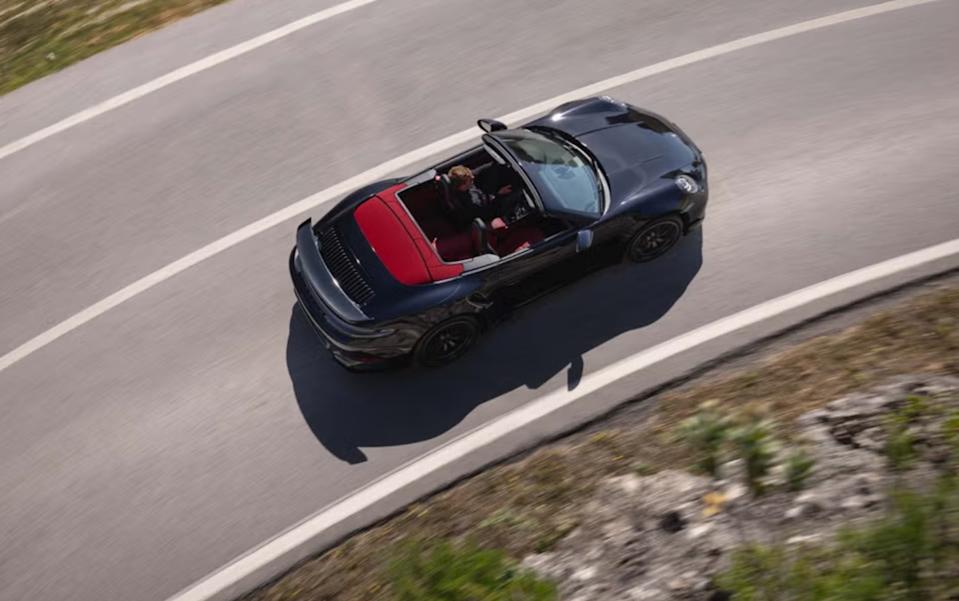
Image Credit: Porsche.
Will some enthusiasts complain that even the performance hybrid system is too much electrification? Absolutely. There’s always someone yearning for the supposed simplicity of a naturally aspirated flat-six bolted directly to a manual transmission.
But Porsche learned long ago that evolution beats extinction. The 911 has survived this long by adapting intelligently: adding turbos, switching to water cooling, incorporating PDK transmissions. Each change sparked controversy. Each proved essential to the model’s continued relevance.
The performance hybrid approach threads the needle — adding power and efficiency without fundamentally compromising what makes a 911 a 911. It’s electrification on Porsche’s terms, not a grudging capitulation to market forces.
The Bottom Line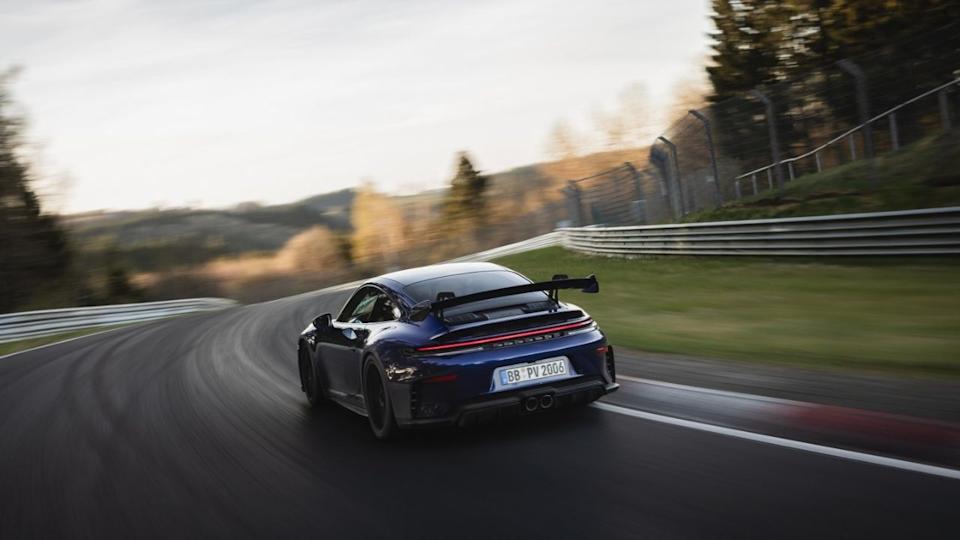
Image Credit: Porsche.
Porsche’s refusal to force a PHEV system into the 911 isn’t about resisting progress. It’s about recognizing that some vehicles have non-negotiable characteristics: and that real engineering excellence means knowing when to say no.
The 911 will continue evolving, incorporating electric assistance where it enhances performance without destroying proportions. But a plug-in hybrid with chunky battery packs compromising the car’s fundamental architecture? Not happening. At least not until battery technology advances enough to fit Porsche’s requirements rather than forcing Porsche to fit the batteries.
In a world where automotive identity often gets sacrificed on the altar of electrification mandates, that kind of principled stubbornness deserves respect. The 911 has survived 60-plus years by being unmistakably itself. Why stop now?