How Nissan’s e-Power Works (And Why It’s Different From a Hybrid)
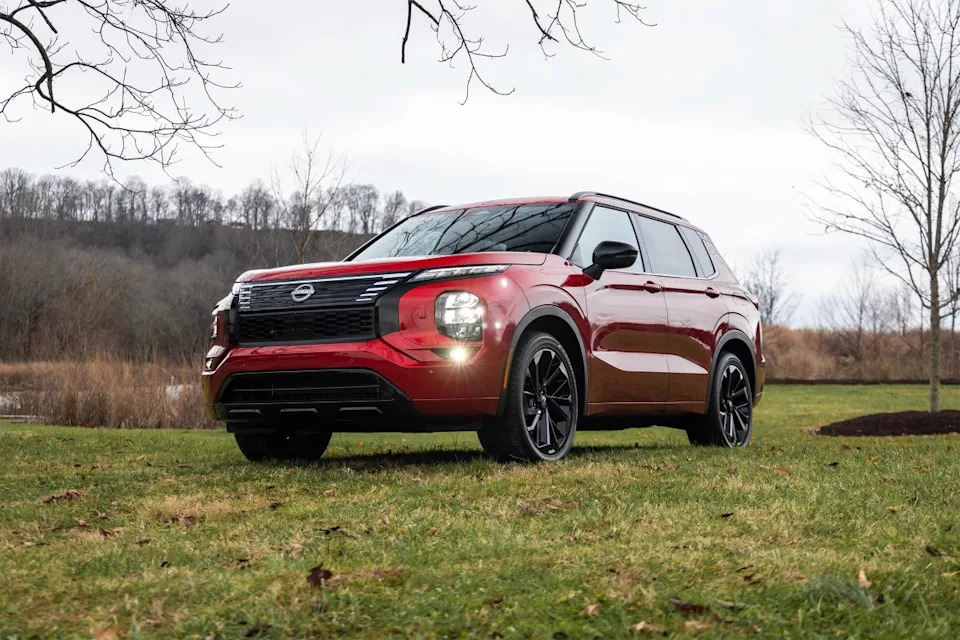
For a company that brought to market the first mainstream EV, the 2011 Leaf, Nissan has been surprisingly slow to expand its line-up of electrified vehicles. But the coming year is a big one for Japan’s second largest automaker. Not only does it have the third-generation Leaf, and a plug-in hybrid version of its best-selling Rogue crossover, but it will in 2026 finally introduce its e-Power technology into the U.S. market.
Already available in Europe and Japan, among other markets, e-Power offers a unique approach to delivering the advantages of an all-electric vehicle while eliminating some of the key drawbacks. Forget about range anxiety, for one thing, and don’t worry about finding a place to plug in. To get a sense of what e-Power technology is all about, we spent a day down near Nissan headquarters in Nashville driving a pre-production prototype that made it clear the automaker is onto something that could have significant appeal in the U.S.
 What’s e-Power?
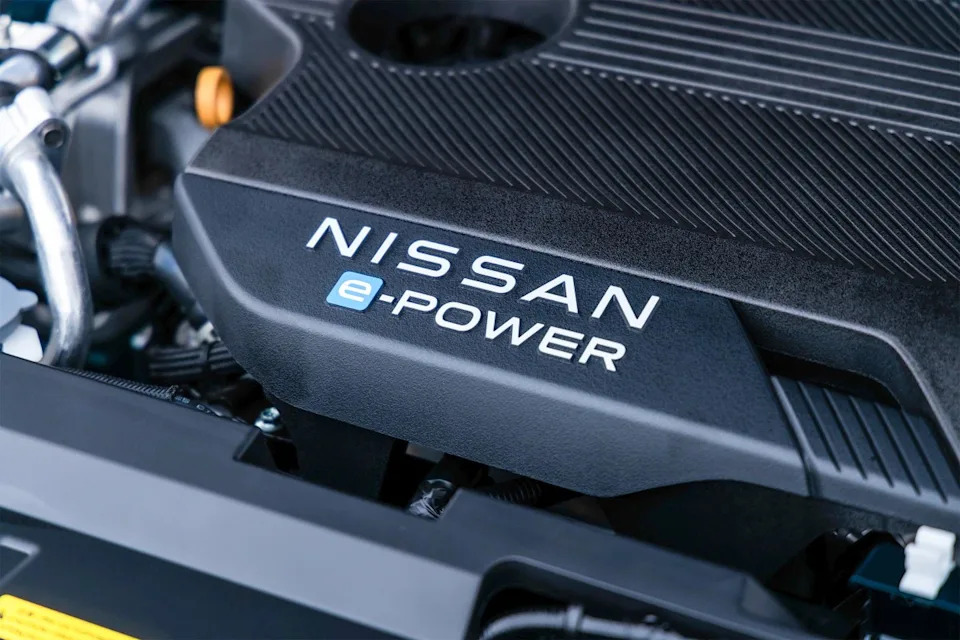
The name might leave you scratching your head. And for good reason. There’s a growing list of electrified technologies coming to market, on top of familiar powertrain systems like conventional hybrids, plug-in hybrids and battery-electric vehicles. We’ll soon start seeing E-REVs and REEVs, for one thing, And now comes the Nissan, e-Power system. Think of its as a cross between a PHEV and an EV.
Unlike an all-electric vehicle, there’s an internal combustion engine onboard and as long as there’s fuel in the gas tank you’ll be able to keep going. That might sound like a plug-in hybrid but its not. With a PHEV, such as the new version of the Rogue, the ICE side of the powertrain serves a variety of different functions. For one thing, it can provide torque to the wheels, along with whatever power comes out of the Rogue Plug-In’s electric motor. That version of the crossover can get an estimated 38 miles range in all-electric mode. Then the gas motor can charge up the battery pack when it runs down.
With the Rogue e-Power system, the internal combustion engine never sends torque to the wheels – which are solely driven by a pair of electric motors, one on each axle. The gas engine has just one dedicated purpose: it serves as a generator, constantly keeping the crossover’s 2.1 kilowatt-hour lithium-ion battery pack charged up. If you’re wondering what the advantage is, that’s simple: you eliminate the complex transmission system needed to blend power coming from two different sources. And the internal combustion engine itself can be made simpler since it doesn’t have to rev up and down very much, operating in the “sweet spot” where it’s most energy efficient, explained Ponz Pandikuthira, the chief product and planning officer for Nissan Americas. Another difference: you’ll never plug in the e-Power Rogue, unlike the PHEV package which requires 7.5 hours connected to a 240-volt Level 2 charger.
 How the e-Power Rogue Actually Drives
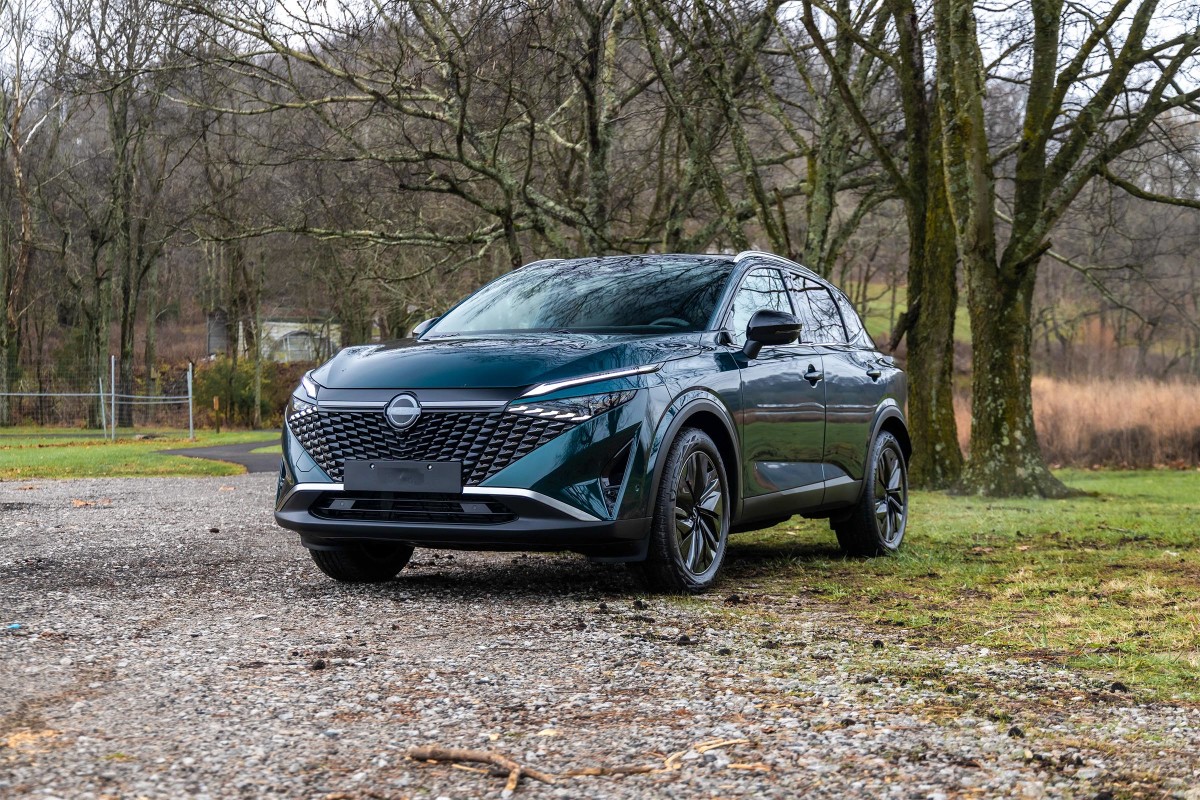
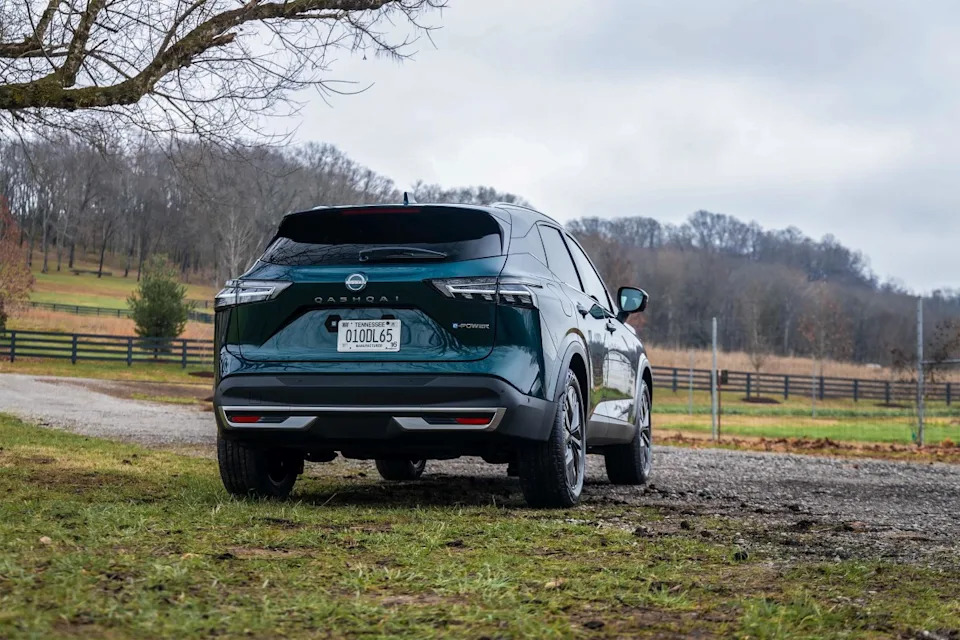
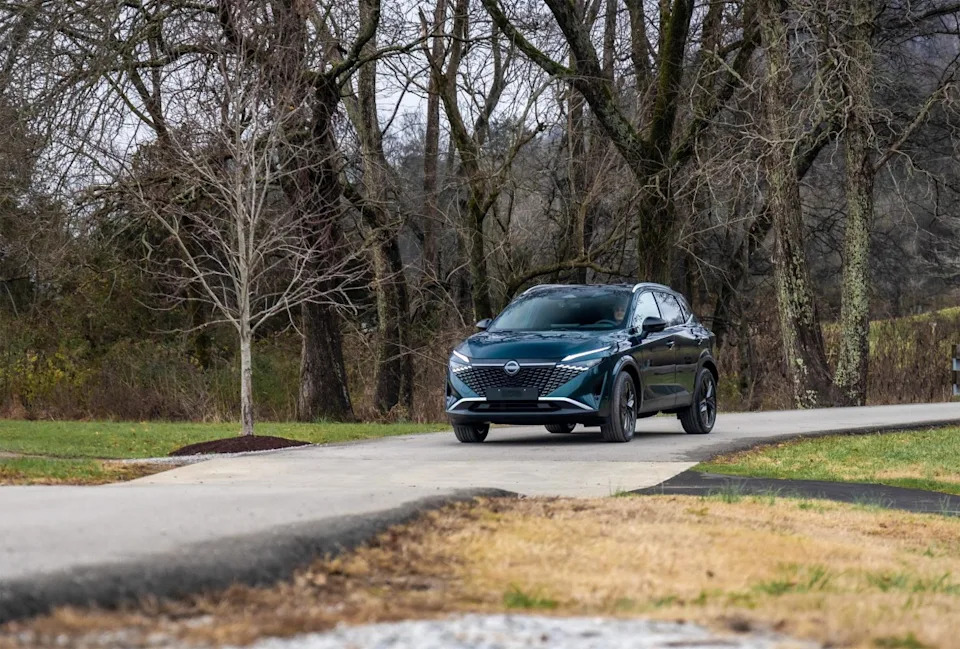
Nissan offered Autoblog a chance to check out the new e-Power system during a drive through the scenic Tennessee countryside. Unfortunately, the automaker didn’t have a version of the next-generation Rogue fitted with the new system yet. Instead, we got to try it out in the Nissan Qashqai. That’s European version of what used to be known in the U.S. as the Nissan Rogue Sport. It’s a bit smaller than the current American crossover. And, more immediately, its e-Power system was equipped with a single motor which translated into a lower-powered front-wheel-drive package.
That said, the Qashqai’s electrified drivetrain proved surprisingly sprite, more responsive and torquey than today’s gas-powered Rogue. The system felt entirely intuitive, with none of the lag and motorboating one often experiences with conventional and plug-in hybrids. It also was exceedingly quiet. Though the internal combustion engine ran almost all the time – the 2.1 kWh battery pack not providing any significant all-electric range. Yet, I seldom noticed any noise from under the hood. The Qashqai was nearly as quiet as I would have imagined had Nissan gone all-electric.
Nissan isn’t ready to reveal specs for the Rogue e-Power. The Qashqai I drove made 188 horsepower from its single electric motor, enough to launch from 0-100 kph (0-62 mph) in about 7.9 seconds. We’ll have to wait to find out if the twin-motor Rogue matches the 248 hp and 332 lb-ft from the new Rogue Plug-in Hybrid. But Pandikuthira said the Rogue package has been specifically tuned for the U.S. market. Where Qashqai “is set up for dense traffic conditions,” the Rogue package will be better tuned for the sort of highway driving Americans are used to.
 Should You Buy the e-Power Rogue When It Arrives?
The bottom line: while the Nissan e-Power system still requires an internal combustion engine sucking gasoline, it appears to be particularly fuel-efficient, even compared to a comparable hybrid or PHEV package. The European package gets as much as 53 miles per gallon.
Even the single-motor package provides smooth, quiet and quick acceleration more in line with an EV, but without a motorist having to worry about running down the battery pack or having to charge up. And, based on what we see with the Qashqai e-Power in Europe the upcoming Nissan Rogue e-Power should be reasonable affordable – likely much more so than the new plug-in model which carries a base price of $32,600 before delivery fees.
Nissan is confident enough about the Rogue E-Power package that, “We think this will eventually evolve to be 100% of (the Rogues) we sell” in the U.S., said the product planning chief.
This story was originally published by Autoblog on Dec 8, 2025, where it first appeared in the Reviews section. Add Autoblog as a Preferred Source by clicking here.