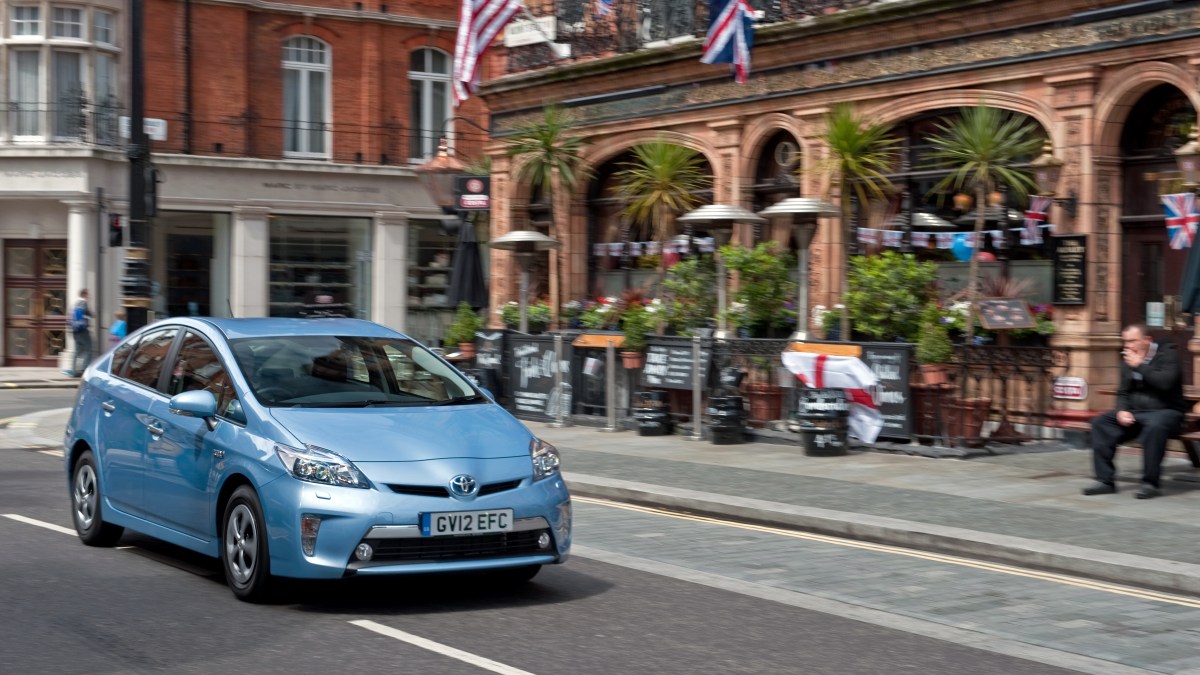
A pay-per-mile tax on plug-in hybrids risks pushing motorists towards more polluting cars, ministers have been warned.
Plug-in hybrids, which can switch between battery power and a conventional engine, will effectively face double taxation while running on petrol or diesel from 2028.
That is because motorists will pay fuel duty and a 1.5p-a-mile charge for electric cars that was announced in the budget last week.
• Hybrid drivers face double tax whammy with 1.5p a mile levy
Industry experts believe it will deter buyers and more people will turn instead to “mild” hybrids, which cannot be plugged in and self-charge using the engine.
They described such cars, which include the Toyota Prius and Nissan Qashqai, as the “worst of the worst” because they have two traction technologies and limited environmental benefit.
Mild hybrids will be exempt from the electric vehicle excise duty (eVED) announced by Rachel Reeves last week. Drivers of battery-only cars will pay 3p a mile.
Ginny Buckley, the founder of electrifying.com, the EV advice site, said: “The chancellor’s decision to float this policy years ahead of time risks sowing a fresh seed of doubt about costs in the minds of car buyers making decisions about their next car, nudging them towards the most efficient petrol-powered mild hybrids cars.
“That would be a big mistake, given plug-in hybrids play a crucial role in giving some buyers the confidence to go fully electric, letting them try things like the charging experience, which almost 50 per cent of non-electric drivers tell us they don’t yet feel confident about.”
Almost 242,000 mild hybrids have been sold this year, 8 per cent more than last year, according to the Society of Motor Manufacturers and Traders. About 190,000 plug-in hybrids have been sold, 37 per cent more than last year.
An industry source said: “Plug-in hybrids are a natural stepping stone for people thinking of getting an EV, especially if they don’t have a driveway. It just seems crazy to slap a 1.5p-a-mile tax on them when the whole government’s aim is to get people driving electric.”
The government has opened a consultation on the scheme, which is designed to plug the hole left by falling fuel duty revenue. The source said: “Everyone understands the need to do something about full EVs but doing hybrids at the same time doesn’t feel right.”
• Could you still save with an EV if you have to pay per mile?
Andy Palmer, the chairman of Electric Vehicles UK, the trade group, said: “If you were trying to slow EV adoption, you couldn’t design a better tactic than hinting at a pay-per-mile charge years before anyone knows how it will work.
“It plants the idea that EV running costs will rise. The predictable result? People stop considering EVs and retreat to the ‘safe bet’ of petrol hybrids. It’s the opposite of what the transition needs.”
The Office for Budget Responsibility, the fiscal watchdog, estimated that the tax would raise £1.1 billion in 2028-29, rising to £1.9 billion in 2030-31.
However, it was “likely to reduce demand for electric cars as it increases their lifetime cost” and 120,000 fewer electric cars would be sold as a result.

Demand for electric cars is likely to suffer, according to the Office for Budget Responsibility
TANG MING TUNG/GETTY IMAGES
Pat Hoy, the founder of Insider Car Deals, a car pricing website, defended the measure.
He said: “This won’t touch EV or PHEV [plug-in hybrid electric vehicle] sales. It doesn’t arrive until 2028 and it’s about £180 a year, hardly end-of-days stuff.
“At most it gives buyers an excuse to haggle, and dealers will play ball as the zero-emission mandate bites. The pay-per-mile is just more hysteria from a jittery motor industry.”
The sale of new petrol and diesel cars will be banned from 2030. Ministers have already relaxed the rules so mild and plug-in hybrids can continue to be sold until 2035.
A government spokesperson said: “The government is committed to the EV transition — boosting support, not cutting it. Drivers can access grants up to £3,750, while over £3 billion is going into UK manufacturing and charging infrastructure.
“Right now, EV drivers pay no fuel duty, while petrol drivers pay around £480 a year. That’s not fair. Under the new system, EVs will pay half the duty of petrol cars — still the cheaper, greener choice.”