
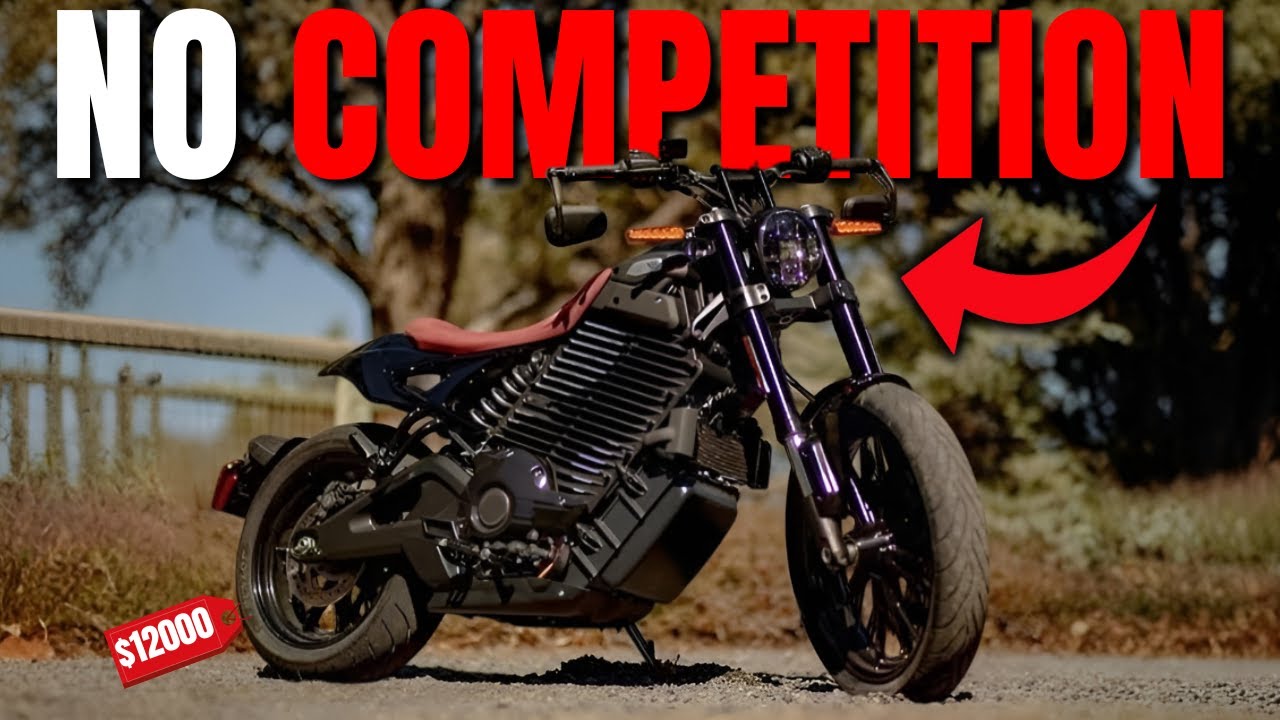
The Electric Motorcycle That DESTROYS Every Gas Bike – THE LIVEWIRE S2 MULHOLLAND
Electric motorcycles. For years, they’ve been stuck in the sport bike category. Aggressive riding positions, aerodynamic fairings, zero compromises for comfort. But what if you want electric power wrapped in cruiser style? What if you want instant torques with a laid-back riding position? Enter the LiveWire S2 Mullholland. The first true electric cruiser that you can actually buy and ride today. This is the bike that proves electric power and cruiser aesthetics aren’t mutually exclusive. Let’s break down exactly what makes this machine special. Design and ergonomics. The Mullholland doesn’t just look like a cruiser. It’s engineered from the ground up to deliver authentic cruiser ergonomics. The front end sits higher than typical electric motorcycles thanks to longer Hitachi 43mm upside down forks. USD forks are interesting technology. Traditional telescopic forks have thin stansion tubes sliding into thicker outer tubes. The problem, those thin stansions flex under hard braking. Upside down forks flip the entire design. Thicker tubes mount on top, creating massively more rigidity. Less flex means more precise steering and better brake feel. The Mullhalland uses longer stroke versions to achieve that raised cruiser stance while keeping the stiffness benefits. Forward foot controls put your legs out front where they belong on a cruiser. But here’s the clever part. The pegs aren’t just moved forward randomly. They’re positioned to create natural heel toe shifting motion. Your feet land on the controls without stretching or cramping. A 6-in handlebar riser brings the bars up and back for that relaxed upright posture. You’re sitting in the bike, not on it. Your arms hang naturally. Shoulders stay relaxed. You can ride for hours without fatigue. Even small details matter. The mirrors mount below the handlebars instead of above. This completely changes the visual profile. Sport bikes put mirrors up high where they catch air and create drag. Cruisers historically mounted mirrors lower for that clean, uncluttered bar appearance. The Mullholland follows cruiser tradition. The wheelbase measures 57.8 in. That’s compact for a cruiser. Traditional big twin cruisers run 65 to 70in wheelbases. But the Mullholland isn’t trying to be a road king. It’s a performance cruiser emphasizing agility and urban maneuverability over pure highway stability. The 19-in front wheel paired with a 17-in rear wheel is classic cruiser geometry. That larger front wheel helps the bike track straight and provides more leverage for steering. The smaller rear wheel keeps the bike nimble and reduces rotational mass for quicker acceleration. The electric powertrain. This is where electric motorcycles absolutely dominate. The heart of the Mullholland is an 84 horsepower electric motor with 63 kW of nominal continuous output. That 84 horses is peak power, what you get when you pin the throttle. The 63 kW continuous rating is what the motor can sustain indefinitely without overheating. For comparison, most air cooled Harley V twins make around 70 to 80 horsepower. We’re in the same ballpark for peak power. But here’s where electric completely rewrites the rule book. Torque 194 pound- feet, 263 Newton meters of instant twist. No waiting for revs to build, no power band to find, no clutch to slip, just immediate, brutal, physics defying acceleration from a standstill. To put this in perspective, a Harley Milwaukee 8114 makes about 119 lb feet of torque. The Mullholland makes over 60% more torque from a motor that’s a fraction of the size and weight. And all that torque hits at zero RPM. With a gas engine, you need to get revs up before torque arrives. At idle, a gas engine makes almost nothing. At 2,000 RPM, you’re starting to get some pull. At 4,000 RPM, you’re in the meat of the power band. Electric motors don’t care about RPM. 0 RPM delivers 194 lb feet. 1,000 RPM delivers 194 lb feet. 6,000 RPM delivers 194 lb feet. The torque curve is a completely flat line from 0 to red line. This fundamentally changes how the bike accelerates. 0 to 60 mph happens in 3.3 seconds. Think about that. 3.3 seconds on a cruiser. Most sport bikes need 3 to 4 seconds. Supercars need 3 to 4 seconds. This cruiser, this laid-back, feet forward, relaxed geometry cruiser, hits 60 in 3.3 seconds. Top speed is electronically limited to 99 mph. Why limit it there? Two reasons. First, limiting top speed saves battery range. Higher speeds create exponentially more aerodynamic drag, which kills range fast. Double your speed and drag quadruples. That’s physics. Second, the motor and battery cooling systems are optimized for sustained speeds around 90 to 100 mph. push much faster and you’d need bigger cooling systems, adding weight and complexity. 99 is more than enough for highway cruising and spirited canyon runs. Battery and range. The battery pack is where the engineering gets really interesting. 10.5 kW hours total capacity with 9 kW usable. Let me explain what that means. Total capacity is the absolute maximum energy the pack can theoretically hold. But you never want to fully charge or fully discharge a lithium battery. Full charges stress the cells and reduce lifespan. Full discharges can permanently damage cells. So the battery management system reserves some capacity at the top and bottom as buffer zones. Usable capacity is what you actually get to use. That 9 kW hours is your real fuel tank. The buffer zones protect battery health and ensure this pack will last for 10 years or more. Modern lithium batteries degrade slowly if managed properly. This pack should retain over 80% capacity after a thousand charge cycles, which could be 10 years of typical riding. Range numbers tell the real story. And these are EPA tested realworld numbers, not optimistic manufacturer claims. 121 mi in pure city riding that start and stop traffic with lots of regenerative braking capturing energy. Urban riding is actually ideal for electric vehicles because all that acceleration and deceleration is where electric powertrains shine. Every time you slow down, you’re putting energy back into the battery. 73 mi on the highway at 55 mph. Highway range takes the biggest hit because aerodynamic drag increases exponentially with speed. This is why electric vehicles of all types struggle on highways compared to city riding. 91 mi combined is your real world mixed riding figure. Commute to work, ride some back roads, hit the highway, and you’ll average around 90 m per charge. Charging. Charging is level two only, no DC fast charging here. Level two is your standard home charging or public destination charging. It’s alternating current, the same power your house uses. The onboard charger converts AC to DC to charge the battery. 78 minutes from empty to full on a 6.6 6 kW level 2 charger. That’s an overnight charge at home or a lunch break charge if you’re out riding. The lack of DC fast charging is a deliberate choice. DC fast charging requires additional expensive hardware in the bike, heavy components, complex cooling systems. It adds significant cost. More importantly, DC fast charging generates more heat requiring even bigger cooling systems. For a cruiser optimized for leisurely riding and weekend trips, level two charging is perfectly adequate. You’re not doing iron butt rallies on this thing. You’re cruising back roads and stopping at scenic overlooks. Level two meets those use cases perfectly. You can charge at home with a standard level two charger installed in your garage. Most riders will plug in overnight and wake up to a full charge every morning. Public charging is available at thousands of locations. Charge Point, EVgo, and other networks have stations at shopping centers, restaurants, hotels. Plug in while you eat or shop, and you’re topped up when you’re done. Weight and handling. Weight comes in at 432 lb. For perspective, a Harley Sportster S weighs 502 lb wet. A Yamaha Bolt weighs 540 lb. Indian Scout weighs around 560. The Mullholland is legitimately lightweight. The weight savings come from the compact electric powertrain compared to a big air cooled V twin with its massive engine cases, transmission, clutch assembly, primary drive, exhaust system, and oil reservoir. The electric motor is maybe the size of a shoe box. The controller is smaller than a textbook. The whole powertrain occupies a fraction of the space a gas engine needs. That low weight has massive benefits. The bike flicks into corners easily. It’s light enough to manhandle in parking lots without breaking a sweat. If you drop it, you can actually pick it up without calling for help. And lower weight means longer range because you’re using less energy to move the bike down the road. Frame and structural design. The frame uses structural battery integration where the 10.5 kWh pack isn’t just sitting in the chassis, it is part of the chassis. The battery housing serves as a stressed member of the frame, taking structural loads just like the frame tubes. This is aerospace engineering applied to motorcycles. Boeing does this with wing fuel tanks that serve as structural wing components. Tesla does this with their skateboard platform where the battery pack is the floor of the car and carries structural loads. Livewire brings this concept to motorcycles. By making the battery structural, you eliminate redundant material. You don’t need frame tubes to support the battery and separate battery housing structure. The battery case itself becomes part of the frame. This saves significant weight while lowering the center of gravity. That heavy battery pack sits as low as possible in the chassis, improving handling and stability dramatically. The low center of gravity makes the bike feel much lighter than its actual weight. When you’re leaned over in a corner, all that mass is below you, not up high, fighting against you. The bike wants to stay planted and stable. Sustainable materials. This is where the Mullholland gets genuinely innovative. The fenders aren’t plastic or metal. They’re cap hemp biomposite. Hemp fiber that’s been compressed and formed into structural composite material. It’s stronger than you’d think and completely renewable. Hemp grows fast, requires minimal water and pesticides, and sequesters carbon from the atmosphere. When the bike reaches end of life, those fenders are biodegradable. They’ll break down naturally instead of sitting in a landfill for centuries. The radiator shroud and wiring caddies use PCR nylon 6. That’s nylon manufactured from recycled ocean fishing nets. Every year, hundreds of thousands of tons of commercial fishing nets get abandoned in the ocean. These ghost nets kill marine life for decades. Companies are now recovering these nets, breaking them down to raw nylon polymer and manufacturing new products. This bike is helping clean up the ocean while reducing demand for virgin petroleum based plastics. The seat is petroleum free silicone. No leather, no vinyl, no animal products, no fossil fuel derivatives. Just silicone that’s durable, weather resistant, and easier to recycle at end of life than traditional seat materials. Color options. Color options keep it simple and purposeful. Liquid black with either black or red accents gives you that murdered outlook look or a subtle pop of color. The black on black is pure stealth. The red accents add visual interest without being loud. Lunar white is the really interesting choice because it’s actually unpainted. The raw composite material comes in white, saving all the energy and chemicals needed for paint. No primer, no paint booth, no clear coat, no volatile organic compounds released into the atmosphere. The material is the finish. This also means the finish can never chip or peel because there’s no paint layer to damage. Suspension and brakes. Suspension uses those Hitachi 43mm upside down forks up front we talked about earlier. At the rear, a single shock with reduced travel compared to LiveWire’s sportier models. The setup is specifically tuned for cruiser comfort over aggressive cornering. It soaks up bumps and road imperfections while maintaining enough control for spirited riding. Braking uses dual discs up front with a single disc at the rear. All managed by ABS to keep things stable under hard stops or slippery conditions. The ABS system monitors wheel speed and modulates brake pressure to prevent lockup. It’s transparent when you don’t need it, but potentially life-saving when you do. The brake feel is excellent thanks to the rigid USD forks. Traditional telescopic forks flex under hard braking, creating a spongy feel at the lever. The USD forks resist that flex, giving you direct communicative brake feel. You know exactly how much stopping power you’re applying. Regenerative braking. Here’s a feature gas bike simply can’t offer. Regenerative braking. When you roll off the throttle or touch the brake lever, the motor switches from consuming power to generating it. It becomes a generator, converting your kinetic energy back into electrical energy that flows back into the battery. This serves two purposes. First, it adds range. Every time you slow down, you’re putting a little bit of energy back. Over a full day of riding, especially in urban environments with lots of starts and stops, you can recapture maybe 5 to 10% of your total energy. That’s several miles of free range. Second, it provides engine braking feel that makes the bike intuitive to ride. Gas bikes have engine braking when you’re in gear and roll off throttle. The engine compression slows you down. Electric bikes can feel weird without that because the motor-free wheels with zero resistance. Regenerative braking recreates that familiar feeling. Roll off throttle and the bike gently slows just like a gas bike in gear. It feels natural and helps with smooth speed control. The region is tunable through the bike’s settings. You can adjust how aggressive it is. Light region gives you more coasting ability. Heavy region provides strong engine braking for one pedal riding where you rarely touch the brake lever. Riding modes. The Mullholland offers multiple riding modes that completely change the bike’s personality. Each mode adjusts power delivery, throttle response, and regenerative braking strength. Sport mode unleashes full power. Throttle response is immediate and aggressive. Rean is minimal to avoid interrupting acceleration. This is the mode for spirited riding where you want maximum performance. Road mode balances power and efficiency. Throttle response is smooth and progressive. Regan provides good engine braking without being intrusive. This is your default everyday riding mode. Rain mode reduces power output and gentle’s throttle response for slippery conditions. Rean is adjusted to avoid upsetting traction. Traction control intervention is more aggressive. Everything is optimized for maximum safety in wet weather. Range mode prioritizes efficiency above all else. Power is limited. Throttle response is very gentle. Rean is maximized to capture every bit of energy possible. Top speed may be reduced. This mode extends your range when you need every last mile to reach a charger. Display and controls. The instrument display is a full color TFT screen showing all your critical information. Speed, battery percentage, estimated range, power usage in real time, riding mode, trip meters, and more. The display is bright enough to read in direct sunlight and dims automatically at night. Navigation isn’t built in, but you can mount your phone and use Bluetooth connected apps. The bike’s audio system can play navigation prompts through your helmet’s Bluetooth if equipped. Controls are simple and intuitive. Mode selection is handled by a button on the left handlebar. Cycle through modes while stopped or riding. Everything else works like a traditional motorcycle. Throttle, brake, turn signals, horn, high beam. If you can ride a gas bike, you can ride this. The sound. One thing people always ask about electric motorcycles. What do they sound like? Electric motors are nearly silent compared to combustion engines. There’s no exhaust note, no intake roar. What you get is a subtle electromagnetic wine that changes pitch with speed. At low speeds, it’s barely audible. At highway speeds, it’s a gentle wor. Some riders love the silence. You can have conversations at stop lightss. You hear your surroundings. Wind noise and tire noise become more prominent. It’s a completely different sensory experience. Other riders miss the sound. The rumble of a V twin is part of the cruiser experience for many people. Livewire can’t replicate that, nor does it try. This is an electric motorcycle embracing what electric motorcycles are, not trying to be a gas bike. Ownership experience. Owning an electric motorcycle is different from owning a gas bike. Maintenance is dramatically reduced. No oil changes, no valve adjustments, no air filter replacements, no spark plugs, no clutch adjustments, no carburetor tuning, no exhaust system rusting out. The motor has one moving part, the rotor. The whole drivetrain is sealed and maintenance-free. You still need to maintain tires, brakes, suspension, chain or belt, and bearings, but the frequency is lower because electric motors don’t vibrate like gas engines. Components last longer. Charging becomes part of your routine. Most riders plug in every night at home, just like charging a phone. You wake up to a full charge every morning. For longer trips, you plan charging stops. Apps show you where chargers are located and whether they’re working. Cost per mile is dramatically lower. Electricity is cheaper than gas. The Mullholland’s 9 kWh usable capacity at typical US electricity rates of 12 cents per kilowatt hour means about $18 for a full charge. That full charge gives you 91 m combined. That’s less than 2 cents per mile. Gas bikes typically cost 6 to 10 cents per mile depending on fuel economy and gas prices. Insurance can be higher because electric bikes are newer technology and parts are more expensive, but some insurers offer discounts for electric vehicles. Shop around. Resale value is uncertain because the electric motorcycle market is still young. Battery degradation affects value more than engine wear on gas bikes. But if you plan to keep the bike long-term, resale doesn’t matter. Who is this bike for? The Livewire S2 Mullholland is for riders who want cruiser style and electric performance without compromise. It’s for commuters who want a fun bike that costs pennies per mile to operate. It’s for environmentally conscious riders who want to reduce their carbon footprint. It’s for people who live in cities where silence is appreciated. It’s for riders who are curious about electric but don’t want to sacrifice the cruiser aesthetic they love. It’s not for people who regularly ride over a 100 miles between stops. It’s not for people without access to level two charging. It’s not for riders who need the sound and vibration of a gas engine. The bottom line, $10,999 gets you into the LiveWire S2 Mullholland. That’s entry-level Harley-Davidson money. Sportster territory. But instead of 70 horsepower and 100 pound feet of torque, you get 84 horses and 190 4 lb feet. Instead of oil changes and valve adjustments, you get plugandplay simplicity. Instead of gas station stops, you charge at home overnight. This is the most accessible electric cruiser you can actually buy today. Not a concept, not vaporware, not a limited edition handbuilt boutique bike. A real production motorcycle from a real company with real dealer support across North America. The electric cruiser has arrived. The LiveWire S2 Mullholland proves that electric power and cruiser soul can coexist. Instant torque wrapped in laid-back style. Sustainable materials meeting classic aesthetics. Zero emissions with authentic cruiser ergonomics. The future of cruising is electric and it’s already
For years, electric motorcycles have been dominated by sport bikes—aggressive riding positions, aerodynamic fairings, and zero compromises for comfort. But what if you want electric power wrapped in cruiser style? What if you want instant torque delivery with a laid-back riding position, swept-back handlebars, and classic proportions that prioritize comfort over track performance? The LiveWire S2 Mulholland answers that question by bringing electric technology to the cruiser segment that’s been waiting for a viable alternative to traditional V-twin engines.
The S2 Mulholland features a relaxed cruiser riding position with mid-mount controls and swept handlebars, electric motor delivering instant torque mimicking the low-end punch cruiser riders expect from big twins, range capabilities exceeding 100 miles on mixed riding making it viable for weekend trips and highway cruising, and styling that blends classic cruiser proportions with modern electric aesthetics celebrating the powertrain rather than hiding it. The battery placement keeps center of gravity low for stable handling, while regenerative braking provides engine-braking feel familiar to traditional riders. LiveWire’s separation from Harley-Davidson allows the brand to innovate without legacy constraints while maintaining quality standards and dealer network support.
The significance goes beyond one bike—it proves electric technology works for cruiser riders who prioritized comfort and style over outright performance. The S2 Mulholland targets riders who want zero-emissions transportation, minimal maintenance, and instant torque without sacrificing the laid-back riding experience that defines cruiser culture. This is the electric cruiser revolution arriving for riders who’ve been waiting for manufacturers to build bikes for how they actually ride, not just how fast they can go. Welcome to cruiser riding reimagined for the electric age.
#LiveWireS2 #ElectricCruiser #LiveWire #CruiserRevolution #ElectricMotorcycle #S2Mulholland #EVCruiser #ElectricVTwin #CruiserStyle #HarleyLiveWire #ElectricRiding