
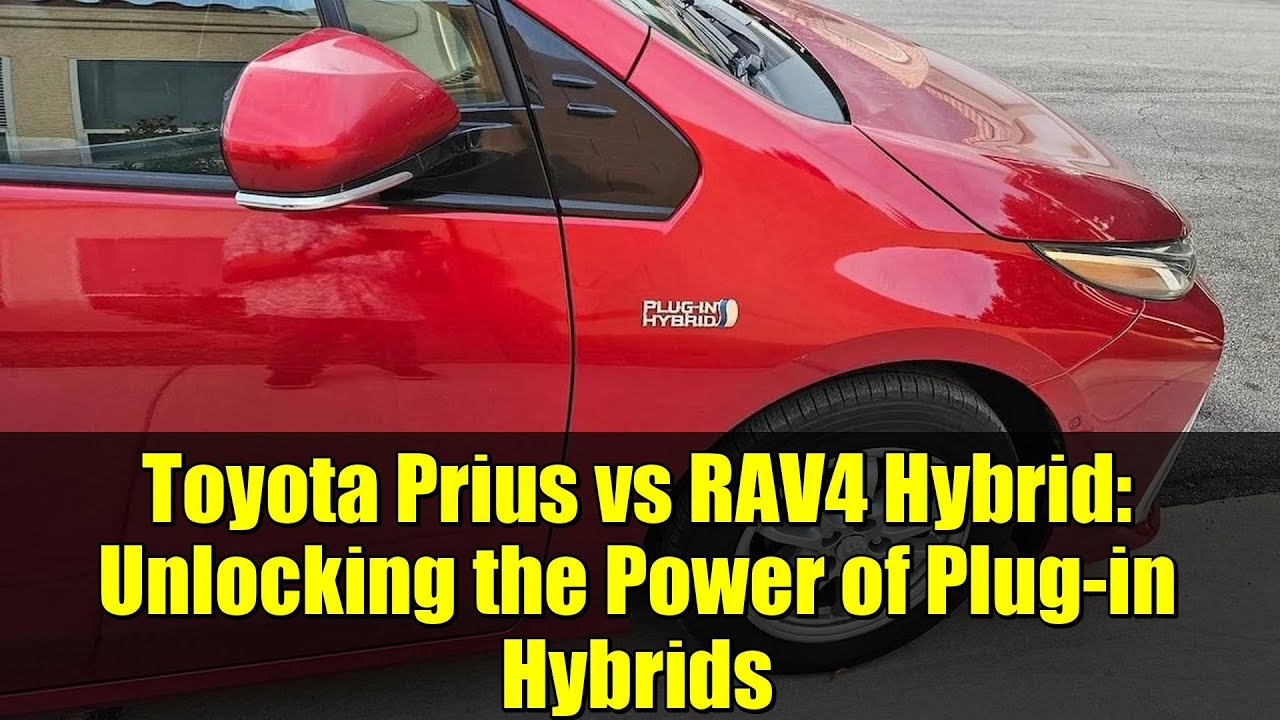
Toyota Prius vs RAV4 Hybrid: Unlocking the Power of Plug-in Hybrids
Imagine being told your car can only go 35 mi on a single charge. Sounds like a deal breaker, right? But here’s where it gets controversial. What if I told you that this seemingly limited range is actually the secret to why many drivers haven’t filled up their gas tanks in months. Let’s dive into the fascinating world of hybrid vehicles and uncover why less might just be more. While exploring the widespread confusion surrounding vehicle electrification, I stumbled upon a thought-provoking post by Jason Lara in a Toyota IV4 discussion group. Jason’s sister had recently received an older Toyota Prius, which she claimed could only go 35 mi on a 6-hour charge. His reaction, that’s all. Why even bother with a hybrid? This question perfectly highlights a common misconception about hybrid technology, one that even seasoned drivers often get wrong. And this is the part most people miss. The beauty of a plug-in hybrid electric vehicle, PHEV, like the Prius Prime or RAV4 Prime isn’t about replacing gasoline entirely. Instead, it’s about optimizing the engine to the point where it becomes nearly irrelevant for daily driving. Let me explain understanding the three levels of electrification. To clear up the confusion, let’s break down the types of vehicles we are talking about. A standard hybrid HEV like the regular Prius doesn’t need plugging in. It generates electricity through braking and the gas engine to boost fuel efficiency. A battery electric vehicle BEV runs exclusively on electricity. Then there’s the plug-in hybrid PHEV, which sits right in the middle, offering the best of both worlds. Jason’s confusion deepened when he discovered that newer models, like the 2025 RAV4 hybrid, boast 42 mi of electric range, while the 2026 version promises 52 mi. What am I missing? He asked. The answer lies in understanding how these vehicles are designed to fit into our daily lives. The sweet spot of electric range. Here’s the kicker. The Toyota IV4 Prime’s electric range is specifically tailored to cover the average American’s daily commute, which is roughly 32 mi round trip. By handling this distance on electricity alone, you effectively eliminating 90% of your gasoline usage, all while retaining the flexibility of a gas engine for longer trips. No range anxiety, no compromises. In our report, owners report realorld Toyota RAV4 prime electric range. Wow. We highlighted how many drivers consistently exceed the EPA’s estimates. For instance, a 42m rated range often stretches to 50 mi in favorable conditions, allowing drivers to go weeks without visiting a gas station. bold claim. Maybe, but the numbers don’t lie. Debunking the useless range myth, Jason admitted, “I thought electric or hybrid vehicles used a lot more electricity than fuel. 35 mi is useless to me if I drive over 20 m to work.” Here’s where the math gets interesting. If your daily commute is 40 mi round trip and your car offers 35 to 42 mi of electric range, you’re not out of luck. In fact, you’re in the sweet spot. You might use a tiny bit of gas for the last few miles, but instead of burning two gallons of gas daily, you’re using barely a teacup’s worth. Controversial thought. What if the real value of a PHEV isn’t in eliminating gas entirely, but in drastically reducing its use while maintaining flexibility? This is where PHEVs shine. They let you be an EV driver during the week and a hybrid driver on the weekend. Why have a hybrid then? Jason’s skepticism echoes a common belief. I thought hybrid owners never had to buy gas again. The reality is more nuanced. Many PHEV owners go months without buying gas, but when they need to drive 400 miles to visit family, they can. It’s the best of both worlds. Efficiency without the logistical nightmare of relying on public charging stations. Looking to the future, as battery technology improves, we are seeing incremental gains that make PHEVs even more practical. Toyota is pushing the envelope, but the goal isn’t necessarily to achieve 300 m of range. Instead, it’s about covering the vast majority of daily driving needs without overburdening the vehicle with massive, heavy, and expensive batteries. For a glimpse into what’s next, check out our coverage of the 2025 Toyota Prime, where we explore how modest modifications can make this vehicle stand out from the crowd. Key takeaways. PHEVs are for commutes, not cross-country trips. A 40 mile range covers most daily driving habits. Gasoline is a backup. For many, the gas engine only kicks in during aggressive acceleration or long trips. Efficiency is cumulative. Even if you drive 50 m a day on a 42 mile charge, your MPG average will still be impressive. Flexibility is key. Avoid the range anxiety of a full EV while enjoying the cost savings of electric driving. What owners are saying, real world experiences often tell a different story than spec sheets. On Reddit, one IAV4 Prime owner shared, “My R4P is the best car I’ve owned. I get 40-ish miles in winter and 50-ish in summer, perfect for errands and driving around town.” Another owner on YouTube praised its practicality, calling it an excellent family car that does its job really well. Final thoughts. Jason’s confusion is understandable, but 35 or 42 mi of range isn’t useless. It’s a carefully calculated number designed to eliminate gasoline for daily driving while providing peace of mind for longer trips. It’s the bridge between the past and the future. And for many, it’s the smartest financial decision they can make. Now, I want to hear from you. Does a 42m electric range cover your daily commute, or would you need more to make a plug-in hybrid worth the investment? Share your thoughts in the comments below. I’m Dennis Fly, a senior talk news reporter since 2012, bringing over 30 years of automotive expertise to every story. Follow me on social media for the latest updates and insights.
Are you curious about the capabilities of Toyota’s hybrid vehicles? In this video, we dive into the world of plug-in hybrids, comparing the iconic Prius with the RAV4 Hybrid. Discover why a 35-mile range on a 6-hour charge is just the beginning of a smarter, more efficient driving experience.
We address common misconceptions about hybrid technology, such as the belief that hybrids should replace gasoline entirely. Learn how these vehicles are designed to optimize your daily commute, reducing gasoline usage and emissions. Explore the benefits of the RAV4 Prime’s electric range, which can cover the average American’s round-trip commute, and how it can exceed expectations in real-world scenarios.
Join us as we debunk the ‘useless range’ myth and reveal the flexibility and efficiency of Toyota’s hybrid lineup. By the end of this video, you’ll understand why these vehicles are a smart financial decision for many drivers.