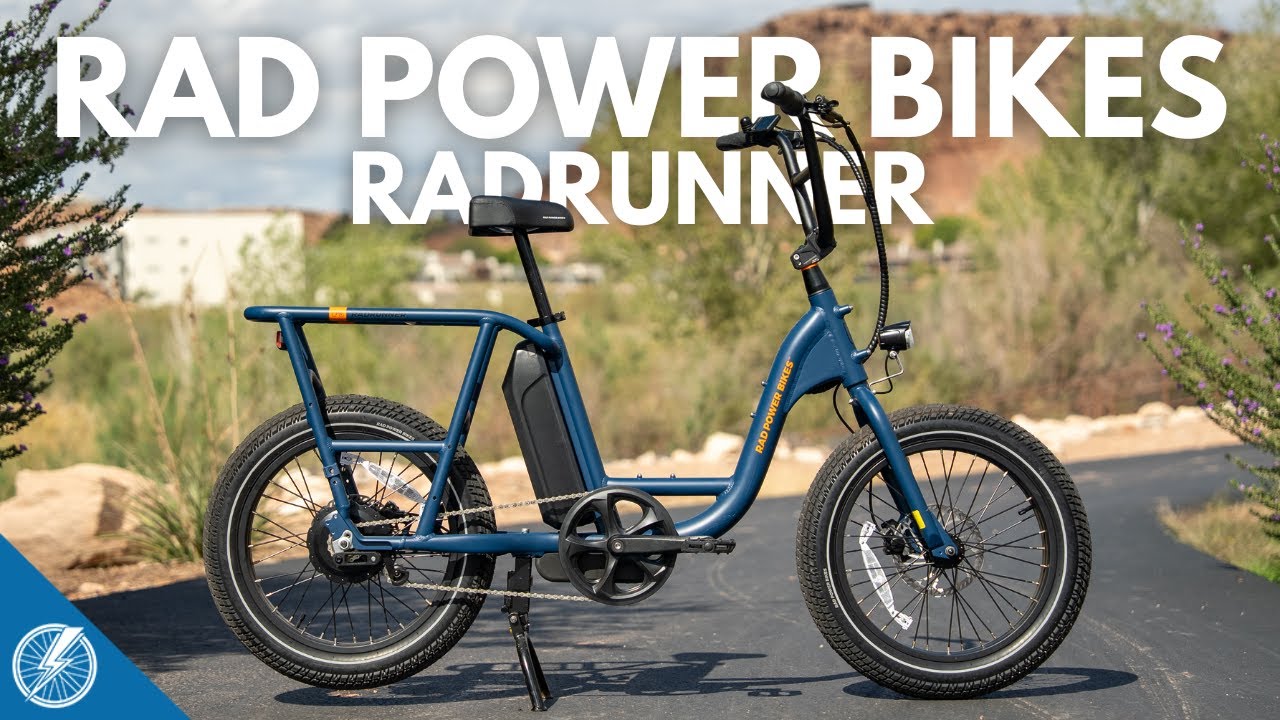
Rad Power Bikes RadRunner Review | A Classic Made Current?
Many ebikes that hit the market come and go, but this one stuck around. The RadRunner from Rad Powerbikes helped define what a utility ebike could be. And now it’s back, refreshed, refined, and more affordable than ever. Let’s dive in and see what’s new. [Music] [Music] This is the Rad Powerbikes Radr Runner. One of the most recognizable utility ebikes on the market. Since the first Radrunner model launched back in 2019, this short tail cargo line has earned an iconic status for being practical, approachable, and just plain fun to ride. From the start, Rad nailed the formula. This bike has a heavyduty accessory ready cargo rack, a manageable frame that’s easy to mount, and smooth, friendly pedal assist that gives riders confidence right away. Together, those things have made every Rad Runner a solid, reliable choice for daily travel and errand running. But the Radr Runner and the company behind it have evolved quite a bit since the first release. Recently, Rad Powerbikes simplified its three utility models with easy to understand names that reflect the bike’s different spec levels. There’s the basic Radrunner, the upgraded Radrunner Plus, and the feature-p packed Radrunner Max. The bike we’re testing here, the standard Radrunner, is the most affordable of the three and the spiritual successor to the Radrunner 2. At roughly $1,500, this is one of the least expensive ebikes in Rad’s catalog, but it’s far from stripped down. It still offers a 320 lb payload capacity, a powerful 750 W rear hub motor, and easy operation that’s great for both new and experienced riders. This latest version of the base model features some big upgrades that focus on performance, safety, and everyday usability. You now get a fullcolor display with a clean, simple interface, a set of two piston hydraulic disc brakes with 180 mm rotors from Gemma for stronger, more consistent stopping power, and also a 48vt 624Wh safe shield battery, which is ULcertified and fireresistant for peace of mind. The bike also rolls on a new set of custom 20×3.3 in all-terrain tires with puncture protection and reflective sidewalls. Between the tires, the rigid steel fork, and the BMX style handlebars, the Redrunner feels nimble and crisp, making it great for weaving through tight spaces or taking confident turns with a load on the back. Helping to move the bike is that 750 W rear hub motor, producing up to 60 N of torque. It uses a cadence sensor to engage the motor as soon as you start pedaling, giving it a steady, easygoing feel that’s ideal for anyone that wants a relaxed ride. There are five pedal assist levels and a half twist throttle for when you’d rather let the motor do all the work. The single speed drivetrain pairs a 52- chain ring with a 16 to three-wheel. This setup keeps maintenance low, so there’s no shifting and no derailure adjustments. You can just simply pedal and go. Lighting and visibility are handled by a 40 lux 100 lm LED headlight and an integrated tail light with brake light functionality. The system has a low light sensor for automatic engagement that makes sure you’re visible day or night. The bike also features a moped style saddle with extra padding, and its upright riding position feels relaxed and balanced. The ergonomic lock on grips, aluminum pedals, and dual leg kickstand all contribute to the RadRunner’s practical everyday ready feel. With a weight of 64 lbs, including the battery, the Radr Runner is relatively easy to maneuver compared to most utility ebikes. It fits riders between 4’11 and 6’2 and has a standover height of 16 1/2 in, making it accessible to a wide range of heights. The bike itself is UL2849 certified and comes in two color options, including forest green and this classic blue. RAD also sells plenty of accessories to expand what this bike can do, including passenger seats, cargo baskets, paneers, and more. So whether you’re setting it up for kid duty, delivery runs, or weekend adventures, the platform is ready to adapt, and there are options for just about everyone. In short, the latest RadRunner keeps everything people loved about the originals: simple controls, solid power, and a flexible design. But this version adds smarter features and improved safety where it counts. At face value, it’s a valuedriven utility ebike that feels refined, approachable, and ready for everyday life. But up next, we’ll put the RadRunner through our standardized speed, range, hill, and brake tests to see how this new version performs out in the real world. All right, let’s do a speed test here on the Rad Powerbikes Rad Runner. So, starting things off with no pedal assist and uh this bike has a single speed drivetrain. So, uh pedaling without power isn’t, you know, the most fun or easy, but it is possible. And I think, you know, once you kind of build up some momentum, it’s a little bit easier to keep things going. Um, now looking at the speedometer here, we don’t have tenth of a mile per hour, but I have noticed some discrepancy between the bike’s display and this app. So, I am going to kind of mostly stick with what we see on the screen here. So, right now we’re going around 9 mph. Let’s go ahead and go up to PAS1 and see how much that changes things. So, with this bike having a cadence sensor, we’re going to reach uh some sort of preset speed limits uh or power output limits, and we’ll see where where we land with those. So, this, you know, just in the lowest assist level here. Lots of power. It came on very quickly and smoothly. Uh the ride is, you know, infinitely easier. Uh, I don’t really have to, you know, put any pressure on the pedals as long as I keep the cranks turning. So, we are up here, you know, another big jump in speed. So, we’re up to 13 mph. Uh, very comfortable, nice, relaxing pace. All right, so it looks like we’re actually hitting 14. All right, let’s go up to PS2, see where that takes us. Same thing. Um, you know, a nice gradual ramping up in power and starting to ghost pedal here kind of around 16 mph. Not really unusual on this style of bike with a cadence sensor especially and a single speed drivetrain. So, um, you know, just kind of kind of relax into that and let the bike carry me where it will. But here we are going around 19 miles per hour actually. So, I’m going to wait for a final reading until we get up around this bend just because there’s a slight downward grade. All right, let’s let that sort of level back out because I don’t think it’s going to stay at 20, but I could be wrong. Well, all right. Yeah, I guess uh we are hanging at 20 mph. So, let’s go ahead and kick it up to PA3. Don’t really expect a whole lot of difference there if we are kind of already at the top end of the uh bike speeds here. So, I thought I felt a little bit of an extra nudge here, but um again, just going by the bike’s display, not a difference in speed. Uh I I think there was a little bit, but not a huge difference. Let’s go up to PA4. Yep, no change there. And then I expect the same thing in PAS5 here. Yep. Okay. Again, no change there, but uh yeah, you know, you got a couple a couple good levels there. And then if you have this bike loaded up, I would definitely expect to have some differences, but uh in any case, let’s uh go check out the throttle. We’ll call that the pedal test. All right, we are back for the throttle portion of the test. We’re going to see how quickly the bike goes from 0 to 20. Let’s go ahead and start in 3 2 1 go. All right, a strong start. Not punchy, but not, you know, sluggish either. Up to there we go, 20 mph. All right, let’s uh call that our speed test. All right, let’s recap our findings from those speed tests. Starting with no assist in the pedal test, I averaged about 9 mph. Then in PAS1, that climbed to around 14. But from PAS2 through PAS5, the RadRunner stayed right around 20 mph across the board. Now, we typically expect to see a gradual increase in speed between each power level, but here the bike reaches its maximum in four out of five assist settings. That means there’s not a lot of difference between most of its PAS levels, at least when riding on flat terrain without cargo. We’d anticipate better differentiation when carrying weight. After all, this is a utility ebike. But for riders traveling light, a little less power in the mid-range settings would make the experience feel more natural and give finer speed control. That said, the cadencebased pedal assist engages quickly and keeps power steady as long as the cranks are turning, which makes pedaling easy and predictable. The throttle felt strong but manageable, helping the 750 W motor move the bike confidently without feeling jumpy or scary. Overall, the RadRunner hit its advertised top speed easily and felt stable doing it, though some rebalancing of its PAS levels would make it even more friendly for everyday unloaded riding. [Music] Next, let’s talk about how far the RadRunner can go on a single charge. The bike includes a removable 624Wh safe shield battery that is UL2271 certified for added safety. Rad Powerbikes advertises a range between 17 and 55 mi depending on how and where you ride. In our standardized range test, we actually landed a little below that maximum, but still above the minimum. Our maximum range test done in PAS1 gave us 44.8 miles, while the minimum range test in PAS5 came in at 26.9 miles. We didn’t quite meet Rad’s 55 mile estimate there, but our results confirm that riders will get dependable mid-range performance from this battery. That said, both numbers are a bit below average compared to similar ebikes we’ve tested. A group of comparable utility bikes we’ve tested averaged about 37 mi on high power and about 69 on low. There are a couple of likely reasons for that. First, the RadRunner’s 624Wh battery is smaller than most competitors, which average close to 730 W hours. Second, the bike’s cadence sensor delivers steady power as long as the cranks are turning, which isn’t as energyefficient as the more adaptive torque sensors we’ve seen on many competing models. Even so, these results still give riders a practical range. Based on our data, you can expect roughly 13 to 14 miles of travel in the highest assist level before needing to turn around. And as our speed test showed, riders sticking to flatter areas or using lower PAS settings should expect to see more miles. When it is time to recharge, the included 2 amp smart charger can refill the battery in about 6 and 1/2 hours, so it’s easy to plug in overnight and be ready to roll the next morning. Overall, while the RadRunner’s range isn’t record-breaking, it is consistent, reliable, and plenty practical for everyday commuting or errands, especially for riders who keep their trips closer to home. [Music] Next up, let’s see how the RadRunner handled our hill test. Because when you’re hauling groceries, kids, or cargo, climbing power really matters. Our test takes place at a relatively new location we call the Devil’s Backbone, which is a half mile climb with an average 8% grade and about 217 ft of elevation gain. It’s a solid challenge for any ebike, but it still reflects the difficulty of hills you’re likely to encounter while riding. Let’s see what happened when our test rider, Justin, took the bike up our test hill, and I’ll walk you through the results once we get back here. Okay, we are out doing the hill test at the Devil’s Backbone on the classic Radr Runner 2. Now the the Rad Runner, this is their new model. Dropped the two. It’s just Rad Runner. We were doing the throttle test and to be honest, this felt a little more peppy than I expected. Easily got up to 20 before this section. We are in assist level five, so the highest assist level. And we’re going to bottom out on this first steep section right about 13. It looks like 13 miles per hour on this. Um, and again picking back up nicely. Um, so 16 miles an hour. 17. So picked up to about 17 before this before the next steep section. We’re now at 14 miles. There’s not decimal points, so it’s just rounded to the nearest mile per hour. We’re at 13. It’s holding there. Looks like Yeah, it looks like it’s going to hold 13. And that’s where it’s going to oh bottom out right at 12. I’m going to let go of the throttle just for a second as we make this turn and then back on it. Let’s see what we get speedwise we get to before this first lamp post. We’re at 13 mph 14. Yeah. So kind of cross right at 14. In terms of motor noise, I’d say it’s right about average. Feels sounds pretty good. Um, not like this section of the trail I’m not hearing very much. I heard a little bit more in the first section. And responsiveness again feels a little more peppy. Um, Rad has always been pretty big sticklers about not pushing past 750 watts. Um, they just really take a conservative approach to that. Um, which arguably can, you know, can be argued that it’s very good. Um, but this feels more peppy than the other ones did. Um, so I’m pretty happy with it. I’ll let you listen now. So, yeah, cruising at 15 16 mph. Um, motor sounded really well. I think you’ll be able to hear it. Um, but this is going to have a pretty decent result as we cross ride at 13 mph. All right, we’re back out on the rad now doing the pedal test. And once again, feels nice and peppy off that line. It’s that single gear. So, we’ll see how it does on the hill. Um, but easily got up to 20 before, and I was not ghost pedaling, which is a good sign. Um, it’s going 17 up this hill now. 16. And feels pretty good. So, yeah, bottoms out right at 16 on that section. Getting back up to 18 19 miles an hour as we hit this next deep section. We’re 17 16 flirted at 15. Yeah, now it’s at 15. And looks like that’s a probably going to be where it bottoms out. Right at 15. Tap the brakes to make this turn and see what we get up to. for this lamp post. Right at 16 mph right now. Going across right at 16. Um motor noise is still really good. Um can hear it, but it’s not I’d say it’s better than average right now. Um as far as engagement, very natural. And I’ve been happy with the power being a single gear. It’s hard to get it right where you’re typically either ghost pedaling on flats or you just need more gears to get up. This feels really good both on flat and here. I’m I’m more than soft pedaling, but I’m not having to pedal that hard. So, it’s doing well. 17 mph. I’ll let you listen as the motor noise does pick up a little bit right now. See, you can hear it a little bit there. And we’re going to finish right at 16 miles an hour. All right, using only the throttle, the RadRunner made it to the top in 2 minutes and 1 second with an average speed of 15 mph. When Justin added some leg power and used the bike’s highest level of pedal assist, it climbed faster in 1 minute and 48 seconds, averaging 16.8 mph. To put that into perspective, a small group of similar utility ebikes we’ve tested at the Devil’s Backbone averaged 1 minute and 49 seconds on throttle and 1 minute and 50 when pedaling. So, the RadRunner landed just below average in its first run and right around average in its second. Now, that might not sound like headline grabbing performance, but honestly, we were impressed. And that’s because Rad’s motors are tuned to stay within their rated 750 W output. They don’t peak above that number like many other brands. Most of the bikes in our comparison group reached 1,000 watts or more at their peak, which helped explain their faster times. Even so, the RadRunner held its own thanks to its relatively light weight of around 64 lb, which helped offset that modest power ceiling. In my personal experience, the bike felt confident and predictable. The throttle carried me up and over hills smoothly and steadily, and when pedaling, the experience felt active, but never exhausting. We tested without cargo, so riders carrying extra weight should expect slower times, but overall, the RadRunner proved every bit as capable as its predecessors. It’s not built for speed records, but it is built to get the job done safely and reliably, and it continues to do just that. [Music] Next, let’s take a look at how the RadRunner performed in our brake test. All of our brake tests are handled by my fellow reviewer, Griffin, who’s about 6’1 and 230 lb. For each run, he brings the bike up to 20 miles per hour, applies the brakes, and comes to a complete stop quickly while keeping the bike under control. We do this three times, measure each stopping distance, and then calculate an average from our results. In this case, the RadRunner stopped in an average of 20’6 in, which is right on par with the 20’4 in average from other comparable ebikes we’ve tested. That’s a solid result, and it shows that Rad spec appropriately for its size and purpose. Now, when we last tested this bike’s predecessor, the Bradunner 2, it came with mechanical disc brakes. They worked well, but hydraulic systems typically provide better consistency and require less hand strength to use. So, we were happy to see the upgrade to Gemma hydraulic disc brakes on this latest version with dual piston calipers and 180 mm rotors on both wheels. Out on the road, I thought these brakes felt strong and responsive without being grabby. They slowed the bike quickly, predictably, and with plenty of control, even when riding downhill or coming down from top speed. Overall, the Radr Runner’s brake system delivered safe, confident, and well- balanced stopping power, which makes this bike feel even more capable for daily riding and cargo use. [Music] All right, let’s talk about ride quality here on the Rad Runner. So, of course, this is a utility or short tail cargo ebike. And uh we’ve got a nice up upright riding position. Very comfortable. We have a very sturdy feel to this bike overall. And then we also have very nimble handling. So, uh some good ride quality highlights there. But let’s get into the details. Uh this bike has a single frame size. Excuse me. Meant for riders from 411 up to 6’2. Now, I am 5’11, so pretty close to the top end of that recommended range, and where things are here, uh, feel very comfortable. Uh, you’ve got some good adjustability on this bike to be able to tailor the fit. There’s about 11 in in the seat post for your saddle height. So, nice big range there. And then, uh, up in the cockpit here. So, we’ve got these BMX style handlebars that are connected to a threadless stem. And uh these you can loosen up the front of the stem and kind of change the angle of the handlebars. So that will affect your reach and a little bit of the handlebar height depending on, you know, the placement within the arc of rotation there. Um but yeah, so I where things are right now, I don’t have quite full leg extension. Um but a the fact that there’s a cadence sensor on this bike kind of makes up for that. very easily pedaling that doesn’t rely on uh you know my own leg power. And number two, um if I I could raise the saddle higher, but if I did that, I think the handlebars would feel a little bit too low. They they are definitely on the lower side, but where I have things right now kind of splitting the difference. Um it it’s very comfortable. So yeah, overall uh feels good to ride. But let’s see. We do not have a suspension on this bike. There’s a rigid fork and seat post. Um, so you know, you are going to feel some bumps here, but the tires are going to help out with that on your left. All right. And, uh, yeah, so the tires here are interesting. Those are 20-in by 3.3 custom tires, and uh, they are marketed to have sort of an allterrain tread on them. Now, I would think of that as maybe a little bit knobbybier than these. These are relatively smooth, but they do have some texture and grip. Uh, so I would imagine on, you know, gravel or some dirt that these would be okay, but um, you know, you wouldn’t get want to get too extreme, I think, which kind of goes along with the fact that you don’t have a suspension. Uh, but anyway, then we also have the 750 W rear hub motor on this bike. Now, uh, with the cadence sensor, I do want to show you the engagement with that. You just kind of saw it there a little bit, but let’s get kind of over this bridge and I will uh slow down a little bit and just do a little test to see how quickly the motor engages. Let’s go ahead and go this way. So, okay, I’m going to slow down a little bit and then I’m going to turn the cranks to show you how quickly uh the motor kicks in. Let’s do that now. All right. So, that was very fast. Right about a quarter turn of the cranks. Uh nice and speedy. nice and uh yeah, quick engagement, feels very responsive, and then of course, you know, you got a powerful motor there that uh gives you good acceleration and enough oomph to move, you know, a heavy load. So, in any case, that covers the basics. Let’s go ahead and head back to the studio, and I’ll add a few additional thoughts. In my experience, the RadRunner really captures what Rad Powerbikes is all about. Simplicity, versatility, and approachability. This is a friendly bike for new riders. It’s practical for parents and commuters, and it’s still fun for anyone who just wants to get outside and enjoy the ride. Touching back on the bike’s tires, I filmed that clip in the middle of my testing, and I wasn’t sure how well they’d actually do off pavement. After all, the tread looks fairly smooth, but I have to say that after spending some time riding on dirt and gravel, I was pleasantly surprised. Knob tires would provide better traction on loose terrain, but for light off-roading on hard packed paths, they’re more capable than I expected. Another huge component of the Radrunner’s ride quality is its user friendliness. This bike is extremely easy to use. With its single speed drivetrain, you just pick your assist level, hop on, and go. Adjusting power is as simple as tapping the arrow buttons on the display. And from there, you can either pedal or twist the throttle to get moving. Overall, the cockpit setup feels well thought out. The handlebar shape and grip position make it easy to stay comfortable while keeping full control of the throttle and display. Personally, I’d prefer lock-on grips over the pressfitit style Rad uses here, but they still felt fine overall. The bike saddle is the same moped style seat we’ve seen on previous RAD runners, and while it works for short trips, our team found it a bit uncomfortable on longer rides due to its wedgelike shape. Luckily, RAD sells multiple saddle upgrades, so it’s an easy swap if you want a different fit. Lastly, Rad’s color display deserves a quick mention. It’s clear, well organized, and even includes an optional fourdigit security pin and maintenance reminders for your drivetrain, brakes, and tires. Let’s take a closer look at the display and settings menu so you can see what I’m talking about. Okay, let’s go ahead and walk you guys through the display here. So, I’ve got the uh display on, and you can see that I have the optional security pin activated, and I just set it to four zeros, but of course, you can do whatever you want. And then, you know, you can uh adjust those digits as you scroll through. But then the button on the underside of the display is how you enter the code. And then you can see on that last one, it turns green to indicate that we got that correct. Uh but now looking at the main display, we’ve got the light indicator here. Now, it’s fairly dark in our studio here. So, those kicked on automatically with the uh light sensor. But then we’ve got the battery charge percentage. We have an estimated range based on the pedal assist level, which is at the bottom. So, you can see that as I increase our power levels, we are going to use more charge and go fewer miles. And of course, we have the uh speedometer in the center there. But to get to the bike settings menu, you just hold this button on the bottom of the display. You can see we have a few options to adjust here. Not a whole lot to get into, but we can, of course, reset the trip computer. We can change our units between metric and imperial. We have a brightness setting for the display. Right now, we have it on the brightest, but there’s also an auto function. That’s nice. And then security. This is where you enter uh the PIN if you want to get into that. So you have to if you have it active, enter that to be able to access the menu, but then you can get in there and change the passcode. And then you can also set it up so that guests have their own passcode as well. Uh not going to dive too deep into that here, but let’s look also at the service menu. So this is very cool. Um, as I mentioned earlier, you have different settings for the brakes, tires, and drivetrain, but you also have all three of those things kind of lumped together here. That is what we have active now. Uh, so basically, if you get your bike serviced and all three of those things are covered, then it’ll remind you after 300 m to get those three things serviced again. But if you service them at different times, you can go in and activate each one individually. And then it basically does the same thing. It’s a 300 mile uh you know distance reminder uh for each of those. But then if we go back out, there’s just some sort of backend stuff here. So that’s really just about everything. Let’s go ahead and keep the review moving. [Music] All right, before we wrap up, let’s quickly break down what stood out the most about the RadRunner. Starting with the pros. First off, this bike is incredibly easy to use. The single speed drivetrain means no shifting. And the cadence sensor keeps paddling nearly effortless. The 750 W motor delivers steady, approachable power that feels capable but controlled, which is exactly what you want from a utility ebike. Its rigid fork, 20-in wheels, and high-rise BMX style handlebars make the bike feel nimble and responsive. For safety, Rad added a potted safe shield battery and Gemma hydraulic disc brakes, giving the bike a more premium, secure feel. At around 1,500 bucks, it’s one of Rad’s most affordable models, but it still comes loaded with smart touches like the color display with maintenance reminders and a security pin feature. It’s also accessory friendly, compatible with everything from passenger kits to cargo baskets and pet carriers, and with two fun color choices, it even looks good doing it. As for cons, the stock saddle wasn’t our team’s favorite for long rides, but Rad offers plenty of easy upgrades. And while the bike’s power delivery makes riding simple, we’d love to see its assist levels rebalanced slightly for smoother speed control when riding without cargo. As the saying goes, if it ain’t broke, don’t fix it. The RadRunner has always been a dependable go anywhere utility bike, and this latest version continues that legacy with a classic and wellproven design outfitted with smart updates that make a great bike even better. At around $1,500, this bike is extremely affordable, yet it still includes meaningful upgrades like the safe shield battery, hydraulic brake system, and color display. Together, those refinements give the Radr Runner a modern, well-rounded feel while keeping its approachable personality intact. In our testing, the bike generally performed well across the board. It comfortably held its class 2 top speed, climbed efficiently, brad confidently, and offered a practical realworld range. We especially liked its easy handling, steady power delivery, and its overall simplicity. Now, it’s not perfect. The stock saddle, and the power distribution of the pedal assist system were the main areas we found with room for improvement, but those are small critiques on an otherwise capable and trustworthy platform. For years, the RadRunner has been one of our most recommended ebikes for families, commuters, and casual riders alike. And this new version is the most valuepacked entry-le model yet. If you want to take a closer look, we’ll leave two links down in the video description below. One to our written review and another to Rad’s website. If you found this review helpful, don’t forget to like and subscribe. And if you decide to pick up a Redrunner for yourself or someone you know, please help support our work by using our link to the bike’s web page when making a purchase. I’m curious though, which accessories would you be most likely to add to your Redrunner? Let us know down in the comment section along with any questions you might have. But thanks for taking a ride with me today. Again, I’m John with Electric Bike Report and this was the new and improved Rad Power Bikes Rad Runner. [Music]
👉 Check current pricing and availability: https://ebrdeals.com/RadRadRunner
👉 Read our full written review and see test data here: https://electricbikereport.com/rad-power-bikes-radrunner-review/
Discover how the recently updated Rad Power Bikes RadRunner performs in our full review and testing! The iconic short-tail utility e-bike returns with upgraded features, improved safety, and the same versatility that made the RadRunner lineup famous. We break down the bike’s 750W motor performance, Class 2 speed capability, real-world range test results, hill-climbing ability, and stopping power of the new Gemma hydraulic brakes.
With its approachable handling, single-speed drivetrain, SafeShield fire-resistant battery, and custom all-terrain tires, the RadRunner aims to be one of the best affordable cargo/utility e-bikes on the market. Find out whether this $1,500 model delivers the capability, comfort, and value you need for daily commuting or hauling gear.
Watch our full RadRunner review for performance data, ride impressions, and our final verdict!
00:00 – Intro
00:46 – Overview
04:59 – Speed Test
09:40 – Range Test
11:36 – Hill Test
17:51 – Brake Test
19:15 – Ride Quality
24:33 – Display
26:51 – Pros & Cons
28:05 – Conclusion