
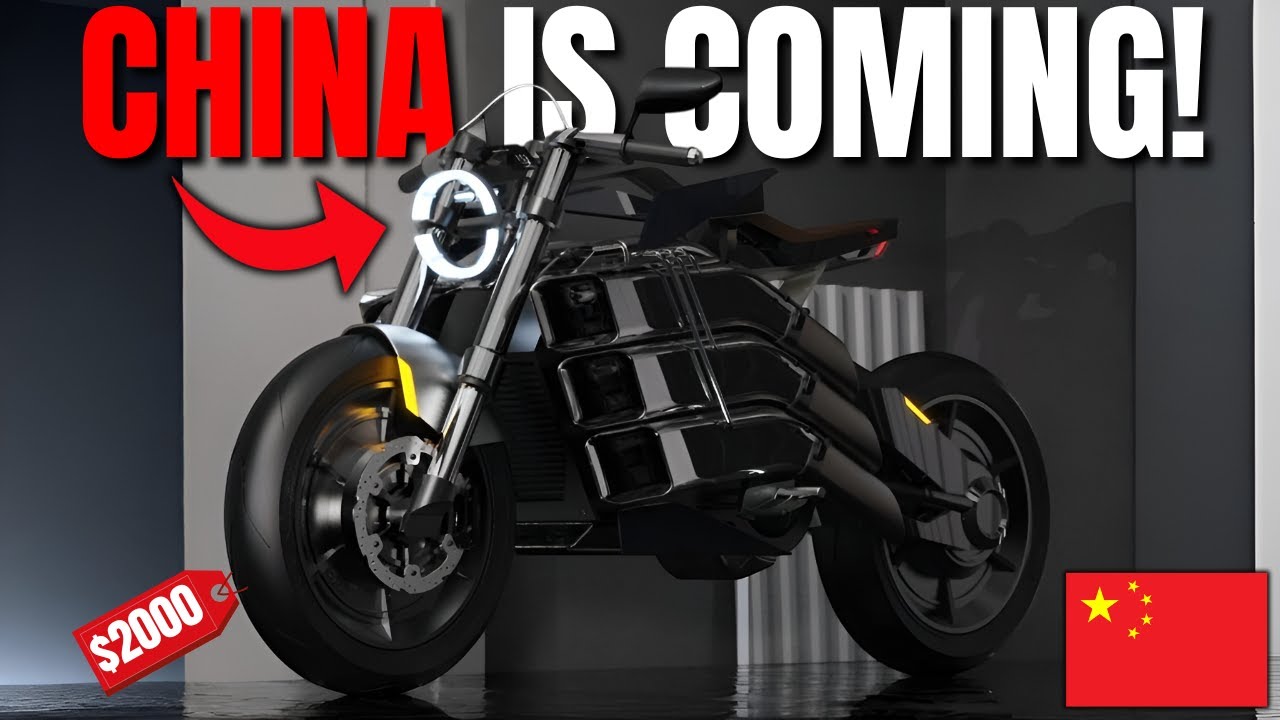
Top 5 Chinese Electric Cruisers Coming To USA That Will Destroy Gas Bikes!!
The electric cruiser motorcycle. The ultimate design challenge in the two- wheeled world. How do you take the low, stretched out, feet forward aesthetic of classic American iron and marry it to an electric powertrain? How do you capture that cruiser soul, that laid-back attitude without the signature V Twin rumble? Traditional cruisers are defined by their architecture. Long, low frames, relaxed riding positions, visual presence that commands attention, but electric powertrains change everything. Battery packs are dense, heavy blocks that need careful placement. Motors are compact but need cooling. The engineering constraints are completely different. Today, we’re diving into five electric cruiser motorcycles taking wildly different approaches to this problem. From affordable Indian concepts leveraging AI to handbuilt Brooklyn boutiques using sustainable materials. From revolutionary hubless wheels to artistic aluminum monokes, these bikes prove that electric power and cruiser style can coexist in ways we never imagined. Let’s break down the specs, the tech, and the engineering. Number five, the Livewire S2 Mullholland. The Mullhalland transforms electric power into cruiser form with genuinely clever engineering. This isn’t just slapping ape hangers on an electric bike. This is thoughtful design addressing how you make electrons feel like a cruiser. The front end sits higher thanks to longer Hitachi 43mm USD forks. USD forks flip traditional telescopic design. Thicker tubes on top create massively more rigidity. Less flex means precise steering and better brake feel. The Mullhalland uses longer stroke versions to achieve that raised cruiser stance. Forward foot controls put your legs out front where they belong, positioned for natural heel toe shifting. A 6-in handlebar riser brings the bars up and back for that relaxed posture where you’re sitting in the bike. Not on it. Even the mirrors mount below the handlebars for that clean cruiser profile. The wheelbase measures 57.8 in with a 19-in front, 17-in rear wheel. Classic cruiser geometry. That larger front wheel helps tracking. The smaller rear keeps it nimble. The powertrain is where electric dominates. 84 horsepower peak, 63 kW continuous. But here’s the magic. 194 pound- feet of torque, 263 new m of instant twist. A Harley Milwaukee 8 114 makes 119 lb feet. The Mullholland makes 60% more from a fraction of the size. And all that torque hits at zero RPM. Gas engines need revs before torque arrives. Electric motors deliver 194 lb feet at any RPM. The torque curve is flat from 0 to red line. 0 to 60 happens in 3.3 seconds. on a cruiser. Top speed is 99 mph, electronically limited to save range and optimized cooling. The battery is 10.5 kW hours total with 9 kW usable. The buffer zones protect battery health for 10 years of riding. Range is EPA tested. 121 mi city, 73 highway at 55, 91 combined. Real world figures, not optimistic claims. Charging is level two only. 78 minutes empty to full. No DC fast charging because it adds weight, cost, and complexity. For a cruiser focused on leisurely riding, level two is adequate. Weight is 432 lbs versus 500 plus for typical gas cruisers. The compact electric powertrain saves massive weight. The frame uses structural battery design where the 10.5 kWh pack is part of the chassis serving as a stressed member taking structural loads. This is aerospace engineering applied to motorcycles. Boeing does this with wing fuel tanks. Tesla does it with their skateboard platform. Livewire brings it to two wheels. By making the battery structural, you eliminate redundant material. No need for frame tubes and separate battery housing. The battery case becomes the frame. This saves weight while lowering center of gravity, improving handling dramatically. Materials push boundaries. The fenders aren’t plastic or metal. their cap hemp biomposite compressed hemp fiber that’s renewable and biodegradable. The radiator shroud and wiring components use PCR nylon 6 manufactured from recycled ocean fishing nets. Every year, hundreds of thousands of tons of fishing nets get abandoned in the ocean. This bike helps clean that up. The seat is petroleum free silicone. No leather, no vinyl, no fossil fuels, just silicone. Colors keep it simple. Liquid black with black or red accents for that murdered out look. Lunar White is actually unpainted, just the raw composite material, saving energy and chemicals while creating a unique finish. Suspension uses those Hitachi 43mm USD forks up front with reduced rear travel compared to sportier models. It’s tuned for cruiser comfort. Dual front discs with single rear, all managed by ABS. $10,999. That’s entry-level Harley money, but with 3.3 second acceleration, sustainable materials, and zero emissions. This is the most accessible electric cruiser you can actually buy today. Number four, the Curtis Zeus. This is where electric cruiser design gets radical. The Zeus throws out the rule book completely. The chassis is machined 6061T6 aluminum monoque. Let me explain what that means. 6061T6 is aircraft grade aluminum alloy. T6 means it’s heat treated to maximize strength. Monaco means the entire chassis is one continuous piece machined from solid billet aluminum. No welds anywhere. No joints that can flex. No frame tubes bolted together. Just one massive chunk of aerospace aluminum carved into a motorcycle chassis by CNC machines. The amount of material that gets machined away is staggering. You start with maybe 1,000 lb of aluminum billet and machine it down to a 50 lb chassis, but the result is a structure with rigidity that welded frames can’t touch. Front suspension uses double wishbone girder forks. This is fascinating engineering. Traditional telescopic forks use sliding tubes. The problem is they flex under braking and cornering loads. A girder fork uses two A arms just like car suspension with push rods actuating remote shocks. The front wheel is controlled by these two A arms working in parallel. The rigidity is phenomenal because you have four mounting points instead of two. Steering precision goes through the roof. The downside is cost and complexity. Each ARM needs precision bearings. Each push rod needs adjustment. But for a bike prioritizing art over practicality, it’s perfect. Wheels are solid carbon fiber discs carved from composite. These aren’t carbon fiber spokes. They’re solid discs, lighter than traditional wheels, and visually stunning. They also eliminate aerodynamic turbulence from spokes at high speed. The downside is they catch crosswinds like sails. An iPad dock mounts directly to the frame for instrumentation. It’s genius, actually. Why spend millions developing a custom display when the iPad already has better graphics, faster processing, and an interface everyone knows? Just dock your iPad and go. Brake lines and wiring run exposed throughout the bike, not hidden under bodywork. The engineering becomes the aesthetic. Form follows function, but function is also form. The powertrain is e-win. Dual zero motorcycles motors on a common shaft. Combined output is 170 horsepower and 290 lb feet of torque. Sport bike power on a cruiser, 0 to 60 in claimed 2.1 seconds. Top speed over 140 mph. This is Power Cruiser taken to the extreme. The prototype battery is 14.4 kW hours. Claimed range is 280 mi. Racete suspension. The swing arm uses concentric pivot with the motor drive shaft, eliminating chain tension changes during suspension movement. Bearing double rotor brakes deliver massive stopping power. LED lighting throughout. Clear panels expose the powertrain components, turning mechanical systems into visual features. The girder fork design is a call back to early motorcycles. Executed with modern materials and precision, the wheelbase stretches long and low. Pure cruiser aesthetic with radical execution. Price. Initially 30,000, later 60 to $75,000. At that price, you’re buying art that happens to be a functional motorcycle. Number three, the Verge TS Pro. This is the motorcycle that literally reinvented the wheel. The Verge features a hubless rear wheel with the motor integrated directly into the rim. The doughut motor 2.0. The center mounts to the swing arm and stays stationary. The outer rim rotates around it on massive bearings. Inside are electromagnets that repel each other with tremendous force, spinning the rim. No chain, no belt, no drive shaft losses. Every watt goes directly to forward motion. The second gen motor weighs 50% less than the first version through optimized magnets and advanced ceramic bearings. Output is 137 horsepower and 737 lb feet of torque, 1,00 new m. A Ford F-150 makes around 400 lb feet. This motorcycle makes almost twice that on a 57-lb vehicle. 0 to 60 takes 3.5 seconds. Top speed is 112 mph. The weight is remarkably light despite the massive battery. That battery is 20.2 kwatt hours. Most electric motorcycles carry 10 to 15. The Verge sits at the top. Range extends to 217 mi mixed riding. Real world highway probably 130 to 150. DC fast charging adds 60 mi in 15 minutes. Full charge under 35 minutes. The bike supports CCS and NACS Tesla supercharger networks. This transforms the electric motorcycle experience from planar around charging to quick stops like filling gas. Aluminum frame with battery mounted low for incredible center of gravity. Olan suspension front and rear. 4.72 in travel front. 4.17 rear. Fully adjustable Brembo calipers gripping BST carbon fiber wheels. Premium hardware throughout. Fullcolor TFT display with Bluetooth through Verge HMI system. The Star Matter platform uses AI to learn your riding style and adapt power delivery and suspension mapping. Software updates over the air continuously improve performance. The rear tire is wider to accommodate motor components, helping the cruiser aesthetic. Single-sided swing arm leaves the entire hubless wheel visible. Engineering is art. The riding position splits the difference between sport and cruiser. Forward leaning but relaxed. Comfortable ergonomics for all day riding. Price starts at $29,900. Special edition at 30,900 for hubless motor tech. 20 kWh battery and BST wheels. That’s competitive pricing. Number two, the Tarform Luna. The sustainable luxury electric motorcycle. Handbuilt in Brooklyn with materials you’ve never seen before. The Luna comes in scrambler or cafe racer configurations. Scrambler features high bars, upright seating, dual sport tires for versatile riding. Cafe Racer delivers clip-ons, forward lean, and aggressive styling. Both share the same electric platform. The motor produces 41 kW, 55 horsepower, 10 kWh battery using Sony cells. Range hits 120 mi mixed riding, 0 to 60 under 4 seconds. Top speed 120 mph. Now the materials and this is where tar form gets revolutionary. Bodywork is flax seed. Yes, flax seeds. The same seeds in your smoothie or bread. Flax fibers get woven into a composite material kind of like fiberglass but using plant fibers instead of glass. Then it’s reinforced with algae based and ironbased metallic pigments. These pigments provide the color while also strengthening the material. Here’s the genius. This material doesn’t need paint, primers, or clear coats. Traditional motorcycle bodywork starts as raw plastic or metal, gets primed, painted multiple colors, then clear coated. Each step uses volatile organic compounds that pollute. The Tarform skips all that. The color is the material itself. Mix pigments during manufacturing and the composite comes out the final color. No VOC emissions from paint booths, no chemicals leeching into groundwater, no clear coat that cracks and peels after a few years. The finish is permanent because it’s the material itself. And when the bike reaches end of life, the bodywork is completely renewable and biodegradable. Bury it and it decomposes back into soil. The seat is biodegradable vegan leather made from plant-based materials. Traditional motorcycle seats use petroleum based vinyl or animal leather. Both are problematic. Petroleum vinyl will sit in a landfill for a thousand years. Animal leather has ethical and environmental issues. The Tarform seat uses neither. It’s a synthetic material derived from plants that will biodegrade at end of life. Feels like leather, performs like leather, but without the environmental baggage. Every single aluminum component is recycled aluminum, not virgin aluminum smelted from boxite ore. recycled aluminum from existing sources that gets remelted and reformed. The energy savings are massive. Smelting virgin aluminum from ore uses enormous amounts of electricity. Recycling aluminum uses 95% less energy. You’re getting the same material with a fraction of the environmental cost. Wheel options give you choice. 18-in billet aluminum wheels machined from solid aluminum stock or traditional spoked wheels with stainless steel spokes and aluminum rims. The billet wheels are modern and clean. The spoked wheels call back to classic motorcycles. Both are fully recyclable at end of life. Frame is TIG welded aluminum. TIG welding tungsten inert gas welding creates incredibly strong precise welds without spatter or mess. Every frame joint is clean, smooth, and structural. Proper TIG welding creates joints stronger than the base metal itself. Founders addition specification takes everything premium. Olan suspension front and rear provides race quality damping with full adjustability for preload, compression, and rebound. ISR brakes made in Italy deliver powerful consistent stopping with excellent lever feel. These components are normally found on bikes costing twice as much. 3.4 4 in HD display with crisp graphics and excellent sunlight readability. Wi-Fi connectivity allows over-the-air software updates that add features and refined performance. Bluetooth integration handles phone calls, music, and navigation through your helmet’s Bluetooth system. Keyless proximity starting means the bike detects your key fob as you approach. Walk up, press start, ride away. No fumbling with keys or inserting anything into an ignition. Just proximity sensing and go. Haptic blind spot detection is genuinely unique. Sensors monitor zones beside and behind you using radar or ultrasonic detection. When a vehicle enters your blind spot, the seat vibrates with a subtle pulse. Not an annoying beep that you might ignore, not a visual warning on the dash that you might miss while focusing on the road. A physical vibration that immediately alerts you to danger through your body. It’s intuitive, effective, and unique to Tarform. Once you experience it, traditional blind spot warnings feel inadequate. The acoustic resonator amplifies the motor’s natural electromagnetic wine. Most electric motorcycles are nearly silent. Some riders love that, others miss the auditory feedback. Tarform worked with Adam Nordon, a sound engineer and film composer, to develop a system that amplifies and shapes the motor’s natural sounds. As you accelerate, electromagnetic wine gets enhanced by acoustic resonators built into the frame tubes. The frame itself becomes a resonance chamber. The result is a unique electric sound signature. Not loud like a V twin, not silent either. Distinctly electric and distinctly tar form, engaging without being obnoxious. The entire platform is modular by design. Bodywork panels bolt on with Allen key fasteners and can be swapped for different styles or colors. If your tastes change in 3 years, order new panels in different colors. If you crash and damage bodywork, replace just the affected panel instead of entire fairings. The battery pack can be removed and upgraded as battery technology improves. Buy the bike today with a 10 kWh pack. 5 years from now, upgrade to a 15 kWh pack with newer cell chemistry and higher energy density. The bike grows with technology instead of becoming obsolete. Software updates deliver overthe-air continuously improving the bike. Better power delivery maps developed through realworld testing. Refined regenerative braking algorithms that capture more energy. New display graphics and user interface improvements. Enhanced stability control tuning. The bike you buy today will be more refined a year from now through software alone. Approximately 55% of the bike’s components are 3D printed using recycled materials. 3D printing allows for complex organic shapes impossible with traditional manufacturing. It also allows rapid iteration and customization. Each bike can have unique details tailored to the owner. Custom brackets, personalized badges, one-off parts. 3D printing makes it economically feasible. Each Luna is handbuilt one by one at Tarform’s headquarters in the Brooklyn Navyyard. Not a factory assembly line cranking out thousands per month. Skilled crafts people building each motorcycle individually with attention to detail that mass production can’t match. Build time is around 6 months from order to delivery. You’re waiting because each bike is being crafted specifically. Price: $48,000. That’s exotic motorcycle money. Ducati panagal territory. But you’re not just buying a motorcycle. You’re buying a handcrafted sustainable modular platform unlike anything else on the road. It’s art that happens to be a functional vehicle. Number one, the Ola Cruiser. This could change everything. An electric cruiser from India with specs that rival bikes costing 10 times more. The design is unmistakable. Low, muscular power cruiser inspired by the Ducatti Davel and Yamaha VMAX. Sloping seat creates that signature power cruiser line dropping from tank to tail. Forward foot pegs for cruiser positioning. Mid-rise bars for comfortable reach. The riding posture is relaxed but engaged. The front end features a hexagonal housing that’s pure concept bike drama. Angular, aggressive, modern. Inside sits a full LED headlamp with integrated daytime running lights. LEDs throughout the entire bike. Turn signals, tail light, brake light, everything. Bright white light that draws less power and lasts essentially forever. At night, this thing lights up like a spaceship. Single piece handlebar mounted high for upright cruiser position. Continuous bend of aluminum or steel. Stronger than separate bars because there’s no clamp joint to flex. Below the bars sits the digital instrument console, command center for all the bike systems. USD forks at the front offer more rigidity than traditional telescopic forks. Thicker tubes resist flex under braking and cornering loads. Better handling, more precise steering. At the rear, a monoshock manages suspension duties. Lighter and easier to adjust than dual shocks. Likely mounts to a linkage providing progressive damping. Soft initially for comfort. Firming up as it compresses. Braking goes serious with twin discs up front, single disc at rear, dual front discs essential for this much power. ABS is mandatory in India for bikes over 125 C. So, it’s definitely present. Styling is pure future cruiser. Dual tone bodywork creates visual separation. Narrow tapered tail keeps weight centralized. Forward foot pegs put your legs out front. Classic cruiser style. Long rake and trail geometry for highway stability. You can ride this for hours without fighting the steering. Likely 17-in wheels front and rear for presence and gyroscopic stability. Now, the powertrain motor is mid-mounted positioned low for optimal weight distribution. Low center of gravity dramatically improves handling. Belt drive to the rear wheel. Belt drives are superior to chains for cruisers. Quieter, running almost silently. Cleaner, no oil or grease. Less maintenance, no adjustments for thousands of miles. Longerlasting, often 50,000 mi before replacement. Just smooth, silent power transfer. Top speed is claimed 150 kmh. That’s 93 mph. Real highway cruising speed with headroom for passing. You can sit at 75 or 80 all day with ability to accelerate for overtaking. Range is quoted over 200 km based on Indian driving cycle testing. That’s 124 mi. The IDC represents typical Indian riding. Lots of urban stopand go mixed with highway cruising. Real world highway at constant speed. Expect maybe 80 or 90 m. But urban and mixed riding should hit over a 100 miles easily. The magic is in the software. Smart move OS 3.0 with AI manages everything. Power delivery, battery optimization, rider assistance. This is sophisticated software on powerful processors analyzing hundreds of data points per second. Voice control for everything without touching bars. Just speak your command. Navigate to home. What’s my remaining range? Switch to hyper mode. Natural language processing means you don’t memorize commands, just talk to it like a person. GPS navigation optimized specifically for motorcycles. Car navigation sends you on boring highways. Motorcycle navigation considers road width, surface quality, curviness, scenic value, roots you on roads that are actually fun to ride. Overthe-air updates mean continuous improvement. Maps update automatically. New features download. Performance improvements install themselves. Bug fixes arrive overnight. Never visit a dealer for software updates. Rider assistance goes deep. Traction control monitors rear wheel speed versus front wheel speed. If the rear spins faster than the front, indicating lost traction, the system instantly modulates power to prevent wheel spin. Keeps you from looping the bike during hard acceleration or sliding out midc corner. Cornering assist uses lean angle sensors via six axis IMU to detect how far you’re leaned over. If you’re at 45° of lean and crack the throttle, the system knows your midc corner and adjust power delivery to prevent the rear stepping out. Sophisticated electronics borrowed from high-end sport bikes. Regenerative braking captures energy during deceleration and feeds it back into the battery. Roll off throttle or touch the brake lever. The motor becomes a generator. Converts kinetic energy back to electrical energy. You’re not just slowing down, you’re adding range. maybe 0.1 or 0.2 kwatt hours recaptured per ride over a full day that adds up to five or 10 extra miles. The Rein also provides engine braking feel making the bike easier to control. Feels intuitive and familiar like a gas bike and gear tires engineered specifically for Indian road conditions. Everything from glass smooth highways to rural roads with massive potholes to unpaved dirt tracks. Maximum grip wet and dry with special tread compounds working across wide temperature ranges. Indian summers hit 40 plus Celsius. Monsoon season brings torrential rain. The tires perform in both extremes. Three riding modes giving you three personalities in one bike. Eco mode maximizes range by limiting power to 60 or 70% and optimizing region for maximum energy recapture. Gentler acceleration, maybe limited top speed, but range extends as far as possible. City mode balances power and efficiency for stop and go traffic. Maybe 80% power with moderate region. Good throttle response without being overwhelming. Perfect for urban commuting. Hyper mode unleashes everything. 100% power. Minimal region interference. Pure performance for spirited riding. Maximum acceleration and top speed. The modes adjust throttle response, power output, traction control intervention, and battery management strategies. It’s like having three different bikes in one machine. The instrument panel is 7 in. tablet sized, crisp, colorful graphics showing navigation maps, battery percentage, estimated range, real-time power usage with graphs, current riding mode, speed, and all standard motorcycle information. Bright enough for direct sunlight dims automatically at night. Voice control integration is seamless. Need directions? Navigate to the nearest charging station. Want to know range? How many kilometers can I ride? Change modes? Switch to eco mode. Natural language processing understands context and intent. Geo fencing creates virtual boundaries via GPS. Set a 50 m radius around your parking spot. If the bike moves outside that zone, your phone immediately alerts. Theft protection through GPS tracking. You’ll know within seconds if someone tries to steal it. Remote immobilization adds another security layer. If stolen and you get the geoence alert, you remotely disable it through smartphone app. The thief gets maybe a block or two before it shuts down permanently. Motors cut power. Bike becomes a 500 lb paper weight. They’ll abandon it and you recover it. The AI continuously learns your riding behavior, how aggressively you accelerate, how often you use maximum power, your average speed, typical routes, charging patterns, riding schedule. Over time, it optimizes performance to match your style. Smooth and efficient rider power delivery adjusts for maximum efficiency. Aggressive, sporty rider, it prioritizes throttle response. The bike adapts to you rather than forcing you to adapt to it. system even predicts maintenance needs. Monitors battery health, tracking capacity degradation and cell balance. Tracks mileage and reminds when services due. Proactive maintenance prevents breakdowns and extends vehicle life. Now, here’s the number that changes everything. Price. 1.5 to 2.7 lak rupees. Let me convert that. 1.5 lakh equals 150,000 rupees. Approximately $1,800. 2.7 lakh equals 270,000 rupees. Approximately 3,250. We’re talking $1,800 to 3250 bucks. Under $3,500 for an electric cruiser with over a 100 m range, AI software, voice control, GPS navigation, comprehensive rider aids, modern styling. Less than a used Harley Sportster, less than most electric bicycles, less than some electric scooters. For comparison, LiveWire costs 10,999. That’s 3 to six times more. Verge costs 29,900. That’s 9 to6 times more. Tarform cost 48,000. That’s 15 to 26 times more. Ola undercuts everyone by an order of magnitude. Expected launch January to February 2026, just months away. Pre-bookings likely opening end of 2025. Small deposit probably required to reserve production slot. Ola Electric has the infrastructure to deliver at scale. Not a garage startup promising the moon. Manufacturing facilities with capacity for hundreds of thousands of units annually. Currently manufacturing electric scooters at massive scale. Shipping tens of thousands monthly. Established dealer network across India with hundreds of locations for sales and service. experience navigating regulations, managing supply chains, providing after sales support, real company with real production capability. If Ola delivers even 80% of promises, it’s a gamecher. Maybe range is only 90 mi instead of 120. Maybe build quality isn’t quite as refined as Tarform. Maybe some features don’t work perfectly at launch. Even with those caveats, a sub $3,500 electric cruiser with AI and decent range completely transforms the market. Makes electric motorcycles accessible to average riders instead of wealthy enthusiasts. The democratization of electric transportation. Five electric cruisers. Five radically different approaches to the same fundamental problem. How do you make electric power feel like a cruiser? The LiveWire S2 Mullholland solves it through ergonomics and sustainable materials. Raised front end, forward controls, hemp fenders. 10 Grand gets you American engineering with electric performance. It’s the accessible option. The bike that makes sense for most riders. The Curtis Zeus solves it through radical artistic expression. Machined aluminum monoke, girder forks, carbon fiber disc wheels. 60 to 75 grand buys you a rolling sculpture. It’s art that happens to be a motorcycle. Engineering as aesthetic. The Verge TS Pro solves it through revolutionary engineering. Hubless motor 20 kowatth battery. Olins’s and Brembo components. 30 Grand delivers genuine innovation with the most advanced electric motorcycle tech in production. This is what happens when engineers are given freedom to completely reimagine motorcycle design. The Tarform Luna solves it through sustainability and craftsmanship. Flax seed bodywork, recycled aluminum, handbuilt in Brooklyn. 48 grand purchases, conscious luxury. A bike that reflects your values. Every component chosen not just for performance, but for environmental impact. The Ola Cruiser solves it through democratization, AI software, voice control, comprehensive rider aids. 1,800 to 3250 makes electric cruisers accessible to everyone. If they deliver on the promises, they change the entire market overnight. From $10,000 American production bikes to $3,000 Indian concepts. From hubless finish engineering to handbuilt Brooklyn sustainability. From aluminum art to AI powered future tech, the electric cruiser is no longer a fantasy. It’s reality. And these five bikes prove that electric power and cruiser style can coexist in ways we never imagined. The cruiser is evolving. The rumble is gone, replaced by instant torque and sophisticated electronics. But the soul remains. Low stance, relaxed posture, presence on the road. The electric cruiser is here and it’s just getting started.
Top 5 Chinese Electric Cruisers Coming To USA That Will Destroy Gas Bikes!!
Discover the electric cruiser motorcycles bringing classic styling, laid-back ergonomics, and zero-emissions performance to the open road. These aren’t sport bikes or adventure tourers—they’re pure cruisers designed for comfortable highway riding, weekend trips, and turning heads with styling that honors motorcycle heritage while embracing electric technology. From bikes offering 100+ mile ranges to models delivering torque that embarrasses traditional V-twin engines, electric cruisers are proving that going electric doesn’t mean sacrificing the soul of cruiser riding.
The electric cruisers available in 2025 feature classic swept-back handlebars and low seat heights providing comfortable all-day riding positions, torque delivery from electric motors matching or exceeding big V-twin engines with zero vibration, ranges between 80-150 miles on highway speeds with DC fast charging adding significant range in under an hour, and styling respecting cruiser traditions while incorporating modern LED lighting and digital displays. Battery placement keeps center of gravity low for stable handling characteristic of cruisers, while instant torque makes passing maneuvers effortless without downshifting through gears. Some manufacturers maintain classic cruiser aesthetics completely, while others blend traditional proportions with futuristic elements celebrating electric powertrains.
The electric cruiser revolution addresses concerns that held traditional cruiser riders back from going electric. Range anxiety fades with improved batteries delivering realistic 100+ mile capabilities, performance now matches or exceeds gas cruisers with instant torque available at any speed without lag, maintenance drops to tires and brake pads with no oil changes or valve adjustments, and the riding experience maintains that relaxed cruiser character riders love. Whether you’re a traditional cruiser rider curious about electric or someone who wants the cruiser aesthetic without gas station stops, these five bikes prove electric technology fits the cruiser lifestyle perfectly. This is classic motorcycling reimagined for the electric age.
#ElectricCruisers #CruiserBikes #ElectricMotorcycles #EVCruisers #CruiserLife #ElectricVTwin #MotorcycleCruiser #ZeroEmissions #CruiserStyle #ElectricRiding #classicstyle