Get The Gavel
A weekly SCOTUS explainer newsletter by columnist Kimberly Atkins Stohr.
And the thing is, I was lucky. No broken hips, no broken back, no brain bleed.
Then I read that just about anyone can drive an e-bike. No minimum age requirement, no test to pass, little clarity around licensing. Can this be true? If so, can it be changed?
These things can hurt people.
Patricia Kimpel
Boston
Much confusion over what these devices are suited for and capable of
We appreciated the recent discussion on the safety challenges posed by modern electric micromobility, and we would like to add the perspective of two people who work directly with these devices every day.
One of us is a registered nurse who has cared for patients with traumatic brain injuries and is a certified smart cycling instructor with the League of American Bicyclists. The other is a certified e-bike technician through the Light Electric Vehicle Association and the e-bike expert for the New England Electric Auto Association.
One of the most significant problems we see is the growing public confusion between legal e-bikes and high-powered electric motorcycles. While they may appear similar, their capabilities and legal classifications differ dramatically.
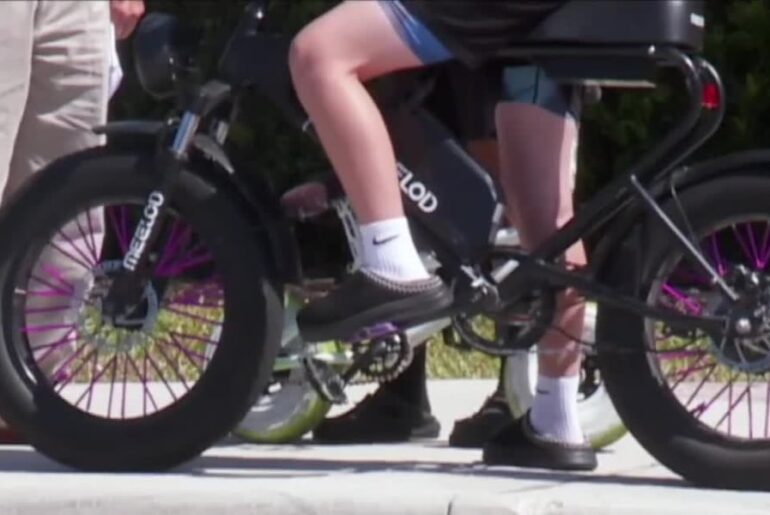
A legal e-bike is limited to 750 watts of continuous power, has fully functional pedals, and is designed for speeds up to 20 or 28 miles per hour depending on the class of the bike. In contrast, some online “e-bikes” marketed to youth use more powerful motors that can reach speeds greater than 28 miles per hour and can be considered motor vehicles requiring a license, registration, and insurance. Unfortunately, parents often buy these machines believing they are safe for teens.
Clearer regulations, stronger consumer education, and expanded protected infrastructure are essential steps toward safer micromobility for all residents.
Chris Hall
Braintree
Alan Wright
Roslindale
Hall is a certified e-bike technician. Wright is a retired nurse. They operate The Pesky Rabbit E-Bike Repair.
More should be done to make streets safer for all
Drs. Natalia Barron Cervantes, Cassandra M. Kelleher, and Peter T. Masiakos highlighted an important safety concern in their Nov. 27 op-ed, “Massachusetts laws haven’t kept up with e-bike technology, and children are paying the price.” The authors recommend a number of regulations they’d like to see the Legislature enact.
At the end of 2024, the Legislature established a Special Commission on Micromobility, which has met five times this year. A report is due out soon, with findings that may require lawmakers to act to make streets safer both for people using micromobility devices and for pedestrians.
I would also note that removing the fastest and heaviest micromobility devices from sidewalks and trails across the Commonwealth would improve safety for people walking, running, and enjoying parks and trails, but there is more to do to improve mobility and safety for everyone. After all, the majority of fatal and serious crashes in Massachusetts involve automobiles. Users are often on sidewalks because streets are dangerous. We need to do everything we can to slow speeding drivers down, such as allowing municipalities to opt in to road safety cameras. Lawmakers should pass proposed legislation that would do that.
Brendan Kearney
Framingham
The writer is the executive director of WalkMassachusetts, a nonprofit pedestrian advocacy organization.
E-bikes raise alarm while we’ve normalized automobile dangers
The tragic deaths of Minh Dang, 64, who died after being struck by an e-biker in Back Bay, and Parker Robles, 13, who died after the electric dirt bike he was riding collided with a car, are heartbreaking and serve as a reminder that we have much work to do to eliminate traffic fatalities in Massachusetts.
Unfortunately, because e-bikes were involved in both deaths, we have seen knee-jerk, though well-intentioned, calls for tighter restrictions (“It’s getting hard to ignore e-bikes’ dangers,” Opinion, BostonGlobe.com, Dec. 1). However, they may cause more harm than good.
As a society, we have normalized traffic violence caused by cars. Speeding, running stop signs, parking illegally, and collisions are everyday occurrences. Yet unlike with e-bikes, we don’t see the same fervor for built-in speed limiters or road diets.
There are laws in place for e-bikes, as well as motorcycles, but across Massachusetts these clearly have not been solutions. Enforcement is difficult, especially considering that historically it has been highly discriminatory.
Rule-breaking is often a sign that there’s an unmet need. Riders use sidewalks because that feels safer than being in car traffic. There is room for more regulations, but these should address the e-bike industry and delivery companies, not just riders overall.
Tiffany Cogell
Interim executive director
Boston Cyclists Union
Boston