A student on an e-scooter flies past the bookstore to cross the street. They previously were riding in a prohibited area for scooters. Nikoletta Anagnostou | Long Beach Current
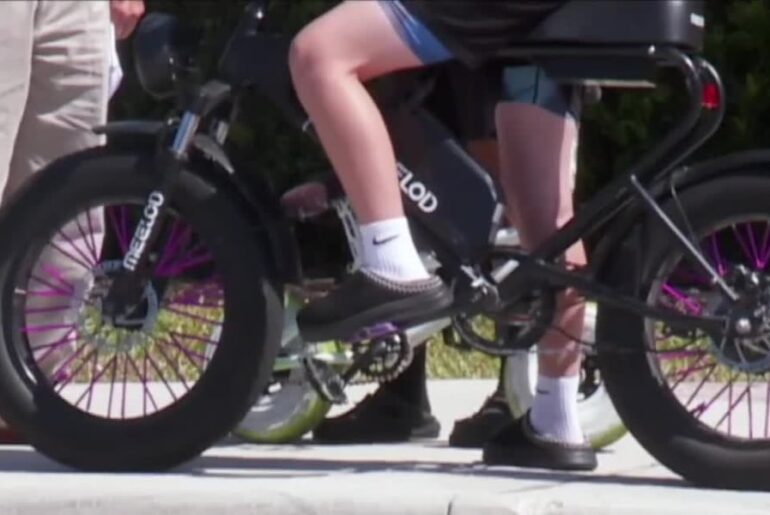
Zooming past students at high speeds, the growing presence of e-scooters and e-bikes is creating an increasing safety problem on campus—and police are struggling to keep riders in check.
Long Beach State Police Chief John Brockie reports that the number of people he’s seen zipping through campus on motorized vehicles has only increased in the past few years.
Even in designated areas, coasting divides are only allowed to go 5 mph, but e-scooters can often exceed 15 mph. As of now, the university police don’t have a safe way to enforce these rules, as speedsters can quickly escape police trying to stop them.
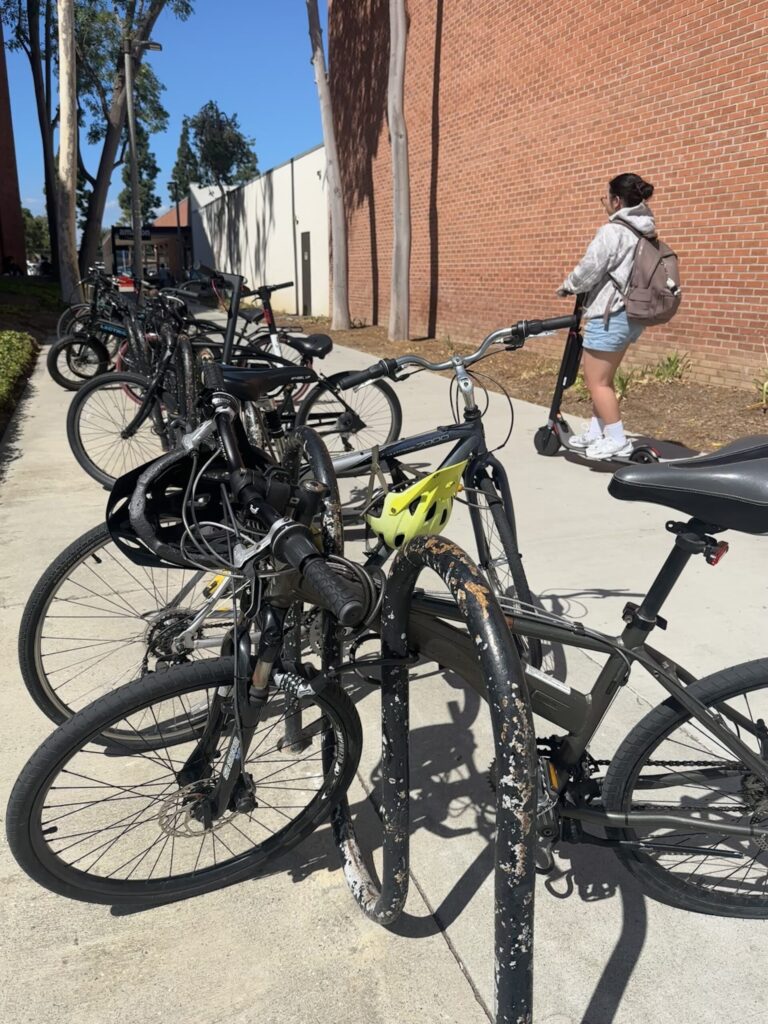
In accordance with CSULB and state regulations, electric and motorized scooters are allowed to be used to travel to campus but must be left at drop-off zones.
Some additional rules riders must also follow include:
Do not park scooters on sidewalks that block pedestrian paths.
Ride on the road and avoid being on sidewalks that are pedestrian-only.
Yield right of way for pedestrians.
May not operate with any additional passengers besides the operator.
Emily Quintero, a fourth-year theatre arts major, said that throughout her time at CSULB, motorized scooters and bikes have become an increasing cause of concern.
“Honestly, I’m a little frightened,” Quintero said. “They zoom past very fast and don’t even look where they’re going. It kind of feels like one is going to crash into you at any moment.”
Quintero said while she understands the need for some to use e-scooters, she’s experienced multiple incidents in which she was almost hit by a speeding two-wheeler, especially on the sidewalks surrounding the yellow “Go Beach” letters.
“Whenever you’re in that area, or even waiting to cross by the ‘Go Beach’ sign, there are always e-scooters, and they are always zooming past you,” Quintero said. “It’s a very tight sidewalk and there are so many students on it.”
According to Brockie, the streets surrounding CSULB, especially Atherton and Seventh Street, are filled with fast scooters, and many of the riders are children. Brockie stated that he is working with the Long Beach Police Department to make the streets surrounding CSULB safer for the community.
“A lot of the really fast ones aren’t our students; they are people from the neighborhoods that are coming here,” Brockie said. “Some will stop—oftentimes they are juveniles—so we have to contact their parents.
Brockie said that, due to the high speed and instability of e-scooters compared to bikes, he has not yet included them in the police department’s free “Bike U-Lock Program,” as he is concerned that doing so would only encourage unsafe riding practices on and around campus.
In addition to the danger e-scooters pose to pedestrian students, they can also be dangerous for riders.
Quinn Bergau, a second-year choral music education student, has been riding her scooter to campus every day since her apartment is nearby, but said she never wears protective gear.
While she hasn’t had any accidents with other students, she said that once she almost ran into a row of bikes because it was wet out. She encouraged students to wear helmets to protect themselves—especially when the weather is rainy.
Bergau doesn’t always ride to upper campus as a music student, and though she said she understands the need for restricted coasting device zones, she wasn’t aware of which areas or sidewalks she needed to avoid.
Still, when she’s going from class to class or back home, she rides at speeds well over the parking lot speed limit for cars, but has never had a police officer stop her, and she isn’t worried about it either.
“I go past [the police] all the time,” Bergau said. “Twenty-two miles per hour—they don’t stop me.”
That lack of intervention is precisely what police said they are struggling with—not because officers don’t see violations, but because enforcing the rules is nearly impossible.
Brockie said if an officer tries to stop them, the riders quickly zoom away, never to be identified. As of now, Brockie said there’s no safe way to prevent students from reckless riding.
“I’m not going to put police officers on electric bikes chasing people on electric scooters or electric bikes—then we just compound the danger,” Brockie said. “If anyone comes up with an amazing way to get everyone to comply, I’m all ears.”