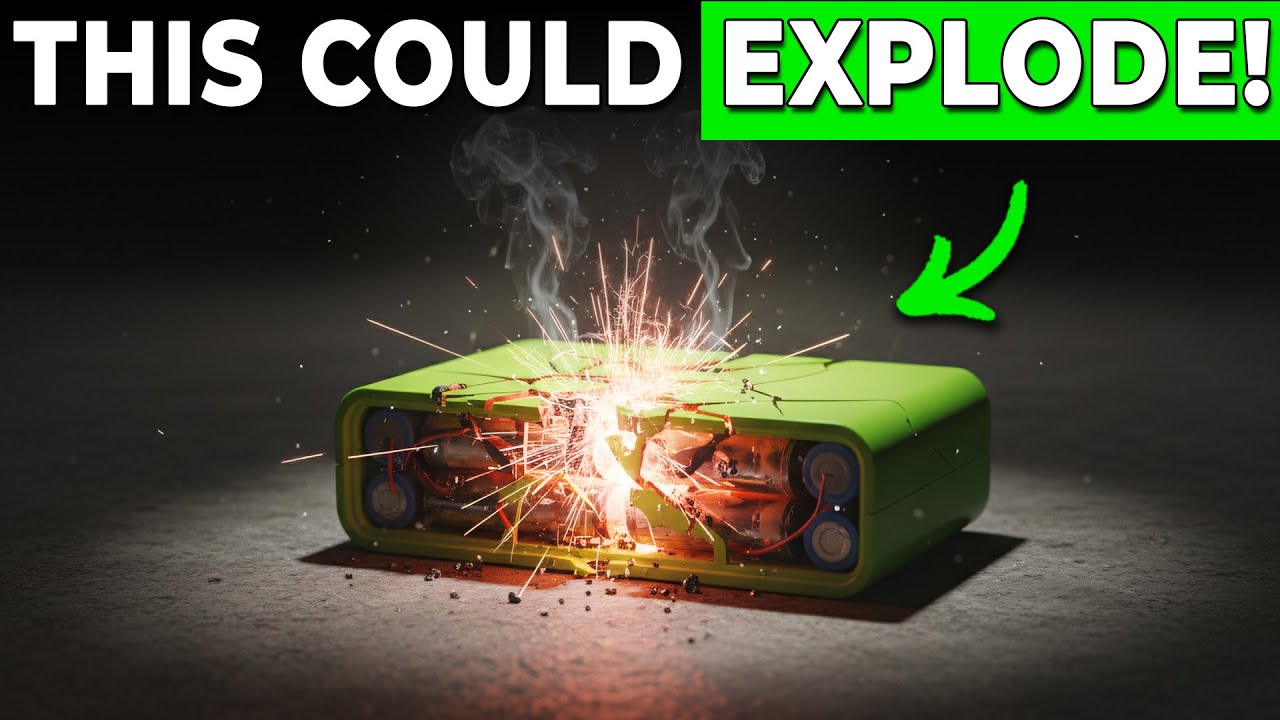
11 Electric Bike Mistakes That Could Burn Down Your House
Most eBike owners think they’re saving money on gas and parking. But what if I told you that over 25,000 lithium-ion battery fires have been documented in the US in just 5 years? Ebikes that look like perfect commuter solutions, but are secretly ticking time bombs sitting in your hallway. In this video, we’re counting down the 11 deadliest mistakes ebike owners make, ranked from bad to catastrophic, based on fire department data and government safety reports. And trust me, some of these are so common, you’re probably making them right now. From charging protocols that turn your bedroom into a fire trap to batteries that can reach 700° C in seconds, these mistakes kill people and destroy homes every single year. And here’s the terrifying part. The number one mistake on this list cause 18 deaths in New York City alone in 2023. Stick around to the end because this isn’t just information. It’s a survival guide that could save your life and your home. Miss this and you could be the next statistic in a fire that starts while you’re sleeping. Let’s get straight into the 11 mistakes that are turning ebikes into house fires across America. Mistake number 11, using inappropriate extension cords or power strips. Most people don’t realize that charging an ebike battery draws significant continuous current for several hours. When you plug that charger into a cheap, thin extension cord or an overloaded power strip, you’re creating a fire hazard that has nothing to do with the battery itself. Here’s what happens. Thin or unrated extension cords generate resistive heat when high current passes through them over extended periods. This overheating can cause the cord itself to shortcircuit or catch fire. But there’s an even more dangerous secondary effect. The external heat generated by a failing cord or power strip gets transferred directly to the battery charger and potentially the battery pack itself. This proximity to an external heat source accelerates the internal heating process within the lithium ion cells. Potentially triggering thermal runaway even if the battery chemistry is completely stable. The electrical demands of ebike batteries are not trivial. These aren’t phone chargers drawing a few watts. Ebike chargers can pull substantial amperage continuously for 4 to 6 hours depending on the battery size. When that current flows through an undersized conductor, basic physics takes over and heat builds up. Mistake number 10, failing to remove the battery when fully charged. This mistake won’t cause an immediate fire, but it’s slowly degrading your battery and increasing long-term risk. Most riders just leave their ebike plugged in overnight or even for days after the battery reaches 100% charge, while modern batteries have a battery management system designed to stop charging at full capacity, leaving the battery connected subjects the cells to unnecessary stress. Lithium ion batteries don’t like sitting at 100% state of charge for extended periods. The electrochemical tension at maximum voltage accelerates the rate of internal cell degradation. compared to storage at mid-range charge levels. This prolonged stress compromises the structural integrity of the cells over time. While the immediate fire risk is lower than other mistakes on this list, the cumulative damage increases the probability of future failures. Battery researchers have established that the optimal charge level for lithium ion longevity falls between 20 and 80%. Constantly pushing to 100% and leaving it there creates unnecessary wear. The cells are essentially under maximum tension and that takes a toll on the internal component cycle after cycle. Mistake number nine, exposing batteries and connectors to water and debris. Ebikes get ridden in all weather conditions and many owners assume these machines are fully weatherproof. They’re not. While the external housing might repel some water, the battery pack and especially the connector harness remain vulnerable points. Exposure to water and debris, particularly when the protective casing has been compromised by prior damage, creates unintended electrical pathways and accelerates internal corrosion that can trigger short circuits. The US Consumer Product Safety Commission made this danger explicit in November 2025 when they issued an urgent warning about specific Rad Powerbikes battery models. The agency specifically cited increased fire risk when batteries or their wiring harnesses had been exposed to water and debris. This wasn’t theoretical concern. It was based on 31 documented fires, including 12 incidents that cause over $734,000 in property damage. What makes this particularly dangerous is the delayed failure mode. Water ingress doesn’t always cause immediate problems. Instead, moisture gradually corrods connection points and creates conductive bridges between components that should remain electrically isolated. Debris can jam into connector pins, creating partial shorts that generate heat during charging or discharge cycles. These slow building failures can manifest days or weeks after the initial exposure, making it difficult to connect cause and effect. Mistake number eight, over modifying the electrical system. Ebike enthusiasts and delivery workers who depend on their bikes for income often look for ways to increase speed or extend range through modifications. One of the most dangerous alterations involves mismatching voltage ratings between components. Installing a battery that outputs higher voltage than the motor controller is rated to receive creates an immediate electrical incompatibility that can trigger catastrophic failure. The physics here are unforgiving. Electrical components are designed to operate within specific voltage ranges. When you supply voltage that exceeds the controller or motors rated capacity, you’re forcing more electrical potential through circuits than they were engineered to handle. This causes immediate excessive overheating in the controller switching components and can cause permanent irreparable damage within minutes of operation. Unlike the gradual thermal stress associated with improper charging, voltage mismatches apply instant overwhelming electrical force. The excess voltage can arc across circuit board traces, melt solder joints, and cause sparking inside the controller housing. This isn’t a slow degradation process. It’s sudden component failure that generates extreme localized heat. That heat can ignite nearby materials or trigger thermal runaway in the battery if the failed controller creates an electrical short that feeds back into the battery pack. For optimal performance and safety, the controller voltage must precisely match the nominal voltage of the battery pack. A 48volt battery requires a 48volt controller. A 52volt battery requires a 52vt controller. This seems obvious, but online forums and YouTube videos promoting performance upgrades often gloss over these fundamental requirements. Sellers of aftermarket components aren’t always forthcoming about compatibility limitations because they want to make the sale. Mistake number seven, charging or storing the battery in extreme temperatures. Temperature management is critical for lithium-ion safety. Yet, it’s one of the most commonly violated rules. Batteries are electrochemical devices where temperature directly affects reaction rates and internal resistance. Both extreme cold and extreme heat create dangerous conditions, though through different mechanisms. The cold weather rule is absolute and non-negotiable. Never charge a lithium ion battery below 32° F or 0° C. This is considered a cardinal rule by battery engineers because charging below freezing causes permanent irreversible damage to the cell structure. When you charge a cold battery, lithium ions can’t properly intercolate into the anode material. Instead, metallic lithium plates out on the anode surface, forming dendrites, tiny spike-like structures that grow with each cold charge cycle. These dendrites eventually puncture the separator membrane between the anode and cathode, creating an internal short circuit that triggers thermal runaway. This damage is cumulative and irreversible. Every cold charge cycle makes the battery more dangerous. If you store your ebike in an unheated garage or shed during winter, you must bring the battery indoors and let it warm to room temperature for 2 to 3 hours before connecting the charger. There are no shortcuts or workarounds for this rule. Charging a cold battery is one of the fastest ways to create a fire hazard. High temperature creates the opposite problem. Excessive heat during charging or storage stresses the internal chemistry and more critically reduces the battery’s ability to dissipate the heat naturally generated during the charge process. Lithium ion cells always produce some heat during charging as electrical energy converts to chemical potential. Normally this heat dissipates into the surrounding environment. But when ambient temperature is already elevated that heat has nowhere to go. internal temperature rises faster, shortening the time to reach the critical threshold where thermal runaway initiates. Before we continue with the top six deadliest mistakes, hit that subscribe button if you want to avoid costly ebike disasters. We’re breaking down the technical details that manufacturers don’t tell you, and you’ll want this information when you’re making your next purchase decision. Mistake number six, charging or storing near exits, combustible materials, or carpets. Location matters more than most people realize. Where you charge and store your ebike is a life safety decision that directly determines whether you and your family can escape if thermal runaway occurs. Fire department data from New York City proves this connection. When the city implemented aggressive public education campaigns urging residents to move charging operations away from exits in living spaces, they achieved a 67% reduction in deaths despite a continued rise in total fire incidents. The physics of lithium ion fires explain why location is so critical. When thermal runaway occurs, the fire is extraordinarily intense and spreads with shocking speed. Temperatures can exceed 700° C within seconds. Storing or charging an ebike near flammable materials like wood furniture, paper storage, curtains, or carpeting guarantees that a battery failure will instantly become a full structural fire. The released heat and flames will ignite secondary fuel sources immediately, creating a self-sustaining conflration that overwhelms fire suppression efforts. Carpet is particularly dangerous because it’s often overlooked as a fire hazard. People think of carpets as floor covering, not as fuel. But synthetic carpets are petroleum based products that burn readily and release toxic smoke. Charging an ebike on carpet means placing a potential ignition source directly on top of fuel. If the battery vents and ignites, the carpet provides an immediate path for fire spread across the entire room. The second location factor involves escape routes. Charging in bedrooms or placing the ebike near doorways, hallways, or stairwells transforms the device into a lethal barrier if it catches fire. Lithium ion fires produce massive volumes of toxic smoke containing hydrogen fluoride and other poisonous gases. This smoke will fill a residence in under two minutes, making navigation impossible and causing respiratory damage even with brief exposure. If your only exit path requires passing the burning ebike, you’re trapped. Mistake number five, failing to monitor CPS-C warnings and recalls. The Consumer Product Safety Commission actively monitors reports of dangerous products and issues public warnings when serious hazards are identified. Ignoring these governmental safety notices means knowingly operating equipment with verified critical defects that can lead to fire, injury, or death. Yet, many ebike owners never check for warnings about their specific models. Two recent cases demonstrate why monitoring CPSC announcements is essential. In November 2025, the CPSC issued an urgent public safety warning about specific Rad Powerbikes battery models, the RP1304, and HLRPS304, which were sold with multiple popular bike models, including the Rad Wagon 4, RadRunner series, Rad Rover 5 series, and Rad City series. This warning came after documentation of 31 fires, including 12 incidents that caused approximately $734,500 in property damage. What makes this case particularly problematic is that Rad Powerbikes refused to agree to an acceptable recall plan. The company, citing precarious financial circumstances, told the CPS-C it could not afford to offer replacement batteries or refunds to all affected consumers. This means there’s no manufacturer remedy. When a company fails to fulfill its financial obligations for a recall, the CPSC warning becomes the absolute last line of defense. The burden falls entirely on consumers to identify the hazard and take action. A second warning was issued in December 2024 for Fangs F7 Pro ebikes sold on Amazon. This warning came after nine reports of fire and burn hazards, including two reports of property damage totaling $12,000. These weren’t isolated incidents. They represented a pattern of failures severe enough to warrant federal intervention. The challenge is that these warnings don’t automatically reach affected owners. The CPSC posts warnings on their website, but there’s no national registry forcing manufacturers to contact every purchaser. Many ebikes are resold, gifted, or purchased secondhand, making it impossible to trace all current owners. If you buy a used ebike, you inherit any safety defects without necessarily knowing the model has been flagged as dangerous. Mistake number four, continuing to use a physically damaged battery. Physical damage to a battery is one of the most direct pathways to thermal runaway. Yet, many riders continue using batteries after crashes, drops, or impacts. The internal structure of a lithium ion cell depends on extremely thin separator membranes to keep the anode and cathode materials apart. Mechanical stress from impacts can compress, tear, or puncture these delicate membranes, creating internal short circuits. The timing of failure after mechanical damage is unpredictable. And that’s what makes this mistake so dangerous. A battery might function normally for hours or even days after a hard impact before suddenly entering thermal runaway. The damage creates a latent fault that may not manifest until specific conditions align, perhaps during the next charge cycle when current flow stresses the compromised area or during a high demand discharge when internal heat builds up. The CPSC has documented cases where batteries ignited when the ebike wasn’t even in use or being charged. strongly suggesting internal faults activated by prior physical damage. External warning signs should trigger immediate removal from service. Dents in the battery case indicate the internal cells absorb significant impact force. Punctures or cracks in the housing mean the protective shell is breached, exposing internal components to environmental contamination. Swelling or bulging of the case is perhaps the most critical warning sign because it indicates pressurized gas buildup inside the seal container. This pressurization dramatically increases explosion risk because the battery is essentially a pressure vessel that’s been compromised. Visual inspection should be part of regular maintenance, especially after any incident. Check for hairline cracks along seams and mounting points. Feel the battery case for unusual heat when the bike hasn’t been recently used. If the battery feels warm or hot to the touch while sitting idle, internal resistance has increased due to damage and the cells are self-heating. This is a fire waiting to happen. Mistake number three, using non-manufacturer or universal chargers. Battery charging is a precision electrical process requiring exact voltage and current delivery. Using a charger that didn’t come with your specific ebike, or worse, using a so-called universal charger is a high-risk activity that frequently triggers thermal runaway. The electrical requirements for lithium-ion batteries are extremely specific. Each battery pack has a designed charge profile based on its cell chemistry, configuration, and capacity. An incompatible charger supplies the wrong voltage, wrong current, or both. This electrical mismatch causes multiple problems inside the battery pack. Wrong voltage leads to overcharging where cells exceed their maximum safe voltage threshold. This forces too many lithium ions into the anode structure, creating mechanical stress that can rupture the electrode material. Wrong current creates localized hot spots during charging. As some cells heat faster than others due to uneven charging rates, these thermal gradients put mechanical stress on the internal components. The result of sustained electrical stress from an incompatible charger is excessive internal heat buildup that overwhelms the battery’s thermal management capacity. This heat accelerates electrolyte decomposition creating a feedback loop. As the electrolyte breaks down, internal resistance increases which generates more heat which causes more decomposition. This runaway thermal process is exactly what the term thermal runaway describes. The CPSC has specifically and repeatedly urged consumers to stop using universal chargers with micromobility products due to documented fire hazards. The warning exists because universal chargers have been definitively linked to multiple fires. These generic chargers are designed to fit multiple products, but electrical compatibility is about far more than whether the plug physically fits the socket. The power output specifications, voltage, and amperage must precisely match the batteries requirements. Manufacturers design their chargers to work specifically with their battery management systems. The charger and BMS communicate through charge protocols that regulate how quickly the battery fills, when to transition from constant current to constant voltage charging, and when to terminate the charge cycle. A third party charger doesn’t have this communication capability. It’s electrically blind, just dumping power into the battery without feedback about the pack’s actual state. Mistake number two, buying and using aftermarket or uncertified batteries. Cost cutting on battery purchases is one of the most frequently cited causes of catastrophic ebike fires. Cheap third-party or uncertified replacement batteries are manufactured without rigorous quality control and often bypass essential safety mechanisms to reduce production costs. These batteries flood online marketplaces sold by unknown manufacturers at prices significantly below name brand equivalents. The core failure in uncertified batteries relates to internal safety systems or rather the lack of them. Many lack a properly functioning battery management system or have inadequate physical spacing between individual cells. The BMS is the batteries protection system, constantly monitoring voltage, current, and temperature across all cells to prevent dangerous operating conditions. A quality BMS will cut charging if voltage climbs too high, disconnect the load if current draw becomes excessive, and shut down the battery if temperatures exceed safe thresholds. Cheap batteries either omit the BMS entirely or include primitive versions that lack critical protections. Without proper management, nothing stops a cell from overcharging, overheating, or being discharged below safe voltage minimums. Each of these conditions accelerates degradation and increases the probability of internal short circuits that trigger thermal runaway. The quality of internal construction also varies drastically. Certified batteries maintain strict spacing between cells with thermal barriers designed to prevent cellto cell thermal propagation if one cell fails. Cheap batteries pack cells tightly together with minimal or no spacing, meaning a single cell failure immediately cascades to adjacent cells, turning a small problem into a massive fire. For US consumers, certification standards provide the safety baseline. The CPSC has consistently called for eBike manufacturers to ensure compliance with UL2849 and UL271 standards. UL2849 is the comprehensive certification that assesses the entire electrical drive system, including the charger, motor controller, and battery. UL271 specifically certifies the lithium ion battery pack for safety and reliability. If an ebike is certified to UL2849, the battery automatically meets UL2271 requirements. Mistake number one, charging unattended or overnight. The single most dangerous mistake any ebike owner can make is charging a battery without direct human supervision. This practice eliminates the possibility of early intervention when warning signs appear, and it’s the primary factor in fatal fires. Thermal runaway can progress from initial symptoms to full conflration in less than 1 minute. If nobody is present and alert during that critical window, the fire becomes uncontrollable before anyone realizes there’s danger. The warning signs of impending thermal runaway are detectable if someone is watching. Unusual smells like burning plastic or chemicals, visible swelling of the battery case, leaking fluid, or the battery becoming extremely hot to the touch. If caught early, the appropriate response can prevent catastrophe. Immediately unplug the charger, carefully move the battery outside to a non-combustible surface, and call emergency services. But this intervention requires immediate human presence and action. Overnight charging while sleeping represents the worst case scenario. Fire safety research has definitively established that people cannot smell smoke while asleep. The brain’s olfactory sensors essentially shut down during sleep. By the time smoke detectors provide audio alarm, the fire may have already propagated through the battery pack and begun igniting surrounding furnishings. Residents wake up to a fully developed fire with visibility reduced to near zero by toxic smoke. The escape becomes a desperate attempt to navigate through darkness and poison in a matter of seconds. The fatality statistics validate this concern. The 18 deaths in New York City in 2023 from lithium-ion battery fires weren’t distributed evenly across all fire scenarios. Fatal fires disproportionately occurred during overnight charging in bedrooms and living spaces when residents were sleeping and unable to respond quickly. The combination of unattended charging and reduced human awareness during sleep creates conditions where survival depends entirely on smoke detector performance and sheer luck. Daytime unattended charging while at work or running errands is equally dangerous. You might return home to find your residence destroyed or inaccessible due to active fire. The economic damage compounds the safety risk. Insurance companies are beginning to scrutinize lithium-ion battery claims and coverage may be denied if investigators determine unsafe charging practices contributed to the fire. These 11 mistakes are killing people and destroying homes every year. But knowing what to avoid is only half the battle. If you want to know which ebikes are actually built right, check out our video on the 12 electric bikes smart people buy while others waste money. [Music]
Most e-bike owners think they’re saving money on gas and parking. But what if I told you that over 25,000 lithium-ion battery fires have been documented in the US in just five years? E-bikes that look like perfect commuter solutions—but are secretly ticking time bombs sitting in your hallway.
▶️ Watch more videos from Tech Charge: 🔋
_____________________________________________
The UGLY Truth About Electric Cars…
_____________________________________________
When Will Electric Cars Become Affordable
_____________________________________________
The INSANE History of Electric Cars
_____________________________________________
This Tiny EV is a HUGE SUCCESS
_____________________________________________
First EV to Reach 1000 MILES Range
_____________________________________________
The First EV to Reach 1,000 km Range
_____________________________________________
🔔 Subscribe: https://bit.ly/30vR5eV