Growth in sales of battery-powered vehicles slowed to the weakest level in almost two years last month after the government floated plans to introduce a “pay-per-mile” road tax on drivers.
Analysis from the Society of Motor Manufacturers and Traders, the industry body, showed that just under 40,000 new battery-electric vehicles (BEVs) were registered last month, up 3.6 per cent from the 38,600 sold in November 2024.
It is the smallest year-on-year increase since December 2023, when sales were affected by snarled supply chains. The market share for BEVS rose by 1.3 per cent to 26.4 per cent in the year, against a government target for 28 per cent.
Government plans to introduce mileage-based road pricing for electric vehicles were among a blizzard of policy kites sent flying in the weeks before the budget. Rachel Reeves confirmed that the electric vehicle excise duty (eVED) would come in at 3p per mile for battery-electric cars and 1.5p per mile for plug-in hybrids, from April 2028.
The move, which is in response to a huge reduction in revenue from fuel duty as drivers switch from petrol or diesel cars, means that the owner of a battery-electric car driving 8,500 miles would pay a total road tax of £255 in the tax year 2028–29.
The SMMT warned that the duty would “endanger the UK’s net zero transition … and quash demand right when it is needed to rise steeply, leaving the market even further adrift of government goals.”
The Office for Budget Responsibility has estimated that about 440,000 fewer EVs could be sold in the five-year forecast period as a result of the changes.
• Is now the time to buy an electric car?
Mike Hawes, SMMT chief executive, said: “The weakest growth [in BEV sales] for almost two years — ahead of government announcing a new tax on EVs — should be seen as a wake-up call that sustained increase in demand for EVs cannot be taken for granted.
“We should be taking every opportunity to encourage drivers to make the switch, not punishing them for doing so, else the ambitions of government and industry will be thwarted.”
The tepid growth in BEV sales came against a backdrop of an overall decline in the UK’s new car market, with total new registrations falling 1.6 per cent to 151,154 units in November.
The fastest monthly growth was recorded by plug-in hybrids, up 14.8 per cent to account for 11.9 per cent of registrations. Diesel continued is precipitous decline, with sales down 24 per cent, while petrol engine registrations dropped 5 per cent.
• Tesla breaks sales record as Norwegians rush to beat tax rises
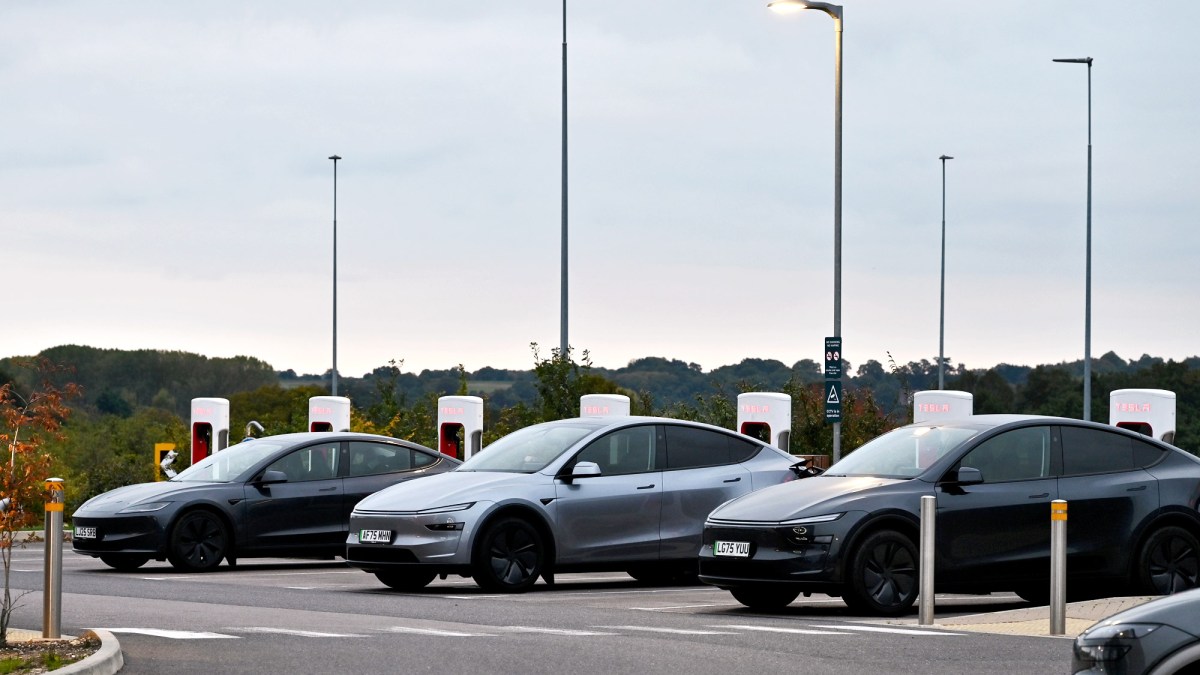
Separate data from New AutoMotive suggested that Tesla was the biggest casualty, with UK sales dropping by almost a fifth month-on-month to 3,800 vehicles registered, to represent a 2.5 per cent share of the market. Registrations by its Chinese rival BYD, which also sells hybrids and plug-in hybrids, more than tripled in November.
The introduction of the new duty was accompanied by measures to extend grants for the purchase of new EVs until 2030, making new Renault and Mini models eligible for the maximum £3,750 discount.
Jamie Hamilton, at Deloitte, said: “In order to continue growth, the government and industry will have to keep making the case for electric and emphasise the investment going into the sector beyond the headline pay-per-mile tax announced at the budget.
“The new EV mileage charge will increase running costs of electric vehicles, but changes to the expensive car supplement threshold may mean some drivers are actually better off over the course of their lease period. The perception over cost may mean that the pace of uptake slows towards the 2035 zero-emission vehicle transition.”