A lot has changed since my first outing on an e-MTB clad with the Avinox motor, which apparently is now no longer strictly part of DJI. Not only has the now standalone brand gone on to develop its software, power and even accessory offering, but it has naturally expanded the number of bikes it now features within, notably putting in a robust challenge to Bosch’s dominance of the mid-motor sector and apparently at a lower price to manufacturers. Things got political too, in relation to the power this incredible motor puts out and while I’ll save deeper thoughts on that for later in this piece, having the opportunity to review the Megamo Reason CRB 05 has given me another opportunity to reconsider and reshape my thinking around this motor system and indeed the bikes upon which it features.
First of all, this is a Megamo Reason review, so while the motor is a show stopper there’s much more engineering prowess to recap upon here. Who are Megamo, you might ask? Well, they’re not a mainstay brand in the UK, so that’s a fair question, but if you were reading from Spain you may well know them as a manufacturer with a fair bit of market presence and domestic manufacturing. Around since the late 80s, Megamo has ridden various waves of bicycle trends and now, in the era of the e-bike, is turning heads across a few categories.
If you’re here shopping for full-suspension electric mountain bikes, we have dedicated guides packed with reviews that you should check in with later.
Megamo Reason CRB 05 review: The headline details
 Geoff Waugh
£6,999 | View offer (Range from £5,999)
Pros
Flip chip allows for geometry adjustment
The Avinox software package is advancing fast
Clever digital experiments in progress, inclusive of adaptive motor power while shifting
Relentless on climbs
Good control from the brakes
Tubeless equipped with rim protection
Big range capability
Great handling, extremely responsive
Good tyre clearance and few places for mud to gather
Cons
Eco feels like non-powered
Sometimes I question the need for such a large battery (thus added weight)
A little unpredictable in the air
Specifications
Stated weight: Approximately 20.1kg
Stated range: Estimated 157km
Frame material: Carbon
Motor: (DJI) Avinox M1, 120Nm
Battery: 800Wh integrated
Drivetrain: SRAM Eagle 90 12-speed
Brakes: Shimano XT 4-piston
Saddle: Fizik Ridon X5
Tyres: Maxxis Assegai
Suspension: Fox Performance 36Sl fork, 140mm / Fox Performance Float 140mm
Included accessories:
Geometry

Who is this e-MTB built for?
 Geoff Waugh
This is a 160mm front and rear travel e-MTB with an 800Wh battery, so though it looks fairly slimline, this is a full fat enduro capable mountain machine. Its DNA is accentuated by a stunningly powerful Avinox motor and SRAM Eagle 12-speed gearing, so it’s as much a capable climber as it is a mountain bike that’s ready to be pointed at downhill runs over and over.
So, consider the Megamo Reason platform an advanced skillset machine and possible overkill for the beginner mountain biker. If you’ve a history mountain biking but are more than say three to five years out of the woods, I would always tend to recommend a few good test rides on e-MTBs of various capabilities, weights and designs, just to help you resettle into the flow of how bikes have changed, both in handling, but also in how the extra weight of e-bike components affects handling.
An 800Wh battery bike handles very differently in many cases than an e-MTB with a 400Wh battery. Given the price of these machines, it pays to know how differences in spec can drastically change handling. So, my advice is, even if you were formerly an amazing mountain biker, don’t come into this process with an ego. Test ride at any demo or retailer events you can get to, relearn and then decide what e-bike best fits your needs. And remember, range extenders exist, so e-MTBs with huge batteries are not necessarily better than lighter models with the capacity to add range. That said, so far there is not an official Avinox motor range extender on the market, only unofficial options.
By the way, there are multiple options when buying into the Megamo Reason 29er platform, from aluminium builds at just under £5,000, through to the carbon fibre flagship at a wallet emptying £11,999 with Fox Kashima suspension. There are both 140mm and 160mm variations too, but all are based around the Avinox motor and large battery.
The Avinox motor and electronics
 Geoff Waugh
I can’t help but feel something has changed with this second outing on an Avinox-driven bike. This Megamo Reason review, though a little hampered by my crashing pretty hard mid-way through the test period, really opened my eyes to the determination DJI has to drive forward progress on the software and technical side.
In the short window between now and my February review of the Amflow PL the brand has added a decent chunk of new features that are now adjustable in the settings, perhaps even listening to concerns about chain breakage under high load situations; or at least there is now a feature that reduces the torque while shifting, which makes a noticeable difference to the gear changing experience. As more gears have been added to cassettes, chains have naturally had to thin in profile, so huge torque numbers do pose a threat. To see action to prevent unnecessary mechanicals is positive.
My sense is that competitor brands could get left behind if they do not innovate digitally in the same way DJI is, and of course, as a globally renowned brand with all sorts of consumer electronics products, that’s going to be a challenge. The resource of this behemoth is as good as unparalleled in the bike industry, and it’s starting to show. As before, Avinox has been spun into its own entity, so there are some assumptions made here.
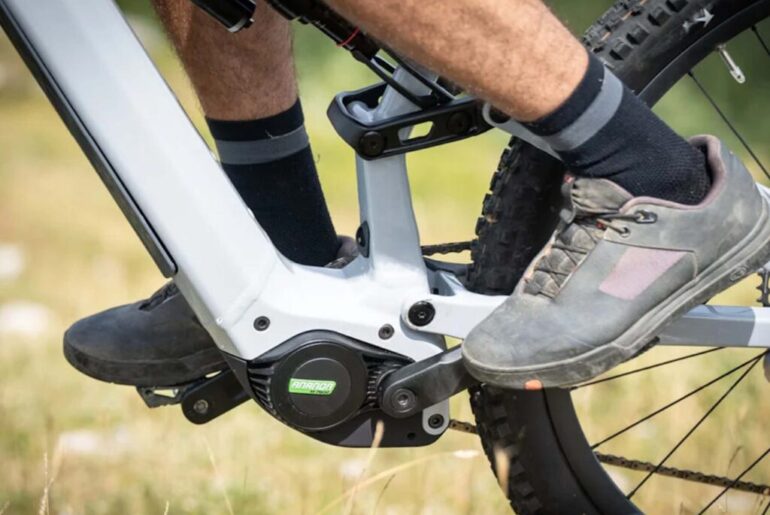
As for the hardware, the Avinox motor between the cranks is only about two and a half kilograms worth of weight and it has a very compact size. This has allowed the designers from Megamo to keep the back end quite short and playful, enhancing the enjoyment as you pop out of corners or pop onto the back wheel between rollers. This is a bike that can be ridden on the rear wheel if you have the talents to do so. I do not, but adjusting the geometry with the frame’s flip chip can help in tuning in the behaviour according to the terrain you’re regularly riding.
This motor has recently been upgraded to a 1,000-watt peak power and 105 newton-meters continuous torque and then 120 newton-meters maximum continuous torque. Those numbers are mega and, as somebody who has ridden many of the motors on the market, I’m yet to ride anything that makes such a mockery of steep hills as this system. This applies whether it’s wet, choppy, rocky, with wet roots, off camber – there really are few things that throw the Avinox off track, apart from arguably very loose sandy soil.

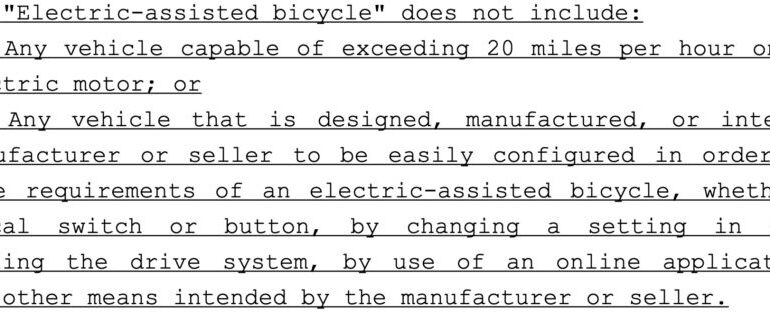
Now comes the moral dilemma, which is a digression on this review, but I think it is important. With great power comes great responsibility and great responsibility isn’t something the public at large can often be trusted with when it comes to power. We know that many e-MTBs do end up getting chipped to go faster, or unlock more power, so on the one hand having something this powerful at least dulls the appetite for the out-and-out illegal, but nonetheless, the Avinox motor is coming in sharply ahead of the apparently controversial, but possibly sensible European trade body recommendations on e-bike power limits.
Why do I care and why should you? Well, countryside access for bikes in the UK already sucks and there are many instances too of sanctioned trail centres now looking at e-MTBs as problematic, or at the very least charging e-bike riders more than traditional mountain bike riders. This is likely, at least in part, down to the damage a significantly more powerful motor may cause to trail erosion. The power peaks are now multiples of what most fit riders can achieve alone, so the conversation is very much a live one. How much is too much power? I start to wonder whether we have found the sensible limit and surpassed it by 25% or so. This is all my (probably minority) opinion, and it takes nothing away from how impressive the engineering is, of course.
Related Articles
How does it ride?
 Geoff Waugh
It should be said that climbing on the Megamo Reason is great fun, or at least it’s dead easy and very quick. That means more runs packed into your day, plus more efficient routes up the hillside in some cases. There’s so much power delivery over a 60-second period in turbo that there are very few inclines that will trouble you, even if they are rocky and rooty. I only really had an issue climbing very loose, but steep sand piles in a quarry, because the torque became a mudslinger, but that’s a limited scenario on most rides.
With this being a highly tuneable bike, the flip chip allows you to alter a range of metrics, from the bottom bracket height and reach through to stack and head tube angle. Add to that the Fox air suspension, which, once the sag is set, is very easily firmed or softened with the turn of a dial or lever on the shock. All of this combined means that you can adapt the bike’s overall riding characteristic to your default when you buy, then tweak it on the fly as you ride to firm up the suspension for climbs or longer spells pedalling, then quickly soften it for rugged descents.
The spec varies, depending on which Reason model you buy, of course, but on the CRB 08, the Fox 36 fork is one that has great small bump absorption and handles pretty well in the mid stroke to keep you in control. This is an air-sprung fork, which has just been updated by Fox to cope better with functioning under high load, which ultimately means a smoother travel when cornering, jumping and hitting any features that may twist the bike.
 Geoff Waugh
The net result of this improved fork, paired with the short stem and slack head angle, is a bike that tracks very accurately through twisty and narrow turns. In short, handling is precise and makes for a confidence-inspiring experience at speed on technical sections. On descents, with the 180mm (size L) dropper post slammed down, it wasn’t particularly daunting to pick down steep sections with exposed roots and rocks without feeling the urge to grab the brakes.
The float shock at the back has the ability to firm up on the fly. There’s a small blue lever that you just flick into the downward position to stiffen up the back end, but you can climb quite freely without any pedal bob. Even with this unlocked, the suspension is only really engaged fully when you are staying relatively firm when you are climbing, or covering mileage between trailheads.
Megamo chose Shimano Deore XT four-piston disc brakes with a pretty large set of rotors for the CRB 05 reason spec and the control afforded by these stoppers is pretty good. The modulation is predictable, allowing you to feather toward a bite point with precision at the lever and with a sharper tug you could skid into corners, hopping right back on the pedals at a moment’s notice to make the most of the motor’s instant power delivery. Together, this makes for a fast-paced riding experience where you needn’t slow down and lose momentum at all.
Megamo Reason CRB 08 review: Conclusions
 Geoff Waugh
Something that I was particularly interested in coming into this test was how such a powerful motor would plough through the available battery, which offers a large 800Wh capacity. Given that DJI has just upped its peak power availability, expanding the top-end supply over 60 seconds rather than the prior 30, I set about repeatedly hill climbing a 15% incline of about 250 metres. The results were surprising in the sense that the battery seemed pretty resilient to this kind of repetitive strain. On each climb in turbo I might notice about 1% of the battery drop, which, given the speed and ease at which I’d just smashed out the climb, was pretty satisfactory.
Which leads me again to something that I’ve been considering for a while. Is an 800Wh battery overkill for most riders, most of the time? Sure, every now and then you will cover longer distances or take on greater inclines, but in relatively flat England, I’d wager that we could get away with at least 25% less battery versus a buyer in northern Italy, for example. Believe me when I say the weight saving can make a huge difference to how the bike handles, which is a large part of the reason I particularly liked the well-balanced Yeti MTe, also reviewed on Cycling Electric last month. As before, range extenders, if you can afford the add-on, would give greater versatility, albeit sometimes they can upset the ride balance if they are placed anywhere other than low down on the frame.
If you can plump to the top spec then you can actually get your hands on a bike of only around 19kg, which is incredibly light. The model I’ve tested here is a little above 21kg, which is on the lighter end when benchmarked against competition and is likely achieved via the combination of the light motor, battery and the carbon frame.
This helps immensely with handling and while on the ground, this bike is very predictable, so cutting through the trees at speed is a lot of fun. In the air, it’s a little more unpredictable, which felt the result of a slight imbalance in the weight distribution, but I couldn’t be sure on this point without a bit more time at bike parks.
I’m told that ‘more radical’ build kits that allow for up to 170mm of suspension travel are in the works and those will come with a Fox 38 fork. So, if you are more certain about downhill track and big mountain use, it might be worth hanging on to model year 2027 to find your perfect match.
Finally, the subject of bike pricing is now really flaring up in the press and it has remained a point that has most influenced our review scores of late. The economy, for most of us, isn’t delivering wage growth or bonuses that might give people bandwidth for big-ticket purchases, so naturally adding a £7,000 e-MTB might be a non-starter in many households. That’s something for bike manufacturers to grapple with and given that most sales in recent years have gone through at a sharp discount, I am still wondering why brands are so sharply focused on the high-end, rather than the more accessible, average sales price territory of the marketplace.
Being objective about it, putting aside the reality in most households, it’s my job to call whether or not a bike and the sum of its parts represent good value, accounting for everything I know about the supply chain, inflation, tariffs, bike retail and consumer direct sales models. It’s extremely difficult to make these calls, but in the case of this Megamo Reason review and in the context of others that I have had in for test lately, I’d say this build is fair value. Not more expensive than it needs to be, but not a bargain either. It justifies the cost with the level of performance componentry on offer, plus the high degree of tunability on offer thanks to flip chops, clever suspension, clearances and more.
Plus, it handles very well and it’s a lot of fun both pointed up and down, so this is certainly a bike I would reach for over and over, if it were in my own collection. With more riding stints, more distance covered and more runs in your days out, the bike only further justifies the investment.
How about the competition?
Read our Megamo Reason CRB 05 review? Here are some other e-MTBs that we recommend that have similarities, but slightly different propositions:
Yeti MTe C2
 Geoff Waugh
£9,499 | View Offer
The purist’s dream, Yeti’s MTe takes a different approach to the Megamo Reason and our review highlighted that all out power isn’t the be all and end all; sometimes keeping the heart and soul of the MTB counts for just as much as a mighty motor. It’s TQ’s HPR60 between the cranks, which is bean can sized and has a peak power of 350W, way below the DJI Avinox’s four-digit peak. So, needless to say this is a bike first, electronics second design, but for that you get a bike that handles brilliantly and which weighs only 20kg.
Catch our full Yeti MTe C2 review here.
Amflow PL
 Geoff Waugh
£8,999 | View offer
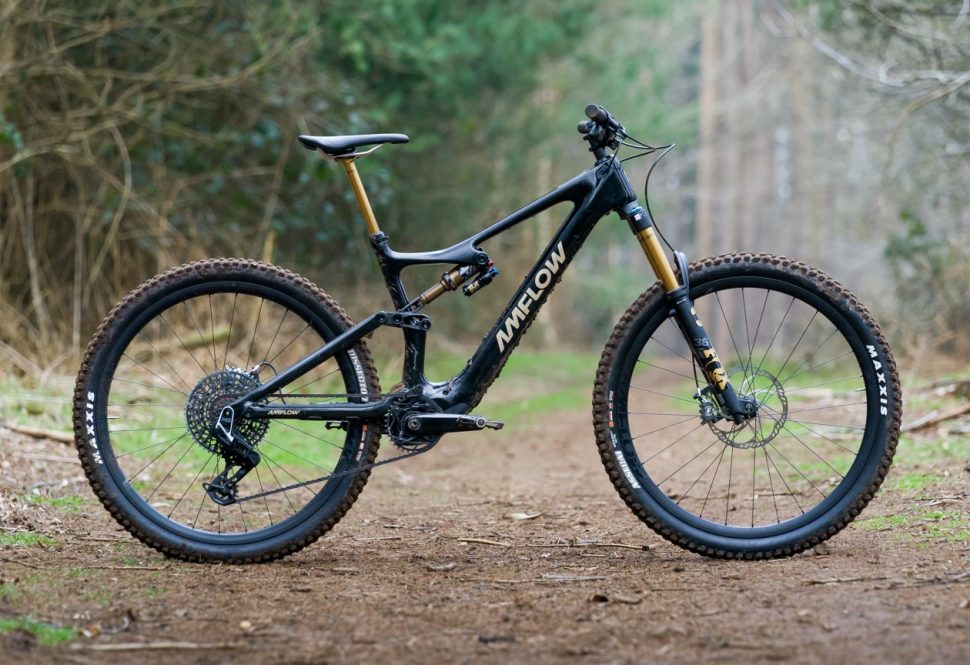
The first e-bike to carry the DJI Avinox motor was the Amflow PL carbon, an electric mountain bike that shook the market with its brute force power from this relatively small motor, but also for a price that came in below some of the market’s other ultra-premium kit.
Catch our Amflow PL review here.