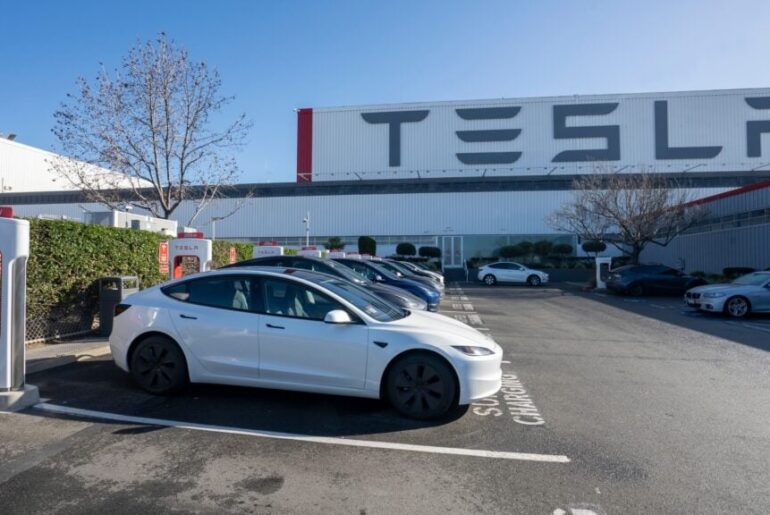
There’s a lot to consider for consumers when it comes to real world EV performance. (source: Getty)
Australians are being warned that many of the major electric vehicle makers are falling short of their promises. When it comes to range anxiety on Australian roads, the concerns of consumers continue to be founded, according to the latest round of extensive research.
The country’s peak motoring body has found the real world driving range of popular EVs has proved to be between three and 31 per cent worse than manufacturers claim. And it’s a key problem standing in the way of growing adoption.
The co-founder of CarExpert Paul Maric told Yahoo Finance the latest results align with the testing he has been involved in and shows how Tesla is still ahead of some Chinese EV makers.
“We’ve noticed with MG vehicles that they struggle to meet the advertised range, whereas Tesla products typically are pretty much bang on the money,” he said.
RELATED
“And I think it just shows you the maturity that Tesla has in the market when it comes to electric vehicles and the technology behind them.”
The Australian Automobile Association (AAA) program has now tested nine EVs, finding each had an on-road range shorter than the results recorded in mandatory laboratory testing reported by the carmakers.
Interestingly, certain brands fared much worse than others.
Tesla had the best performance with its 2025 Model Y only falling three per cent short of its 466km lab range.
At the other end of the spectrum was the Chinese made 2023 MG4 which only achieved a real world range of 281kms compared to its lab range of 405kms, a miss of 124 kilometres or 31 per cent.
The 2025 Kia EV3 meanwhile missed its advertised 604km range by 11 per cent and the 2024 Smart#1 (a joint venture between Mercedes-Benz and Geely) was 13 per cent down on its 420 lab range.
The results come after its first round of electric vehicle examinations found all five models failed to meet their promised range. A breakdown of those results can be seen here with the Chinese BYD ATTO 3 performing the worst at -23 per cent, while the Tesla Model 3 was only marginally better at -14 per cent.
The AAA also found 76 per cent of the 131 internal combustion and hybrid vehicles consumed more fuel than advertised.
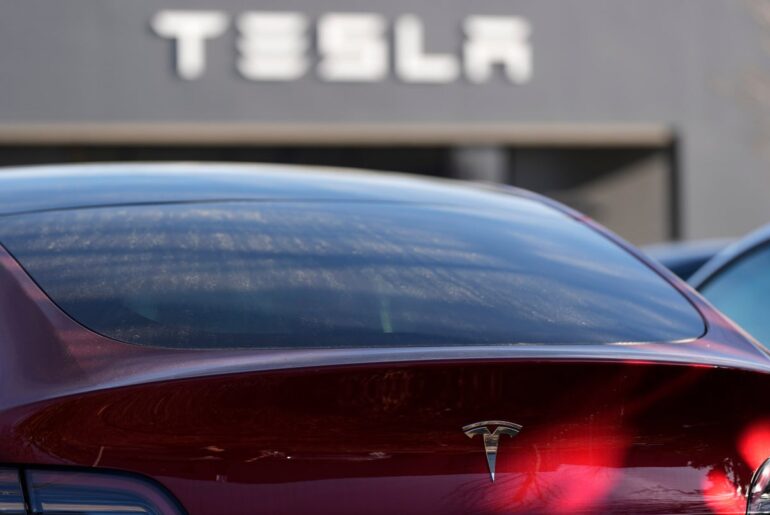
While better than some models, Tesla hasn’t hit the advertised range in testing. (Source: AAP)
The AAA carries out these tests on a 93km track in and around Geelong, Victoria, on urban and rural roads, as well as motorways.
Story Continues
However the time of the year and the climate during testing will have a big impact on the battery performance and longevity, Maric warned.
“This testing, unlike an internal combustion vehicle, is really only a very small snapshot in time,” he told Yahoo Finance.
“With an electric vehicle, if you drive it in cold conditions, let’s say two degrees Celsius on your way to work in winter, it can perform up to 40 per cent worse than its advertised claim.
Maric said the Australian testing was conducted at pretty much the optimal temperature for the vehicles at around 17 and 23 degrees Celsius
“Anything below or above that creates inefficiencies.
“So you can imagine with the MG example … if you have a 30 per cent reduction in range in optimum conditions, that will be amplified significantly when you’re driving it in cold conditions,” he said.
Ultimately, EVs perform the best in urban and city environments when drivers are stopping and starting more often, because the regenerative braking captures kinetic energy during deceleration and converts it into electricity to recharge the battery.
“Ultimately, an electric vehicle makes the most sense in lower speed conditions in and around the city,” Maric said.
Managing director of AAA, Michael Bradley, said the latest real world evidence will help Aussie drivers make decisions and set expectations when in the market for a new car.
“These results give consumers an independent indication of real-world battery range, which means they now know which cars perform as advertised and which do not,” he said.
“Giving consumers improved information about real-world driving range means buyers can worry less about running out of charge and make the switch to EVs with confidence.”
The AAA program is supported by $14 million in Commonwealth funding and was created in response to the 2015 Volkswagen scandal, when the European automaker was caught lying about the emissions its vehicles produced.
Get the latest Yahoo Finance news – follow us on Facebook, LinkedIn and Instagram.