Tesla’s logo is seen in this illustration taken July 23. Reuters-Yonhap
Safety concerns are escalating over Tesla’s launch of the Full Self-Driving (FSD) system here, as drivers are widely expected to rely more and more on the quasi-autonomous driving system despite the lack of institutional safeguards, experts and industry officials said Monday.
The U.S. electric vehicle (EV) maker received a Level 2 certification here for the supervised version of the flagship software. The carmaker’s locally distributed Model S and Model X vehicles — both imported from the United States — can now access the service.
Under the Level 2 system, drivers have to keep their eyes forward and constantly monitor road conditions, but this is still not enough to ensure safety, according to experts.
“Simply put, the Level 2 autonomous driving is just an advanced assistance system, so drivers should not depend excessively on it,” said Kim Pil-soo, a professor of automotive technology at Daelim University College.
Tesla launched the supervised version here in order to evade any possible responsibility in case of accidents, according to Kim.
“The biggest problem is that customers put way too much trust in the system, particularly in Tesla’s FSD due to its global popularity,” he said.
Drivers are responsible for any accidents that occur while using Level 2 autonomous driving, as it is classified as a driving assistance system. The Level 2 system faces less strict regulations than Level 3.
For now, any vehicles with a Level 3 autonomous driving system need to receive prior approval from the government before they can be sold domestically. Level 3 allows drivers to take their eyes off the road.
“All drivers must keep in mind that the Level 2 system is not perfect, nor does it ensure safety on the road,” Kim said. “However, as the system is very comfortable, drivers may become more and more dependent on it, which will increase the likelihood of accidents on the road.”
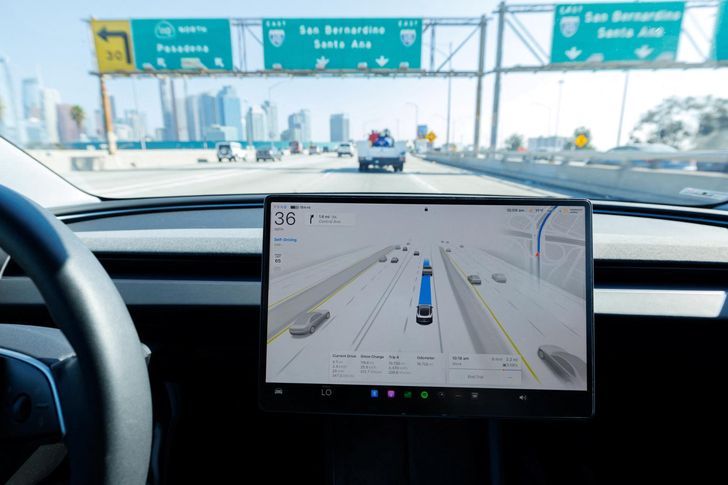
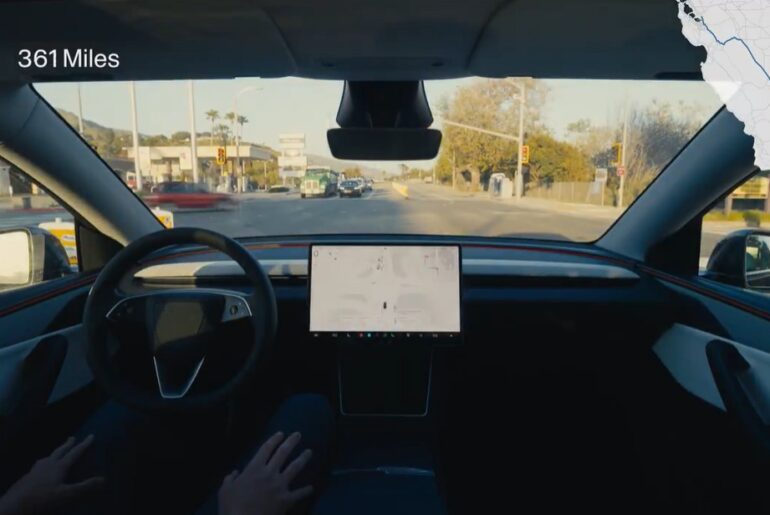
A 2025 Tesla Model 3 drives autonomously using FSD 14.1.4 software on a freeway in Los Angeles, Calif., Nov. 6. Reuters-Yonhap
The Korean government has allowed the operation of FSD here in line with the Korea-U.S. Free Trade Agreement (KORUS FTA).
However, experts urged the government to come up with relevant institutional measures and tougher regulatory hurdles to enhance the safety of services like FSD.
“Authorities should thoroughly test whether imported Tesla vehicles with FSD are safe enough in road conditions in Korea, as drivers bear full responsibility for any potential accidents while using the service,” said Lee Ho-geun, a professor of automotive engineering at Daeduk University.
Under the KORUS FTA, Korea could import up to 50,000 U.S. vehicles each year, once they meet the Federal Motor Vehicle Safety Standards. However, the upper limit has recently been abolished, according to a joint fact sheet on the latest trade deal between Korea and the U.S.
This paves the way for more Tesla vehicles with FSD to be imported to Korea in the future, as the brand gains popularity here.
The market for autonomous vehicles is on rapid track for growth here and abroad. According to data from Next Move Strategy Consulting, the global autonomous vehicle market was worth some $106 billion in 2021. The figure is projected to grow to more than $2.3 trillion by 2030.
Drivers also expressed concerns over FSD, worrying about potential misfunctions in the system.
“A recent report of a chain collision initiated by a Tesla vehicle raised concerns over the EV brand,” an office worker who drives a vehicle powered by an internal combustion engine said. “The introduction of Tesla’s self-driving service also adds to the concern, as it has only been a few years since it was launched, which means it cannot be fully trusted in terms of safety.”

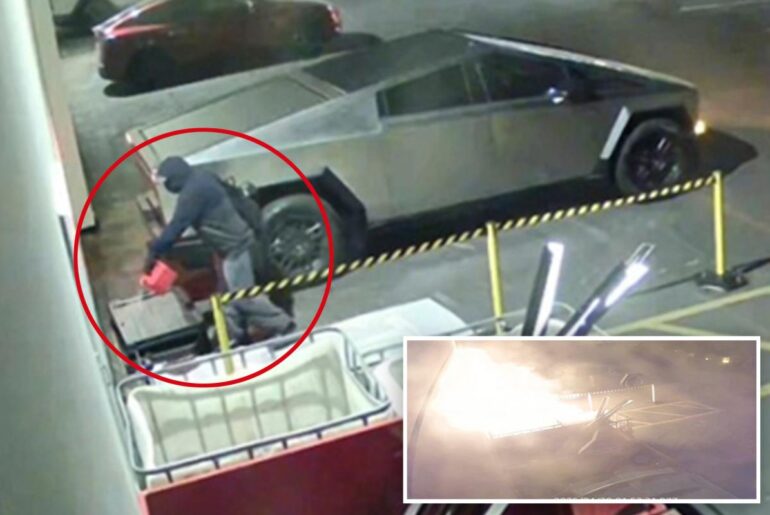
![Tesla's entry-level Model 3 sedan [SCREEN CAPTURE]](https://www.evshift.com/wp-content/uploads/2026/01/1768620872_0fecd24b-2e4f-40e4-acb9-19e23f494e3f-770x499.jpg "Tesla’s Standard Model 3 sedan priced in 30 million won range after gov’t subsidies")