10 Tips & Tricks to MAXIMISE EV Range!
[Music] Winter is definitely on its way with some interesting things that pop up for electric car owners and plug-in hybrid owners. And that is this thing right here. Yes, your car’s range. I know for a fact that you clicked on this video because you want to increase your range. So, I’m going to do just that. I’m going to offer 10 tips and tricks that you can implement to increase your range on your electric car or your plug-in hybrid. And the first one on this list is arguably the most important. But before that, WLTP. Yes, this is what is quoted when you buy a new car. So, for example, this car has quite an impressive range of 484 miles, but they always say up to up to 484 mi or whatever the electric car might be. And there is very good reason for that. Basically, each car brand out there gets their car tested independently via thing called WLTP. And this stands for worldwide harmonized light vehicles test procedure. And in a nutshell, it’s an independent test for comparison purposes. So you can see how far your car can go in the best conditions or what they sometimes say is ideal conditions. Conditions are never ideal. And unfortunately, as it goes into winter, this can be one of the things which we’ll explore in just a second. [Music] Now, this first one, as I said, is the most important on this list, and mainly because it is where you drive. Now, for most of us working like a 9 to5 or something like that, you will unfortunately experience some traffic and the annoying brake lights, which then means you have to slow right down for people coming out of junctions or traffic lights and rush hour and that sort of thing. And this constant stopping and starting, for example, now I’m accelerating back up to speed. This uses a lot of energy. Acceleration is where you lose a lot of energy, which means if you’re driving around in a town or city during rush hour with stop start traffic, you’re constantly stopping and starting, which uses the most amount of energy. Swap that out for country driving or even motorway driving. You’re going to be moving at a faster speed, which can actually be a little bit more fuel efficient. But I said, this does relate to one I’m going to get to in a minute. So yes, one of the reasons why your range is slightly less is because you’re driving in a builtup area, town or city with lots of start, stop traffic versus when you’re moving at a constant speed on a jog cage rate or motorway. Now, if you’re doing lots of driving, the most economical thing really is to maintain that speed. So you can use cruise control or a limiter. Now, if I put the limiter on, for example, I’ll set it to 70. Now I can’t go faster than 70 and accidentally speed. Or you could use cruise control. So, if I swap this out for the cruise control, set it to 70 and on. There we go. But one issue you will face is if you don’t have adaptive cruise, you’ll constantly have to touch the brake pedal, which kind of defeats the point. But some cars like this even have adaptive cruise where it can maintain the distance to the car in front. So, believe it or not, I’m not actually using my uh my feet right now. I’ve set it to 70 and it’s just staying that distance away from that car in front. I wish every car had that. Now, up next is brake recuperation. Now, this is far easier for me to explain this on the road. So, I’m going to head back out in just a second, but on most cars, you can adjust it either on the screen here or some paddles or in this car, it’s actually uh this stalk right here, but it’s easier to show you on the road. Now, brake recuperation actually just controls how much the car regenerates. If you don’t have any brake recuperation on at all, look what happens here. We’re doing 20 mph. I’m going to take my foot off of the accelerator pedal and we’re just coasting like this and slowly going down. Air resistance and of course the the grippyiness on the road is causing us to slow down and eventually come to a stop I guess unless there’s a big tailwind behind us. But this time we’ll do exactly the same thing, but I’m going to use normal recuperation. So I’m going to pull this towards me, which was now enabled normal recuperation. So, we’ll get back up to 20 again and have a look at the difference. This normal mode is actually what engine braking feels like. So, we start to slow down a little bit and we notice we’re slowing down a lot quicker now compared to before. There is in fact another mode that most cars have called strong recuperation. Uh sometimes there’s variations of that in between, but yet this one’s just called strong. Look at the difference now. Same conditions again. We’re doing 20 mph. I’m going to take my foot off the accelerist pedal around about now. I haven’t even touched the brake pedal and we’ve stopped already. So, basically that’s also the term one pedal driving. So, you can drive round effectively on one pedal. So, here for example, my foot’s on the acceler pedal roundabout coming up. I’m going to slowly take my foot off the acceler pedal and I can actually slow the car down without even touching the brake pedal. Hence the term one pedal driving. Some cars also have an intelligent mode or an auto mode. So in this car for a press away it says intelligent recuperation. Now this will actively adjust that recuperation based on what’s in front. So if you’re approaching cars or I don’t know there’s a turn in the road or something like that. I’m oversimplifying it here. It will adjust the recuperation for you. But my argument is with this is of course if you can try not to use the power in the first place. There’s no point in racing up to 60 70 mph if you see traffic ahead because you just have to slow down again. And when you recuperate, it doesn’t recuperate 100% with power anyway. But it is good to master the brake recuperation so you can effectively control what your electric car or plug-in hybrid does. Now, the very reason for me making this video in the first place is, well, we’re in autumn right now, verging on winter, so it’s going to get that much colder. And unfortunately with electric cars and plug-in hybrids, your range will go down. There’s no getting around it, which is probably one of the reasons why you’re watching this video because you’ve noticed that number going down and down and down. Now, that number you see on the screen is of course an estimate. And most cars do actually factor that in, which is quite good. So, don’t worry. When you go to charge your car and it says 100%, but then it only starts with a two or a three, whereas it used to start with a four beforehand, don’t worry. It’s quite normal. Unfortunately, we can’t control the weather. It’s just something you just have to factor in. I appreciate modern cars like this do actually have a thing called a heat pump. So actually when you use your heating it’s a lot more efficient. But it is just something to factor in that certainly when it’s a little bit colder the range will go down a little bit. He says as the sun goes behind the cloud. Winter might be coming sooner than you might think. Now to help with of course this colder weather, pre-entry climate control is your friend. Now, I recommend using this when your car’s plugged in, mainly because then you’re drawing power from the mains as opposed to using up your battery. And that way, the car’s nice and warm, the batter is warm, and most importantly, the interior is nice and warm, ready for when you leave. Now, you can set this up usually a variety of different ways, depends on the car, make or model, but in this car, you can do it on the screen or you can do it via the app. Now, the other one is live traffic. Now, yes, I probably shouldn’t have come this way because there’s a massive queue of traffic. So, if I’d had the satnav on, it probably would have avoided it, but this is my point. Make sure you use your live traffic because now I’m back to that point. One, stop and start traffic. You want to avoid it. You want to keep that momentum going. So, yeah, make sure you use your live traffic. Make sure you have a subscription if you want to use the cars one or use Apple Maps, Google Maps or Ways. They offer free live traffic. But just try and avoid that traffic in the first place. as well. It will also avoid road closures like this. Oh, and this one as well. So, yeah, if you have your live traffic on with the satnav, it’ll uh at least reroute you somewhere else away from the congestion. Now, the next one on this list is tire pressures. Make sure you’ve got them at the correct PSI, especially for electric cars because they are slightly higher than normal. Just remember, it all comes down to your tire size and of course your wheel alloy size as well. So, this one can range anything from 44 PSI all the way up to 47 PSI if you’ve got a car fully loaded. Now, I know this is a fairly obvious one. Using sport mode all the time, of course, is not going to get you the most range. I know a few of you are thinking, well, that’s fairly obvious. You know, if you’re stuck behind a learner lorry like this here, and then you go to overtake and then you boot it. Electric cars can give you a lot of torque. And look, we’re overtaken already. But the thing is, if there was traffic ahead and you had to slow down again, you’ve just wasted all that energy. I know the drive modes are fairly obvious, it’s quite, you know, common place to use an eco mode if you want to get the most range. But there’s method in the madness as to why I’ve included it on this tip and trick as well. Because if you’re using adaptive cruise on some modern cars like this car for example, believe it or not, eco mode actually controls how sort of aggressive it is or how laid-back it is in terms of accelerating. So, I haven’t got it enabled at the moment, but in some examples on some modern cars, when you’re in eco mode, it will slowly accelerate up to the speed limit, whereas in sport mode, it will do it a lot more. So, yes, although sport mode and the different drive modes do affect what the accelerator pedal does for us, it will also affect what it does internally as well. Even says it here, acceleration limited, kick down is possible. So, yes, it will just limit that acceleration just a little bit. So you can’t accelerate so hard and use all that extra power. And on some cars it might even give you an eco route on the satnav as well. So of course you’d have to be using the inbuilt one. But yeah, just something to factor in. Now the rule goes the faster you travel the more power you consume. And this goes for fuel internal combustion engines, petrol, diesel, plug-in hybrids, or electric cars like this one. So yes, the faster you go, the more power you consume. So obviously the national speed limit, the top speed limit we can do legally in the UK is 70 mph. So what difference would it make if you traveled at 50 or 60 on like a motorway or something? Well, I know that around 40 50 60 mph is around about the most economical speed to do. So let’s do a science test right now. I’m going to take this car drive up and down this jaw carriage right here. 50 miles an hour, 60 mph, 70 mph separately, and I’ll race set at each run, and we’ll see which one is more economical. Okay, so first run. I think we’re going to keep the air conditioning on for this. Uh, keep it at 20° cuz that’s what I’ve had the car set at at the moment. Reset this. There we go. All reset. Car on. And away we go. Let’s just make sure the air conditioning is on. Perfect. Right, let’s go do this. So, I’m going to set the limiter to 50 miles an hour, and we’ll see what this is like first. [Music] [Music] and finish. Okay, there’s our 50 run. Okay. All right. You’ll see the results in a second. Hang on. We’ve got to do the 60 and 70 run yet. [Music] Now, this was rather interesting doing this test because um well, it kind of points to what I alluded to with the faster you go, the more power consumed, but I didn’t realize it was that much. There again, this wasn’t the most scientific test possible. Mind you, I did check my tires, so and I did try and keep to the speed limits as much as possible using the limiter. Annoyingly on the 60 m per hour run I did get stuck behind the caravan at the very start but that was for like maybe 20 30 seconds. So give or take a bit of variance here. So the results 50 mph 5.4 miles per kowatt hour times the battery size of this car which is 85 kwatt hours 459 miles 60 mph 4.8 8 m per kowatt hour times the battery size again 408 m 70 mph 4.3 m per kowatt hour* 85 365 mi 459 versus 365 mi versus 70 versus 50 mph. There you go. The faster you go, the more power you consume. And this also applies to petrol diesel as well. Just throwing it out there. And then the last one on this list is to make sure you choose your tires because on electric cars specifically, some of them do have their own unique tires mainly because of the extra weight involved with the battery. I know it’s not too much, but there is extra weight from an EV battery typically and even plug in hybrids cuz they have battery and an engine as well. Now, I have to admit I am no expert on tires. Uh so I have to admit obviously when I don’t know something. So, tires are definitely not my area of expertise. However, I do need new tires soon on my own car. So, I will definitely be researching it. Maybe I’ll explore budget tires versus premium tires. So, yeah, make sure you’re subscribed. However, I did some research and I checked out Mitchell’s website. They make a very good point here. In a nutshell, there are two types of cars out there when it comes to EVs. Regular vehicles retrofitted to become electric and then a brand new platform. But the reason why I put this on this list is because say you’ve bought a used car out there. I don’t know if they’ve got the same tires. Maybe you don’t know if you got the same tires as to what the manufacturer has recommended to put on. So do your own research and check out for your own car. Make sure you’ve got the exact tires for that car to minimize that rolling resistance because if there’s more resistance from this means your car is working harder and then you basically get less range. So these are all things to factor in and consider. Well, there we go then guys. That concludes this week’s video. Thank you so much for watching. And before you go anywhere, that comment section down below. I know for a fact there’s going to be a few EV owners watching this video. So, if you have your own suggestions you have found out through your EV ownership, let me know in the comment section down below and we’ll share it with everyone. But guys, thank you so much for watching. Until next time, see you then. [Music]
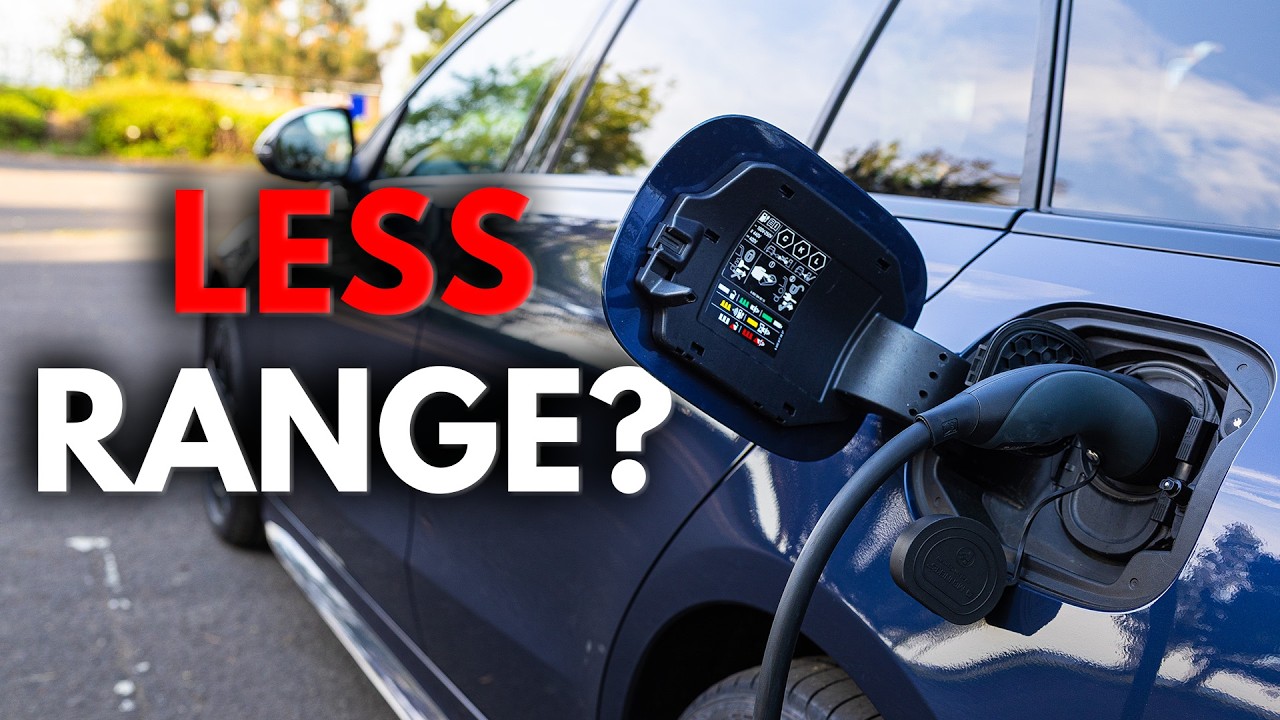
Noticed your range drop recently in your Electric car? This can be for a variety of things, here’s 10 tips and tricks to help increase your range!
*Watch NEXT WEEK’S Video & Become a Member!* 👉🏼 https://www.youtube.com/channel/UC8VSC5vv_SUeydoBo9ISucw/join 👈🏼
Chapters:
0:00 Intro
0:30 WLTP
1:19 #1 – Where you drive
2:27 #2 – Cruise Control / Limiter
3:08 #3 – Master Brake Recuperation
5:41 #4 – Weather
6:39 #5 – Pre-Entry Climate
7:07 #6 – Live Traffic
7:52 #7 – Tyre Pressures
8:15 #8 – Drive Mode
9:44 #9 – Speed
12:59 #10 – Tyres
#EV #Cars #ElectricCars
🎵 All music in this video is from Epidemic Sound:
⬇️ FREE TRIAL⬇️
http://bit.ly/epidemicsoundreferral