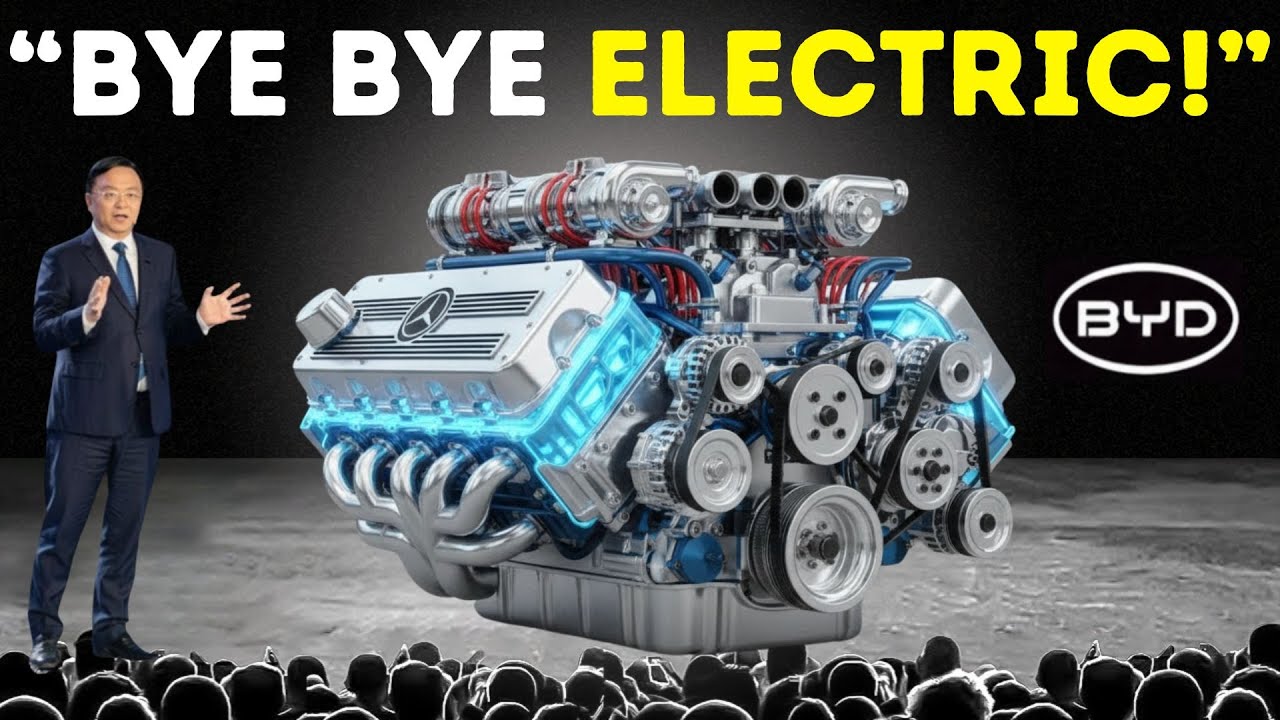
BYD CEO: This NEW Engine Will DESTROY The Entire EV Industry for Good!
2,100 km. That’s the total range you can get with BYD’s new hybrid on just one tank and one charge. Not even Tesla can match that right now. What what what are you doing differently that Tesla is not doing? Uh we have more models. So just a very simple example, we have 7 to nine models. Their newest engine, which is part of BYD’s fifth generation hybrid system, only uses 2.9 L of fuel per 100 km when the battery is low. It’s not just an electric car. It is a high efficiency hybrid that runs longer at a cheaper price. So, what exactly did BYD create in the name of a new engine? And how is it going to change the EV industry forever? Recently, BYD launched its new Seal06 and Chinl electric vehicle models. However, the highlight of the show was their whole new hybrid system. It is a plug-in hybrid that now gets 2,100 km of range on one full tank and one full charge. That’s almost three times what regular gas cars can do. The reason behind this upgrade is BYD’s newly released fifth generation dual mode system. DM basically means it is a plug-in hybrid. You can drive with electricity, with fuel, or with both. But this version is not like the old ones. It is not like you will be switching between fuel and electric. In this new system, the electric motor does most of the work and the fuel engine is there just to support it. That’s how they have pulled off this crazy fuel efficiency. When the battery runs out, instead of chugging through fuel as most hybrids do, this system uses just 2.9 L per 100 km, which is basically nothing. Most fuel cars use around 8 or 9 L for that same distance. BYD’s system is pulling off onethird of the fuel and going three times farther. So, how did they do it? They rebuilt almost everything. First up, the engine. It is a 1.5 L petrol engine. And honestly, the power numbers look pretty average, around 99 horsepower. But that’s not even the best part. The real secret is how efficient it is. Most car engines waste a ton of energy as heat, but this one doesn’t. It runs at 46.0 06% thermal fizzy. To be clear, that’s the highest of any mass-produced car engine right now. Toyota used to hold the crown with 41% and now BYD has jumped past them. So, how did they get there? It wasn’t easy. According to BYD engineers, they ran over 240 different combustion experiments just to get the fuel mix right. Then, they tested over 100 different cooling methods to stop the engine from overheating when pushed harder. In the end, they managed to raise the compression ratio, the pressure inside the engine. They raised it from 15.5 to 16. That small change took a ton of work, but it paid off. The engine now runs more cleanly and uses less fuel per mile. Something that most people miss is that this engine does not run all the time. In fact, it is designed to turn off as much as possible. When it does turn on, it stays inside. What? BYD calls the high efficiency zone. That means the engine is only active when it can run at peak performance, so you are never wasting fuel idling in traffic or crawling through a parking lot. The electric motor handles those boring low-speed jobs. BYD also unveiled their new motor. There are two options depending on the model, a 161 horsepower version or a 215 horsepower version. The first one is for people who want good fuel economy. The second one gives you a little more punch on the highway. Either way, you’re getting way more flexibility than most hybrids offer. BYD is letting you choose how you want the car to behave, and that’s a smart way to go, but the engine and motor are just part of it. The powertrain, basically the whole system that moves the car, has been redesigned, too. BYD packed seven different components into one controller. That saves space, cuts down on wires, and makes everything run faster and smoother. It also means less energy is lost during operation. According to their data, this new system reaches a total efficiency of 92% which is huge for a hybrid. Another upgrade is that the electric hybrid system now has 70% higher power density. That means it gets more power out of the same space and weight. The parts don’t have to work as hard and the car feels more responsive. That’s the kind of thing you usually only see in expensive performance cars. But these were not the only upgrades made in their new vehicles. It’s their blade battery, which is the core of what makes their hybrid system work so well. So, what exactly is it? The blade battery is BYD’s own version of a lithium iron phosphate or LFP battery. Most EVs still use nickel manganese cobalt or NMC batteries. Those can overheat, cost more, and come with supply chain issues. BYD skipped all of that and went for LFP, which is cheaper, more stable, and far less likely to catch fire. Then they took it further. Instead of stacking the battery cells like blocks or rolling them like cans, BYD made them long and flat like blades. Then they lined them up edge to edge in a pack with no wasted space between them. That’s why it’s called the blade battery. That’s literally what it looks like. This design gives you more power in less space. Compared to regular LFP batteries, the blade setup increases energy density by about 50%. That means they can fit a powerful battery in a smaller package without giving up performance. And in plug-in hybrids like the Chinel or Seal06, that space saving leaves more room for fuel tanks or other systems. Now, let’s talk about safety because that was the first concern when this new battery was introduced. Most battery fires in EVs happen when the cells are damaged and overheat. The blade battery passed what’s called the nail penetration test. They literally stabbed the battery with a metal spike and it didn’t catch fire or even smoke. If you try that with most other batteries, you will witness a dangerous mess. The blade stayed intact, which was a big deal. Cooling also got a full redesign. Older battery packs didn’t always get even cooling. Some areas stayed hot, others cooled too fast. That leads to wear and tear. BYD fixed that problem by switching from a T-shaped cooling layout to an S-shaped one. This simple shift improved temperature balance by 45%, keeping every part of the battery closer to the same temperature. That makes the whole system more stable and helps the battery last longer. Speaking of long lasting, the Blade battery is built to go the distance. After 3,000 full charge cycles, it still holds 90% of its original capacity. Most batteries fade long before that. For drivers, this means fewer replacements and lower costs. long term. The battery also charges fast thanks to low internal resistance. And because it’s tightly packed and structurally integrated, it makes the car stronger, too. In short, the blade battery fixes most of the problems other EV batteries still have. It is safer, tougher, longerlasting, and cheaper to build. No wonder BYD made it the center of everything they are doing right now. But BYD didn’t just tweak a few parts and call it innovation. They rebuilt almost everything. Starting with vehicle aerodynamics, BYYD applied dozens of refinements aimed at reducing energy loss during driving. The Chinel and Seal Aero 6 feature active air intake grills that automatically open or close based on cooling needs. When cooling isn’t required, the grills remain shut to reduce frontal drag. Alongside this, the cars use low drag brake calipers and ultra low rolling resistance tires that minimize friction without compromising grip. Each of these features shaves off energy use, particularly during high-speed travel or long-d distanceance driving. The car’s overall shape and chassis also underwent changes to improve air flow, lowering the drag coefficient across multiple models. Less drag means less power needed to cruise, letting the electric motor last longer and the fuel engine burn less. Inside the system, they didn’t waste any opportunities either. They replaced multiple separate control units with one compact setup called the 7in-1 powertrain controller. It handles everything from the inverter and motor controller to gear shifts. Combining it all in one place cuts wiring, weight, and power loss while also making assembly and maintenance easier. Even the small battery that powers your lights and dashboard got an upgrade. They switched from the usual 12vt lead acid battery to a 12vt lithium iron phosphate one. That alone cuts fuel use by 0.1 L per 100 km. It might not sound like much, but that’s BYD’s whole approach. Small gains stacked across the entire system until the result is something big. Another smart move was improving the fuel tank. Because the blade battery is slimmer and takes up less room, BYD had extra space to work with. So, they increased the fuel tank in the Chin L from 48 L to 65 L. Combined with the car’s low fuel consumption of just 2.9 L per 100 km, you get that massive 2,100 km range. For reference, most compact SUVs don’t even come close, even with bigger engines.
BYD CEO: This NEW Engine Will DESTROY The Entire EV Industry for Good!
The automotive world just got rocked because BYD’s CEO, again, has unveiled a game-changing engine that could flip the EV industry on its head. This is not another simple upgrade, it’s a full-blown revolution under the hood. As legacy automakers scramble and Tesla keeps a watchful eye, BYD might have just pulled off the ultimate power move. Could this be the end of the EV game as we know it? Buckle up coz this engine is about to shake the entire industry to its core.