November 27, 2025
By Karan Singh
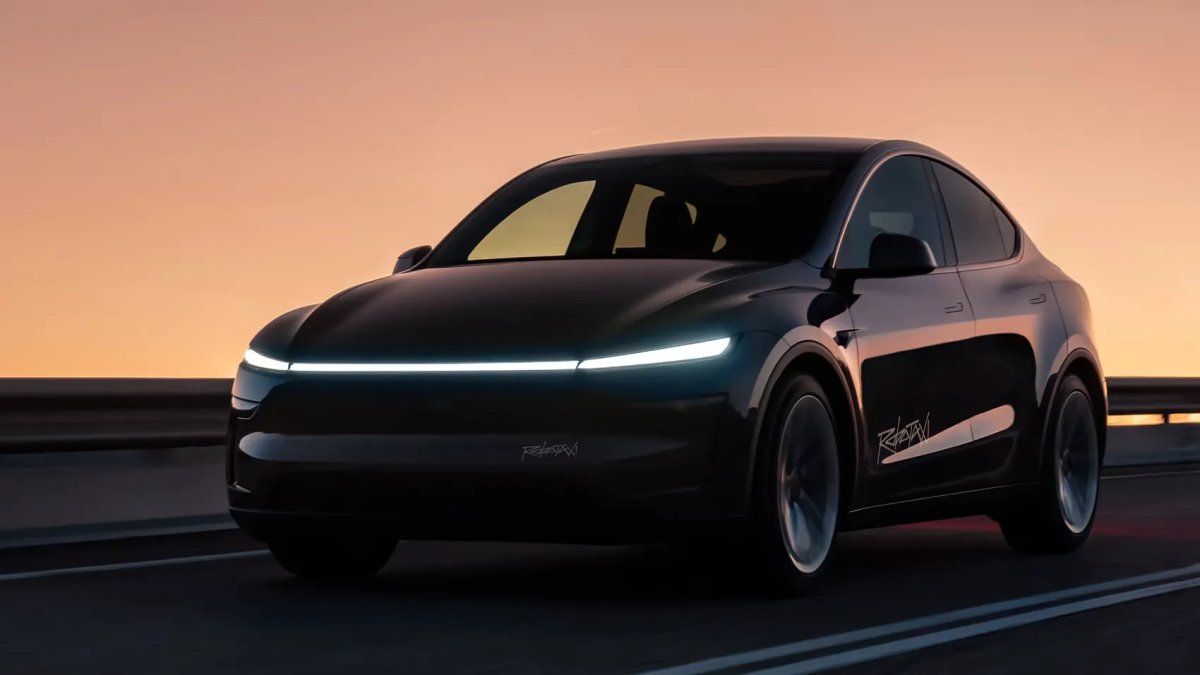
In the world of corporate communications, doubling is a powerful word. It suggests exponential growth, rapid scaling, and booming demand. So when Elon Musk announced on X that the Tesla Robotaxi fleet in Austin should double next month, the immediate reaction should be one of progress and success.
However, a closer look at the community-tracked raw numbers reveals a starker reality. When you do the math, doubling the current fleet doesn’t represent a triumph of scaling; it represents a pivot from last month’s ambitious targets.
The Tesla Robotaxi fleet in Austin should roughly double next month
— Elon Musk (@elonmusk) November 26, 2025 The Math: 30 x 2 = 60, not 500
To understand the gap, we have to look at the baseline. According to the open-source community Robotaxi tracker, which crowdsources sightings and license plate data, only 29 unique Robotaxi vehicles are operating in the Austin geofence.
If Tesla executes on Elon’s new promise to double the fleet in December, that brings the total up to approximately 60 vehicles.
This is in sharp contrast to the guidance provided during the Q3 2025 Earnings Call just weeks ago. The stated goal for the end of 2025 was clear: 500 Robotaxis operating in Austin.
Even assuming the community tracker is off by 100%, Tesla will likely end the year with fewer than 100 Robotaxis deployed in Austin.
The Unsupervised Shortfall
This shortfall isn’t just numerical; it’s functional. The original Q3 target wasn’t just to have 500 cars on the road; it was to have them operating without safety monitors throughout the city of Austin.
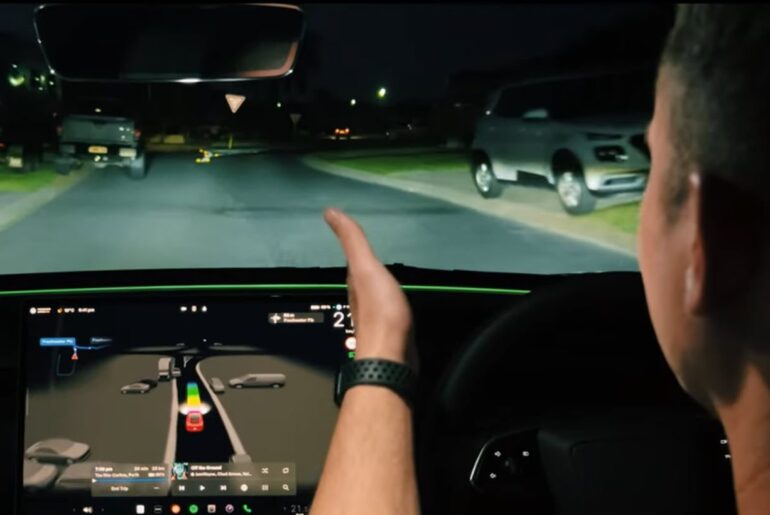
Currently, every Robotaxi ride in Austin is still a Supervised FSD experience, with a Tesla employee in the driver’s seat, standing ready to intervene. A fleet of 60 cars requires a roster of about 150-200 employees to cover shifts, breaks, and weekends. Scaling to 500 cars would require hiring an army of nearly 1,000 human monitors – an operational and financial bottleneck that contradicts Tesla’s entire Robotaxi model.
The fact that the fleet is only growing to ~60 suggests that Tesla isn’t comfortable with removing the safety monitors quite yet. When it is, the only constraint would be manufacturing Model Ys, of which Tesla could roll out the entire fleet within a few short days.
What’s Next?
The focus on the rate of growth, rather than the absolute numbers, isn’t surprising. However, if the Austin pilot, with the controlled, engineer-tested, and close-to-home sandbox for Robotaxi, is struggling to scale past 60 vehicles by the end of 2025, the aggressive timelines for a cross-US and global rollout in 2026 and 2027, respectively, might also be a bit too aggressive. All eyes will be on Tesla when it removes the vehicle’s safety monitors, which is one of the biggest factors limiting the Robotaxi’s scale.
The supply issue causing 30-minute wait times isn’t just a lack of cars; it is a lack of autonomy. While we’re looking at this exceptionally critically, it isn’t the first time Tesla has stumbled with the deployment of Robotaxi. Most of these stumbles are out of their control – regulatory issues preventing rollouts, or lack of confidence in current iterations.
Tesla will eventually get it right; it’s just a matter of waiting.
Ordering a New Tesla?
Use our referral code and get 3 months free of FSD or $1,000 off your new Tesla.
November 26, 2025
By Not a Tesla App Staff
Each year, Tesla releases a massive Holiday Update, packed with new features, quality-of-life updates, and fixes to lead into the Holiday season, and 2025 is no exception. This eagerly awaited update will definitely be something to look forward to.
If you’re not familiar with Tesla’s holiday updates, take a look at what they released in previous years. There are plenty of features we expect to arrive, but the real fun is speculating about what else Tesla might be cooking up, and taking some user input to boot.
Last year’s Holiday Wishlists managed to get quite a few items checked off the list.
The Tesla App has come a long way since last year, with major highlights including Apple Watch support and Live Activities for Charging and for Service on iOS.
Android Watch App
Tesla most recently added Apple Watch support – but we’d love to see the equivalent for Android users as well. Adding the capability shouldn’t be too challenging, as Tesla already has most of the parts in place, especially now that they’ve developed a Watch-specific UI.
Just a matter of implementation – and for many Android users, it would be a fantastic holiday gift.
Smart Ring Support
With the next big thing for wearables being Smart Rings, it would make sense for Tesla to provide official NFC or Bluetooth support on those devices in the near future. We’d imagine such support would come when Apple releases its own planned smart ring, with support for other rings to potentially follow in the future.
Third-party rings already exist, but they rely on cloning a keycard to function. Having baked-in Bluetooth support would mean you could get into your Tesla with just a ring — no phone or awkward tap on the B-pillar required.
Live Updates (Live Activities for Android)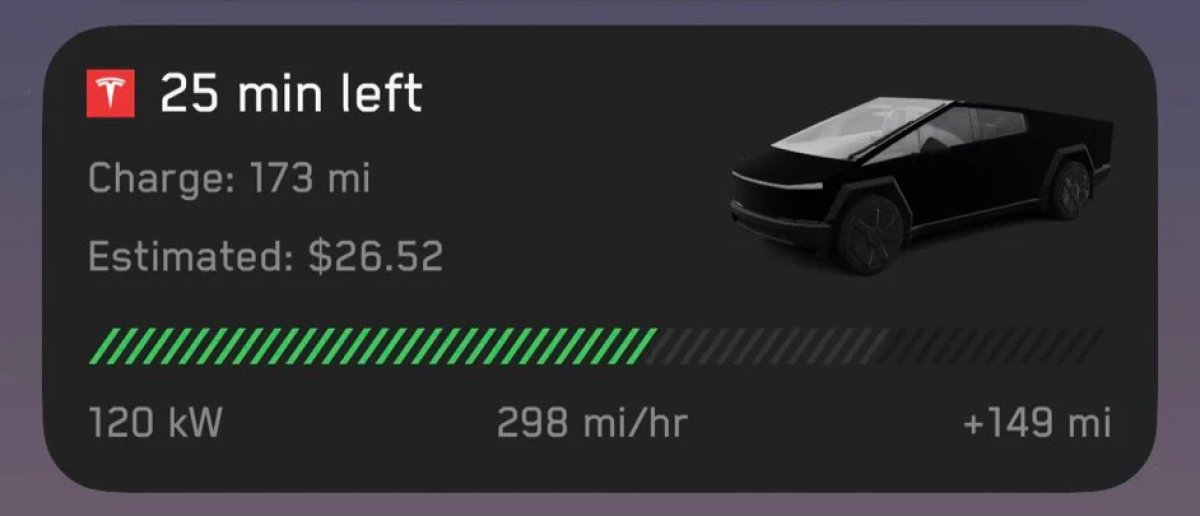
Tesla launched Live Activities for charging and service for iOS earlier in the year – and Google just launched Live Updates, the Android equivalent, for the latest versions of Android.
Once again, ensuring parity between the two largest ecosystems is the goal here, as the design work is already done — it is just a matter of implementation.
Expanded Lightshow Support
Today, you need to use a completely clean USB for custom LightShows, set up and configured in a particular way. That means using a second USB drive that doesn’t allow for Sentry Mode or Dashcam recordings.
Tesla should first address the USB issue, then enable us to upload Lightshows directly from our phones to our vehicles – after all, the files are generally only a few megabytes, and much smaller than the Dashcam videos already available in the app.
Garage Door Controls
Your Tesla can already open your garage door if properly set up, whether with MyQ or with a standard garage door opener. However, you can only open your primary garage door, and not any of the others. Getting proper garage door controls in the app would be a fantastic addition.
Lock Sound Support
While we all love Tesla’s custom lock sounds (check out our list of hundreds of sounds), which play a custom sound file when the vehicle is locked, we’d love to see them integrated into the Tesla app.
Currently, you need to download the sound file and manually add it to the USB drive in the vehicle. While it’s an amazing feature, allowing us to add the sound file through the Tesla app would make it much more convenient, especially if you like to switch up your sound once in a while.
FSD Stats
Tesla recently added FSD Stats with FSD v14.2, letting drivers see exactly what percentage of miles are driven on FSD. While owners with Tesla Insurance can already see similar stats, it’d be a great addition to see these new FSD Stats in the Tesla app, letting users easily look at and share their own statistics.
Autopilot Status
The Tesla app is great and gives you a lot of insight into the vehicle, including where it’s headed, its arrival time, and its current speed. However, we’d love to see whether the car is being driven on Autopilot or manually.
Arrival State of Charge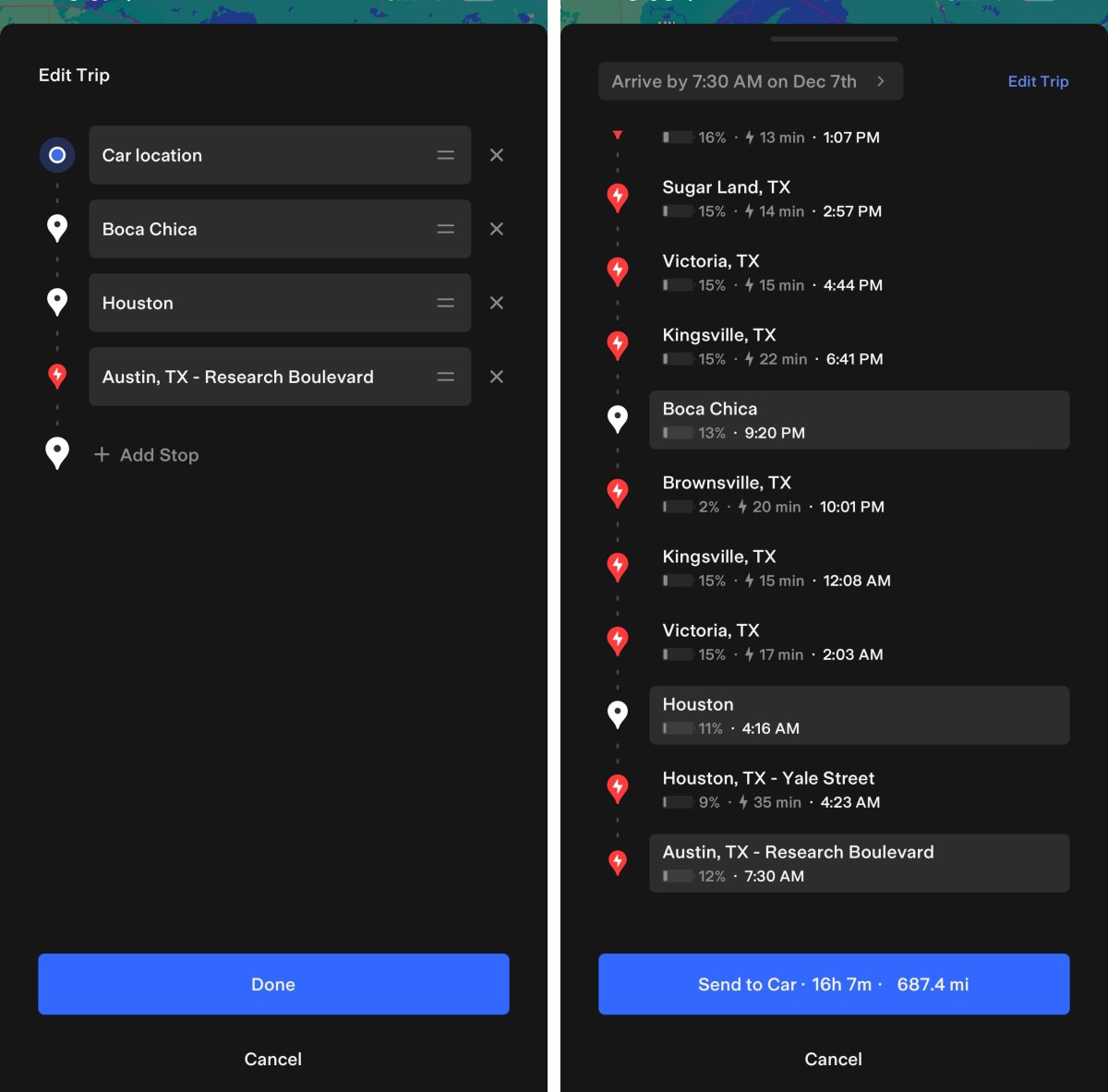
A popular request among Tesla owners is the ability to set a desired battery charge percentage upon arriving at a destination. Last year’s holiday update added this feature to the vehicle software, but the app has yet to see a similar feature.
Tesla has added several features to the app’s Trip Planner, including waypoints. Although the app lets you choose a starting charge percentage, it does not allow you to select the state of charge at your destination.
If you’re traveling somewhere without a nearby charger, this becomes an issue. It’d be nice if the Tesla app let users pick their desired state of charge at arrival, the same way it lets you select it in the car.
Precondition Battery Button
Similar to an in-vehicle preconditioning button for third-party chargers, the Tesla App should also have a button to precondition the battery. This will make it easy for users, especially those who don’t have home charging – to get their vehicles ready for DC Fast Charging before departing.
Additional Visualizations
The Tesla app already has some amazing visualizations that leverage the same 3D models used in the vehicle.
Recently, Tesla launched charging visualizations in the vehicle. We’d love to see these same visualizations added to the app. Tesla could also add other visual components that show up in the vehicle such as other vehicles, parking lines, etc.
Improved Music/Video Controls
While the Tesla app lets you control some aspects of music in the vehicle, they’re limited to volume control, pausing/playing, and previous/next song.
We’d love for Tesla to expand these options so that users in the rear have more control over the vehicle’s music. This could include selecting the music source and searching for and playing a specific song or playlist.
While all of these features won’t be a part of this year’s holiday update, we may see one or two of them implemented this holiday season. Which one are you looking forward to the most?
November 26, 2025
By Karan Singh
The global map of FSD just got a little bit larger. Following several months of speculation and an announcement earlier this month, Tesla has officially flipped the switch in South Korea, making it the seventh global market to receive FSD (Supervised).
The rollout has commenced with Tesla’s usual modus operandi for FSD releases, landing in the hands of key influencers and early adopters first. While the sample size is currently small, the first reports from the streets suggest that FSD is remarkably well adapted to driving in one of Asia’s busiest and most challenging driving environments.
$TSLA 🇰🇷 FSD is now live in Korea, and the way it navigates those shared streets is impressive 🔥
On this tight road, the system appears to have a lower, more appropriate sensitivity to pedestrians 🔥
This eliminates the problem of sudden, unnecessary braking 🔥
Amazing 🔥 pic.twitter.com/Bpk93twt9O
— Ming (@tslaming) November 22, 2025
Notably, this is also the first overseas rollout of FSD v14. Other countries like China, Australia, and New Zealand remain on FSD V13.2.9 for the time being. North America, including Puerto Rico, Canada, and Mexico, are all on the most current builds of FSD v14.
The Vanguard Fleet: AI4 Model S and X
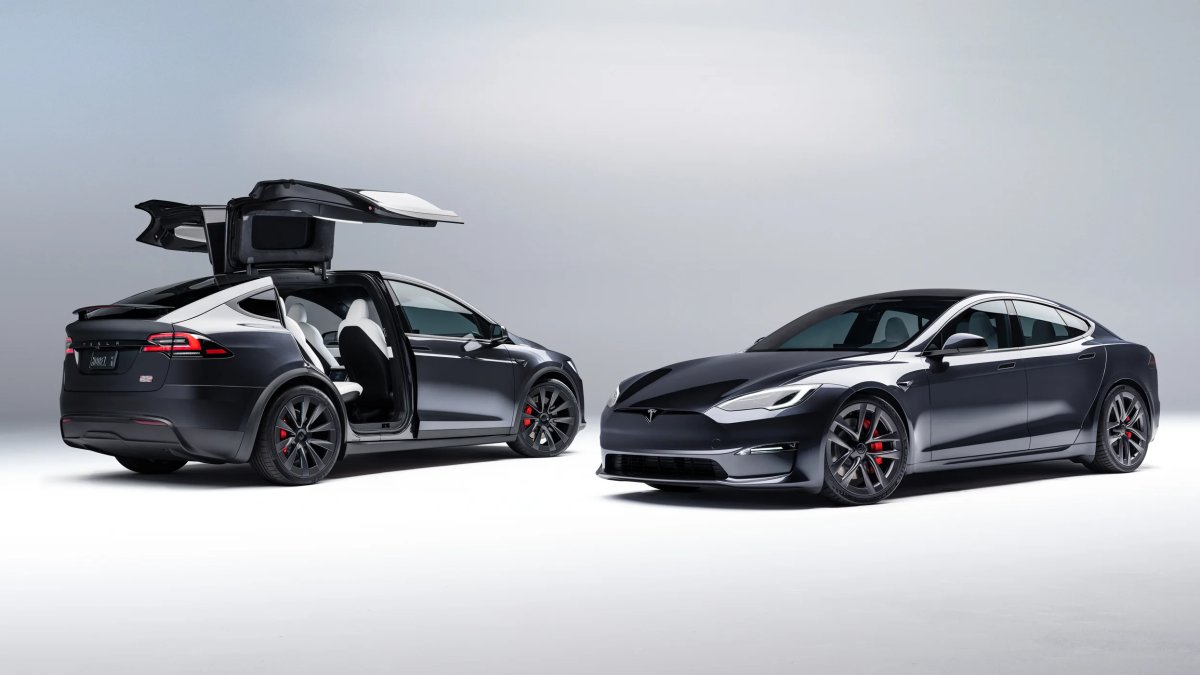
This isn’t a larger wave covering all of Tesla’s models like it was in Australia and New Zealand. Instead, the initial wave is strictly limited to Model S and Model X vehicles equipped with AI4 (HW4) computers.
There is a geopolitical reason for this exclusivity. The rollout leverages the Korea-U.S. Free Trade Agreement (FTA), which allows a specific quota of U.S.-manufactured vehicles (like the Fremont-built Model S and X) to be imported into Korea under U.S. safety standards, bypassing some of the domestic certification hurdles that currently block the Chinese-made Model 3 and Model Y fleets.
Once Tesla completes the additional safety certifications required to deploy FSD on the Model 3 and Model Y, we expect those AI4-equipped vehicles to quickly follow along with the rest of the fleet.
Local Validation
The star of this initial rollout has been the performance of FSD in Seoul’s notoriously dense and aggressive traffic. Some of the first few comprehensive looks at FSD’s performance highlighted the ability for FSD to handle the challenging cut-ins, complex intersections, and narrow lanes throughout Korea’s capital city.
$TSLA 🇰🇷
BREAKING : I just experienced FSD (Supervised) for the first time in Korea.
The vehicle is Model X and the FSD version is *V14.1.4.
We have yet to see any official cases of V14 being applied outside of the United States and Canada.
I’ve just completed my first FSD run… pic.twitter.com/521P7Ckgn5
— Tsla Chan (@Tslachan) November 21, 2025 What’s Next?
With the software now live on the initial few vehicles, Tesla will be closely monitoring reports from Korean influencers and early access users. If reports trend well, which they seem to be, we can expect FSD v14.1.4 (or potentially v14.1.7) to roll out to a larger set of AI4 Model S and Model X vehicles across South Korea.
For the vast majority of Korean owners driving the ever-popular Model 3 and Model Y, the wait will continue. As these vehicles fall under a different safety regulatory framework, they’ll need additional certification before they can join the FSD fleet. However, the deployment of the software on Tesla’s flagship vehicles will also help to serve as a critical proof-of-concept: the software works.
The next hurdles for South Korean owners will be legal, not technical.