The Internet EXPLODES: Is Tesla Actually Slowing EV Growth in America?
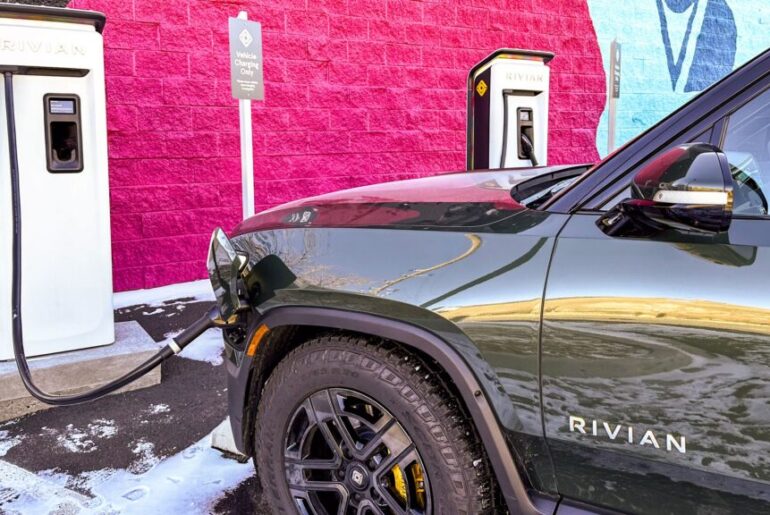
So there there’s this article right on inside EVs and it’s had way more comments than I’ve seen on this platform maybe in months. People are absolutely furious. I mean livid. They are angry. You can see the emotion in their voices. They type on their keyboards. The response to this article has been absolutely brutal. I’ll share with you the comments and responses, but I personally think this article actually is almost entirely correct. So why are people responding in this way? The perception from a lot of people is that legacy automakers have caught up to Tesla and even to some Chinese EV companies as well. They’re making EVs that are just as good now. However, this article from Inside EVs, it’s quite interesting because they’re claiming that’s not the case at all. Hello, my friends. Welcome to the channel. I’m Sam Evans. You’re watching the Electric Viking. Really intriguing here. I thought this was quite an interesting perspective that you guys might want to know about. Mac Hogan says this. Tesla changed the world in 2012. And I think um there’s no real argument about that about that. The company existed long before that, but that was a year when they proved the idea would work, right? The brand launched the Model S, creating a brand new product category out of whole cloth and blowing countless others to bits with its all-electric super sedan. And the truth is, yeah, the Model S was revolutionary when it first came out. It won a bunch of different awards. It was expensive, though. It was beyond the price of the average human being, right? Through iterative improvements, though, Tesla would go on to build the world’s bestselling premium sedan, and it’s now very affordable. It’s bestselling EV. YouTube’s new algorithm means that you’re often not getting all of our videos in your feed. There’s 7,500. I’m pretty sure you’re probably not seeing a lot of them. In the description, there is a link to our newsletter. Click on that and you can get an update every day of all the latest news in the electric car industry. Guys, I should also point out the Tesla Model 3 actually is the price that Elon Musk promised it would be. I sound like I’m an Elon Musk apologist. I don’t like that. But it is actually relevant if you think about it. If you include the cost of inflation, the Model 3 is actually cheaper than $35,000 today. Anyhow, they also went on to sell the world’s bestselling luxury sedan in terms of overall numbers of sold over the last 10 years, its bestselling SUV, the Model Y, and its bestselling vehicle period, the Model Y, depending on the year. And Tesla is now worth more than every other car company combined. A lot of people think that’s a crazy bubble, but um there’s others, like myself, who don’t think it is. Most of the so-called legacy automakers, says Mac, have not been able to follow its lead, and they’re still making losses on EVs. I’ve just added that part in because it’s true. None of them build EVs at a consistent profit, let alone any profit. And none of them are quite ready to build the whole system as Tesla does. End to end. Last month, Max says he took a road trip in a 2025 Hyundai Ioni 5 XRT, which I’ve got to admit I think is a pretty cool car. It is the absolute best, he says. best EV that any legacy automaker sells in the United States. He might be right. It’s the best you can do if you don’t build the full stack. But Tesla builds the whole stack. There’s a robust charging infrastructure that is more seamless than any nonTesla system at typically far lower prices. The vehicles are purchased from no haggle company stores. That’s a big advantage. I hate the whole haggling with dealer thing. That sucks. Anyway, not dealerships with high-pressure finance departments. He says the cars integrate seamlessly with your home, your power grid, your solar panels. The only good hotel chargers in the country seem to have Tesla logos as do the best home batteries, although there has been a recall on Tesla’s powerable batteries at this point in time because there’ve been some problems with them. Max says that this is weaponizing the core advantage of EVs. You use power everywhere. So, your universal power bank should follow you everywhere. The more services you can connect to it, the more money you’re going to make. Hyundai wants to do all of that as well. But it is its own thief inside a conglomerate that is responsible for 11% of South Korea’s economy. And let’s be honest, guys. I mean, Hyundai do make some good EVs, but more than 90% of their car sells worldwide and not electric cars. More than 90%. It has the money and the stamina to do it, but it isn’t there yet. It wants to build up a full software and energy platform that integrates with the infrastructure and with other smart devices, but for now in the autosphere, it simply builds great EVs. Now, I personally don’t think they’re that great. They’re good, and now I I love the design. They’re cool looking, but in terms of a value for money proposition, the Hyundai 5 in most countries is overpriced. And if you look at the comment forums on pretty much every article about their cars, everyone says the same thing. At least 99% of them do. Anyway, Max says when he set out on a 650 mi road trip this past weekend, he knew not to bother with Hyundai’s included route planning software. I loaded up a better route planner and app now owned by Rivian. He said a competitor that builds most of its own stack and I use that instead. But since it wasn’t built by Hyundai and the XRT is brand new, it didn’t know how efficient I’d be. And since the best app for doing this isn’t integrated with the Hyundai, my car wasn’t actively updating the plan with its realworld battery consumption. A Tesla does all of that automatically and routes you only through the best chargers because it only uses the ubiquitous Tesla superchargers. Aha, Hyundai fans may say, but the 2025 Hyundai 5 can use superchargers. It’s true. It even has a native Tesla style Knack plug. Another sign of the brand’s utter dominance in this space, Tesla’s dominance. Yet, even this didn’t solve its charging problems. The first two superchargers I visited refused to initiate the charging session. I tried on the Tesla app and used the supposedly automatic plug-and charge feature. Neither worked. Yeah. Ouch. Because superchargers were originally built for native backend Tesla magic to sort everything out, there’s no way to identify or rectify the faults or figure out what’s going on. I called my contact at Hyundai who gave me the default scripted advice. When that didn’t work, I bailed to a Rivian branded charger in a disused parking lot and plugged in yet another adapter. On the way home, I tried to use Hyundai’s root planning software. It directed me to a Calrans charger in the middle of the desert. The charger had one stall, operated at 50 kW, about 1/5 of the maximum charging speed of the car, about 16 actually, and most notably has been closed for months for a construction project. It was also 25 mi from the nearest charger, and the car’s efficiency declined as I drove. So, if I had followed the Hyundai’s guidance, I would have ended up completely stranded in the Mojave Desert. That’s pretty serious. It doesn’t matter how good the rest of the car is. If you can’t plug in at a destination and trust the vehicle to figure out a reliable and efficient route, it’s not good enough. This is a pretty good point. Representatives from Hyundai, General Motors, and Ford, etc. will all explain how unfair it is to judge their cars by the condition of the infrastructure. They aren’t in the business of building gas stations, and that never stopped them. Why suddenly do EV companies need to have infrastructure as well? Well, because EVs aren’t gas cars. They’re a new business with new opportunities. And while automakers don’t have to build charging stations, home power systems and home charging setups, they should want to. If electric energy is the main way we accomplish work in the future, it is going to be h then you don’t want a piece of that pie. You want to own the entire pie shop. And I’ve talked about how this is an e economic advantage for Tesla for a long time. I mean, Tesla’s taking it to the next degree, well beyond what any other car company is doing as well, uh, including Electrify America and Volkswagen by, you know, installing these solar plants now and batteries next to their supercharger stations. Sometimes they’re under the ground and you don’t even know they’re there. And they’re basically working as their own energy companies, basically extracting energy from the grid when it’s cheap or even free, selling it back to consumers at a much higher price. It’s genius. Tesla owned its bakery, but getting there was expensive and tough. But the thing is Tesla was a startup and if they could do it as a startup, surely these massive conglomerates could do it, right? But many automakers have still not caught on to the opportunity here. Max says this. I won’t name names because I don’t want to piss anyone off at Honda, Toyota, or Stellantis. Now, as you guys know, I don’t care about pissing them off. Others are just now starting the journey Tesla set out on over a decade ago. Among them, I’d wager that General Motors shows the most promise. The company already has a mature EV platform with a mostly common software stack and good route planning or route planning, albeit with a heavy assist from Google. Now, one thing Google’s done recently, it’s integrated EV charges. So Tesla chargers and other EV chargers have been integrated now into Google Maps which is absolutely awesome. It also has General Motors we’re saying here a real home energy product charging partnerships with EVG go a state charging network and a robust battery supply chain. It recently announced further pushes into home energy and robotics. Competitors have bets in some of these places. Mercedes, BMW, Toyota, Honda, Kia, Hyundai, and Stellantis all invested in Iona and a few are working on their own on their own charging products. But no one is anywhere near the scale or maturity of Tesla and you can feel that every time you use their cars. Now, I should also point out the cost for Tesla to build their Supercharger stations is much lower than what it is for other companies. We know that from the data from Tesla um actually bidding on a superchargers in Austin. It’s not in Austin actually, sorry, in Texas. And other companies bid on them as well. And they had to actually reveal their prices that what it cost them to build each supercharger. The other companies as well as Tesla and Tesla’s price was like I think it was 17th of their prices. It was crazy. Anyway, the reason why these companies haven’t yet done this is because it isn’t an easy road. Tesla had the luxury of losing billions of dollars for years to make the business model attainable in the long term. Legacy automakers, meanwhile, must thread this needle while simultaneously investing in and profiting from their internal combustion engine portfolios. Now, do they really have to do that? I mean, let’s look at the facts here. General Motors and Ford have made billions and billions of dollars over the years. They made a lot of money. They could have invested more of it in the early days. Here lies the fundamental problem for legacy car companies, says Mac. Gas car companies and electric car companies aren’t just building different devices. They’re building different ecosystems. Every part of building, selling, and servicing EVs is different. And the more you’re configured for selling gas vehicles, the harder it is to take advantage of these changes. How can you drive out cost if your tech has to be backwards compatible with gas vehicles? How can you have top tier overtheair update capa capability, which they don’t? If you’re supporting a bunch of cars that can’t quietly turn on to install them, how can you sell someone a $50,000 car without building a software tool that can guide it anywhere in the country? Maybe legacy automakers can find a way around these problems. they can build good enough EVs until the infrastructure and supply chain matures, then take advantage of the lessons learned by companies that actually innovate. We often blame Chinese car companies for copying, but legacy automakers have pretty much done the same thing, copying, right? Many of them are now using structural batteries. They’re now starting to use giga casting. They’ve copied Tesla. That’s a dangerous strategy, though. EV buyers tend to be loyal. And so if you miss the window to sell someone their first EV, you might not be in the conversation to sell them their second. You need a great product as fast as possible. And as Tesla has proven, if you can’t rely on infrastructure and software that’s already available, you’re going to have to build it yourself. Now, there was a lot of furious people responding to this um article. I mean, there’s a lot of people who really dislike Tesla right now that are um responding. Here’s what someone said, and there was quite a few people that like this comment. Dependence on a proprietary charging network owned by a single vendor is a bug. It’s not a feature. Now that the EV industry is maturing, we should be leaning into common standards and better software, not walled gardens. Now, I think um Tesla has opened its supercharge network up, so it’s not a world garden. Anyway, he goes on to say, “And the home power argument was stronger before Tesla issued a long overdue recall on a massive number of power walls that threatened to burn people’s houses down.” You can see there’s a lot of emotion behind this statement. A lot of strong emotion, which not all facts here, a few facts, but a lot of emotion as well. Now, someone else said this, Andrea, GG, she’s also obviously pretty angry. She said, “Tesla’s charging network in the US is increasingly resembling the infamous standard oil network in the early 20th century. Evil and corrupt.” She’s basically saying, “Are we sure this is the in the best interests of American citizens?” In both China and Europe, this has not happened. And in both regions, EV adoption is progressing faster than in the United States. So, it’s actually Tesla’s fault for building its own supercharger network and opening up to other car companies for EVs not selling it large in larger numbers in America. Tesla, Andrea has spoken. It is your fault. You are to blame for building out the supercharger network. It is just it’s terrible what you’ve done, Tesla. That’s what Andrea is saying. Do you guys agree? Let me know. Now, someone else said this. This commentary is idiotic and there is not one fact or bit of data or research presented in this post. Um, yeah, interesting. None. This is more of the same nonsense that ignores Tesla’s falling share with claims that the legacy automakers are clueless and years behind Tesla. Also, this premise offered by people like this author, terrible author, Mac, actually Mac, I think you got a great article here, that you cannot be successful at EVs if you also sell ice cars has been proven to be utter BS. The thing about people who are set in their views is that they don’t back down or admit error. They just keep moving forward with new theories and commentary. Also, General Motors isn’t just a partner with EVgo. They find a ton of EVgo stalls and are directly responsible for a huge percentage of EVgo’s growth over the last three years. In addition, anyone who continues to claim that legacy automakers OEMs are doing nothing to invest in improving charging and charging integration is either stupid or being disingenuous. Pick one. So, there’s a lot of strong reactions and emotions to this article. However, I believe the core argument in this article is fundamentally correct. Number one, legacy automakers. How many what percentage of the cars that they sell are actually EVs, right? It’s less than 10% for pretty much all of them. Why? Why? Well, most of them, their EVs are more expensive than their gasoline powered cars. Almost all of them. In China, that’s not the case. Now, why is that? I mean, have a look at the cost of batteries today. Lithium phosphate batteries today. Have a look how cheap they are. I mean, it really isn’t. It shouldn’t be more expensive to make an EV than a gasoline powered car. Yeah, but the truth is legacy automakers do not make a profit on EVs. In fact, they make a loss. All of them do. If any of them were actually making profit, they’d tell you exactly what it was. They’d say, “Wow, look how great we’re doing. Everyone else sucks in comparison to us. I promise you they’d be saying it, but they’re not because they don’t make any profit. They don’t want to sell more EVs. They want to sell enough EVs to not have to pay any taxes, carbon credits, fines, etc. That’s the bare minimum. That’s what they want to do. They they really are walking a tight rope. So, the author is completely correct here. They’re walking a tight rope. And this is a very difficult situation for them to be in right now. They’ve got to sell internal combustion cars because that’s where they make a profit. Well, that’s what they think they have to do anyway. Too much of a risk to go full EV. If they went full EV, though, the thing is they might actually be able to make a profit sooner because they’d be making larger numbers. But anyway, they’ve got to walk this tight rope. Remember all these new emission standards mean they’ve got to pay fines or they’ve got to purchase carbon credits from other companies like BD and Tesla and Pstar and Volvo etc etc. So they’re in a very tricky situation but at the same time we are hearing lies from these automakers constantly. They are constantly lying to the public. They’re always saying oh we’re backing off on our EV plants because EV sales worldwide EV sales are down. they’re well down on on, you know, we can’t sell EVs because we’ve got to reduce our numbers. Ra, all of that is complete nonsense. We know this year EV sales have grown 23% worldwide. If you exclude North America, Europe, and China, EV sales have grown 48% worldwide. I mean, EV sales in Europe are up more than 30% this year. We are not seeing a decline in EV sales. And yet these legacy automakers, most of them at some point over the last couple of years have made claims to the contrary. They are clearly lying. So you can’t have your cake and eat it. If you support what these legacy automakers are doing and saying, you are supporting exactly what I’ve just said. And that’s very much an anti-EV narrative that is coming from these companies. Why are they putting out this anti-EV narrative? I mean, you’ve heard it. Mercedes-Benz, Volkswagen Group, they’re all doing it. Many of them are still saying hydrogen is the future. Toyota, Hyundai, for example, BMW even. Why are they doing it? Well, we know why they’re doing it. They need to stay alive. They need to make money. But they’re saying this at the cost of their personal integrity.
The Internet EXPLODES: Is Tesla Actually Slowing EV Growth in America?
Tesla’s dominance is now under fire as analysts warn that its pricing strategy, slower upgrades, and stalled Supercharger expansion may be dragging down overall EV momentum in the U.S. The internet is erupting with debate as critics argue that Tesla’s moves could be slowing—not accelerating—the nation’s electric transition.
Sign up for my newsletter here ► https://theelectricviking.com/newsletter/
🔔 Subscribe and hit the notification bell! ► https://www.youtube.com/@electricviking?sub_confirmation=1
👉Book a 1-Hour Consultation with The Electric Viking via the link at https://theelectricviking.com/consultation/
Join me on Patreon ► https://www.patreon.com/theelectricviking
Join as a member in The Electric Viking YouTube►
https://www.youtube.com/channel/UCjzi56cxvmEDwjo1Bd2Yxpg/join
Members-only videos (see videos before anyone else)►
Support by sending Super Thanks! Here’s how to buy a Super Thanks:
The best solar company in Australia just installed my new solar system.
Check them out here: https://www.resinc.com.au/electricviking
I use Starlink internet to upload all of my videos, use my referral link here: https://www.starlink.com/residential?referral=RC-392400-91086-9
👇👇 Buy something and support The Electric Viking Store 👇👇
https://shop.theelectricviking.com/
Size guide and other help for the store 👇
See what happened to Shanna (Sam’s wife):
The Electric Viking on other platforms:
Apple Podcasts ► https://podcasts.apple.com/us/podcast/the-electric-viking/id1826841318
Spotify Podcasts ► https://open.spotify.com/show/7qDxQ2PDFC3KvJq5f7Oxih
If it’s not available in your country, use this link: https://podcasters.spotify.com/pod/show/theelectricviking
Rumble ► https://rumble.com/c/TheElectricViking
Facebook page ► https://www.facebook.com/theelectricvikingfb
Facebook group ► https://www.facebook.com/groups/theevfbgroup/
X (Formerly known as Twitter) ► https://x.com/theevking
Instagram ► https://www.instagram.com/theelectricvking/
Pinterest ► https://www.pinterest.com/theelectricviking/
Telegram ► https://t.me/theelectricviking
TikTok ► https://tiktok.com/@theelectricviking
Read my blog ► https://theelectricviking.com/blog/
👇 My Bali trip 👇
👇 Video about My Skateboard 👇
👇 Subscribe to my kids channel 👇
https://tinyurl.com/subscribetojackandcal
See more videos:
THE 1 MILLION ROBOT WAR! Xpeng’s IRON Aims To Beat Tesla to Mass Production In 2026
S&P KILLS NISSAN! “BB-” Rating Crushes Automaker With Brutal Borrowing Costs
Western Automakers Are Handing China the Global Car Market
Ford CEO Sounds Alarm: Skilled Worker Shortage ‘We Are in Trouble in Our Country’”
CATL Reveals New LFP Batteries VS NEW Naxtra Sodium Battery Energy Density (175 Wh/kg)
Anker SOLIX Reveals VPP-ready home energy solution at All Energy
Inside China’s Gigantic Dual-Tower Solar MIrror Project — A Renewable Leap
Anti-Renewables Group Used AI to Kill $1B Wind Farm — The Real Story
BYD ATTO 3 KILLER? GWM Ora 5 EV Launches With 580km Range
LiDAR, 605 km Range, $14K Price: Western Automakers Should Fear Leapmotor
EV Sales Stall in Australia in October – MEDIA Fear Deters Uneducated Buyers
#tesla #evmarket #evsales #usa #chargingnetwork #evslowdown #automotive #elonmusk
👇Reference to the news/charts & videos used in this video:
https://insideevs.com/features/779012/legacy-car-companies-vs-tesla/
This channel may use some copyrighted materials without specific authorization of the owner; but content used here falls under the “Fair Use” Copyright Disclaimer under Section 107 of the Copyright Act 1976.
Allowance is made for “fair use” for purposes such as criticism, comment, news reporting, teaching, scholarship, and research. Fair use is a use permitted by copyright statute that might otherwise be infringing. Non-profit, educational or personal use tips the balance in favor of fair use.
Contact us for any copyright issues. If you want a credit of any footage we are using, please let us know.
Website: https://theelectricviking.com/contact/
Email: contact@theelectricviking.com