The UK has announced groundbreaking plans to introduce a charge for electric vehicle (EV) drivers to use roads and to shift certain green levies that support low-carbon areas from consumer energy bills into general taxation.
UK Finance Minister Rachel Reeves made the announcements in parliament as part of the autumn budget statement on Wednesday.
The government estimates the lower levies on energy bills could save households up to £150 ($198) per year from April 2026.
This cut is achieved through a combination of moving a portion of renewable energy subsidies from bills to general taxation and ending a support scheme for energy-efficiency measures, such as home insulation.
A hoped-for announcement on a replacement for the Energy Profits Levy (EPL), or windfall tax on “excess” profits from UK oil and gas production after 2030, was notable for its absence. Following a government-led review process, UK offshore oil and gas operators had expected Reeves to announce a replacement for, or at least some, big changes to the EPL.
Separately, the UK Department for Energy Security and Net Zero published its long-awaited North Sea Future Plan on Wednesday.
Among other initiatives, it will introduce new transitional energy certificates that will allow for tie-backs “on or near to existing fields — so long as this additional production does not require new exploration,” a statement said.
Electric Charge
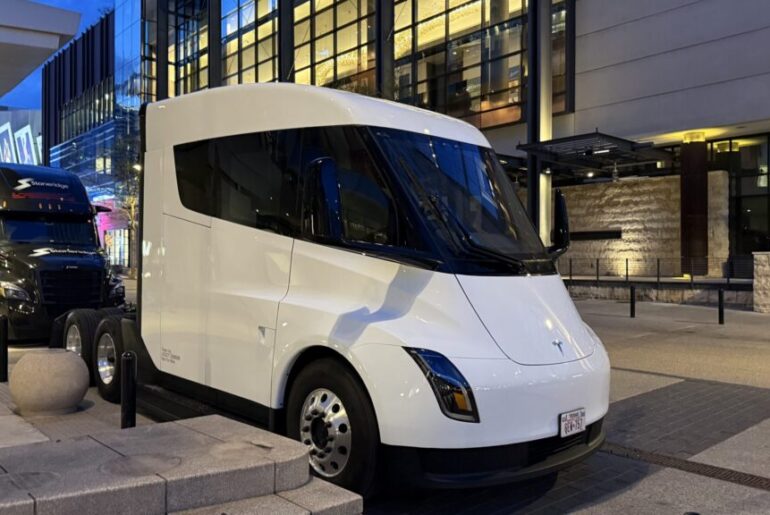
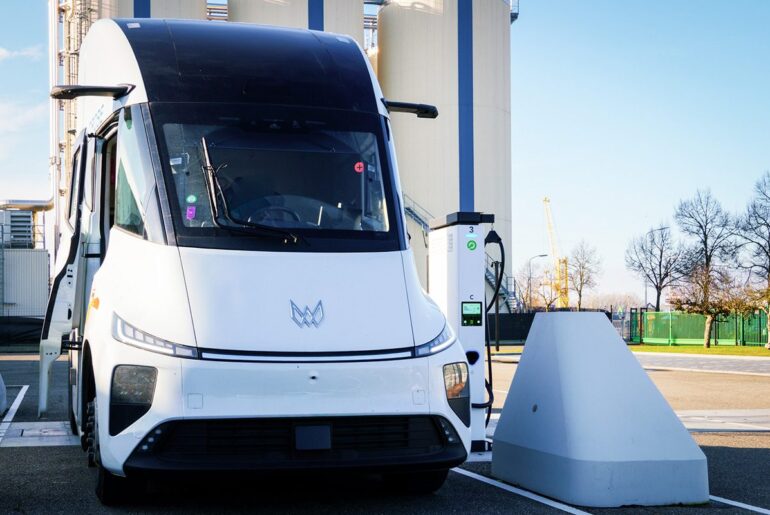
From April 2028, electric car drivers will pay a road charge of 3 pence per mile under an Electric Vehicle Excise Duty scheme, while plug-in hybrid drivers will pay 1.5 p/mile. The rates will go up in line with inflation each year. But the government said it would be down to drivers to “estimate and pay” for the miles they drive, without providing further details.
“All cars contribute to wear and tear on the roads, so it is only right that motoring taxes cover electric cars via a modest self-reported per-mile levy,” the budget statement said.
The UK government estimates that by 2030 “around one in five car drivers are expected to pay no fuel duty at all” because they will be driving EVs, “while other motorists will continue to contribute an average of £480 a year.”
Fuel duty revenues from drivers using gasoline and diesel cars are projected by the government to fall by up to 50% to around £12 billion/yr in the 2030s.
“Shifting most green levies into general taxation is great news for bill payers and will fund long-term bill-saving schemes far more fairly,” environmental campaign group Greenpeace UK’s head of politics, Ami McCarthy, said. “Holding firm on the oil and gas windfall tax, despite fierce industry lobbying, will also continue to support the transition to clean energy.”
Windfall Tax to Stay?
Meanwhile, the EPL, which was introduced by the previous Conservative government in 2022, was raised in Reeves’ 2024 budget from 35% to 38%, effective Nov. 1, 2024, and extended to Mar. 31, 2030.
Trade group Offshore Energies UK (OEUK) lamented that the failure to replace the EPL with a more business-friendly levy would jeopardize £50 billion in investment in the UK oil and gas sector and cost “tens of thousands of jobs.”
“OEUK is also seeking an immediate meeting with the Chancellor [Reeves] to explore every option to reverse this policy and prevent further economic and industrial damage,” a statement said.
Since taking office in July 2024, the government has not appealed UK court rulings allowing the controversial Rosebank and Jackdaw upstream developments to go ahead. However, both projects have had to reapply for key permits, accounting for their end-user (Scope 3) emissions.