Top 3 Plug-In Hybrid Secrets Your Dealer Won’t Tell You
Millions of people around the world believe plug-in hybrids are the perfect middle ground. A bridge between the gasoline past and the electric future. A car that promises freedom from range anxiety, lower emissions, and the comforting safety net of a gasoline tank waiting quietly under the hood. On the surface, it feels like a flawless idea, a practical transition, a smart compromise. But every compromise comes with a cost. And some costs are hidden so deeply, they only become visible long after the purchase has been made, long after the excitement has faded, long after the warning has expired. Tonight, we peel back the polite marketing language and uncover what truly lies beneath the glossy image of plug-in hybrids. Because behind the promise of efficiency and convenience is a story filled with overlooked tradeoffs, misunderstood technology, and consequences that most buyers never even imagine. Plug-in hybrids are sold as cars that will run mostly on electricity. That’s the idea consumers are given. Short trips, errands, the daily commute, all handled quietly on battery power. The gasoline engine steps and only when necessary. But the everyday reality is far more complex. Most plug-in hybrids provide only a modest amount of electric range. Usually somewhere between 20 and 40 real world miles. And that number depends on perfect conditions. Mild weather, smooth driving, careful acceleration, and a healthy battery. In the real world, those ideal conditions rarely exist. When temperatures drop, when roads become unpredictable, when the battery ages, or when the car is loaded with passengers and luggage, that promised range shrinks, sometimes dramatically. What was advertised as 40 mi might become 25. What began as 30 mi might fall to 18. And once that electric range disappears, the entire driving experience shifts. When the battery runs out, a plug-in hybrid becomes heavier than a normal gasoline car, yet still relies on the same small gasoline engine. That engine now has to carry the weight of a battery pack that may no longer be helping. This means the fuel economy you see on TV commercials, 80 m gallon, 100 m gallon, collapses into numbers that look far more ordinary. Some drivers report real world figures closer to 25 to 40 miles per gallon, especially on long highway trips where electricity plays almost no role. For many buyers, this is the moment when expectations and reality collide. They realize the extraordinary mileage numbers printed on brochures only apply under perfect laboratory style testing. They were never meant to reflect long-term everyday use. And yet, those exaggerated numbers remain one of the strongest selling points because they create the illusion of effortless fuel savings. But fuel efficiency is only one part of the story. A plug-in hybrid contains both a full gasoline system and a full electric system. Two different worlds merged into one car. This makes the vehicle far more complex than a regular hybrid or a traditional gasoline engine. And with complexity comes risk. Inside a plug-in hybrid are countless parts that need to work in harmony. Cooling systems for the engine, cooling systems for the battery, electric motors, control modules, high voltage wiring, inverters, dual transmissions, exhaust components, sensors, pumps, chargers, and software layers on top of software layers. When one part struggles, multiple systems can be affected. Owners have reported sudden drops in battery performance, unexpected software errors, malfunctioning charging ports, and cooling system failures that lead to expensive repairs. Some repairs are minor, others cost thousands. A handful of drivers have been shocked to learn that replacing a degraded battery could cost anywhere from $5 to $12,000, more in some luxury brands. And while many cars come with an 8-year battery warranty, once the period ends, the financial responsibility falls entirely on the owner. Plug-in hybrids are often marketed as environmentally friendly, and in some situations, they truly are. Driving on electricity for short distances does reduce tailpipe emissions, but the environmental picture isn’t as simple as the advertisements make it seem. The batteries inside plug-in hybrids require lithium, cobalt, nickel, manganese, minerals that must be mined, transported, refined, manufactured, and shipped. These processes consume immense amounts of energy and leave behind large environmental footprints. The gasoline engine inside the vehicle also continues to produce emissions. In fact, when the engine must suddenly take over for a depleted battery, it often performs worse than a traditional hybrid because it wasn’t designed to be the primary source of power. Meanwhile, several studies have shown something even more revealing. Many plug-in hybrid drivers do not charge their vehicles regularly. Some forget. Others lack access to a charger at home. Some simply find it inconvenient. And when plug-in hybrids are driven mostly on gasoline, they become heavier, less efficient versions of standard gasoline cars, their real environmental benefit disappears entirely. And then there is winter. Cold weather doesn’t just reduce battery range. It reshapes the entire driving experience. Batteries operate best at moderate temperatures. When it’s freezing outside, the internal chemical reactions inside the battery slow down. The car must use energy to warm the battery in the cabin. As a result, the electric range drops sharply. In some cases, plug-in hybrid drivers lose half of their electric mileage during winter months, but the gasoline engine also suffers. Many plug-in hybrids use small engines designed for occasional assistance, not full-time winter driving. When forced to take over, they burn more fuel, warm up slowly, and struggle to deliver the smooth performance drivers expect. The outcome is a sudden increase in fuel consumption at the exact moment the driver expects efficiency. So why with all these challenges, do automakers continue pushing plug-in hybrids so aggressively? The answer is not technological, it’s strategic. Plug-in hybrids allow car companies to meet government emissions regulations and earn valuable credits. They’re cheaper to produce than full electric vehicles. They satisfy customers who want to go green without leaving gasoline behind. And most importantly, they generate strong profit margins. In simple terms, plug-in hybrids help automakers make more money while appearing environmentally responsible. It’s a convenient middle ground for companies navigating a rapidly changing industry, but the buyer often ends up believing they’re getting a simpler, cleaner solution than they actually are. Around the world, plug-in hybrid owners have shared experiences that tell a much more complicated story than the marketing suggests. Some drivers have seen their batteries lose significant capacity after only a few years. Others discovered shocking repair bills for electric components they barely understood. Some felt their cars performed beautifully at the beginning, but slowly became less efficient and more expensive to maintain over time. Many thought they were buying a futureproof technology only to face issues long before they expected. So, the real question becomes, should people still buy plug-in hybrids? The answer depends entirely on how the car will be used. For someone who charges every day, drives mostly short distances, lives in a mild climate, and understands that maintenance may be more complex, a plug-in hybrid can be a practical and efficient option. It can reduce gasoline use, cut emissions, and provide flexible driving. But for drivers who rarely charge, travel long distances, live in extreme climates, or plan to keep the car for a decade or more, a plug-in hybrid may create far more problems than it solves. The car that was supposed to simplify life can end up requiring more attention, more repairs, and more fuel than a standard hybrid or a fully electric vehicle. At the heart of this story lies a simple truth. Plug-in hybrids are not bad cars. They are misunderstood cars. They rely on a delicate balance. A balance that works brilliantly in the right hands and falls apart in the wrong conditions. The tragedy is that most buyers never learn this until their car begins to age, until winter arrives, until their charging habits change, or until a repair bill arrives that feels impossible to justify. So, before stepping into the world of plug-in hybrids, buyers deserve honesty. They deserve clarity. They deserve to understand not just the benefits but the limitations. Not just the ideal scenarios but the real ones. Because only then can they decide whether this technology fits their lifestyle or whether it simply fits the marketing narrative behind it. The future of transportation is shifting fast. Electric vehicles, hydrogen concepts, advanced hybrids, and new battery technologies are changing the landscape every year. Plug-in hybrids occupy a unique place in that transition. Part gasoline, part electric, part old world, part new world. They can be incredibly efficient when used correctly, but deeply disappointing when misunderstood. And now, with every layer uncovered, you know the truth. Not the polished version, not the scripted promise, but the reality most drivers never hear before they sign the paperwork. Whether you decide to buy one or not, at least now the choice is yours.
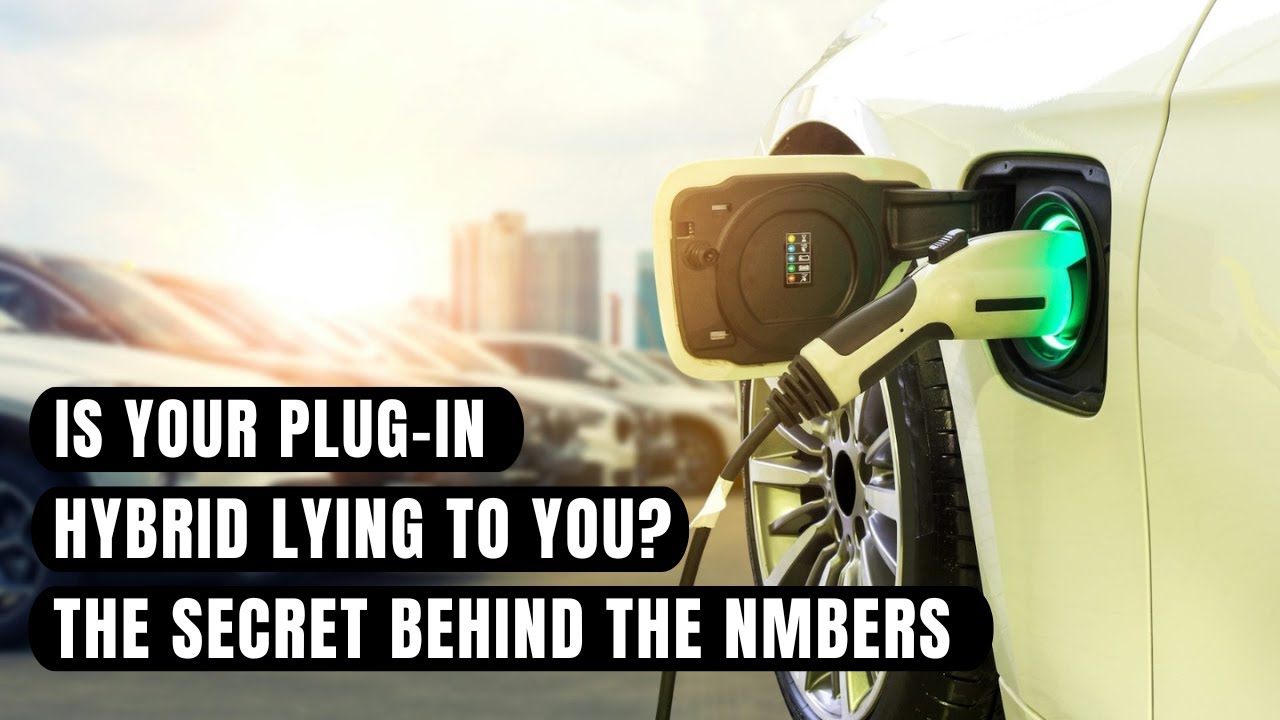
Are plug-in hybrids really the “best of both worlds”… or are drivers being misled?
In this eye-opening video, we uncover the hidden problems, shocking maintenance costs, real-world fuel economy issues, cold-weather failures, and environmental truths that car companies never mention.
Before you spend thousands on a plug-in hybrid, watch this full investigation.
From battery degradation to misleading MPG claims, from complex repairs to the surprising real impact on the environment — this video reveals what is actually happening behind the marketing.
If you’re thinking about buying a Plug-In Hybrid, EV, or even a traditional hybrid, this video will help you make an informed decision backed by facts, real owner experiences, and in-depth analysis.
Top 3 Plug-In Hybrid Secrets Your Dealer Won’t Tell You
👉 Don’t forget to LIKE, SUBSCRIBE, and SHARE if you found this information helpful.
Your support helps us create more deep-dive videos like this!
#pluginhybrid #hybridcars #electricvehicles #evnews #carreview