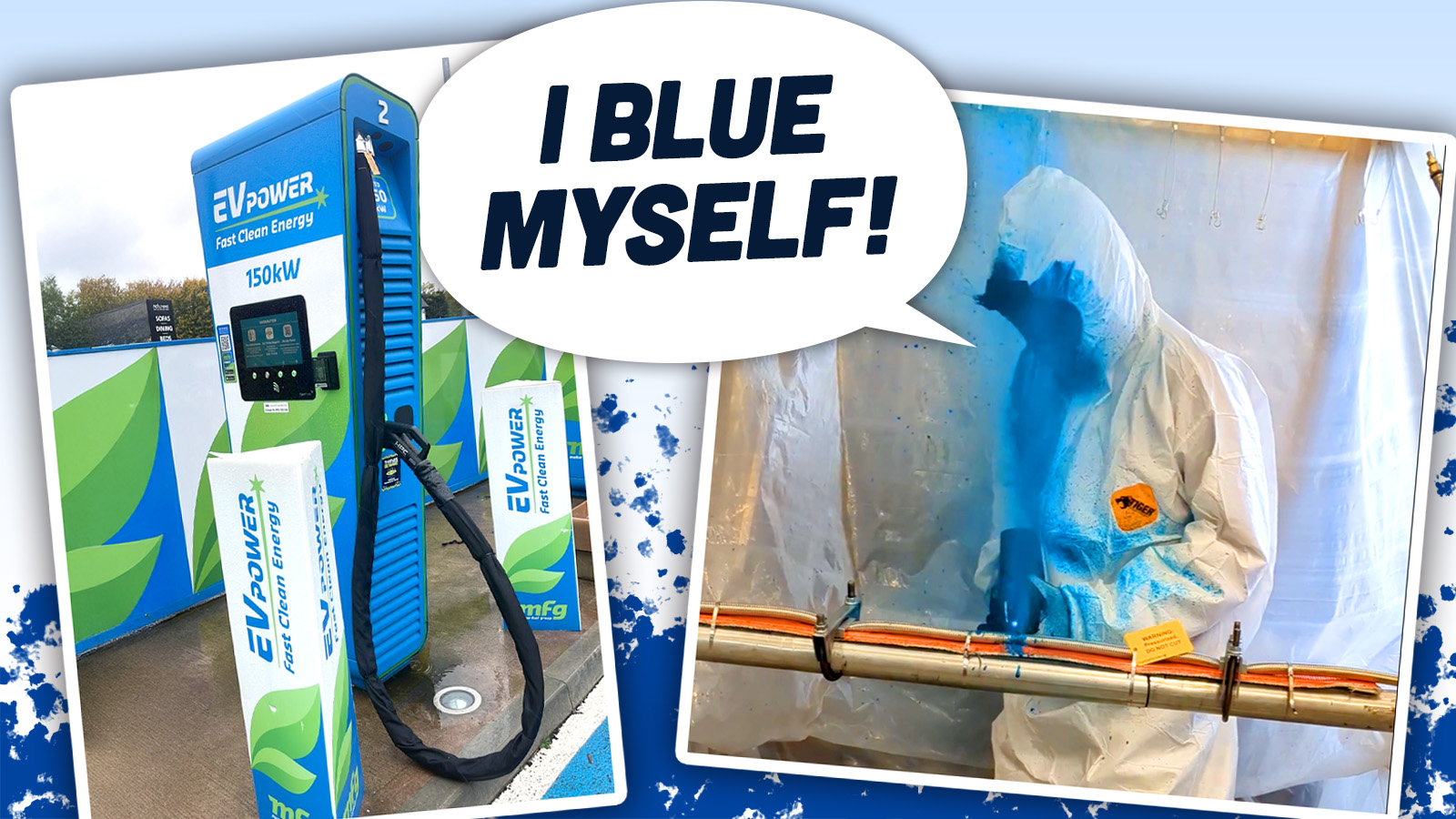
As more EV chargers grace the roadways and parking lots of the world, thieves are taking advantage. The cables that connect chargers to cars use valuable copper wire, making them easy targets for those who want to make a quick buck by selling the metal to scrapyards or recycling facilities.
Because thieves want to make as much money as possible, they’ll often hit every charger at a given station, according to PBS, leaving the entire location totally useless until each cable is replaced. The resulting downtime means inconvenienced EV drivers, added costs, and yet another obstacle for mass electric vehicle adoption.


Seeing an opportunity in the market, one company has figured out a deterrent for keeping thieves away from EV charging cables using a decidedly low-tech solution: Pressurized liquid dye.
It All Started With Catalytic Converters
The company, CatStrap, is known for making anti-theft devices for catalytic converters. Their namesake product is a strap you wrap around your exhaust, made from three layers of strip steel (a flat, bendable type of steel) that makes it incredibly difficult to cut through with an average cutting device. Since 2013, founder Tom Birsen and his son David have been making the CatStrap as a side project to the family’s main auto repair business. Then, seven years ago, demand shifted.
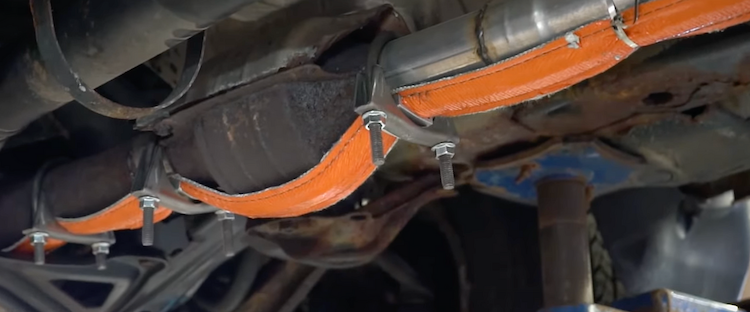 Source: CatStrap
“In 2018 and 2019, the catalytic converter theft activity kind of transformed into an epidemic, more or less, where it really started to spread,” says David Birsen, who is now the company’s vice president. “The price of the precious metals in [the catalytic converters] started to rise, leading into 2020, when things just went hockey stick from a theft activity standpoint. And so our business went from something that was kind of a side project to a full-time manufacturing facility.”
The Birsens shut down their auto repair business and have been focused on theft protection devices ever since. The idea to break into the EV charger cable protection game came from one of CatStrap’s existing customers.
“About 18 months ago, one of our commercial customers, a municipal government out in the Seattle, Tacoma area, started to electrify their fleet,” the junior Birsen told me. “So they had EV chargers at their facility, and folks were cutting down the fence and chopping off their EV charging cables. So they actually put it on our radar for the first time that EV charging cable theft is now a problem for the copper scrap value.”
The First Iteration Of Cable Charging Protection Is Born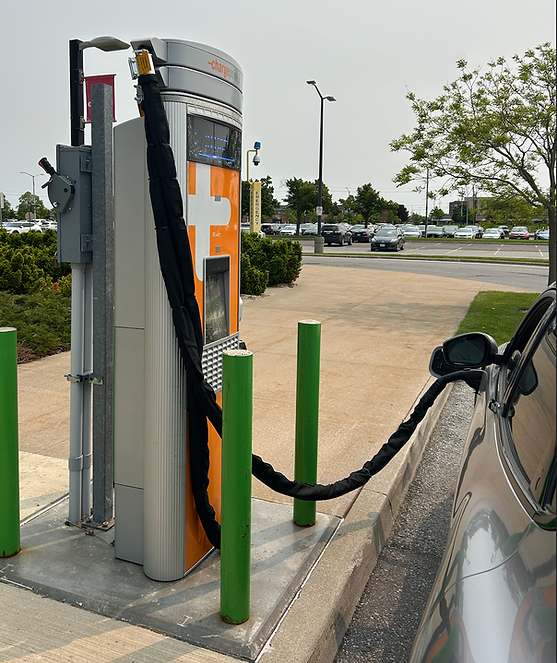 It looks like a normal cable, but it’s not. Source: CatStrap
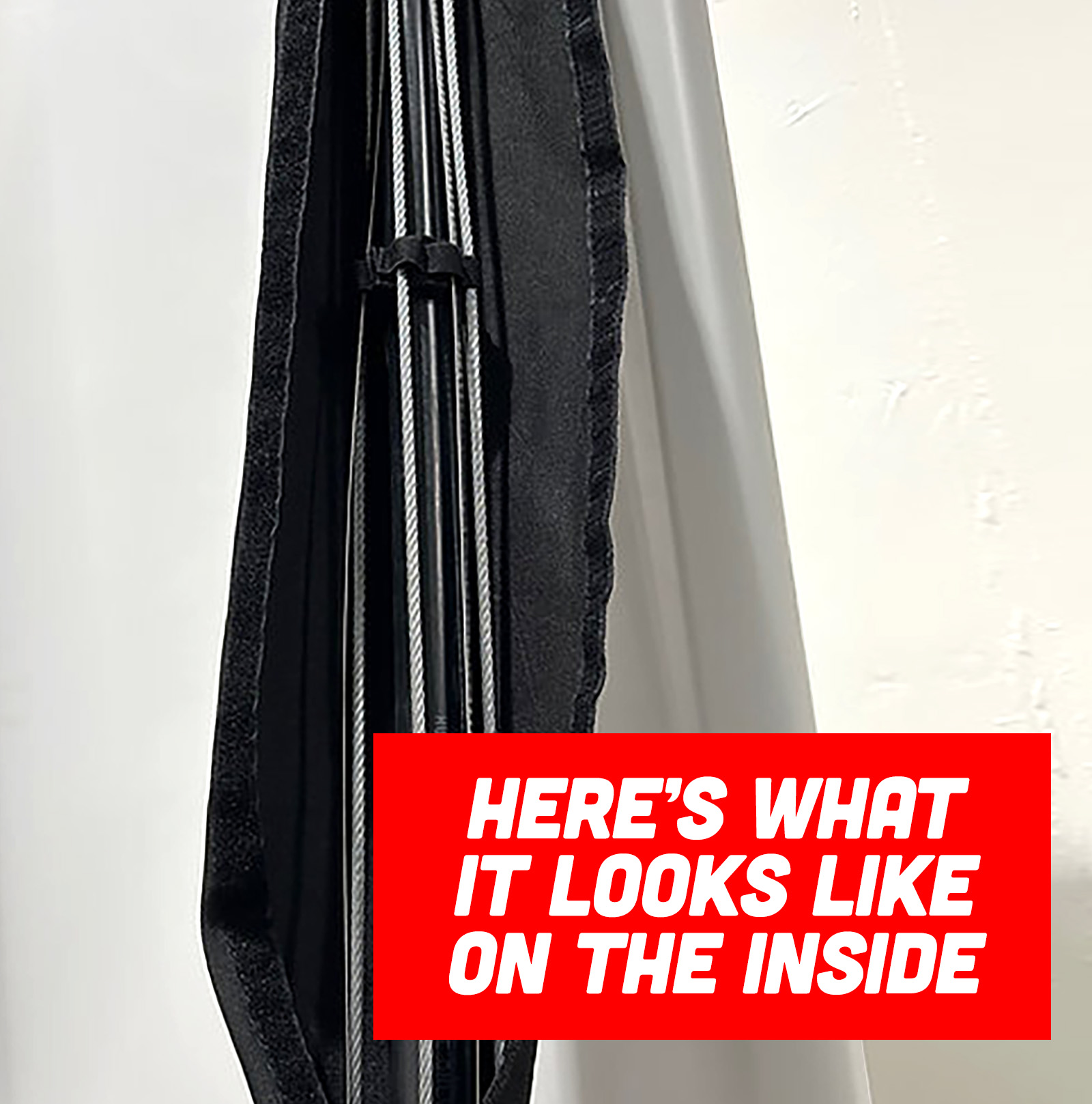
Birsen’s solution? A product called the EV Cable Shield. Like the CatStrap, this device consists of a series of strip steel pieces—four in this case. The steel runs the length of the charging cable, surrounding it on each side for full protection. Getting the steel hard enough to actually stop thieves wasn’t easy.
“The strip steel material that we’re using is very similar to what they actually manufacture the saw blades out of, except ours goes through an extra heat treatment process that raises the hardness of that material, just a level above what you’ll find in the hardest saw blade tool that you can buy at Home Depot, for example.”
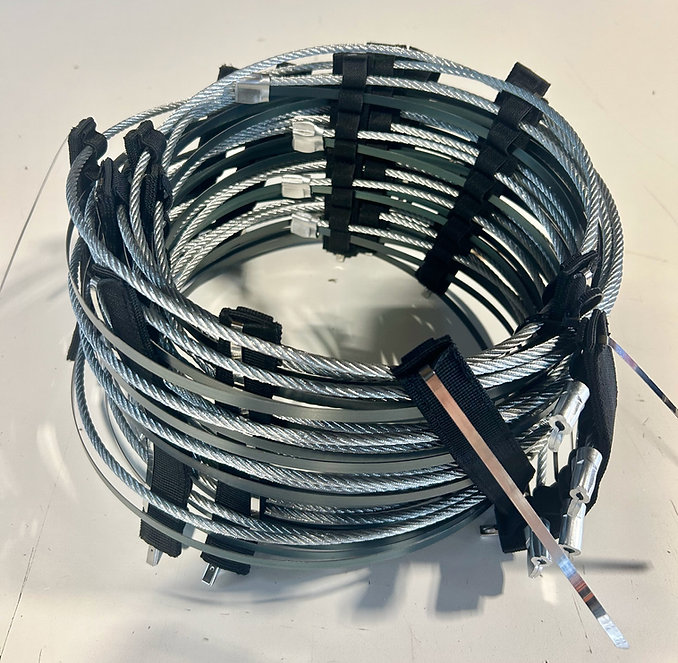 The EV Cable Shield before it’s placed onto a charging cable. Source: CatStrap
“So most Sawzall blades top out at around 47 to 49 on the Rockwell hardness scale. And our strip steel spec, it’s from 53 to 55 on that Rockwell hardness scale,” says Birsen. “So basically, what happens when you have even a high-quality Sawzall blade, and you try to cut through these three layers of hardened strip steel, the teeth on that blade will just wear out before you can actually cut through the material. And so after a couple of minutes of cutting, you’re basically just left with a dull blade.”
“It’s just a really frustrating, difficult job to get through,” he says. “You need at least a fresh pack of spare blades in order to actually complete a cut. And so, we just don’t see that happening out in the real world.”
For the Cable Shield, CatStrap went even further, adding another type of metal to make it even tougher for thieves.
 Source: CatStrap
“We also intermix [the strip steel] with steel aircraft cable, and the reason that we’re using two materials in the EV charging cable space is because there’s no one tool that’s effective at cutting both types of material,” Birsen says. “So you’ll have a bolt cutter type of tool that can’t get through a very ductile, flexible aircraft cable. Or more of a saw type of tool, where those steel strips are just gonna destroy the teeth. It’s the combination of those materials for the EV cable that makes it really difficult to cut.”
Two major considerations in adapting the CatStrap product to EV charging cables are that charging cables aren’t hidden away under the car, and they have to move freely without assistance. Adding the same level of protection while keeping those two things in mind was a challenge, according to Birsen.
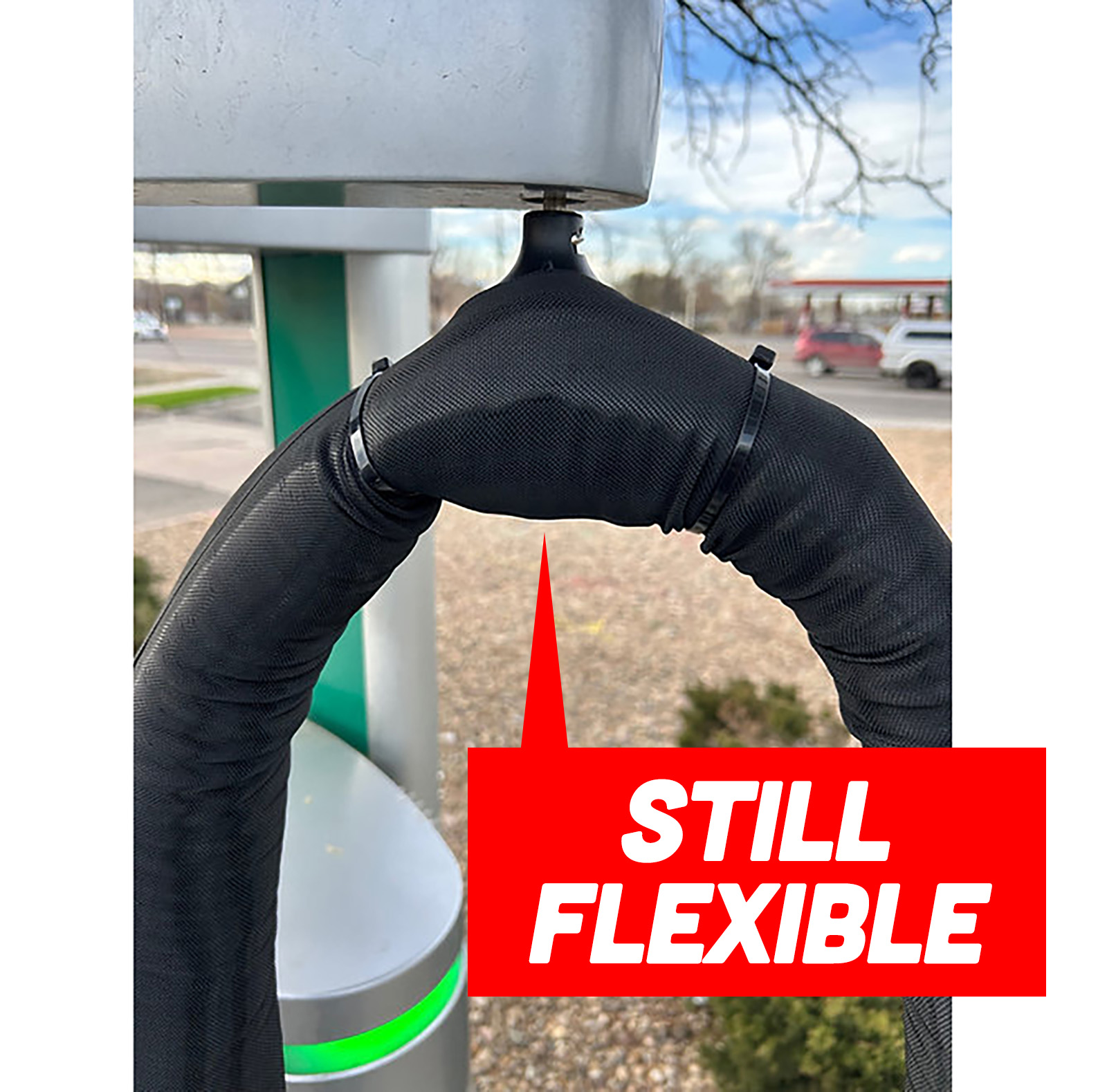
“There are new constraints for charging cables—mainly that they’re flexible,” he says. “You need to remain lightweight, and you can’t inhibit the usability of the cable at all from a consumer experience. There are also some more aesthetic requirements for an EV charger compared to the underside of the exhaust of a car, where no one really sees.”
 Source: CatStrap
To that end, the entire setup is wrapped in a black nylon sheath that seals via a Velcro-type fastener. The result is a chubbier, slightly heavier wire that can still be maneuvered by an average person without them having to struggle.
An Extravagant Deterrent
Birsen says his company has sold around 2,000 of its EV Cable Shields so far, with the product now making up about half of CatStrap’s business. Of those 2,000 Shields, around 1,000 have come equipped with a $100 add-on product called the DyeDefender. It’s a pressurized line of liquid that sits alongside the steel in the Cable Shield. When cut, it releases a blue dye that shoots out in the direction of whoever is attempting to cut the cable.
“[It was] originally developed for the catalytic converter product, and really inspired by what the banking industry does, with those blue packs that release that powder if someone runs off with [money]. And in like glitter bomb type of inspiration from YouTube videos,” Birsen tells me.
He says he took additional inspiration from the automotive industry, using nylon braided fuel lines to hold the dye. The liquid itself is 60% vegetable glycerin and 40% water, with less than 1% food-grade blue colorant. Birsen says the solution mimics antifreeze properties, so it stays liquid in cold weather. The line is pressurized to 80 PSI, which is enough to shoot “several feet” of spray, but not so much that it’ll injure someone.
 Busted. GIF via CatStrap
In addition to causing a huge mess, cutting through the line would mark the culprit with a bunch of obvious blue dye, making them an easy spot for law enforcement.
“If they did try to cut through one cable, it’s highly unlikely that they’re gonna go down the line at a typical EV charging station where there’s six or eight cables and continue doing that because it creates a real mess and [it’s] not something that these guys are used to dealing with,” says Birsen. “It certainly prevents any sort of catastrophic damage where they wipe out an entire station.”
How Effective Is It? Well, No One Really Knows Yet
Despite having sold over 1,000 EV Cable Shields equipped with the DyeDefender system, no one has been brave enough to attempt to cut past the setup just yet, according to Birsen.
“We are still waiting for our first documented video of a thief cutting through this and seeing the blue spray on them,” he tells me. “To date, all the videos that exist are from our own internal testing. Everything that has been deployed, there has not been an attempted cut yet, actually.”
 Source: CatStrap
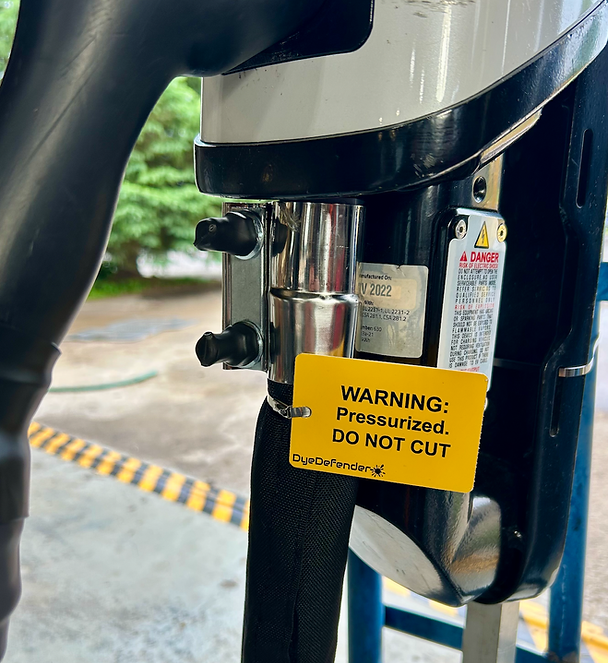
Birsen says the lack of attempts likely comes down to the yellow placard that comes with every DyeDefender system. It sits right at the beginning of every cable equipped with the option, warning potential thieves that what they’re about to cut into is, in fact, pressurized.
“I think ultimately our goal is: Can we provide enough of a visual and psychological deterrent where a thief doesn’t even try in the first place? And so we do provide that yellow warning tag with every unit that says, ‘Warning, pressurized, do not cut,’ which is important both from a deterrence standpoint and from a liability standpoint to make sure that we’re covering both ourselves and the customer,” he says. “That has been incredibly effective at getting a thief to just walk up to the unit and walk away without even trying.”
To all the EV charging cable thieves out there: Be careful. Next time you try to steal some copper from a charging station, you might end up looking like the newest member of the Blue Man Group.
Top graphic image: CatStrap