The plan is evolving against the backdrop of knowing Connecticut was once a strong manufacturing state.
It’s a plan by Gyre9, an engineering and manufacturing facility in Southbury, to produce high-end electric motorcycles at its facility as early as next summer.
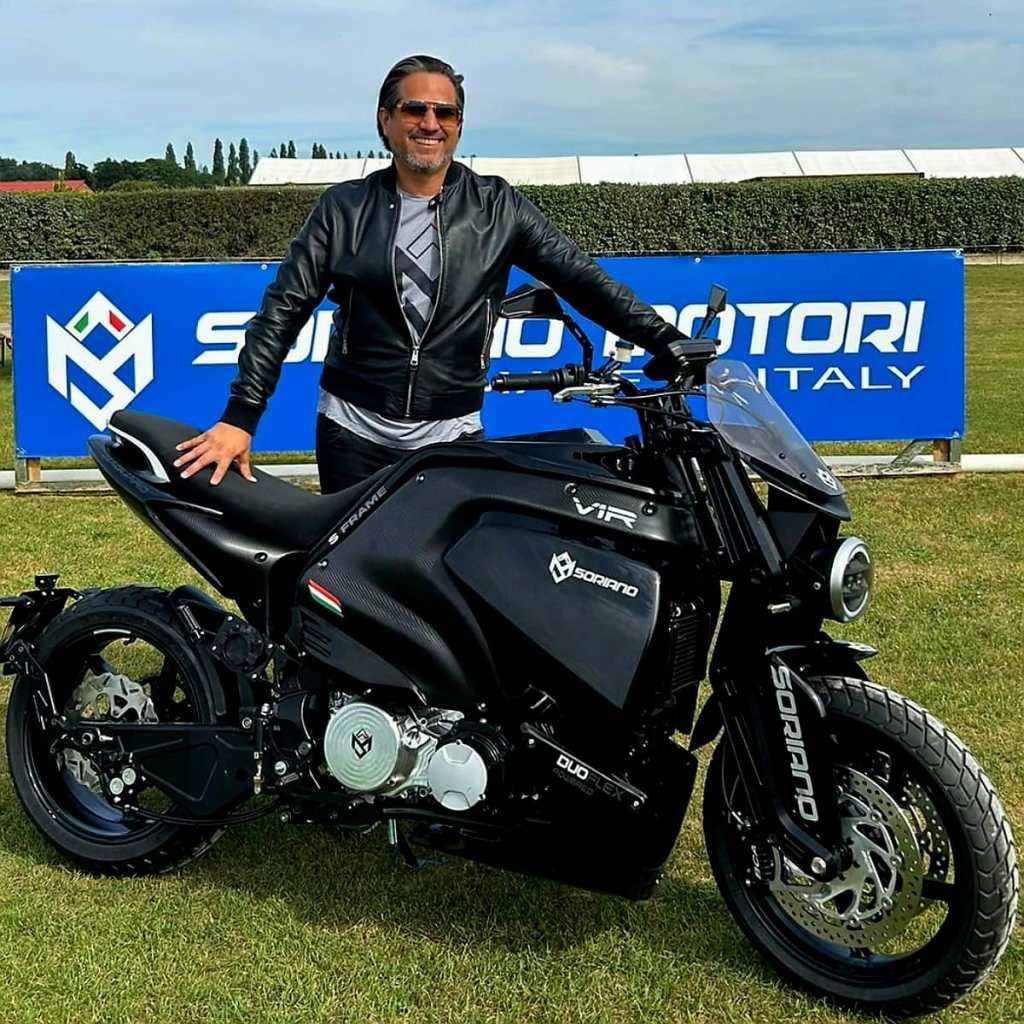
Gyre9 has entered a partnership with Italian-based Soriano Motori. The men said the companies now have a joint venture called Soriano9. Soriano Motori CEO Marco Soriano and Gyre9 founder Ed Gilchrest were to hold an unveiling in Southbury this week for potential investors – some coming from as far as Canada. There had expected to be 40-50 investors to attend at the minimum, with many more expected to be attending virtually, according to Gilchrest.
The idea, Gilchrest said, was for “them to have a sense of who we are as a manufacturer and an engineering group, and a lot of conversations around what our plans are and what we’re going to use the money for – it’s sort of official unveiling of the prototype.”
“It’s not the latest design but it’s close enough for show and tell purposes,” he said.
Gilchrest and Soriano first spoke in February to discuss a potential union. Soriano visited from his Long Island home in March.
“I told him we aren’t making motorcycles, but we can pretty much make anything,” Gilchrest said. “He saw my factory and said, ‘We can do it here.’ We obviously have a lot of space here – that’s not an issue. We chatted over many weeks and decided it would be a joint venture.”
Pizza, barbecue, tacos, pasta at one CT kitchen. There’s opportunity to own the restaurants too.
Gilchrest said his company is always looking for new opportunities.
“The whole way we’re set up here is like, we’re kind of fearless and we look for opportunities to learn something new,” Gilchrest said. “Marco is very charismatic and very convincing. And he’s like, ‘we can do this.’ I’m like, you just have to raise money.”
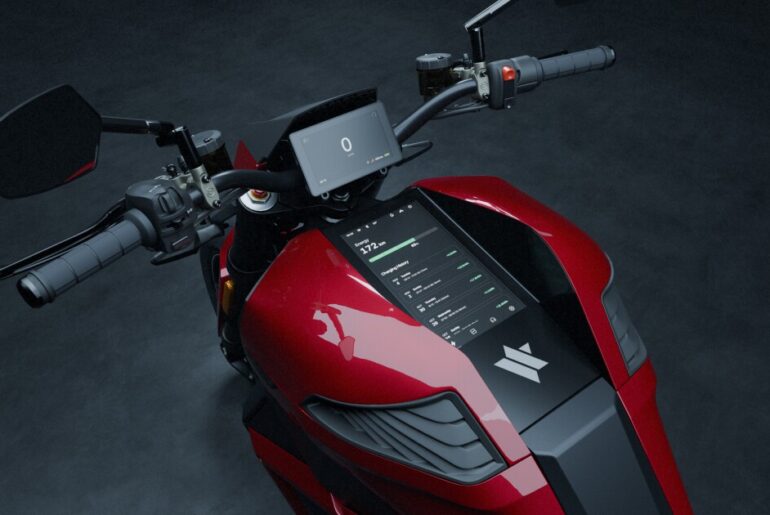
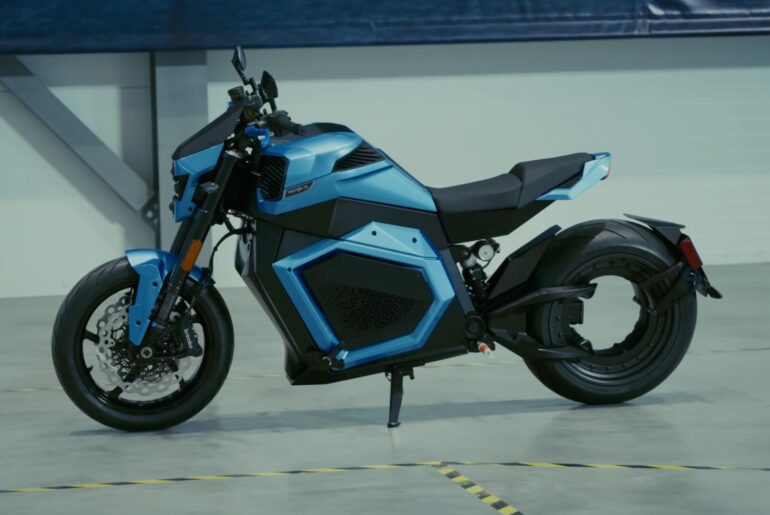
Gilchrest said these motorcycles are premium motorcycles that range from $40,000 to $50,000 in cost.
Gyre9 is already in the business of electric vehicle technology. A large portion of the company’s business is designing and manufacturing electric vehicle charging stations.
Once Soriano9 gets investors, engineering has to be tweaked at his facility to produce the motorcycles, and the motorcycles will need to go through another round of prototyping, he said.
Gilchrest said it would take about a year for the company to get to the point where it can produce the motorcycles.
“I’m an engineer and (Marco’s) sort of a marketing sales money guy. So all the stuff that we worry about, he’s not even thinking about. So, which is fine. That’s why it’s a good team,” Gilchrest said.
Gilchrest said if everything goes to plan, this could potentially be a source of manufacturing pride for the state.
“To actually bring something in into Connecticut like a motorcycle being made here, it’s kind of a big deal,” Gilchrest said. “We’ve had Paul Lavoie (then Connecticut chief manufacturing officer) here many times, the Governor (Ned Lamont) and (U.S. Sen. Richard) Blumenthal and we were always ‘the little company that could.’”
“But the trick would be, can we get one of these things going that is kind of above and beyond what we’re doing?” Gilchrest added. “Because we’re already making stuff, but it’s mostly stuff where people go, ‘oh, that’s interesting, Ed.’ This would be pretty cool. It could even be a mild success, it would just be amazing that Connecticut, if we can pull this off.”
Gyre9 has been in business in Southbury for nearly 20 years. In addition to manufacturing electric vehicle charging stations, the factory makes toaster ovens, medical devices, and industrial equipment among other items. The company also does work with start-up businesses.
“Kind of the mothership is product development, and 99% of what we design, we would never make. It would go somewhere else in the world and get maybe manufactured by our customer or a contract manufacturer in Asia somewhere. Or we might only make them for a while. We might make the first few thousand and then it gets sent to a lower cost factory once the design’s proven,” Gilchrest said.
The company currently as about 30 employees and that will expand by 10 to 15 people next year and the year after if Soriano9 “hits the target.”
“That’s not even counting, if Marco wants to develop more bikes, more motorcycles, and we do the development,” Gilchrest said. “Right now, we’re doing like design for manufacturing work to get this into production. But if he says, no, let’s design the next ones in the U.S. instead of Italy, that’s a whole different animal. You’d have 15 engineers working on it.”
Soriano has been in business since 1903, but Marco Soriano said there has been a “company rebirth” of the brand in 2020.
“I decided to do that because of a trend in the market with the electric vehicles and having had a history of automotive and outboard engines and just for aviation and motorcycles in my family, I asked myself, why not?,” he said. “I decided to go forward with this idea that we came to design engineering and manufacturing in Italy with a whole new concept innovates through all the problems that you see in immobility today.”
Question remain, he said, about the range electric vehicles have, length of time and places to charge, what the infrastructure for it is, and more.
Soriano said the U.S. is 10 years behind Europe and Asia in this field.
“On that basis, our innovation was to create a vehicle that was very Italian design appealing to the market and being that the U.S. is always one of our primary buyers for high-end luxury Italian…,” Soriano said.
Soriano said he also factored in potential tariffs and their impact when making decisions.
“Marco has all these vendors in Europe that were going to be making all the parts for him,” Gilchrest said.
“And unlike Marco, to make this work, I can’t use all those vendors. There’s certain stuff we’re going to have to buy, like Brembo brakes, and off the shelf items like tires. and maybe the wheels. But all of the custom machine parts, we’re going to have to resource here in the U.S. Otherwise, all we’re going to do is be paying the tariffs ourselves.”
“We just had a new tariff deal, that’s not signed really yet, with Europe that brought the tariffs down for Europe a little bit, but I think it’s at 15% now,” Gilchrest said. “Marco is happier, even without the tariffs to try to do this in the U.S and in Connecticut. We’re not going to be the lowest cost producer, but we’re pretty scrappy.”
Soriano said tariffs played a factor in his decision on manufacturing in the U.S. Initially, EU was initially facing threats of up to a 30% tariff under the Trump Administration.
“And when that happened, I had to take immediate decision to where what to do in the event that that would actually take place,” he said. “And as of not too long ago, two days ago, there was finally a (15%) deal made between the E.U. and the U.S. But I could not wait that long to take a decision…I decided to bridge instead into the United States by finding building or having a manufacturing plant where we can do the design engineering and manufacturing, just that we were set up to do that in Europe already.”
Soriano had first reached out to Gyre9 in February before meeting with them in March and by the middle of April formed Soriano9.
“The motorcycle itself has already displayed and fixed a lot of the problems that we have today. One of them, it’s the high voltage battery pack done in house, so we don’t have to rely on suppliers in China,” Soriano said. “We do all that in house, and those are our designs or schematics from zero. I’ve also designed and built a double headed engine, which I call the dual flex, allowing for higher performance and energy conservation.”
He said in electric vehicles, all the driver has is a brake and acceleration. Soriano said he’s added a gearbox transmission to electric vehicles to use less energy and give the vehicle better torque when maneuvering.
“In the motorcycle business you need still your clutch, your gear plugs on your left side, and you need your full-braking system on your right, as your maneuver in your bike,” Soriano said. “The last innovative thing that we did here was adding noise, an actual AI system, where the rider has the optional to change the sounds in the bike, so that people can actually hear you on the streets. Another one of the problems that you see with EVs, especially in a motorcycle where you expose traffic is that nobody can hear you and that’s potentially a higher chance that you can get into an accident. We’re maximizing safety.”
Soriano is also implementing modules on the bike to teach the company how the consumer behaves on the bike to collect data, which he calls “valuable when you are expanding your business globally.”
Soriano said Soriano9 has a five-year plan with the hopes of bringing in as many as 300-to-500 new employees in the future.
“As of today, we have an official joint venture. We are having very first unveiling of the prototype built in Europe, but that will be worked on for the second generation as we’re industrializing the platforms, as we’re industrializing and commercializing the products, with larger, large distributors throughout North America,” Soriano said. “The plan is to do that in the form of an advanced manufacturing plan will have robotics, laser cuts, precision, machinery, to operate at this factory.”
Soriano said the company is working with 80% Italian manufacture parts and components but are also working on finding out who are best suppliers would be in the U.S.
Soriano, who has homes in nearby Long Island and Manhattan, said the Southbury factory has great potential.
“I see a potential of growth, long term, in the state of Connecticut,” Soriano said. “We’re attracting investors from all over the world, and they understand the fact that we make this decision to come to manufacturing in the U.S.”
He noted Connecticut has a lot of history in manufacturing businesses that “unfortunately have stopped existing, but once was renowned for being a very strong manufacturing state. And hopefully that brings back some of that aspect of history and legacy in comparison to other states in the U.S.”