
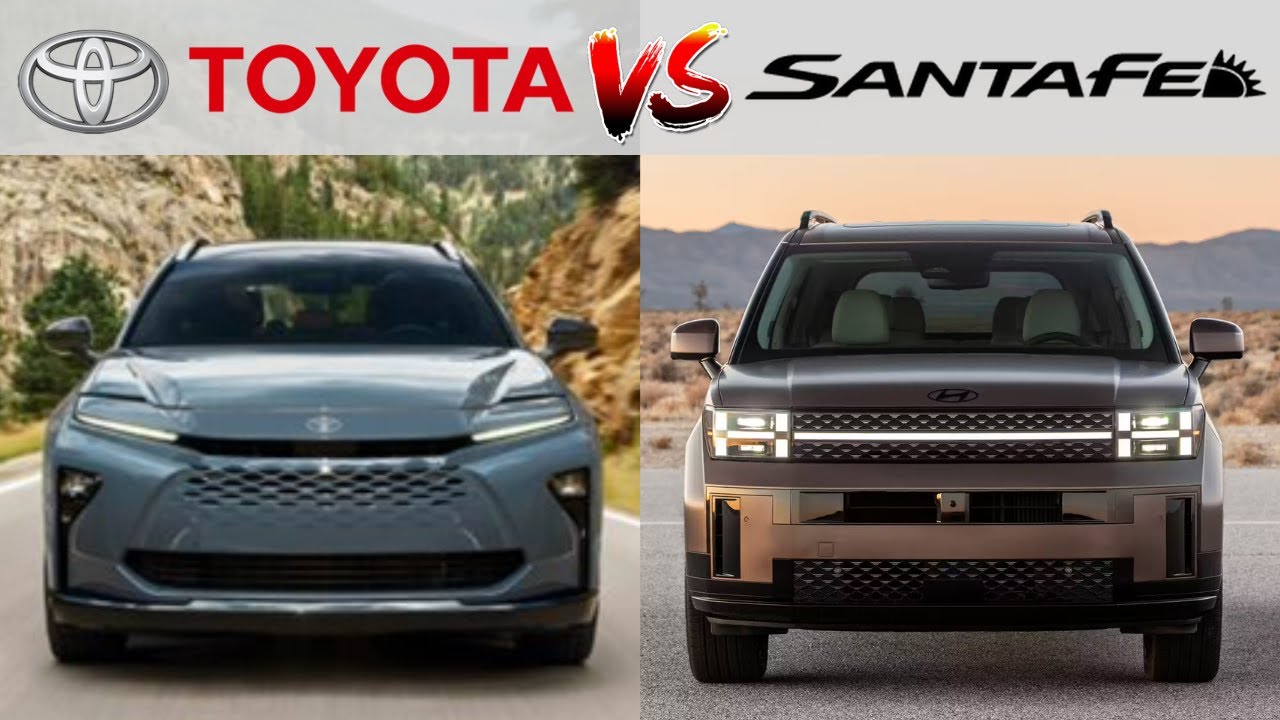
Toyota Crown Signia vs Hyundai Santa Fe 2026 | Hybrid SUV Battle
The SUV world is evolving fast, but in 2026, two vehicles step forward with completely different philosophies, challenging everything we thought we knew about family mobility. On one side stands the 2026 Hyundai Santa Fe, bold, boxy, redesigned from the ground up, and engineered with the kind of adventurous spirit that invites you to throw in the bags, load up the family, and head out toward the horizon. It’s practical, rugged, spacious, and unapologetically confident. And then opposing it with grace and refinement comes the 2026 Toyota Crown Signia, a sleek, premium hybrid crossover that doesn’t shout for attention. It earns it with its elegant silhouette, whisper quiet drivetrain, and upscale cabin. The Crown Signia is Toyota’s new definition of modern luxury. Built for drivers who want efficiency wrapped in sophistication. Two very different personalities, two very different missions, but only one can truly offer the better value, better comfort, and better everyday experience in 2026. In this video, we dive deep into everything that matters from powertrains and performance to interior quality, technology, safety, real world usability, and pricing. We break down how the Santa Fe’s rugged utility compares to the Crown Signia’s refined hybrid focus in which SUV truly delivers more for families, commuters, adventurers, and everyone in between. So, settle in, turn up the volume, and get ready because this is 2026 Hyundai Santa Fe versus 2026 Toyota Crown Signia. This is Parth, and you are watching Motor Nation. Before we jump into today’s video, here’s something every true car enthusiast will love. Our official website, motornationgroup.com. It’s your go-to destination for everything automotive. From the latest car launches and industry news to detailed reviews, performance breakdowns, comparisons, buyer guides, and even insights into future tech shaping the next generation of vehicles. Join the Motor Nation community where passion meets performance and the drive never stops. Now, let’s get into the video. When you look at the 2026 Hyundai Santa Fe and the 2026 Toyota Crown Signia side by side, you immediately realize these two SUVs were built for completely different kinds of drivers. And that’s exactly what makes this comparison so interesting. The 2026 Hyundai Santa Fe arrives with one of the boldest redesigns in Hyundai’s history. Its squared off body, long wheelbase, tall greenhouse, and H-shaped lighting give a rugged, almost Land Rover inspired stance. This is Hyundai leaning hard into the outdoor lifestyle trend. A family SUV that looks just as comfortable pulling up to a campsite as it does in a mall parking lot. With three rows, a roomy cabin, and a mix of turbo and hybrid powertrains, the Santa Fe is all about flexibility, practicality, and a sense of adventure baked right into its design. Meanwhile, the 2026 Toyota Crown Signia takes the opposite approach. Sleek, elegant, premium, and purpose-built for drivers who want efficiency without sacrificing comfort. It’s Toyota’s first crown branded SUV for North America, and it embraces a more refined couplike profile that prioritizes smooth aerodynamics, and high-end appeal over rugged presence. Unlike the Santa Fe, the Crown Signia sticks to a single hybrid powertrain, focusing on consistency, reliability, and a polished driving experience rather than variety. So, while the Santa Fe plays the role of the versatile family explorer with the looks, space, and options to match, the Crown Signia positions itself as a stylish, efficient, luxurylleaning alternative. Both aim to be practical, both aim to be comfortable, but they deliver those qualities through two very different identities. Let’s get under the hood of both of these 2026 crossovers because that’s where their true characters begin to emerge. Starting with the 2026 Hyundai Santa Fe. This is a large three row SUV reinvented for modern families. For its power trains, Hyundai offers you a clear choice between performance and efficiency. And it’s worth understanding exactly what each brings. If you opt for the standard gasoline engine in the Santa Fe, you’re looking at a 2.5 L turbocharged 4-cylinder engine producing approximately 277 horsepower and 311 lbft of torque paired to an 8-speed automatic transmission. This setup gives the Santa Fe surprisingly strong acceleration for its size. In independent testing, it was recorded doing zero to 60 mph in roughly 6.3 seconds. Now, that’s quick for a three row family SUV. The fuel economy for this engine is modest compared to smaller crossovers, but competitive in its class. Combined numbers sit in the mid20s MPG range, depending on drive type and trim. When you factor in its capacity for people and cargo, this gasoline option delivers genuine on-road performance without sacrificing practicality. Then there’s the hybrid version of the Santa Fe, a powertrain designed for the driver who values efficiency but still wants SUV space. This variant uses a 1.6 L turbocharged engine linked with electric motors, totaling around 231 horsepower and approximately 271 lbfd of combined torque. Figures vary slightly by region. In real world testing, that equates to 0 to 60 miles per hour in the upper 7-second range, around 7.8 seconds in one test. In combined fuel economy, estimates of 35 to 36 m per gallon or higher depending on frontwheel or all-wheel drive. What this means is fewer visits to the pump, less expense over time, and a hybrid system that doesn’t feel slow. It still accelerates with confidence. On top of that, Hyundai has tuned the hybrid for smoothness and quiet operation, which makes daily driving feel more refined. While Hyundai hasn’t officially published all detail numbers for 2026 yet, what we do know is that the Santa Fe delivers choice, the raw power of the turbo gasoline, or the smart efficiency of the hybrid. If your priority is rapid getaways and towing ability, the gasoline version might suit you best. If you commute daily, carry family and cargo often, and want lower running costs, the hybrid is a compelling alternative. Turning now to the 2026 Toyota Crown Signia, you’ll notice a different philosophy altogether. Rather than offering multiple engine choices, Toyota has settled on one intelligently calibrated hybrid system designed for refinement, efficiency, and premium feel. The powertrain consists of a 2.5 L naturally aspirated 4-cylinder engine paired with dual electric motors and a third motor driving the rear wheels giving full-time all-wheel drive as standard. The total combined output is around 240 to 243 horsepower routed through continuously variable transmission ECVT fine-tuned for smooth imperceptible transitions between electric and gasoline power. Toyota quotes fuel economy estimates of around 41 miles per gallon combined with city/highway ratings around 42 to 41 MPG for the base hybrid version which is impressive for a crossover of its size and hybrid complexity. In realworld tests, acceleration from 0 to 60 mph is recorded in the 7-second range. Though Toyota isn’t chasing stopwatch numbers here so much as a refined composed driving experience. If you opt for a more performance-tuned hybrid max variant were available, figures shift accordingly, but the routine driving focus remains the same. Quiet, smooth, efficient. Comparing the two, the Santa Fe gives you wider choice in powertrain, meaning you can pick what matters most to you. performance, efficiency, or somewhere in between. The Crown Signia gives you one purpose-built hybrid system wrapped in upscale design and engineered for drivers who want a refined, low emissions crossover with premium touches. If you put your foot down in the Santa Fe with the turbo engine, you’ll feel the pull and the responsiveness. If you glide away in the Crown Signia, you’ll feel how understated and polished the hybrid system is with smooth acceleration and whisper quiet transitions. So, in short, choose the Santa Fe if you want maximum flexibility, plenty of powertrain options, and the ability to tailor your driving experience. Choose the Crown Signia if you want one finely tuned hybrid system, premium feel, exceptional efficiency, and less worry about choosing the right engine. Either way, you’re getting modern hybrid air technology, smart transmissions, and competitive performance, just delivered with very different characters. [Music] As we move inside, you immediately sense how different the Santa Fe and the Crown Signia are, not just in design, but in the way they feel, the space they offer, and how they integrate technology into your daily drive. Starting with the 2026 Hyundai Santa Fe, stepping into the cabin feels both rugged and refined. The interior is surprisingly roomy with front leg room around 44.4 4 in. And generous space in the second row at about 42.3 in, while even the third row, though tighter, provides about 30 in of legroom. Usable for kids or shorter trips. Shoulder room is broad, especially up front, giving that open, airy feel typical of a well-designed three row SUV. When it comes to cargo capacity, the Santa Fe Impresses, with all seats set, you have around 14.6 cubic feet of space, enough for a few grocery bags or backpacks. Fold down the third row, and that cargo area expands significantly to about 40.5 cubic feet. And if you tumble both rear rows, you unlock up to 79.6 6 cubic feet of space, creating a very flexible load floor for gear, luggage, or bigger items. Comfort in the Santa Fe is a priority. The seats are supportive, and depending on the trim, you’ll find features like heated or ventilated front seats, soft leather or premium fabric, and plenty of cubbies, large cup holders, and rear USB ports that make life on the go easier for passengers. Riding in the second row is pleasant for long stretches. Wide with good visibility and with the third row out of the way, plenty of elbow room. On the technology front, Hyundai doesn’t hold back. A 12.3 in touchscreen dominates the center stack in higher trims, running a modern infotainment system that supports wireless Apple CarPlay and Android Auto. You also get Bluetooth connectivity, steering wheel mounted audio controls, and a reliable six- speakeraker sound system in base versions. Connectivity is easy. The UI is intuitive, and there are multiple USB ports, even in the far back, so each passenger can plug in and stay powered. Meanwhile, the 2026 Toyota Crown Signia brings a completely different sensibility, more premium coupe meets crossover than a traditional SUV. When you open the door, you’re greeted by soft touch surfaces, leather trimmed seats, and elegant accent materials, bronze metal trims, subtle stitching, and a feeling of high craftsmanship. In the front seats of the Signia, comfort is top tier. They’re sculpted, supportive, and available with heating and ventilation, and in higher trims, memory settings to remember your preferred position. Rear seat passengers benefit from generous legroom, a flat floor, and well-padded seats, making journeys relaxing rather than cramped. The roof line slopes gently, giving the cabin a sporty yet upscale feel while preserving enough headroom not to feel claustrophobic. Cargo wise, the Crown Signia offers about 25.8 cubic feet of space behind the rear seats, enough for daily errands or a couple of weekend bags. But when you fold those seats flat, the load area swells to roughly 68 to 69 cubic feet depending on trim, providing a practical flat floor that works well for larger items. Tekken Insignia is where elegance meets functionality. Toyota equips it with a nearly seamless 12.3 in digital gauge cluster and a 12.3 in central infotainment touchscreen as standard in most trims. A dual display setup that feels modern and luxurious. Connectivity is strong. Wireless Apple CarPlay and Android Auto come standard. On higher trim levels, there’s an available 11 speakeraker JBL premium audio system that fills the cabin with rich balanced sound and ambient lighting sets a calm refined mood for night driving. So when you compare the two, the Santa Fe leans into practicality, space, and versatility. Blending tech with realworld usability and smart cargo flexibility, the Crown Signia shifts toward a more refined, quietly luxurious cabin. One that doesn’t just carry you and your gear, but does so with sophistication, comfort, and a modern tech-filled character. Safety is more than just airbags in 2026. It’s about smart, active systems and structural design working together to keep you and your passengers out of trouble. And when you look at the Hyundai Santa Fe and the Toyota Crown Signia, each brings its own strengths to that mission. Starting with the 2026 Hyundai Santa Fe, the SUV comes loaded with Hyundai’s latest smart sense safety suite. That means you get forward collision warning and automatic emergency braking to detect vehicles or pedestrians, which helps prevent or mitigate front-end crashes. Lane keeping assist monitors your drift and gently corrects steering if you inch out of your lane. There’s adaptive cruise control, too, which makes highway driving less tiring by adjusting your speed for traffic. Especially useful when you’re hauling the family. On top of that, the Santa Fe typically offers blind spot monitoring with rear cross traffic alert. So, when you’re changing lanes or reversing out a tight spot, the car warns you of vehicles you might not see. Hyundai also equips the Santa Fe with driver attention alert. The car watches for subtle steering or speed changes that might indicate fatigue and nudges you when you need a break. Add a full set of airbags, electronic stability control, traction control, and a rigid body structure with crumple zones, and you’ve got a safety foundation designed for realworld family driving. Now, the 2026 Toyota Crown Signia takes a more upscale but serious safety approach with Toyota Safety Sense 3.0 as standard. That suite includes a pre-colision system with pedestrian detection, full speed range dynamic radar cruise control, lane departure alert combined with steering assist, and lane tracing assist to help the car stay centered in its lane. Road sign assist identifies important signs like speed limits. Automatic highbeam switch brightness based on oncoming traffic. Proactive driving assist even applies general steering or braking under certain conditions to help avoid or mitigate collisions. Beyond the core TSS system, the Signia adds blind spot monitoring with rear cross traffic alert, plus a safe exit alert that warns if someone or something is approaching while you or your passengers try to open the door. on higher trims or with the available advanced technology package. You also get front cross traffic alert and lane change assist. Valuable for urban driving and tight spaces. Four low-speed traffic jams. There’s traffic jam assist on certain trims, which helps manage steering, braking, and acceleration below about 25 mph, assuming you meet conditions and enable the system. In terms of structure, the Crown Signia doesn’t rely solely on electronics. It’s built with a high strength body shell, reinforced crumple zones, and a full complement of airbags, including side curtain airbags to protect occupants in a variety of crash scenarios. Toyota’s Star Safety System further backs you up with vehicle stability control, traction control, electronic brake force distribution, brake assist, anti-lock brakes, and smart stop technology. And now we arrive at one of the biggest deciding factors for buyers, the pricing. And this is where the 2026 Hyundai Santa Fe and the 2026 Toyota Crown Signia take two completely different paths to reach two completely different types of customers. Let’s start with the 2026 Hyundai Santa Fe, a model that has built its reputation on offering big value, big tech, and big presence without demanding luxury SUV money. The lineup starts with the Santa Fe SE priced around $35,500, which already feels unusually well equipped for an entry model. You’re getting dual 12.3 in displays, wireless smartphone integration, LED headlights, and Hyundai’s latest SmartSense safety suite. Features many competitors hide behind higher trims. Step up to the seal, around $38,500, and the Santa Fe starts feeling more family focused. You get additional comfort touches, more convenience tech, and improved interior materials that make daily commuting a lot more pleasant. Then comes the XRT, priced near $41,000, which adds a rugged edge with blacked out styling, chunkier cladding, bigger wheels, and visual upgrades that give the Santa Fe a more outdoors ready character without actually bumping into off-roader pricing. Above this sits the Limited at about $44,500 with a Santa Fe transitions firmly into premium territory, offering leather upholstery, ventilated seats, a surround view camera system, and a cabin that starts to blur the line between mainstream and near luxury. And for buyers who want maximum refinement, the calligraphy, priced around $48,500, stands as the top of the pyramid. With quilted Nappa leather, a dualpane panoramic sunroof, upscale ambient lighting, and Hyundai’s most advanced tech, this trim is designed to compete directly with vehicles costing thousands more. The hybrid lineup mirrors this structure. The hybrid seal starting near $40,500. The hybrid limited around $45,700 and a flagship hybrid calligraphy approaching $49,500. With better fuel efficiency and smoother power delivery, the hybrid trims offer a compelling upgrade for buyers wanting performance and economy in one package. But the 2026 Toyota Crown Signia approaches pricing differently. Not by giving you a long list of trims, but by positioning itself as a premium hybrid crossover right from the start. The lineup begins with the Signia XLE priced around $43,000. And even at this level, Toyota loads it with features many brands reserve for mid or upper trims. You get the full hybrid AWD system as standard. A large dual screen setup with Toyota’s latest connected services, highquality interior materials, cloud-based navigation, heated seats, and Toyota’s Safety Sense 3.0. It enters the market at a higher price, but it comes in strong with a premium first attitude. Then we move to the Signia Limited. Priced around $48,000, which is where the model truly shines as a near luxury offering, this trim adds leather upholstery, a panoramic glass roof, upgraded ambient lighting, ventilated front seats, a premium JBL audio system, and extended driver assistance features. The Limited carries itself like a crossover designed to deliver Lexus-like comfort without the Lexus price tag. As we wrap up this head-to-head between the 2026 Hyundai Santa Fe and the 2026 Toyota Crown Signia, it’s clear that both SUVs bring very different personalities to the table. One build on bold value and versatility, the other engineered for refined efficiency and premium road manners. The 2026 Hyundai Santa Fe continues to stand out with its rugged squared off SUV presence, a spacious and family-friendly cabin, an impressive suite of tech features, and the option of turbocharged or hybrid powertrains that balance performance with practicality. Hyundai’s aggressive pricing strategy, strong warranty coverage, and thoughtful interior usability make the Santa Fe the more adventure ready and budget friendly choice. It delivers capability, everyday comfort, and a feature set that rivals even pricier competitors. Meanwhile, the 2026 Toyota Crown Signia takes a more upscale crossover luxury route. Its hybrid exclusive drivetrain focuses on smoothness and fuel savings, while the cabin emphasizes refinement, quietness, and Toyota’s signature durability. The Signia doesn’t try to be rugged. Instead, it excels as a premium commuter SUV for buyers who value efficiency, comfort, and a high quality driving experience wrapped in sleek styling. Thanks for watching this in-depth comparison of the 2026 Hyundai Santa Fe versus the 2026 Toyota Crown Signia. If you enjoyed the breakdown and want more detailed car reviews, comparisons, and automotive insights, make sure to hit the like button, subscribe to Motor Nation, and turn on notifications so you never miss an update. You can also follow Motor Nation on Instagram and X for quick updates, behindthe-scenes content, and real-time car news. And don’t forget to check out our official website where we post extended reviews, buying guides, and the latest automotive trends every week. This is Motor Nation, where passion meets performance. Thanks for watching and I’ll see you in the next one.
Toyota Crown Signia vs Hyundai Santa Fe 2026 | Hybrid SUV Battle
SUV showdown alert — 2026 Hyundai Santa Fe vs 2026 Toyota Crown Signia. Two very different Toyota crossovers, but both aim to deliver comfort, efficiency, and style for 2026. Which one is right for you?
In this video, we compare:
– Powertrain & performance: Santa Fe’s hybrid, PHEV, and gas options vs Crown Signia’s sleek hybrid setup
– Fuel economy: real-world efficiency and hybrid range compared
– Interior and comfort: three-row practicality & cargo space vs premium two-row luxury
– Technology: infotainment displays, driver-assist systems, and connectivity
– Safety: advanced features and backup systems that matter for families
– Price & value: which model offers more for your money based on features and trim levels
– Practicality: day-to-day usability, road manners, and long-term ownership
Timeline:
00:00 – Introduction
02:00 – New reveal
02:33 – Overview
04:32 – Powertrain
10:05 – Interior & Tech
14:58 – Safety Features
18:17 – Pricing & Value
22:13 – Conclusion
👉 Watch till the end to discover which 2026 Toyota crossover is the smarter buy — the family-friendly Santa Fe or the luxury-hybrid Crown Signia.
👍 Don’t forget to Like, Comment & Subscribe for more 2026 SUV reviews, car comparisons & hybrid breakdowns!
#HyundaiSantaFe #ToyotaCrownSignia #2026SUV #FamilySUV #HybridCrossover #CarComparison #SUVReview #MotorNation #ToyotaHybrid #SantaFe2026 #2026hyundaisantafe #2026hyundai #2026santafe #2026toyotacrownsignia #2026toyota #2026crownsignia #toyotacrownsignia #hyundaisantafe #motornation
———————————————————————————————————–
Heroism by MaxKoMusic | https://maxkomusic.com/
Music promoted by https://www.chosic.com/free-music/all/
Creative Commons Attribution-ShareAlike 3.0 Unported
https://creativecommons.org/licenses/by-sa/3.0/deed.en_US
Bliss by Luke Bergs | https://soundcloud.com/bergscloud/
Creative Commons – Attribution-ShareAlike 3.0 Unported
https://creativecommons.org/licenses/by-sa/3.0/
Music promoted by https://www.chosic.com/free-music/all/
Take It Easy by Luke Bergs | https://soundcloud.com/bergscloud/
Music promoted by https://www.chosic.com/free-music/all/
Creative Commons – Attribution-ShareAlike 3.0 Unported
https://creativecommons.org/licenses/by-sa/3.0/
Sound Effect by whoisbenjamin from Pixabay
Sound Effect by Modestas123123 from Pixabay
Sound Effect by Matthew Vakalyuk from Pixabay