2026 Porsche Cayenne Electric | Porsche Redefines Insanity
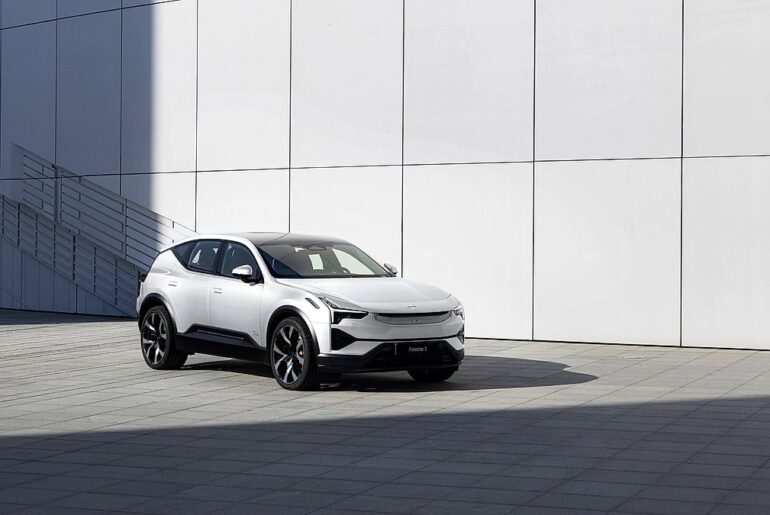
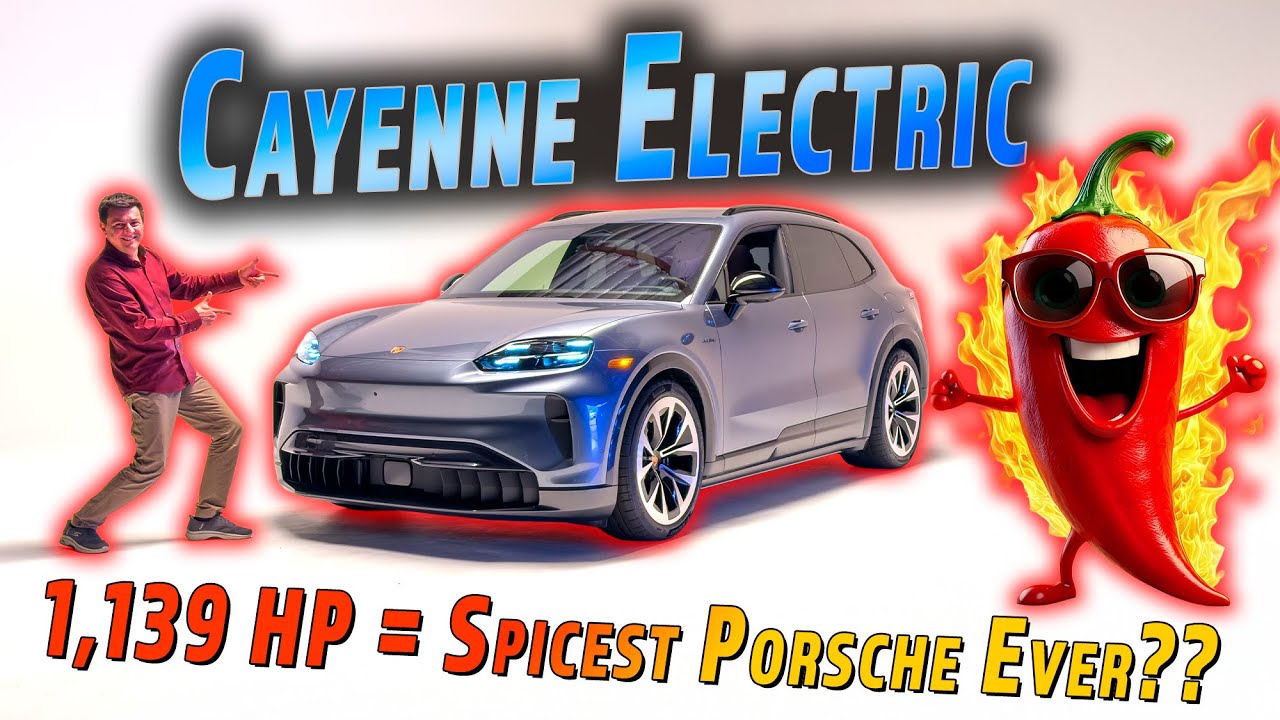
Today I’m down in Southern California taking a look at the most powerful and the most techladen Porsche ever. This is the all-new electric Cayenne. Up to 1,139 horsepower is happening under this body, getting you 0 to 60 in 2.4 seconds. Although, I bet Porsche is just a little bit conservative with that number. And more impressive, probably over 300 mi of range in every trim. So, let’s take a dive into this model and decide, do you want an electric or do you want a gasoline or do you want a plug-in hybrid Cayenne? because they’re all going to exist at the same time. First things first, let’s start with the design. Right now, we’re taking a look at the turbo model. We’ll take a look at the regular version of the electric Cayenne in just a moment, but up front, they look somewhat similar. We have passive arrow inlets here for the air curtain to help direct air around the side of the vehicle. That’s what helps get this that really low coefficient of drag, even lower than the regular Cayenne. And even though there’s nearly 1,200 horsepower happening here, we don’t need a lot of cooling. So, we have active arrow grills down here at the bottom. And these are interesting because they have a much more aggressive look than the standard EV you see out there with just a simple flap or a simple door. These actually will change their angle of attack based on your drive mode and how fast you’re going. So, if you’re going average city speeds, they’re probably going to be closed off. If you engage the sportier modes, they’re going to be very aggressively open. And at highway speeds, it’s going to depend on the cooling requirement for what’s going on and whether or not you’re demanding the most range out of the system, of course. Up here, we have the HD Matrix full LED headlights, of course, with LED turn signals. And the rest of this is definitely a smoother, more aerodynamic look than we’ve seen in the rest of the lineup, but not far off the TYON, of course. As you’d expect from Porsche, this is not some sort of EV conversion of the regular Cayenne. This is a groundup clean sheet design using all the latest in tech from Porsche. And it actually doesn’t even share that much with the rest of Porsche’s electric lineup. Some of the motors are shared with the Macan, but in this turbo, pretty much everything is unique to this specific model. And it was designed from the ground up to have a reasonably sized front trunk under here. Although, I suspect it might be a little bit too small to fit one of those larger carry-on bags. Because this is going to coexist with the plug-in hybrid and the gas Cayenne, they decided it should be right about the same size. It would be weird if there were different size Cayens around. The roof line is a little bit lower than the regular model, but we actually find more headroom on the inside. You also get a longer wheelbase, and that’s possible because with an electric vehicle, you can push the wheels as far to either corner as you really want. In terms of length, ground clearance, etc., it is substantially similar to the regular gasoline Cayenne. Also, the general shapes and flows are pretty similar cuz they don’t want to alienate customers. It’s when you get closer that you’ll notice the differences. Again, we have the passive arrow inlets right there up front. Those help create an air curtain around the vehicle. We get some crazy wide tires for a modern EV. 28540R22s right here in this model. Carbon ceramic brakes are going to be available. Just check out those massive calipers and rotors in there. Of course, this turbo model has really wide tires in the back. So, back here we find 325 tires also on 22-in wheels. Of course, 21s are going to be standard in the regular model. And really wide tires are going to be standard period. So, in the regular model, these rear tires, you’re going to see those in a moment, go down to 315s, but that’s still a crazy big wheel and tire set. The turbo gets a subtle widening right back here in that fender flare, but nothing too extreme. The roof line is classic Porsche. The greenhouse is a little bit smaller than the other models, and then we get an active spoiler back here in the rear. And speaking of the rear, that’s where things get a little bit lower, a little bit more aerodynamic, and a bit more dramatic as well. We of course have the big LED light bar there. Porsche spelled out across the rear. In case you’re wondering, the focus on aerodynamics didn’t delete the rear windshield wiper. I know that a lot of folks are really interested in maintaining that feature. Down here, of course, we have a lower bumper. Really interested in focused in aerodynamics. These little fins right there. And we have active arrow fins that pop out of the side of the vehicle. You’re going to find these only in the turbo model. And this is because Porsche wanted to be able to compensate a little bit for the slightly wider body, those fender flares, and of course, the wider tires. and they wanted to give all the models pretty similar range. We don’t know exact range figures just yet, but most models should be well over 300 miles. Early tests have actually indicated that you can get about 350 mi of actual highway driving at 70 mph in even the more powerful versions. So, that’s a pretty impressive figure. Every EV company is investing heavily in high voltage EV technology, but Porsche has been doing that longer than everybody because the TYON was one of the first high voltage EVs in the world. This is one of the latest. It uses a brand new battery pack, 113 kwatt hours, and even though it doesn’t share anything directly with the TYON, logically it’s building on every lesson that Porsche has learned with that model and the Macan, of course, and some of the related Audi models. But this turbo is completely unique. It doesn’t share motors with absolutely anything else. And that’s how we get to 1,139 horsepower peak. Now, that’s when all the stars align. The batter is in the right condition, the cooling’s in the right condition, etc. You engage the right modes. If you don’t do any of that, it’s still insane. You still get 844 horsepower. So, anyway you slice it, this is really, really quick. And again, when all the stars align, 0 to 60 will happen in 2.4 seconds. That’s thanks to brand new permanent magnet electric motors. bigger one. Of course, as you’d expect, right back here in the rear, we will have some detailed specifications to share with you, but keep in mind that it’s not simply a matter of adding A plus B. The car will send power wherever it’s needed based on what you’re doing behind the wheel and of course all of the software on board. What’s more impressive about Porsche’s EVs, though, for me personally, is how quickly they charge and how much regenerative braking you actually get. Let’s talk about the charging first. This is capable of 400 kW DC fast charging and that’s going to happen back here with a standard J3400 or NACS charge port. Porsche is really pushing the envelope when it comes to charging in a number of different ways. Importantly, one of those ways is 400vt DC fast charging, which you’ll find at every supercharger station that’s publicly open to non-Teslas in the US right now. This is going to be able to charge at a sustained rate of 200 kW on a supercharger station. That’s really a big deal because if you take a look at a Lucid or a Genesis or a Hyundai or a Kia, those other high voltage EVs that are available in the US and you take those to a Tesla supercharger station, they’re going to charge really quite slowly. Slowly enough that you might think to yourself, why would I even bother doing that? That’s not necessarily going to be the case here. However, if you go to an 800vt charging station, you can do 10% to 80% in about 15 minutes. This is going to be without a doubt one of the fastest charging vehicles that you can buy in North America. We don’t have specs for the 400vt charging, but don’t expect it to stretch out too far because of that 200 kW rate. The charge doors are on the back. As I said, the DC charging is going to happen over there, and it is going to be DC only, not combined AC/DC charging like we find on this pre-production prototype. On this side, we’re going to find just a J1772 AC charging connector. This makes a little bit more sense than people might realize at first glance. Some people might be asking, why didn’t they just make one charge connector or put an NACS AC charging connector on this side? Well, I have the answer. In the United States, J1772 AC public charging outnumbers NACS AC charging by about 18 to1. So, in the wild, this is the port you’re going to see everywhere. And you won’t need an adapter to AC charge at the airport or at the grocery store or at the office or even at home. you can just get yourself a J1772 charging station at home. On the road though, the NACS connector is probably what you’re going to want because of the reliability of Tesla stations and the fact that every major charging network has committed to that standard in the future. Of course, it is going to come to with an adapter so you can also plug into a CCS charging station. Also insane is the regenerative braking capability here up to 600 kW peak. That is 6 to eight times higher than the average Tesla. So, when you hear people say, “Hey, they love regenerative braking and they never use their brakes.” Well, think about that in this context. We have those massive carbon ceramic brakes up front, huge rotors, huge calipers, but they’re just there when you really want to drive this to the absolute limits. Because in most daily driving, 97% of your braking is going to be done by the motors and the battery. Unlike most EVs in the world, this has a third way of charging. If you don’t want to ever plug it in, you can get one of these. It’s an inductive charging mat and it will charge at the same rate as the conductive connector over there on that side. This is one of the first EVs in the world to support this kind of technology. You have to remember to order it from the factory to support this, however, so definitely keep that in mind if you’re ordering your Cayenne. You can order it as a prep kit where you can add all the hardware later. That’s going to be the least expensive way to go. Or you can order it from the factory with all the hardware on board from the beginning. That’s probably the way you want to do it if you really want to use the charging mat. You can also elect not to have it at all, but I wouldn’t do that if I were you. Here’s how it works. The car knows that you have the charging mat, and as you approach your driveway or your garage, because this can be mounted inside or outside, it’s going to actually assist you in driving over the mat and parking in exactly the right spot. Now, when I say exactly the right spot, there is a margin for error. You don’t have to be pinpoint accurate right on the center of that, and the car will let you know whether you’re in the right range or not. Then, it’s simply going to start charging. You might be wondering what happens if, I don’t know, your neighborhood cat or a raccoon decides to crawl across that charging pad. Well, it knows about that as well, and it will actually stop charging, so it makes sure it doesn’t microwave Fluffy. Now, let’s start checking out the interior. First, the front seats. These are an allnew seat design for Porsche, but as you’d expect, they’re incredibly adjustable. There are a ton of knobs and switches over here. Four-way adjustable lumbar support. We have extending cushions, inflatable bolsters, massage, etc. All of that is, of course, going to be available. The seats are actually quite comfortable and the seating position is definitely very similar to the Cayenne. Even though the roof line is lower, as I said, because the body doesn’t need to be as thick down there since we don’t have regular drivetrain components, we actually have a slightly taller interior than we have in the regular Cayenne. Meaning, if you want to sit in a really upright position, you absolutely can. That plus the extended wheelbase means that there’s a ton of room in the back seat. If you want to put taller adults or rearfacing child seats back here, whatever you want to do, there’s room for it. I probably have about eight or nine inches of room between my knees and that front seat back with it very comfortably adjusted for me at six feet tall. Now, the seat bottom cushion appears to be a little bit lower to the ground than the Cayenne. That may be where some of the headroom came from, of course, but I still have at least an inch of headroom between my head and the Alcantara roof section here. And even more than that between my head and the glass. If I come over here to the middle seat, as you can see, still tons of room, actually more room than we have in the outboard seats because this glass panel goes actually behind the rear seats. Really giving you a roomy and airy feel in here. I can slide all the way over to this side and you can really see just how much room is going on in the back here. The rear seats are also pretty wide. So, we have nice big armrest right there in the middle. And as you’ve come to expect from Porsche, a lot of practical touches as well, like a 4020 40 folding rear seat back. I really, really love that feature. Cargo capacity, that’s just over 19 cubic feet standard. But remember that when it comes to cargo capacity, the Germans are not talking about what’s above the rear seatbacks. So, if you were to compare this to some of the other SUVs on the market, we actually have very similar room back here. I suspect if it was measured that way, it might be closer to 30 cubic feet. Going in for a closer look, you can see that 40 20 40 folding rear seat back design, the top tether anchors right there. We have LED light bars in the rear. That’s a really elegant touch. And then if we take a look under the load floor, let’s see what we find here. This is enough room to store the roller type cargo cover. And there’s a little bit of additional storage space below that. The moon roof in here is pretty cool. Not just because it goes past the rear passenger’s heads, but because it has an electrochromatic dimming function like we’ve seen in other Porsche vehicles, but it also opens. Porsche says this is the first time they’ve done that and it definitely is really cool. So, if you don’t want that, you know, head baking in the sun feel that you find in so many EVs, definitely check this out because that also opens. Now, moving over to the seats and the shoulder belts, we get height adjustable shoulder belts for the driver and front passenger. Fixed inplaced head restraints right there. Porsche logo embossed on the top. Turbo logo right there. And definitely a very, very aggressive seat design. Again, very configurable, very adjustable. Lots of premium materials are going on in here as well. You can see the ambient lighting strips right up there on the door and the ambient lighting panels right there in the middle. I apologize for the lighting in here. It is definitely very dark inside this interior, but we’re going to do our best. Now, over here we have the passenger screen. This is probably the most fully featured passenger screen I think I have ever seen in a new vehicle because we don’t just have mapping and the navigation, etc. You can also do things like adjust your ambient lighting in the vehicle. You can change some of the sound modes here for the Burmeister audio system. You can even adjust uh the moon roof right there, whether you want the roof to be completely shaded or you want it shaded in the same sort of patterns that we’ve found in the TYON for a while. That’s another really cool touch. Of course, the display also gives you navigation, a fullfeatured media interface. You can get gauges there so your passenger can see how fast you’re going. And you’ll notice we also have an app store so you can add extra apps. So we have Bose audio app there, uh sorry, Bose Auto app there, the YouTube app, Acue, etc. And there’s that app center button for adding additional applications to the vehicle. Now, moving out from there, the dashboard design is definitely very modern Porsche. This is probably the coolest feature here. It is actually a curved OLED display for this center touch panel. And I really love the look and the feel of this software. They’ve sort of divided it up. So, this portion is more commonly used features like direct access to the home screen there, navigation, media, that sort of thing. And also some commonly used functions like the drive mode settings there. Lots of different drive mode settings, battery information. This is a really cool option here because it’s going to tell you at all times what your maximum charging power would be. This is not a preconditioned battery. Nothing’s been going on. It hasn’t even been driving, but the battery is at 74% and we have max charge capability of 341 kW. That is a really insane charge rate even just there on that. As you’d expect in a modern EV, there is a ton of information about the battery as well. battery state of health, uh, current charging power, things like that, so you can see exactly what’s going on. And the system is incredibly configurable here, so you can adjust the ambient lighting settings, the kind of colors you want there, uh, seat settings, climate control settings, you can adjust the passenger seat, etc. We will have a video when we can get our hands on this with a deep, deep dive into this system. But this is one of Porsche’s’s best interfaces here, I have to say. When the TYON first came out, there were a few software glitches, and this is a pre-production vehicle, but I have to say this software is really, really well featured. Over here on the drive mode section, notice we have a bunch of different drive modes like off-road mode. That’s obviously going to raise the suspension up. You get a number of different animations with the animated lighting on the inside, etc. You can adjust the suspension height with a number of different levels. You can change the electric sound, the recuperation, whether you want it off, on, or auto, etc. Lots of configuration. Also, lots of configuration over here on this curved LCD instrument cluster. Really, really cool. Sorry, OLED instrument cluster actually. Over here we have touch buttons over here on the side for various things like suspension, the ride height, parking sensors. That’s over here. Sorry, on that side right there. And then on this side we have controls for things like the motor sound, the headlights, fog lights, etc. All that jazz going on there. And then the steering wheel. That is a pretty typical Porsche looking wheel with controls for the volume over here, multifunction controls for that display right over here. You can see some of the different layouts that we can get on that screen. Everything is really snappy. I love that feel that uh when you’re rolling through these options, it doesn’t say, you know, pause for a moment while the map is loading. It just snaps right up there to the map. Down here, we have a drive mode toggle button. So, we press right here for the push to pass, and then we toggle around for the various different drive modes. Cruise control that’s still right over there on that stock. Going back to the center console, they didn’t forget about physical buttons. So, we have temperature toggles right there, a roller style control for the volume, climate controls right over there with that auto button. As you can see, this is the wrist rest portion. Just nice softly padded wrist rest. We then have sort of a storage knick-knack area there. It’s quite deep under there where you can put your smartphone that rolls open to reveal more storage in here. Two cup holders buried nice and deep there. And then we have some USBC charge only ports right there. And don’t worry, we didn’t forget about the glove box. It is a pretty shallow affair over there on the passenger side. Now that we’ve covered the turbo, let’s cover the model without the turbo, also known as the more affordable model. This shares a little bit more with the Macan and other vehicles, mostly in the motor technology, but importantly, it shares the same battery as the turbo. So, we get the same 113 kWh pack and the same approximately 300 to 350 mi of realworld range. Now, Porsche hasn’t been overly specific, but they have said that most models are actually going to get very similar range regardless of the options that you choose on them because of some of those arrow tweaks that they add to the turbo to compensate for the different wheels and of course the different tires. If I grab the camera to go in for a closer look, you’ll notice that a lot of the basics are the same, though. We still get those same aggressive active arrow shutters there at the bottom of the bumper. We still have pretty wide tires. These are a little bit narrower. 27540 R22s. These are an optional wheel on this particular model. Bit more of an aerof focus there. Of course, in the back, we get fender flares that are not quite as aggressive, just a little bit narrower because we have slightly narrower tires back here. These are 31535 R22s. Again, still pretty impressive. Out back, you’ll notice that the big difference is that we don’t get those extending arrow fins that come out of the back. Those are unique to the turbo model, but here maybe you can see a bit more of the shape and the styling out here in the back because of the lighting. We get the same active arrow spoiler right there on top, of course. And the interior is very much the same. This particular model has a really nice sort of medium brown interior. We get the same sort of passenger screen over there on that side, the same curved screen in the center, and the same curved instrument cluster over there on that side. And yes, we even get the same cool electrochromatic sunroof on top. As the saying goes, if you have to ask how much it costs, you probably can’t afford one. This one started at $19,000. That turbo started at 163, but you can be sure it ends an awful lot higher than that because Porsche has a ton of options to choose from, including one of the coolest, which is a different front end. If you want something that is not as low as this, a little bit more off-road capable, gives you a better approach angle, you can do that. If you want your Porsche painted a particular shade of pink or blue or whatever, you can do that as well with the paint to sample program. There’s also the special request program where Porsche will do just about anything that they can possibly try to do as far as customization to the vehicle. You want a different stitching color on the inside, you can do that, of course. Different upholstery colors, you can do that, of course, for the right price. And that’s really the name of the game here when it comes to this. And the problem when it comes to competition, what competes with this? Not a lot. Let’s be frank. Yeah, you could cross shop this with a Polestar 3. Pstar would love you to think that. BMW would love you to think that it cross shops against a iix. Mercedes would love you to think that it cross shops against, you know, an EQE SUV, something along those lines. But truly, they are not like this, especially with that level of customization. And they’re certainly not like that turbo model with all the bonkers electric numbers that we find in that. So, if you want the ultimate EV SUV that you can buy in the United States, well, starting next year, not right now, then you want one of these. Let’s talk about that buying process. If you want one, head on down to your Porsche dealer because these are available for order at the exact time you’re watching this video. Just roll on down, pick your options from the sheet. Of course, we haven’t driven it, so we can’t talk about that yet, but you can definitely order one. And then it’s actually going to start arriving in summer of 2026. So, you’re probably going to have, you know, a 7 to 10 month wait depending on exactly what kind of orders and options you’ve selected. If you want the personalized customized options on the inside, you’re going to be waiting a little bit longer. If you want those paint to color options, paint to sample options, that is definitely going to take longer. But back to my original question, is this the Cayenne to choose? I have to say yes. I would rather have this than the gasoline model. You know, the gas model is going to be a little bit easier to deal with in some situations. If you have limited charging infrastructure for whatever reason that might be, yeah, that’s going to be a better option. The plug-in hybrid, it’s going to be a better option if you want to tiptoe into electrification. But if you’re willing to rip off the band-aid and give it a whirl, this is simply better in every way. This is the point in the video where I would normally start talking about comparisons. Trouble is, there aren’t really any outside of the other Cayenne models, the gas model and the plug-in hybrid, which are not related to this at all. But that does take me back to the beginning of the video. I would simply get this over the other Cayenne. It’s the most modern, the most techladen, the coolest, the fastest. 0 to 60 solidly under two and a half seconds is absolutely mind-blowingly insane. And that and the fast charging and the battery tech is what separates this from the sort of cross shops. I don’t know if I’d go all the way in on competitors, but cross shops, yes, you could cross shop this against a BMW EX. BMW would love you to do that. You could cross shop this against an EQE SUV. Mercedes would love that. Polestar would love you to think that this was a Polestar 3 competitor. I would say Polestar 3 is the closest we can get to an alternative with the upcoming 800vt architecture in that vehicle. But we don’t yet know all the details on that upcoming Polestar 3 refresh. And this is still in a different league with 1,139 horsepower, insane recharge rates, etc. And a price tag that definitely is on top of the Polestar 3. Polestar 3 can get spendy. This starts at $19,000. and it has a level of customization and luxury touches that you simply do not find in the competition. Is it worth it to you? That’s a question that only you can answer. So, answer that down there in the comment section and let me know, are you interested in this? Are you interested in one used? Because personally, I’m having this thought right now that maybe I should lease a Polestar 3. And the reason I should lease a Polestar 3 is because in 3 years these would be coming off lease and maybe I could trade into one of them because maybe then I could afford a base model like this. Let me know what you think about that too down there in the comment section. See all of you later.
The most powerful production Porsche of all time isn’t a 911, nor is it a sleek and sexy Taycan sedan. Nope, it’s the new all-electric Cayenne with 1,139 horsepower, capable of a blistering 2.4-second run to 60. And we all know that it’ll be faster because Porsche loves to underrate their vehicles, but we’ll have to wait to see how low it can go. In the meantime here’s what we know: It’s the same general size as the ICE Cayenne, which will continue on for 2026, as will the PHEV variant. This Cayenne, however is completely unrelated and the Turbo is completely unique. Using a next-generation high voltage battery and motor design, Porsche has built on the success of the Taycan’s EV driveline to make more power, offer better performance, faster charging (up to 400kW), and even more insane levels of regen and track capability. Porsche says that regen braking is now capable of recouping 600 kW of power, more than 7x what a Tesla is capable of, and that’s on top of the giant carbon ceramic brakes. There’s also wireless charging on offer and the ability to up-convert Supercharger power at the fastest rate we’ve seen yet. Tesla charging will still be slower than using an adapter at a CCS station (it’ll be native J3400/NACS), but extending your charge window to ~20-25 minutes from 15 minutes isn’t the biggest deal for most. Yep, 15 minutes. That’s how long this will take to get 10-80% (as long as the stars align) which will give you 245 miles of driving range. I don’t know about you, but I don’t mind stopping for a 15 minute stretch break every 250 miles…
Here’s why we don’t talk about reliability much: https://youtu.be/WicesuUvTXo
And resale value? Same thing: https://youtu.be/635cX7A3E_Y
Join this channel to get access to perks! https://www.youtube.com/@AAutoBuyersGuide/membership
Support on Patreon: patreon.com/autobuyersguide
Buy Merch! http://aoamerch.com
The Pod: https://www.youtube.com/c/AutoBuyersGuidePodcast
EV Buyers Guide: https://www.youtube.com/c/evbuyersguide
The Mountain Garden: https://www.youtube.com/c/TheMountainGarden
Follow us on Facebook: http://fb.me/theautobuyersguide/