The Most Expensive Part on The RTR Lite and still WAY Less Than You’d Think!
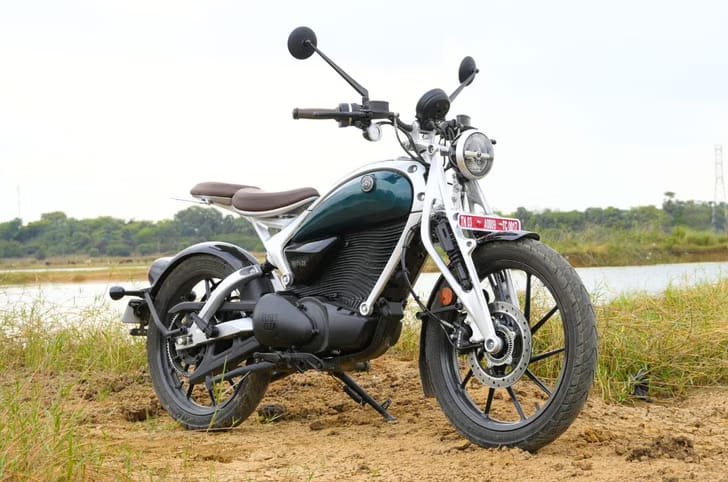
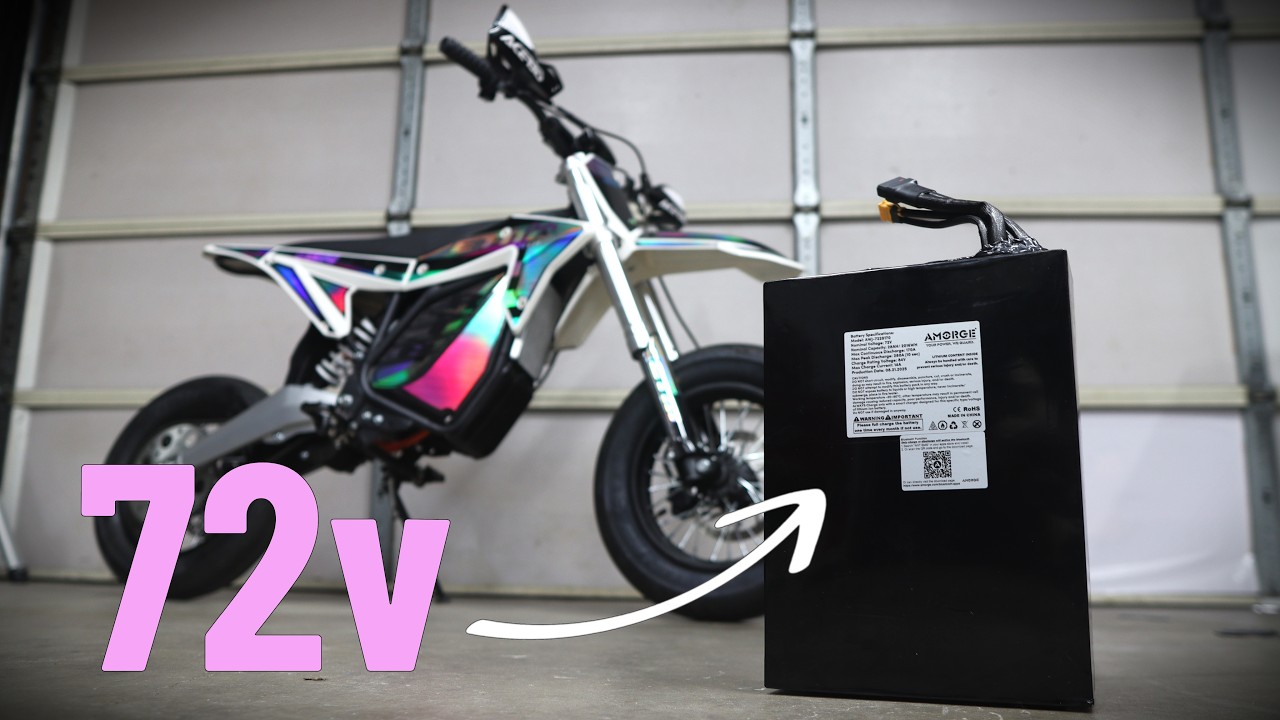
The time has finally come. This RTR light here is going to fully transform into a regular RTR. Actually, more so, like an RTR extra strength. Welcome to the fastest ETM RTR in the hands of the buying public. And all it took was a battery. [Music] And if you’re not fully caught up in the RTR light build series, don’t you worry. Playlist is right there. We bought an RTR light with the goal of making it outperform a standard RTR with a series of upgrades for less than $1,000. So, not only is the bike going to be faster, but it’s going to be done cheaper. Winwin. And recently, we just tuned up the biggest mod to this bike where we swapped out the controller for something with a little more oomph, a little more potential, and a lot more power. But, we were still limited by the stock 60 volt battery because there’s only so many amps you can reasonably squeeze out of it. Thankfully, there are options out there and at a price less than you would expect elsewhere. Those of you that watch my Mototech videos are going to know exactly what name I’m about to drop, and that is Amorg. By the way, how do you even pronounce this company name in the first place? Is it Amorg? Aorgge? Honestly, I have no idea. Anyway, Amori is a battery pack manufacturer that makes all sorts of batteries and all sorts of sizes for just about any bike you can think of. They make batteries for Motoex, surons, razors, and more from 48 volts up to 72 volts and even greater. You can also custom order if you want to get a battery pack with a very specific size. So about a month or so ago, I contacted a morg and gave them my desired dimensions, voltage, and capacity. They’ll then send you a proposal with different cell types and a chart, and you can be able to see the different specs with each of those. You’ll pick one, and then about 6 to 8 weeks later, you get a battery in a box. Looks like we got the charger. Always good to have. Okay. And this big old chunk right here. That is a lot to unpack. They did a really good job about it. I’ll give it that. There we go. Tada. Beautiful. And this is what I received. It’s a 72V 28 A battery with the same dimensions as listed on the stock RTR lights battery pack. And as you can see, it’s exactly the same size. A few things to note with this. As you can probably see, this new battery does not have a metal box like the stock one does. You can ask Amorg to make one with a metal box for more money of course, but this is a budget build and the battery is the most expensive part of any build. So, in this case, I went without. This is also not the highest battery capacity that I could have ordered. Again, I was doing this on a budget. I could have gone with something up to 35 amp hours capacity, which would give me a ton of range, but I wanted to be as effective as possible with this. And this is 28 amp hours, which is still greater than the stock RTR 72V 25 amp battery pack. The new battery pack also has the same QS8 style connector as the stock battery, so install will be a breeze. Well, not exactly a breeze. Not having a metal box also has the disadvantage of not having a handle to hold and lower into the bike. I’m definitely not going to be using the battery connections as a handle, but I have an idea. Now that we got that solved, more than anything, I would love to just get on this bike and take it for a rip and see how it actually performs. But first, we got to change some settings specifically with the FAR driver because it’s going to freak out at me. So, this series of beeps is just telling me that’s overvolted. It still thinks it’s getting 60 volts, but really it’s at 70 or probably even 80 volts at this point. So, I just need to change the rated voltage to 72. And now it’s shut up. And while I’m at it, I’m going to make some changes to the amperage because this new battery has bigger line current. Previously the 60volt battery was only capable of 80 amps line current. Now this one is up to 170. So in addition to the controller settings, we also need to make changes to the display here because again this assumes that it has a 60vt battery in it still. So the battery percentage that’s shown right here is always going to be off. It’s always going to show 100%. Now this will also be helpful for those of you that have messed with the settings in the display because believe it or not, there’s actually two buttons on this in the backside. One here and one here. So, I’ll show you how to get that back to stock. First, to show you the settings, though, let me turn it off and turn it back on because once it turns on, the first thing that you’ll see is a U right here and a number. But if you push and hold this button right here, this is going to change from U to L. And if I push and hold it again, it’s going to change from L to H. What those three letters and the numbers next to them are different voltages. U is your rated battery power. So, in this case, it’s 60 volts, although it’s just showing 54 in this case. I’m not exactly sure why, but then the L is the low voltage output and then the H is the high voltage output. So to change that, you just push and hold this to go to different settings and then you use the other button on this side to change the actual number associated with it. So let’s do just that. I’m going to turn this off and turn it back on. And then I’m going to push and hold this so it can change from U to L. And then once it’s in L, I’m going to push and click this. And as you can see, it’s going up from 54 up to 55. And uh we’re going to be here a while because the low here in this case is going to be 66. 12 seconds later. Actually, something else I figured out. If you push and hold this and wait for a little bit, it’ll increase on its own. And yes, I’m over 66 in this case, but it’s going to Yep. reset there. I think it goes up to like 80 or 90. So, I’m just going to wait and hold until Oh, so close. 66.2. Round the wheel we go. Again, you can see the battery percentage is freaking out, but that’s okay. It’s because the low here is now 66. And the high, I think, is actually lower than the high. But we’re going to change that. Now, we switch to H. Yeah. See, now it’s 65. Now, we got to change this H from 65 to 82. There we go. 82. So then after you applied those settings, just let it sit and let it reset enough so that it’s showing the trip now. Just leave it on for like 30 seconds or so because if you turn it off and on too quickly, I found that it actually just goes right back to the original settings you had previously. But I’ve had this on for a while now. So now I can turn it off, let it sit for a little bit, and then I’ll turn it back on. The U should be updated. Yeah. So now it’s showing 66, which is the low that we put in here. And now it’s showing the proper percentage 100% now. And it’s rated for 72 volts. And again, for reference, I’m going to put up a chart here which is from electro and code directly. And this is the default settings for the RTR and for the RTR light. Now, we put in the default settings for the RTR now that it’s a 72vt with the L being 66 and the H being 82. But if you have the RTR light and you need to take that back to stock, it’s L is 54 and H as 65. So, besides all the controller settings, there was one additional wiring change I wanted to make because the battery came with its own set of battery leads. And these battery leads were thicker gauge than what I had in previously. And I want to make sure that I have the best quality stuff in there. So, I put the thicker gauge wires in, but they’re a little bit too thick. So much so that it was actually sticking out against the battery panel. So, I had to make some trims to that. And now they’re protruding a little bit. I don’t think it’s going to interfere with the riding and all. And if anything, it looks kind of cool. All right, let’s give this a little rip. See what it can do. Whoa, that acceleration is something. 45 already hitting a stoplight, but I saw 55. That really had room to grow. But already we have matched the RTR Golf Clap. It’s not just the top speed, but the torque. This is a really steep hill. one that I have struggled up on many a bike, but look at this. It’s just gone. Wow. I thought it had acceleration before, but this is like a whole shot master now. All right, we actually need to do that again because I’ve been messing with this for a little bit over the last few days, and I actually noticed that on that last run, this was not maximized. So, I put in the full 170 amps. Plus, I think this has a little bit more into it. All right, here we go. Whoa. Let’s get in front of this car. Holy cow. 54 56 57. Woo. Still topping out at 57. That’s crazy. But the acceleration though, I’m going 33. Wa. And just like that, 45. We did it. The original goal was to match or beat the regular RTR. And even though I think this could be tuned a little better and could go faster, I think it’s safe to say we have it. However, since this project has been started, ElectroCo has since released their own mod kit, which includes a controller and a motor, and now the bar is even higher. But even as this bike sits right now, I am pretty close. Screenshots reveal from the website that their new high mode is running at 180 amps continuous. I can’t quite match that because this battery is limited by 170 amps. Pretty close though, but I think it’s the other part of that mod kit that I’m limited by now. So, I just got back from that last run and I literally just went up and down the street twice. Not very long. Trip meter here says 3 mi. Not really much anyway, right? But one of the things that I was noticing the first time I rode this, which was a lot more than those 3 miles, was that this was feeling pretty warm. So, just after that, let’s do a little temperature check here on the motor and see where we’re at. It is 130° after 3 miles. That seems pretty high considering that just a few minutes ago it was at ambient temperature, which probably today is like 70° or something like that. Not exactly sure how much mileage you would be able to get out of this if you were really going at the max. I mean, there’s probably a reason why the new 6 plus 7 kit includes a high torque or a high-speed motor. So, I think we’re really pushing our luck with the stock one here. But, I have ideas. Now, it’s time to add up the cost, not just for the battery, but for everything. Recapping very quickly, we first converted this bike from dirt to super moto because super moto, which does absolutely nothing for power. It’s completely unnecessary, but I wanted to do it anyway. and I spent $176.54 doing so. Next up was another completely unnecessary and some may even argue dumb idea, which also had nothing to do with power, but was to get rid of that RTR creaky drivetrain by filling my swing arm with general purpose spray foam. So, I spent another whopping $4.98 doing that. But then we actually addressed the power finally with a Far Driver ND72450 controller swap. So, I spent $169 on that controller plus the wiring harness. We then took it a step further by actually tuning that controller and added a few small things like clamps to mount it better as well as a thicker 35 chain. So that cost me $18.69. Which brings us back to this video, the most expensive video, but could be worse. Now for the real bombshell. This 72vt 28 A battery from Amorg only cost me $465. Really? That’s basically half the price of the stock 72volt battery that you’d be paying for at Electro and Co. However, because I’m sure someone would comment otherwise, the caveat to this is the shipping cost. This costs $92 up to $245 in shipping alone, depending on how long you’re willing to wait. Now, all of the other prices that I’ve listed so far don’t include shipping. The reason why I’m doing that is because you’d be paying for shipping if you were buying it somewhere else or even from Electro and Co. themselves. But in this case, because of the shipping cost, I’m actually going to be adding this. So, in reality, this battery cost me $557. I’m also going to add in a couple of other things. One of which was an essential, but I just happened to have on hand, and a few people had been asking about it in prior videos, that being the electrical connectors. I got a general kit on Amazon. It goes for $15.99, and these are the same kind of connectors that Electroco uses in its components. So that way, it’s able to connect up to the 3-speed and the throttle and the display really easily. I’m also going to add the Aurby handguards here that I put on. This is technically from the 60VT project because I had bought it for that, but it didn’t really work out on that bike and it didn’t seem fair to immediately take it off and then consider that a free takeoff part as spares. So, this is going to add another 28.88. That means that modifying this bike in its entirety cost me $9718. And if you include the cost of the bike itself, this bike sits now at a $3,1708 bike, which is a whopping $29 less than a regular RTR. I really cut that close. If you were to mod this bike equivalently with only electroone components, which I think as of filming this would be the 6 plus 7 kit, a stock 72vt battery, a super moto kit, and a thick chain, all of that would cost you over $1,800. Literally double. That’s pretty crazy. And one other thing I want to note, this whole thing is not just a big screw you to Electro and Co. I kind of get where they’re coming from. They are putting a lot of time and effort behind the scenes to make the products easier for you to use as the consumer. All of their products are 100% plugandplay. I just want to show you that doesn’t have to be a monopoly. I like to find the alternatives. I like to do it myself. I like to save some money and I want to share it with you, which I’ll keep doing because I need to find a new motor. to that battery. That’s freaking insane. I don’t have to dig into my salary. Break out the champagne after any riding. Of course, champagne and ebikes don’t mix. Shred responsibly.
And no, it’s not with Electro & Co’s 6+7 TruMoto Mod Kit. Actually, we made this bike outperform an RTR Lite AND an RTR for a price that’s less than just a stock RTR! It’s amazing what you can find an adapt, really just taking a page out of the Razor or Tuttio or any other electric dirt bike scene, and I think we should have a DIY RTR mod scene as well!
– Get 10% off your order with code “LEXDFOX” at https://motionfactoryracing.com/
– Get 22% off any shop manual, motorcycle OR car, with code “lexdfox22” at https://www.emanualonline.com/
– Get 30% off your motorcycle android auto carplay unit with code “LEXDFOX” at https://carpuride.com/?ref=lexdfox
– Get 22% off your motorcycle android auto carplay unit with code “LEXDFOX” at https://aoocci.com/?ref=lexdfox
– Buy your CRF450RL dashboard accessory panels here: https://www.etsy.com/shop/Lexdfox
#electroandco #etmrtr #etmrtrlite #rtr #rtrlite #rtrpro
My garage camera gear:
Canon M50 Mark II: https://amzn.to/3jSoluq
Sigma 16mm f1.4: https://amzn.to/3WTEE8L
SmallRig for M50: https://amzn.to/3jVyFBS
Movo Microphone: https://amzn.to/3GlqK8s
Video Light: https://amzn.to/3WQ80Vt
Tripod: https://amzn.to/3GgVfw5
My helmet camera gear:
DJI Action 3: https://amzn.to/44Kjr5V
Boya Mic Adapter: https://amzn.to/44EWZep
Mic Volume Adjustment: https://amzn.to/4abbBn7
Purple Panda Lav Microphone: https://amzn.to/3vMwsuV
Bell MX-9 Adventure w Mips: https://amzn.to/3Zd3RMY
My handlebar camera gear:
Insta360 One X2: https://amzn.to/3ImxRA5
Insta360 Frame Case: https://amzn.to/3VI64gs
6 in Ram Mount Arm: https://amzn.to/3Zr2zOL
Ram Action mount: https://amzn.to/3Insd0F