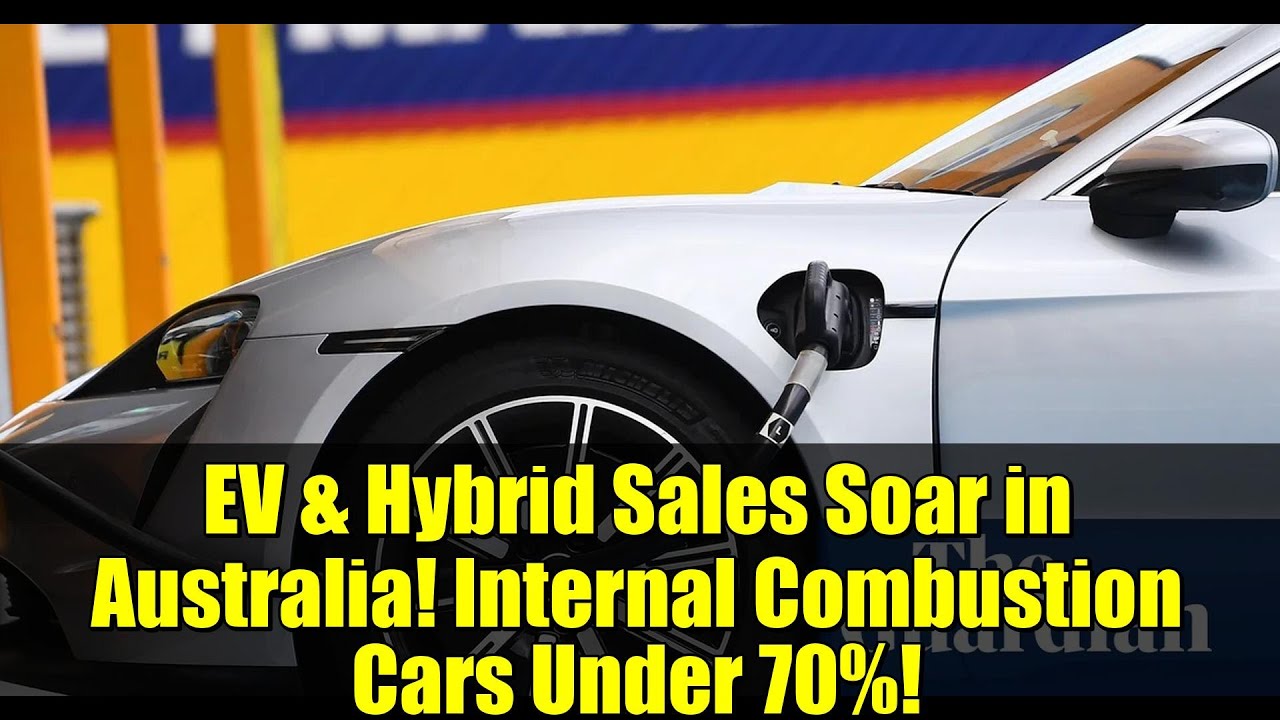
EV & Hybrid Sales Soar in Australia! Internal Combustion Cars Under 70%!
The automotive landscape in Australia is undergoing a seismic shift, and it’s one that’s both exciting and for some, deeply unsettling. For the first time ever, internal combustion engine IC vehicles have fallen below 70% market share, marking a historic turning point in the country’s transition to cleaner transportation. But here’s where it gets controversial. While electric vehicle EV sales are soaring to record highs, the future of this green revolution hinges on government policies that are far from unanimous. Are we doing enough to accelerate this shift? Or are we risking a stall in progress? Let’s dive in. Electric and hybrid vehicles are no longer a niche market in Australia. They’re becoming the new normal. According to the latest quarterly data from the Australian Automobile Association, AAA, EVs accounted for a staggering 9.7% of new car sales in the three months leading up to September, the highest share ever recorded. Meanwhile, hybrid and plug-in hybrid sales also surged with 49,929 and 12,460 units sold, respectively. In contrast, petrol-powered cars saw a marked decline, dropping from 226,36 units in the previous quarter to 210,458, a trend that’s hard to ignore. But this is the part most people miss. Despite these impressive numbers, Australia’s emissions reduction goals are still at risk. The Electric Vehicle Council has sounded the alarm, urging state and territory governments to reinstate EV subsidies that were previously axed. Without these incentives, the council warns, Australia may struggle to meet its ambitious target of cutting greenhouse gas emissions by 62% to 70% by 2035. The Climate Change Authority estimates that EVs would need to make up half of all light vehicle sales by the next decade, a goal that feels increasingly out of reach without stronger policy support. Alman Gower, the Electric Vehicle Council’s head of legal, policy, and advocacy, puts it bluntly. Australians are voting with their wallets, moving away from costly, environmentally harmful IC vehicles toward electrified options that save them money. But we can’t rely on consumer demand alone. Governments at all levels need to step up. Gar specifically called out Western Australia’s decision to end its $3,500 EV rebate scheme in May, a move he argues undermines the national effort. The federal government has taken steps to encourage EV adoption, including fuel efficiency standards and fringe benefits tax exemptions. However, the lack of a clear sales target and the proposed road user charge intended to replace lost fuel excise revenue have sparked debate. Matt Keane, chair of the Climate Change Authority, warns that such a charge could act as a headwind to EV adoption, while Treasurer Jim Chowmers has stated he’s in no rush to implement it, despite pressure from state governments seeking road funding. Here’s the million-doll question. Can Australia achieve its emissions goals without a unified, multi-level government approach to EV incentives? And should consumers bear the brunt of funding road maintenance through a new tax on EVs, potentially slowing their adoption? These are the questions that will shape the future of Australia’s automotive industry and the planet’s health. What’s your take? Let’s spark a conversation in the comments.
Australia’s EV revolution is accelerating! ⚡️
In this video, we break down the latest sales data, revealing record-breaking EV sales and a significant drop in internal combustion engine vehicle market share. We’ll cover:
The latest EV sales figures and market share.
The rise of hybrid vehicle sales.
The decline of petrol-powered cars.
Government policies and incentives.
Expert opinions and future projections.
Learn how the Australian automotive landscape is changing and what it means for you! Don’t forget to like and subscribe for more updates on the EV market!