AIMA Santa Monica Review | Contemporary California Cruising
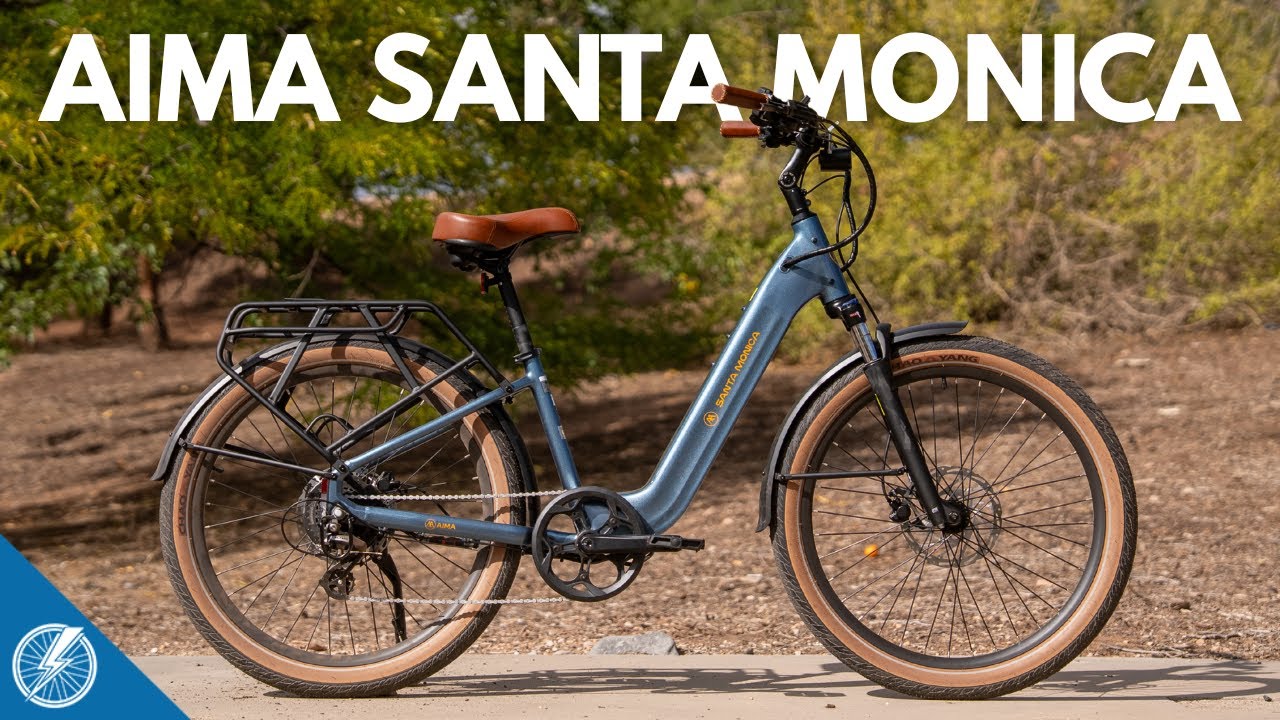
We review a lot of ebikes here at Electric Bike Report, and it’s not often one stands out across all areas of our realworld testing, but the AMA Santa Monica did just that. Let me show you why this cruiser commuter hybrid might be one of the best bikes of its style we’ve ridden. Here at Electric Bike Report, we’re lucky to have a really smart and engaged community of readers and viewers, people who know their stuff when it comes to ebikes. So, when a bike gets mentioned over and over again in our comments and emails, we take notice. And for quite a while now, one name’s been popping up more than just about any other, that being the AMA Santa Monica. After years of requests, we were finally able to get one in for testing. And honestly, it didn’t take long to understand why this bike’s been such a crowd favorite. The Santa Monica immediately stood out as a cruiser commuter hybrid that’s as functional as it is comfortable, blending everyday practicality with a ride feel that’s just plain fun. At first glance, it checks all the boxes for what you’d want in a comforter oriented ebike. With a standover height under 16 in, the step through frame design is approachable and easy to mount, while the swept back handlebars and oversized comfort saddle keep the rider in a relaxed upright position. It’s a bike that feels just as well suited for a morning commute as it does for a weekend cruise down the boardwalk. You also get a suspension fork with 75 mm of travel to smooth out bumps, and a pair of wide 27 1/2x 2.6 in tires that give the bike a stable, cushy, and extremely planted feel. Combined with alloy fenders, integrated front and rear lights, turn signals, and an Mik HD compatible cargo rack, it’s clear that AMA designed this bike to cover a lot of ground. both literally and figuratively. Now, we’ll get into all the performance data later on in the video here, but even a short test ride made it clear that the Santa Monica is a lively and responsive eBike. The bike’s 750 W rear hub motor delivers power smoothly and quietly thanks to a torque sensor that adapts the motor’s output to match how hard you’re pedaling. That combination makes the ride feel incredibly natural. You give a little bit more effort. The bike gives a little more back and it adds up to an intuitive and engaging experience whether you’re tackling hills or just taking a casual cruise. Speaking of hills, we’ll cover this more in our dedicated hill test section, but the Santa Monica is one of the strongest climbers we’ve seen in its category, and it goes to show that AMA put real thought into tuning the motor for both comfort and capability. From a design perspective, this bike looks just as good as it rides. Our test model came in a glossy cornflower blue color that looks like a high-end automotive finish. Paired with brown faux leather grips and saddle and tan wall tires, the overall aesthetic walks a nice line between classic and modern, giving this bike a refined retro inpired look that really stands out on the road. When it comes to core specs, the Santa Monica’s got a lot to offer as well. Powering the bike is a removable, fully integrated 48volt 720watth battery that uses LG cells. The battery is UL2271 certified for safety, and AMA includes a 3 amp fast charger that takes about 5 hours to reach a full charge. You get five levels of pedal assist, a throttle that’s mounted to the left handlebar for when you just want to coast, and an easyto read color LCD display with a backlight for low light conditions. For braking, AMO went with Tekkro hydraulic disc brakes paired with oversized 203mm rotors front and rear, offering powerful and consistent stopping performance. The bike’s drivetrain is a Shimano 8-speed setup with a 52- chain ring and an 11 to 34 to cassette, giving you plenty of range for both flat terrain and steeper clims. The Santa Monica is UL2849 certified. It weighs about 70 lb with the 8.7 lb battery installed and it supports a total payload capacity of up to 400 lb. AMA offers two frame sizes that fit riders from 5’1 to 6’3 and it’s available in three color options including black, white, and the blue that you see here. All told, the AMA Santa Monica feels like the full package. It’s comfortable, capable, stylish, and surprisingly refined in its details. From the sturdy mikk rack to the intuitive motor response and the clean automotive level finish, this bike feels like it was built to impress both new riders and seasoned ebike enthusiasts alike. But the big question, as always, is how its realworld performance stacks up against similar cruiser and commuter style ebikes we’ve tested. Let’s take a closer look and find out. All right, we are here for a speed test on the Santa Monica. Starting off with no pedal assist and uh we’re going kind of right between nine and nine and a half miles per hour. I will say that I can definitely tell that the bike uh you know has some weight to it, but it pedaling is still pretty easy. Um you know with the way the gearing is I’m think I’m in second gear right now and uh you know I have one lower than that obviously so if I needed to get home like this not a big deal. But anyway uh let’s go ahead and bump things up to PAS1. So, that’s the lowest assist level. And boy, uh, power came on right away. Kind of ramped up gradually. I can tell that this pedal assist system is super sensitive and responsive. And it’s making a massive difference in the ease of pedaling already. It’s also pretty quiet. I hear just a very low kind of worring sound. Um, but yeah, here in PAS1 with pretty much the same level of effort going kind of between 15 and 15. All right, let’s go up to PAS2. Another smooth ramping up in power. So, I’m just getting with every sort of pedal I’m It’s pushing me a little bit further. And obviously, we’re picking up some speed as well. Uh we are up to between 16 and 12 and 17 maybe more around 17. Yeah. Okay. Let’s go up to PIS3. I’m going to shift up to I think seventh gear. And let’s see. We are looking already here at 20 mph. So, you know, again, we are on a flat path and that doesn’t require a whole lot of motor power to help get you up to speed. And this thing feels pretty peppy anyway. So yeah, we’re uh exceeding 20 by a little bit here between 20 and 20 and 1/2, but I wouldn’t expect to see really any change when we go up to PA4 or five. So here in four, same thing. And then finishing things off in PAS5. Uh we’re okay. So kind of more solidly landing around the 20 and a half mark, but okay, that looks good. Let’s uh go ahead and check out the throttle. All right, we are back for a class 3 speed test here on the Santa Monica. Um trying to start things off this time right around where we were in PAS1 in the class 2 test. Uh we’ve already kind of determined how fast the bike can pedal without pedal assist. So here, yeah, kind of going right between 15 and 15 and a half in PAS1. Let’s uh see how much of a difference the higher speed cap makes. Let’s go up to PS2. I’ll shift up to sixth gear here. All right. Picking up nice and quickly here. Very responsive once again. Uh, you know, just the motor uh changes its output very quickly in response to minor changes in my pedaling. So, just trying to keep things pretty consistent here. Uh, we are looking kind of right between well, let’s say right around 18 1.5 mph. Again, those fluctuations are really just like changes in my pedaling, changes in the path, but I think we’re landing pretty consistently here between 18 and a Yeah, around 18 and 12. All right, let’s go up to PS3. I will shift up to seventh gear. Now, I’m noticing that as I step up in power, the those sort of small changes in speed or or its sensitivity to my pedaling are kind of being amplified here. Um, so like keeping things consistent is a little bit trickier, but you know, not a big deal. Uh, for just normal riding, I think here in PAS3, we’re looking kind of between 23 and 12 and 24 miles per hour. All right, let’s go up to PS4. I will go ahead and shift up all the way to eighth gear now. Now, I am going to slow down for these folks a little bit so don’t scare anybody. All right, and let’s pick back up. All right, zooming up to kind of right around 26 miles per hour here. All right, and then let’s finish things off in PAS5. We are running out of track, so see if we can hit 28. Topping out pretty close. Yeah, like right there. Right there. Yeah, for sure. All right. Well, looks good. Let’s go ahead and bounce back to the studio. All right, let’s wrap things up with a throttle acceleration test from 0 to 20. We’ll see how quickly the bike gets up to speed. Let’s go ahead and start in three, two, one, go. Okay. Little peppy off the line, but not scary. Powerful. Picking up swiftly for sure. 18, 19, and 20. Okay. Yeah, nice and confident. Let’s uh go ahead and head back to the studio. When the AMA Santa Monica rolls out of the showroom, its maximum speed is capped at 20 mph, making it a class 2 ebike. But AMA gives riders the option to have their dealer unlock it to class 3 mode, which raises the top assisted speed to 28 mph. As you saw, I tested the bike in both of these modes and with just its throttle while riding on a flat paved shared use trail. In its default class 2 configuration, I recorded speeds of 9.4 mph with no assist, 15.2 in PAS1, 16.9 in PAS2, 20.2 2 and PAS3 and just a bit higher through PAS4 and 5 at 20.3 and 20.6 mph, respectively. That plateau near the top is something we see pretty often on torque sensor bikes. They’ll hit their max speeds easily, then focus on maintaining it instead of adding more power. Once the bike was unlocked to class 3, though, the difference was clear. Each level felt distinct with speeds starting at 15.2 2 mph in PAS1. Then moving up to 18 1.5 in PAS2, 23.6 in PAS-3, 25.8 in PAS4, and all the way up to 27.8 mph in PAS5. The Santa Monica’s 750 W motor delivered power quickly and smoothly, responding almost instantly to pedal pressure without feeling jerky or overpowered. The throttle shared that same lively feel. It kicked in with a quick surge before leveling out into a steady, predictable acceleration that felt strong but controlled. Overall, the Santa Monica’s performance made it one of the peppiest and most responsive cruiser style ebikes we’ve tested. It’s great for relaxed riding in class 2 mode or faster commuting in class 3. Next up is our range test where we checked how far the Santa Monica could travel on a single charge in both its lowest and highest levels of pedal assist. Ama advertises a realistic range of 30 to 60 mi from the bike’s 720watth battery. And based on our testing, that claim turned out to be pretty accurate. We ran two separate tests. One in PAS1 to measure the bike’s maximum range and another in PAS-5 to find its minimum. In PAS1, the Santa Monica lasted for 55 and a half miles before the battery ran out. And in PAS-5, it made it 31.7 miles. Both results fall very close to AMA’s clean range, which is always good to see. Those numbers also lined up well with the performance of other cruiser and commuter style ebikes we’ve tested. On average, bikes in these categories covered around 60 mi in their low power tests and roughly 33 mi in their high power runs. So, the Santa Monica’s results were right in the pocket. just a few miles shy of the average on one end and nearly identical on the other. What makes this more impressive is that AMA’s motor is more powerful than most of its peers. The motors from our comparison group averaged about 590 watts of nominal power, while the Santa Monica’s rear hub is rated for 750 W. Despite that added muscle, its efficiency was still strong, using just a few watt hours per mile more than its mostly lower powered peers. Given its combination of a larger than average 720watth battery and higher output motor, the Santa Monica delivered a balanced blend of power and endurance, most riders will likely fall somewhere between our two results, which makes this bike a solid choice for daily commutes, weekend rides, or longer leisure cruises. And when it is time to recharge, the included 3 amp charger can bring the battery back to full in about 5 hours. Next up is our hill test, which we conduct at our official test location known as the Devil’s Backbone. This is a halfmile climb with an average grade of 8% and 217 ft of elevation gain, making it a pretty serious challenge even for powerful ebikes. We performed this test twice. Once using only the throttle and again using the highest level of pedal assist to see how each mode handles the climb. Let’s see how this test went. You can hear our rider Justin’s thoughts along the way and then I’ll walk you through the results shortly. We’re at the Devil’s Backbone doing the throttle test on the IMA Santa Monica, a model that I’ve actually wanted to get in for quite a while and see how it does. And so far out of the gate, again, we’re in max PS class level two. Easily hit 19 and change before we hit this first section. And it’s climbing fairly decent. Right at 17 mph right now, 16.5. And it’s going to bottom out right at 15.9 16 mph on that first section. Climbing right back up to 18 19. Yeah, just got right to 19 before the next steep section here. As we make that turn down to 17, 16.3 16 15.9 and get a bottom right at 15.6. Just going to have to tap the brakes obviously to make this turn and re-engage that throttle. See where where speed we get up to before this first lamp post. We’re right at 14.6 mph right now. And we’re going to cross that checkpoint at 15.6 mph. Now, in terms of motor noise, very quiet. I actually don’t hear much at all other than the other than that rear hub engagement, which I always like. It is a little bit windy today. Um, but I don’t think you’re going to hear it. I’ll let you listen through this next section as we’re going about 13.5 miles per hour right now. So, yeah, we got up to about 17 mph there. I’m still not hearing much at all on the motor. It feels really smooth and controlled but but powerful. I think this will be a pretty good result as we cross the line right at 15.5 miles per hour. Okay, we are back at it now on the IMS Santa Monica now doing the pedal test and assist level five. So, max assist class two settings and got up to about 19 and 12 pretty easily before this first hill was in seventh gear. I’m actually going to shift down to sixth here. And feeling again pretty good. Right at 18 mph. Yeah. Going to bottom at 17.9 here. And we’ll go around these uh non bikers up here. Give you an idea of how fast this actually this goes. And so yeah, easily got up to about 181 19 again before the steep section or 17.0. know bottom out right about 16.7. Going to downshift twice. Let’s see what we get to before this first lampost. I’m now in fourth gear, which is actually feeling pretty decent. And we’re at 16.9 mph across that lampost first. So, I mean, definitely feeling pretty good up this hill. The motor engagement is very nice and smooth and controlled. And in terms of pedaling, I’m I’m not just having to turn the pedals. I do have to put a little bit in, but it’s not that much. Um, and noise level again, pretty silent. I’ll let you listen. So, yeah, I don’t think you’re hearing anything. We got up to 18 mph. And so, you know, I I think this city commuter cruiser is going to do really well. We’ll go check the tape as we finish. We’re at a 16.6 mph. As you saw, the Santa Monica absolutely crushed this test. Using only the throttle, it made it to the top in 1 minute and 54 seconds with an average speed of 15.9 mph. When pedaling in its highest assist level, it did even better, clocking in at 1 minute and 49 seconds with an average of 16.6 mph. For context, similar cruiser and commuter style ebikes we’ve tested averaged around 2 minutes and 13 seconds using the throttle and 2 minutes and 10 seconds when pedaling. That means the Santa Monica finished roughly 20 seconds faster on average, which is a pretty big margin in this test. Those results are especially impressive considering the bike’s weight and motor specs. At just over 70 lb, it’s on the heavier side for a cruiser. Yet, its 750 watt motor peaks at 1,260 watts and delivers 70 new meters of torque. The comparison group averaged 64 lb with motors that peaked at about 919 watts and 75 new m of torque. So, this bike was heavier, but clearly had more than enough power to make up for it. On the hill, the Santa Monica felt confident and quick, maintaining strong momentum even without pedaling. Whether relying on throttle or pedal assist, the bike climbed smoothly and without hesitation, proving that it’s more than capable of handling steep grades and hilly commutes alike. Next up is our brake test where my fellow reviewer Griffin, who is 6’1 and about 230 lb, takes each bike up to 20 mph, then applies the brakes in a consistent, controlled way to bring it to a full stop. We repeat that process three times and take the average stopping distance to smooth out any inconsistencies. So using that method, the Santa Monica stopped in an average of 21 ft and 8 in. That result places it just slightly faster than the average of 21 ft 11 in from the other cruiser and commuter style ebikes we’ve tested. So it’s right where it should be in terms of safety and performance. Once again though, when we dig a little deeper, the result becomes even more impressive. AMA outfitted this bike with Tekkro’s HD E3520 hydraulic disc brake system, which is a proven eBike specific two-piston brake system that delivers consistent and reliable stopping power. To help offset the bike’s slightly heavier 70 lb weight, AMA used larger 203 mm rotors instead of the more common 180s, which improves heat dissipation and overall braking efficiency. Out on the road, the brakes felt excellent. They offered a solid bite without feeling too aggressive. And the modulation was smooth and predictable. The Santa Monica stopped quickly, stayed stable, and felt completely under control, earning it another solid two thumbs up from us. All right, let’s talk about ride quality here on the AMA Santa Monica. So, uh, right off the bat, this is a cruiser/comuter hybrid ebike. And, uh, you know, it’s got all the things you would expect with that. Got a nice comfy upright riding position, a big cushy saddle, and then these swept back handlebars with faux leather grips. Uh let’s see. The bike has two frame sizes. We are actually on the smaller of the two, which is um sized below my height of 5’11. Uh but both sizes fit riders from 5’1 up to 6’3. And I got to say, even on this regular size frame, uh I’m I’m feeling pretty good. I’ve got, you know, the adjustable stem to help out here. So, I’ve raised that almost to its full height, but not quite there. So, there’s a little bit more uh verticality that I could get if I wanted to. Um, I’ve got the handlebars angled up just a little bit, but it’s very comfortable. Doesn’t feel too low. Uh, my arms are, you know, pretty outstretched here, but, you know, it’s it’s very comfy and cozy. Got pretty decent leg extension, and then the uh motor and the pedal assist system here are just really peppy and responsive. So, with very light pressure, I’m able to, you know, pick up and speed pretty quickly and easily and just feels really good overall. Um, yeah, the handling is great, just very appropriate for a kind of relaxing, casual ride. But anyway, uh we’ve got a suspension fork up front that is an SR Sunour fork with uh 75 mm of travel and that is a coil fork with both preload adjustment and a lockout feature. Uh we have tires that we’re cruising on that add a little bit more cushion. So those are 27 1/2 by uh 2.6. Those are just street tires made by Chowyang. But, uh, you know, the suspension definitely helps smooth out any bumps. Uh, the tires really add to that. They give you a lot of nice riding stability and, uh, good traction on paved surfaces. So, all in all, a very good setup here. And then, uh, let’s be cautious around here. Hello. Thanks. Uh yeah, but then we’ve got that peppy 750 W rear hub motor with the torque sensor and five levels of assist. So plenty of power levels. Uh you know, in the lower settings, it feels really natural as we’ve talked about. Um it, you know, is lively but still lets you feel like you’re riding a bike. And then of course in the high assist levels, you just get a ton of payoff for the effort that you put in. Uh all in all, yeah, really have have nothing but good things to say here. So, let’s go ahead and uh head back to the studio and we’ll chat a little bit more. Hopefully, you could tell from that video clip that ride quality is another area where this bike really shines. Its look, feel, and comfort are exactly what you’d expect from a cruiser style ebike. It’s relaxed, comfortable, and approachable, but of course, it’s also a bit peppier than average. This mix makes long rides feel easy, and daily use feel very practical. To touch back on sizing, Ama offers the Santa Monica in two sizes. The regular fits riders between 51 and 510, while the large is meant for those between 5’6 and 6’3. I was technically a little outside the range for our test bike here, but the adjustable stem gave me the flexibility to dial in a comfortable fit, which I really appreciated. As far as handling goes, the Santa Monica feels predictable and well-mannered. It’s relaxed without feeling sluggish, and that makes it equally at home for casual cruising or more spirited daily commuting. I did notice a small amount of frame flex while cornering or maneuvering at low speeds, but overall, it felt impressively sturdy for a step through frame, and of course, it was very easy to get on and off of, too. AMA also deserves credit for including a really thoughtful package of features with the Santa Monica. The integrated lights, full coverage fenders, and sturdy MKHD compatible cargo rack make it ready for realworld use right out of the box. That rear rack can hold nearly 60 lbs and works with a wide range of accessories that lock into place, including baskets and paneers to pet carriers and even a child seat. On the handlebar, there’s a dedicated control module for the lights, turn signals, and an electronic horn, all within easy reach. This module felt like a step up from most that I’ve tested. Although the horn sounded a little bit more like a car alarm, so I’d probably recommend adding a bell to the handlebars for signaling other cyclists and pedestrians. The bike’s user interface, which includes the main button pad and the color display, was simple and intuitive, and I appreciated the option to set a startup pin for added security. So, to round this section out, I think the Santa Monica delivers a smooth, comfortable, and easygoing ride that fits perfectly with its cruiser commuter personality. All right, let’s go ahead and walk you guys through the bike’s display. So, here I’m turning it on. And uh you can see here that I have the option activated for a security pin upon startup. So, right now that’s just four zeros. So, we’ll go ahead and throw that in. And uh then let’s take a look at what we have going on the screen here. So, uh up on the right we have a clock. Up here on the left we have a couple of icons that show you what the current class limit is. And there’s also an icon that says whether or not the throttle is enabled. So that will vary depending on the setting, which again is something that only dealers can change. Uh but in the middle here, we have the speedometer. Then we have the pedal assist level down below. And then below that is the battery charge level with a percentage, which is always nice. Uh we also have a uh trip there. You can run through a few pieces of data including the odometer, max speed, average speed, uh estimated range based on your pedal assist level and your current cadence, as well as how many minutes that you have ridden in total. We also have a watt meter on the right that will show the motor output while you’re riding. But if you want to get into the settings menu, you can hold the up and down arrows and then we have a few options here that we’ll kind of run through. So this second thing here, the advanced settings, that is uh only accessible through dealers. So pretty much everything else is something that you can change though. So if we go into HMI settings, that’s uh human machine interface. Basically just everything that you’re looking at on the screen there. So you can change your units from metric to imperial. Uh you have service recommendation. So if this is activated, you’ll get a little icon if uh the bike recommends service. I have an auto off function that right now is set to turn the bike off after 5 minutes if I don’t turn it off when I walk away. You can adjust that as well. You can reset the trip computer. You can adjust the screen brightness. And uh then we have here the uh security pin setup here. So right now I have that activated. I can reset it if I need to and uh change that code. But then here is also where you set the clock time. And then if we back up, uh, information is pretty much just like backend stuff. I wouldn’t worry too much about that. Language of course is pretty self-explanatory. You have a few options there. And then when it comes to theme, the main display that we just talked about, uh, there are three options for that. Fashion, sporty, and classic. The default was this fashion one. And, uh, in playing around with the other two, I’m not going to show you those because it takes a while to boot back up and everything. But um I found that the other two felt a little bit more dated. Fashion seemed uh you know a little bit sharper and nicer looking. So that is what I left it as for for this walkthrough. But you have a couple options you can choose from. But in any case, let’s uh keep things moving. Now that we’ve gone through all of our testing, let’s wrap up this section with a quick list of pros and cons for the Santa Monica. Starting with the pros, first and foremost, this bike is just fun to ride. Its quiet 750 W rear hub motor and torque sensor make it feel peppy and highly responsive, giving you smooth, natural power delivery that reacts almost instantly to your pedal effort. Many of the Santa Monica’s components also feel like upgrades compared to what we normally see in this category. The MKHD cargo rack, the integrated lights and turn signal system, the brake system with large 203mm rotors, and the brown saddle and grips. all add a touch of refinement that stands out. This is also one of the best hill climbers of its kind that we’ve tested while still feeling incredibly stable and cushy thanks to its wider than average tires. Comfort is clearly a priority here. The upright position, plush saddle, and faux leather grips all contribute to that classic cruiser feel. I also appreciate the bike’s simplicity. It doesn’t rely on a mobile app or complicated menus, making it easy for new riders to just hop on and go. And with two frame sizes and an adjustable stem, it fits a wide range of riders from 5’1 up to 6’3. As for the cons, the only real drawback is that unlocking or relocking the bike’s class 3 mode must be handled through an authorized AMA dealer. But let’s move on and summarize all of our findings from testing this bike. It’s always a good sign when I struggle to find real downsides to a bike, and that was definitely the case with the AMA Santa Monica. From start to finish, this bike was appealing, enjoyable, and genuinely impressive. Between its looks, ride feel, and overall performance, it’s very easy to say that the Santa Monica is a fantastic all-around ebike. And for the record, that’s coming from someone who doesn’t naturally gravitate toward cruisers. As a reviewer, I can appreciate them for what they are, but I usually prefer bikes with a sportier, slightly more aggressive feel, at least personally. Even so, the Santa Monica won me over almost immediately, which just goes to show how well put together it is. And when it comes to performance, the test data speaks for itself. In our speed test, it proved responsive and well tuned with intuitive programming. In our range test, it matched its peers by delivering practical realworld range. It climbed hills exceptionally well, and it even topped the average in our brake test with strong, confident stopping power. The only real critique we have is that changing the bike’s top speed must be done by an authorized AMA dealer, which could be inconvenient for some riders, but otherwise, the Santa Monica feels like a clear winner. It’s a comfortable, capable, and stylish ebike that I would happily recommend to anyone seeking a refined, easygoing ride for leisure, commuting, or daily transportation. If you want to take a closer look, you can dive into a bit more detail in our written review, or head over to AMA’s website using the links in the video description. At least at the time of filming, this bike can only be purchased through authorized dealers, but you can find your nearest location through that link to Amma’s website down below. And please be sure to let them know that we sent you. Please also be sure to like and subscribe if you found this review helpful. And I’m curious, do you prefer extremely laid-back cruisers or ones like this with a bit more pep in their step? Let us know down in the comments section and feel free to send us any questions. But thanks for taking a ride with me today. Again, I’m John with Electric Bike Report and this is the Ama Santa Monica.
Our Written Review – https://electricbikereport.com/aima-santa-monica-review/
AIMA’s Website – https://ebrdeals.com/AIMASantaMonica
We’ve had a ton of requests to test the AIMA Santa Monica — and now that we finally have, we get the hype! This e-bike is stylish, comfortable, and surprisingly powerful, with performance that goes toe-to-toe with some of the best cruisers and commuters we’ve reviewed.
In this video, we dive into everything that makes the Santa Monica special: its buttery-smooth torque sensor, punchy 750W motor, plush ride feel, and thoughtful commuter-ready design. Whether you’re after a relaxed cruiser or a daily commuter with flair, this one’s got you covered.
⚡ Highlights:
– 750W rear hub motor (1260W peak)
– 48V 15Ah LG battery (720Wh)
– Tektro hydraulic disc brakes with 203mm rotors
– 27.5” x 2.6” street tires for extra stability
– MIK-HD cargo rack and integrated lights/turn signals
– UL 2271 & UL 2849 certified
🚴♂️ Tested & reviewed by Electric Bike Report’s team on our full test circuit — including speed, range, brake, and hill climb data.
🎥 Watch now to see how the Santa Monica performed and why it might just be one of the most capable cruiser-style e-bikes we’ve tested!
00:00 – Intro
00:44 – Overview
05:06 – Speed Test
12:09 – Range Test
13:57 – Hill Test
19:33 – Brake Test
20:54 – Ride Quality
25:41 – Display
28:35 – Pros & Cons
30:01 – Conclusion