
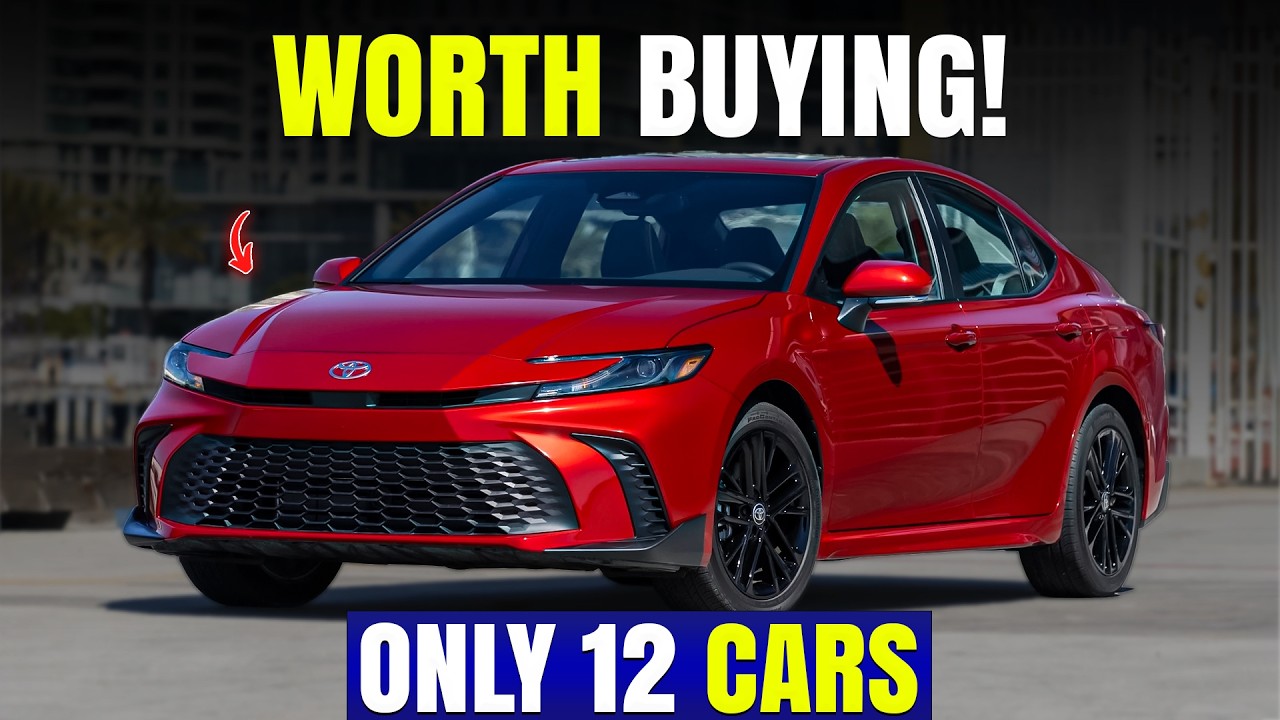
Only 12 New Cars Worth Buying In 2026 (spoiler: They’re Not European)
Your neighbor’s brand new BMW just got towed again. Meanwhile, that 10-year-old Toyota next door still running like new. Here’s the shocking truth luxury magazines won’t tell you. European badges don’t mean reliability anymore. They mean expensive repairs and endless dealership visits. But don’t worry, 2025 has 12 cars that actually deliver. And spoiler alert, not a single German badge made the cut. Stick around because by the time we reach number seven, you’ll meet a truck that leaves V8s in the dust, sips fuel, and won’t cost you a second mortgage. Ready to discover the cars that are actually built to last? Let’s dive in. Number 12, Mazda CX90PHEV 2025. Let’s start with a three row SUV that luxury brands wish they could build. The 2025 Mazda CX90PHEV is what happens when a luxury SUV and a reliable workhorse have a baby. And that baby inherited all the best genes. While Audi and BMW are still figuring out how to make plug-in hybrids that don’t self-destruct after warranty, Mazda’s been quietly perfecting their upscale game. Under the hood sits a 2.5 L turbocharged 4 cylinder paired with an electric motor, delivering a combined 323 horsepower and a massive 369 lb feet of torque. The plug-in hybrid setup gives you roughly 26 mi of pure electric range, perfect for school runs without burning gas. Realworld combined fuel economy, around 56 mp gallon equivalent when using both power sources. On gas alone, it returns 25 m per gallon combined. Inside, you’re greeted with materials that shame some German interiors, Napa leather, real Santos rosewood trim, and a cabin so quiet you’d swear Monk’s sound insulated it. The 12.3 in infotainment screen runs Mazda’s intuitive system. No subscription required for basic features. Pricing starts around $48,000, climbing to roughly $58,000 for loaded Turbo S Premium Plus models. Here’s the kicker. While European FHVs are showing electrical gremlins by year 3, Mazda owners are cruising past 200,000 mi with little more than oil changes, three rows of luxury plug-in efficiency, and zero drama. But wait until you see what Honda engineering delivers at number 11. Number 11, Honda Accord Hybrid 2025. If sedans are dying, someone forgot to tell Honda the 2025 Accord hybrid is proof that when you build a midsize sedan, right, people still buy them in droves. This isn’t your dad’s beige Accord. This is sharper, smarter, and more efficient than ever. The powertrain deserves respect. A 2.0 L 4 cylinder Atkinson cycle engine mated to Honda’s two motor hybrid system producing 204 horsepower and 247 lb feet of torque. But the real headline, EPA estimated 48 mp gallon combined in a midsize sedan that doesn’t drive like a golf cart. We’re talking smooth, refined power that makes highway overtaking feel effortless. Tech-wise, Honda nailed it without drowning you in gimmicks. The 12.3 in touchscreen with wireless Apple CarPlay and Android Auto is intuitive. No engineering degree required. Honda Sensing suite comes standard with adaptive cruise, lane keeping, and collision mitigation. Pricing starts around $32,000 for base hybrid models, climbing to roughly $40,000 for loaded Touring trims. Here’s what separates the Accord from pretenders. Honda hybrid batteries are proving essentially bulletproof. 10-year-old Accord hybrids are still running original battery packs without degradation. Compare that to certain European hybrids needing $8,000 battery replacements at 80,000 mi. Low running costs, high resale value, zero drama, and surprisingly, this isn’t even the most fuelefficient sedan on our list. Number 10, Toyota Camry Hybrid 2025. Speaking of fuel efficiency, let’s talk about America’s bestselling sedan, now exclusively hybrid. The 2025 Toyota Camry went allin on electrification, and it’s a masterclass in doing more with less. No more V6, no pure gas engine, just bulletproof hybrid tech wrapped in surprisingly stylish sheet metal. The drivetrain is Toyota’s latest, a 2.5 L 4 cylinder paired with an electric motor, generating 225 horsepower in front-wheel drive models and 232 horsepower in all-wheel drive configurations. EPA ratings hit 51 mp gallon combined for the most efficient front-wheel drive LE trim. That’s Prius territory in a roomy sedan that doesn’t scream, “I’m saving the planet.” Inside, Toyota finally modernized things. The 12.3 in touchscreen on upper trims is responsive, and the digital gauge cluster looks sharp. Available premium JBL audio delivers surprisingly rich sound. Pricing starts around $30,000, climbing to roughly $38,000 for top tier XSE trims. But here’s why the Camry Hybrid earns its spot. Toyota hybrid reliability is legendary. Taxi cabs with 500,000 plus miles on original hybrid components. No turbochargers to fail. No dual clutch transmissions eating themselves. Just a proven ECVT that laughs at traffic jams. Meanwhile, European competitors are having transmission software updates at 15,000 mi. Boring? Maybe. Bulletproof? Absolutely. But wait until you see what Korean engineering delivers at number nine. Number nine, Hyundai Ionic 6 2025. Hyundai’s electric sedan looks like it escaped from a sci-fi movie and drives even better than it looks. The 2025 Ionic 6 is proof that Korean automakers aren’t just catching up to European EVs, they’re leapfrogging them entirely. This streamlined four-door is all about efficiency and range without sacrificing driving fun. two battery options, a 53 kWh pack making 149 horsepower in the base standard range or the long range 77.4 kWh battery delivering 225 horsepower in rearw wheelel drive models and 320 horsepower in dual motor AWD. But the real party trick, EPA estimated range up to 342 mi on a single charge in the SERWD model, matching or beating much pricier European EVS. The cabin feels premium with ambient lighting, dual 12.3 in displays, and surprisingly supportive seats. Fast charging capability means 10 to 80% charge in about 18 minutes on a 350 kW charger. Pricing starts around $38,000, climbing to roughly $55,000 for loaded AWD Limited models. Here’s what matters long-term. Hyundai’s backing these EVs with a 10-year, 100,000mi battery warranty. They’re confident these powertrains will last. Meanwhile, certain German EVS are showing battery degradation and software glitches before the lease ends. The Ionic 6 combines efficiency, warranty coverage, and Korean reliability in a package that makes European alternatives look overpriced. And surprisingly, there’s an even more compelling EV at number eight. Number eight, Kia EV 92025. Three row electric SUVs are the holy grail, and Kia just nailed it. The 2025 EV9 is what happens when you combine tellide practicality with cuttingedge EV tech without Tesla service nightmares or German complexity. This boxy bruiser seats seven halls cargo and does it all with zero tailpipe emissions. Power comes from either a 215 horsepower single motor setup or a dual motor AWD configuration pumping out 379 horsepower. The 99.8 8 kWh battery pack delivers up to 304 mi of range in rearw wheelel drive variants. Towing capacity hits 5,000 lb, enough for a decent boat or camper. Realworld highway range, expect around 270 mi in AWD models. Inside is where Kia flexes. Three rows of genuinely usable seating. Loungestyle captain’s chairs in the middle row that swivel to face third row passengers. Dual 12.3 in screens. Premium Meridian audio and vehicle-toload capability that lets you power appliances during camping trips. Pricing starts around $56,000, topping out near $75,000 for GTline AWD models. The genius move. Kia’s leveraging the same battery tech and warranty as Hyundai 10-year 100,000mi coverage. While European three row EVs are priced north of $90,000 and showing questionable reliability, the EV9 delivers space, capability, and peace of mind. It’s the family hauler for the electric age. But wait till you see what pickup truck engineering delivers at number seven. Number seven, Toyota Tacoma. Hybrid 2025 midsize trucks are having a moment. and Toyota just made the smartest play. The 2025 Tacoma Hybrid combines legendary Tacoma toughness with a hybrid powertrain that makes fuel stops less frequent and torque delivery more immediate. This isn’t a compromise, it’s an upgrade. Under the hood sits a 2.4 L turbocharged 4-cylinder paired with an electric motor producing 326 horsepower and a stump pulling 465 lb feet of torque. That torque figure embarrasses most V8 trucks from a decade ago. Fuel economy estimates land around 25 mp gallon combined. Impressive for a truck with legitimate off-road capability. Towing capacity hits 6,500 lb. Payload tops out around 1,685 lb. The Tacoma’s interior got a genuine upgrade. The 14-inch touchscreen dominates the dash, running Toyota’s latest infotainment. Available JBL audio, multi-terrain select, and crawl control for serious trail work. Pricing starts around $44,000 for base hybrid models, climbing to roughly $56,000 for TRD Pro variants with off-road goodies. Here’s the kicker. Toyota’s hybrid systems in trucks are proving just as durable as their hybrid sedans. The Tundra Hybrid’s been racking up miles without issues. Meanwhile, Ram’s new turbo inline 6 is showing teething problems, and Ford’s power boost requires premium fuel. The Tacoma Hybrid is efficient, powerful, and backed by Toyota’s reputation for building trucks that refuse to die. And surprisingly, there’s an even more practical truck at number six. Number six, Honda Ridgeline 2025. Honda’s pickup has always been the smart guy’s choice. practical, refined, and reliable. While everyone else chases macho branding, the 2025 Ridgeline refineses the formula further, offering a truck that makes daily driving enjoyable while handling weekend warrior duties without drama. Power comes from Honda’s bulletproof 3.5 L V6, producing 280 horsepower and 262 lb feet of torque, mated to a smooth shifting N-speed automatic transmission. All-wheel drive is standard, giving confidence in slippery conditions. Fuel economy sits around 21 m per gallon combined, respectable for a truck. Towing capacity reaches 5,000 lb, and the bed’s unique dualaction tailgate plus inbed trunk are brilliantly practical. Inside, the Ridgeline feels more upscale Honda than work truck. The 9-in touchscreen with wireless phone integration is intuitive, heated and ventilated seats, premium audio, and a cabin quiet enough for luxury car owners who need truck capability. Pricing starts around $40,000, topping out near $50,000 for black edition models. The genius of the Ridgeline, it’s built on Honda’s unibody platform, sharing components with the Pilot SUV. That means Honda Accord level reliability in truck form. While traditional body-on-frame trucks need frontend rebuilds at 100,000 mi, Ridgelines cruise past 200,000 mi with minimal issues. It’s the thinking person’s pickup. Less testosterone, more common sense. But wait until you see what Japanese luxury delivers at number five. Number five, Lexus TX 2025. Lexus just entered the three row luxury SUV fight with a weapon the Germans didn’t see coming. The 2025 Lexus TX is what happens when you take Toyota reliability, wrap it in genuine luxury, and price it sely. This is the Highlander’s sophisticated older sibling that’s making BMW and Mercedes nervous. Engine options include a 2.4 4 L turbocharged 4-cylinder making 275 horsepower or upgrade to the hybrid powertrain delivering 366 horsepower through Toyota’s multi-stage hybrid system. That hybrid setup returns around 29 mp gallon combined, embarrassing for German rivals. The TX550H+ plug-in hybrid variant pumps out 406 horsepower with 33 mi of electric only range. The cabin is pure Lexus. Meticulous build quality, soft touch materials everywhere, and thoughtful storage solutions. The 14-inch touchscreen runs Lexus’s improved interface, finally ditching the frustrating trackpad. Available Mark Levenson Audio with 21 speakers creates concert hall acoustics. Pricing starts around $56,000, climbing to roughly $75,000 for loaded F-S Sport performance hybrids. Here’s why the TX matters. It’s a German luxury SUV killer. While BMW X7 owners are dealing with electrical issues and Mercedes GLS drivers are scheduling transmission software updates, TX owners are doing nothing but filling the tank less often. Lexus hybrid components are proving virtually indestructible. Three row luxury without the premium repair bills or depreciation nightmares. And surprisingly, there’s an even better hybrid SUV at number four. Number four, Toyota Grand Highlander Hybrid 2025. Toyota took their best-selling three row SUV. Stretched it, refined it, and added more hybrid goodness. The 2025 Grand Highlander Hybrid is proof that sometimes bigger really is better, especially when it’s wrapped in Toyota’s legendary reliability DNA. The powertrain is Toyota’s stout 2.5 L 4 cylinder paired with electric motors, producing 362 horsepower in the hybrid max configuration. That’s more power than most V6 luxury SUVs while returning an EPA estimated 27 mp gallon combined. Towing capacity hits 5,000 lb, enough for a decent camper or boat. The standard hybrid model makes 243 horsepower and achieves around 30 miles per gallon combined. Inside, Toyota went premium. The 12.3 in touchscreen is responsive. The available panoramic sunroof floods the cabin with light, and that third row actually fits adults without inducing claustrophobia. Premium JBL audio with 11 speakers sounds fantastic. Captain’s chairs in the second row add flexibility. Pricing starts around $45,000 for base hybrid models, climbing to roughly $60,000 for platinum trims. The genius here is space without compromise. While European three row SUVs struggle with tight third rows and questionable reliability, the Grand Highlander Hybrid delivers room for seven, efficiency, and Toyota’s track record of bulletproof hybrids. Taxi services are already eyeing these for their fleets. The ultimate reliability test. It’s the family hauler that refuses to break. But wait until you see what Korean luxury delivers at number three. Number three, Genesis GV80 2025. Let’s talk about disruption. The 2025 Genesis GV80 walks into the luxury SUV segment and asks a question that makes German brands nervous. Why should buyers pay more for less reliability? This Korean luxury flagship is the real deal. serious refinement, powerful engines, and a warranty that embarrasses the competition. Engine options are impressive. The base 2.5 L turbocharged 4-cylinder produces 300 horsepower, while the upgrade 3.5 L twinturbo V6 pumps out 375 horsepower and 391 lb feet of torque. All-wheel drive is standard. Fuel economy sits around 23 mp gallon combined for the turbo 4, dropping to 19 m per gallon combined for the V6. Competitive for this class. The interior is where Genesis flexes. Napa leather everywhere. Genuine wood and metal trim. The 14.5 in touchscreen runs intuitive software and the available 12.3 in digital gauge cluster is gorgeously rendered. Bang and Olafson audio with 17 speakers creates audio filegrade sound. Pricing starts around $58,000 topping out near $80,000 for loaded 3.5T Sport Prestige models. Here’s the genius move. Genesis includes a 10-year 100,000mi powertrain warranty and complimentary scheduled maintenance. While BMW X5 owners are sweating $1,200 service bills, and Range Rover owners are on firstname basis with their service adviser, GV80 owners are relaxing. German luxury without German repair bills. And surprisingly, there’s an even more compelling luxury vehicle at number two. Number two, Aura MDX Type S 2025. Honda’s luxury division just dropped a performance SUV that embarrasses European sports sedans. The 2025 Aura MDX TypeS is what happens when you combine three row practicality with legitimate sporting credentials without the fragility of German performance SUVs. Under the hood is Honda’s magnificent 3.0 L turbocharged V6 producing 355 horsepower and 354 lb feet of torque routed through a smooth shifting 10-speed automatic transmission. Super handling all-wheel drive SH AWD is standard using torque vectoring to carve corners like an SUV has no business doing. Fuel economy sits around 19 m per gallon combined. The price of performance inside Aura went premium without going overboard. The 12.3 in touchscreen with Google built-in is genuinely intuitive. Available 16 speaker ELS studio 3D audio sounds incredible. Sport seats wrapped in leather and ultraas suede hold you tight through corners. Pricing starts around $71,000, undercutting German performance SUVs by $10,000 to $15,000. The genius here is Honda reliability in performance packaging. While BMW X5 M50i owners are dealing with wastegate failures and Audi SQ7 owners are nervous about turbo longevity. The MDX TypeS uses Honda’s proven turbocharged V6 that’s already showing durability in the TLX TypeS. Legitimate performance without maintenance nightmares. Three rows, 355 horsepower, and Honda reliability. But there’s one more vehicle that combines everything perfectly at number one. Number one, Mazda CX70 PHEV 2025. Here we are, the pinnacle. The 2025 Mazda CX70PHEV is what happens when a brand obsessed with driving dynamics meets modern efficiency demands. This two row luxury SUV is the thinking person’s choice. Refined, powerful, efficient, and built to last. Under the hood is a 2.5 L turbocharged 4 cylinder paired with an electric motor producing 323 horsepower and a massive 369 lb feet of torque. That torque figure makes acceleration feel immediate and effortless. The 17.8 kWh battery pack delivers approximately 26 mi of pure electric range, perfect for daily commuting without burning gas. Combined fuel economy sits around 56 mp gallon equivalent when running in hybrid mode. The interior is where Mazda justifies its premium positioning. Napa leather seats with kakanui stitching. Real Santos rosewood trim. The 12.3 in center screen and digital gauge cluster run Mazda’s intuitive interface. Available 12 speakeraker Bose audio with bass match technology sounds sublime. Pricing starts around $48,000 topping out near $58,000 for Turbo S Premium Plus models. But here’s why the CX70PHEV takes the crown. It combines Japanese reliability with European refinement at a price that makes sense. While German PHEVS are showing electrical gremlins and battery degradation, Mazda’s Skyactive platform has a decadel long track record of durability. The CX70PHEV delivers luxury, efficiency, and peace of mind. The complete package, 12 cars, not a single German badge. That’s not bias, that’s reality. Japanese and Korean brands crack the code. Build reliable, efficient vehicles that don’t require a second mortgage for maintenance. While European automakers chase technology for technology sake, brands like Toyota, Mazda, Honda, Hyundai, and Kia are perfecting the basics. Durable powertrains, intuitive tech, and warranties that actually mean something. If you enjoyed this countdown, hit that subscribe button. And remember, the smartest car purchase isn’t always the flashiest badge. It’s the one that starts every morning without drama.
Only 12 New Cars Worth Buying In 2026 (spoiler: They’re Not European)
our neighbor’s luxury car just got towed — again. Meanwhile, that 10-year-old Toyota next door? Still running like new.
Here’s the truth luxury magazines don’t want you to hear: European badges no longer mean reliability — they mean expensive repairs and constant dealership visits.
In this video, we’re breaking down the 12 most reliable cars of 2025 — vehicles that deliver power, efficiency, comfort, and long-term dependability without the repair bills or stress.
From hybrid sedans to electric SUVs and tough trucks, these are the cars that will actually last 200,000+ miles without drama.
By the end, you’ll see why not a single German badge made the cut — and why Japanese and Korean automakers are quietly dominating 2025.
Cars Mentioned in This Video
00:38- #12 Mazda CX-90 PHEV 2025
02:22- #11 Honda Accord Hybrid 2025
03:53- #10 Toyota Camry Hybrid 2025
05:35- #9 Hyundai Ioniq 6 2025
07:21 – #8 Kia EV9 2025
09:04- #7 Toyota Tacoma Hybrid 2025
10:47- #6 Honda Ridgeline 2025
12:24- #5 Lexus TX 2025
14:14- #4 Toyota Grand Highlander Hybrid 2025
15:58- #3 Genesis GV80 2025
17:46- #2 Acura MDX Type S 2025
19:38- #1 Mazda CX-70 PHEV 2025
Want more videos you’ll love?
Check out these awesome picks from SUV Detective—they’re packed with expert tips on trucks, SUVs, engines, and more. Perfect for auto lovers like you! 👇
Subscribe to SUV Detective!
Love trucks, SUVs, and powerful engines?
Join the SUV Detective community for expert insights and thrilling automotive content uncovered like a true detective! 🕵️♂️
👍 Don’t forget to Like, 💬 Comment, and 🔔 Subscribe to stay in the loop—never miss a case!
⚠️ DISCLAIMER:
All video clips and materials used in this content belong to their respective copyright owners.
This video is created strictly for educational, informational, and commentary purposes only.
It is protected under Section 107 of the Copyright Act 1976, which allows “Fair Use” for purposes such as criticism, comment, news reporting, teaching, scholarship, or research.
All footage has been carefully edited and transformed to match the context of this video.
🎵 Track: Lost Sky – Fearless pt.II (feat. Chris Linton) [NCS Release]
🎧 Music provided by: NoCopyrightSounds
📺 Watch here: • Lost Sky – Fearless pt.II (feat. Chris Linton)
⬇️ Free Download / Stream: http://ncs.io/Fearless2
#ReliableCars #CarRanking2025 #LuxuryCars #UsedCars #HybridCars #ElectricSUVs #CarBuyerTips #ToyotaHybrid #MazdaCX70 #HondaAccord #CarReliability #automotivenews