Was I Wrong About Plug-In Hybrids?
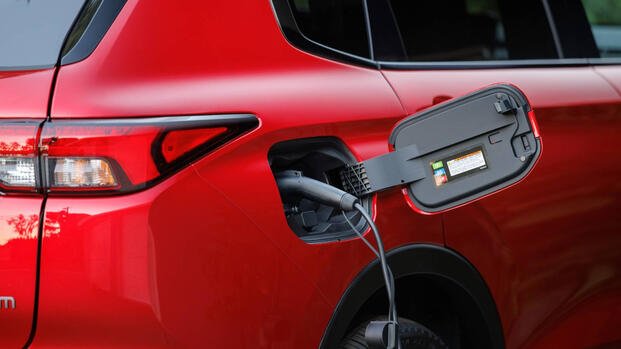
Welcome back to the channel, everybody. We should talk about plug-in hybrids today. I recently made a video, gas, EV, or hybrid. And Alex on Autos, a very respected YouTube channel that I personally would recommend if you haven’t checked him out before. I just watched his video saying that plug-in hybrid data is very skewed. And I had used some of this skewed data basically to exclude the fact that plug-in hybrids should be included in my research. And I think I’m going to stand by that. And there’s three reasons why. Demographic, price delta, and use case. You see, more plug-in hybrids are being purchased in Europe because their employers are purchasing them for them. They want the savings of the EV, which plug-in hybrids qualify for. And the other illustration the European market makes is that the regular general public is not going to use a plug-in hybrid like an early adopter. And that’s the demographics I really want to dive into a little deeper. Plug-in hybrids aren’t going to be able to perform the way they claim for at least half of Europeans because they likely don’t have a place to charge them overnight reliably. So, here’s my argument. Should employers buy plug-in hybrids to lease to employees at all? Alex on Autos is right that the European market shouldn’t be trusted as a case study because a large company is purchasing the fleet and then leasing to employees who are willing to sacrifice the freedom of choice for a cheap lease from their employer. The employer gets a benefit on the purchasing end and potentially additional incentives for being a cleaner vehicle. And then the employee has the responsibility of making that vehicle fit within their needs, which basically makes level two charging rare and complicated for apartment dwellers. The demographics aren’t a whole lot different for the United States. A large amount of people live in a place without off- streetet parking or a place to charge, which compels me to argue again, should plug-in hybrids even exist? As far as the price delta, you have to look at what you’re buying and what you get. They’re oftent times the same price or more expensive than any kind of EV comp would be. So, if you’re buying new, I don’t know where the cost savings is. And you’d have to have a lot of cost savings to justify a 17 kilowatth battery over, let’s say, a 75 kWh battery. With a plug-in hybrid, you’re still paying for maintenance. You have to change that oil once a year, even if you never use gasoline. Additionally, your plug-in hybrid will use gasoline if you don’t, whether you want it to or not, for the exact same reason. So, if you have an exactly 40 mi commute and you live in a warm climate, so you don’t lose range in the winter. And additionally to that, you’re also making very regular, very long trips, there may be an argument for a plug-in hybrid for you. But otherwise, the price delta doesn’t look great. Let me show you what I mean. How plug-in hybrid batteries degrade faster than full EVs. I won’t subject you to this entire thing, but there is some independent research here, and this is the meat and potatoes. A driver who covers 40 to 50 kilometers a day electrically will almost fully discharge and recharge their pack every day. This cycling intensity leads to faster chemical wear in the batteries cells. The smaller packs also operate at higher C rates, the amount of current drawn or charged per unit of capacity, which increases heat generation and internal resistance. Heat and high current density are both known accelerants of lithium ion degradation. And that’s not all. PHEVs often rely on simpler thermal management systems than BEVs. So, it’s a double or a quadruple or several whammies when it comes to wanting to save the planet with your plug-in hybrid. Plug-in hybrids used to be a great case for people who wanted the short distance benefits of EVs without having to search for charging stations on long distances. But charging stations today are everywhere. There’s enough. Where do you live? Mississippi. Here’s Mississippi on Plug Share. And the worst state is actually Louisiana. And it’s not great, but it’s not bad either. As we move along the map, you can definitely make destinations within the state, and you can definitely travel through it. Alabama is the same. And here’s a look at Arkansas. Again, just move around the state, and there are plenty of places to charge. And contrary to popular belief, those are the five worst states per capita for charging in the US. Let’s look at some recent comments. My biggest personal issue for an EV is my personal schedule. I have 120 mi roundtrip commute. Then three of the five days a week after driving the 60 mi home, I do food delivery for a local restaurant that is about 50 mi a night. During the summer, it wouldn’t be an issue, but come November and the rest of winter, the battery loss is too much, I believe, for my driving. Also, there is no DC fast chargers in my town just to stop in for a quick 5 to 10 minute charge to get me through my deliveries and get home. Do you have a unique situation that only a plug-in hybrid would work for? Let me know in the comments below. This viewer has a case for a plug-in hybrid, and it’s my opinion that the situation needs to be this complex for a plug-in hybrid to make sense for you. An EV offers an easy solution for this problem without any extra time. All it takes is a modern GPS. This is Claysville, Pennsylvania, and it’s a really small town. I don’t know anything about it, but what I do know is it’s 61 miles away from where I live. So, I would assume it’s fairly similar to what my viewers situation would be like. I live here. I work in Morgantown, which is 60 miles away. I have nowhere to charge in my hometown while I do my delivery shift. So, what do you do? I don’t even have to ask. I can just come in here, add stop, and put the entire trip right in. So, I’ve mapped out my viewer’s entire situation right here on a better route planner. We’re assuming my viewer lives in Clayville, which does not have any charging. Plenty enough people, though, to do a delivery shift. There’s probably at least one restaurant in Clayville that might offer delivery. Next, we’ve simulated the delivery shift by adding 50 miles of driving after an arrival in Clayville from a work shift. We’ve got a start in Claysville, where my hypothetical viewer lives, and they’re driving to Morgantown, which is 61 mi. Next, they’ll work their shift. They’ll leave Morgantown, headed back for Claysville to start their delivery shift. They’ll stop in Washington, Pennsylvania for 9 minutes at the Supercharger. If you notice, 28 to 51% in the event that they thought they needed more, they could just add more there. There’s plenty of buffer in the battery. they could go to 75% instead of 51%. So that may be a 20-minute stop, but either way, it’s on the way and it doesn’t inconvenience the driver any. Next, they arrive in Claysville and then they do their simulated delivery shift. The next day, they charge at home and the day would start all over again. And each day, they’ll be fully charged and ready to go. This is what happens when you don’t live near a charger. You would just end up charging here. A better route planner has you taking I7 to 79 in Washington, Pennsylvania and heading down to Morgantown. The best thing about this is you have a 10 to 15 mile journey from Claysville to Washington. So in the event that you wanted to add that 10 minutes in the morning, you could potentially do that and then when you left work, you wouldn’t have any rush to get to your delivery shift. This is going to happen anywhere you go in America. Here’s that same shift except now you live in Broken Bow, Nebraska, which definitely doesn’t have any places to charge. However, you might work in a place like Fedford. You leave your house in Broken Bow. You go to Theford. You go to work. You come back into Broken Bow for your delivery shift. You do your delivery shift. And then you end up back at home. Let’s see what the plan looks like. You leave your house in Broken Bow. You head to Theford for work. After work, you go to the charge point. You charge for 27 minutes. It’s a little bit slower of a charge point, but it can be done. Next, you head back to Broken Bow to start your shift. You head to Loop City. That simulates the shift. And then back to Broken Bow. And this is actually a 74 mile delivery shift, but you’ve got one charge. It’s 27 minutes and you’re done. And since you know you have to charge before you get to your delivery shift, it means you can do the entirety of your delivery shift without having to stop and go find gas. Whereas when you run out of gas, it’s like a shock or something that wasn’t planned. And it could prevent you from getting a tip during your delivery shift or make your shift itself just really inconvenient and difficult to tolerate. And right here is where I’ll say the used market is the used market. If you find a $4,000 Telluride with no miles on it, you should probably get that. If you find a plug-in hybrid that’s a good deal, definitely go with it. A good price for an EV is well, literally all of them right now in the used market. And hybrids are way overpriced, but most plug-in hybrids are too. I’ve got examples. 2022 Mitsubishi Outlander plug-in hybrid, $21,000. 2023 Bolt EV, same number of miles, $20,000. Subaru Saltra, even fewer miles and it’s within $1,000 of the price. Two things have just happened for 2026. The tax credit went away and manufacturers that want to sell EVs have drastically lowered the prices. However, you can’t just lower the price of a plug-in hybrid because you’ll lose money because plug-in hybrids have a large powertrain and a decentiz battery and just cost a lot to make. And then there’s the winter time. Now, you may live in a warmer climate, and this may not be true for you, but in the winter time, your plug-in hybrid battery is just extra buffer for later. When I had my plug-in hybrid, yes, I owned a plug-in hybrid for 3 years, so I kind of know what I’m talking about here. But in the winter time, you would start your day with 18 mi of range instead of 56. And those 18 mi needed to be preserved. You needed to switch to a hybrid vehicle mode and use gasoline right away. Otherwise, that range would just disappear immediately and still would drain itself because climate is more than the battery capacity could feed it at one time. You have to switch to gasoline if it gets cold. And EVs do lose range in the winter, but gas cars also lose range in the winter. It’s crazy how that works. Also, people needed to dip their feet in years and years ago when it came to getting a plug-in hybrid instead of an EV because the infrastructure wasn’t there. Or maybe you didn’t know anyone who owned an EV. Well, that’s not true anymore. I don’t need to go out there and learn if someone can own an EV in the area where I live because it’s pretty likely that a neighbor of yours does. Additionally, do you like one pedal driving? Well, plug-in hybrids don’t have one pedal driving. They may have regen braking, but they don’t have the full all the way bring you to a stop. They just don’t have it. And I appreciate people wanting flexibility on long trips, but what even is that? I was riding with Brian on the New Jersey Turnpike recently, and he said, “Hey, you know what? I need to use the restroom.” I thought, well, let’s check plug share and find a charger. It was less than a mile from where we were. We pulled in and we plugged in. And this may not be less than a mile for everyone, but chargers are available now to the point where you can make it to one when you have to stop. Is your bladder flexible? I’ve been to Fort Lauderdale, Florida in one shot. I left Morgantown, West Virginia, and 24 hours later, I showed up in Fort Lauderdale. I had to stop a ton of times. And what I’ve learned over time is the longer you sit in a car for one clip, the more fatigued you are when you get there. So, you are inviting more fatigue and I understand that people have things to do and that there’s time involved in things, but how much time are you willing to budget for a long trip? Enough to make it there, I would hope. It’s like jet lag for cars. We are building out, and by we, I mean private companies, private citizens, nonprofit organizations, charge point operators, basically everyone but the federal government, a massive level three or fast charging infrastructure that plug-in hybrids can’t even use. Why would you buy something that is already obsolete when it comes to charging? But on the other side, even if they could use it, what would they use it for? Isn’t that when you’re supposed to buy gasoline? Like I said, I’m sticking with my previous video where plug-in hybrids aren’t competitive. Why? Hybrids are cheaper and a better idea if you can’t even with comparable EVs. It’s not yester year when plug-in hybrids got $7,500 tax credits, which made them cheaper than hybrids to buy in the first place. EV prices have been drastically lowered, making them as good of a deal, if not better, than plug-in hybrids. Wintertime range is dismal or non-existent for PHEVs. So, forget about not using gas if you live in a cold climate. EV chargers are now abundant enough to get you anywhere. Plug-in hybrids have less battery tech and are much more likely to have battery degradation due to way more battery cycles. You don’t have to dip your feet in to see if an EV will work in your area. EVs are more powerful, quieter, more efficient, offer more selection, have a better warranty, and are more likely to be able to be worked on because they are more common. On top of that, they’re also less complex, and require no gasoline or oil changes. Finally, the used market is the place where you buy the best deal. And if that happens to be a plug-in hybrid, so be it. This is the only place where a plug-in hybrid makes sense. So, again, new plug-in hybrids or continuing to manufacture plug-in hybrids doesn’t make any sense. [Music] or that is black gold Texas tea. So that’s it for this one. Let me know your thoughts in the comments below. Join Patreon or become a YouTube member for early access to videos. Subscribe for more. We’ll see you on the next one. Hey, smash the like button. Thank you.
Join this channel to get access to perks:
https://www.youtube.com/channel/UCTPJmDZPJt17iq4lsTuH61g/join
patreon.com/aslash304
The EV80quette Tee – https://tinyurl.com/29hwcerw
The Used EV Market after the Tax Credit: https://youtu.be/VfdyuqVGZEw
Blazer EV vs. Prologue: Are they The Same Car: https://youtu.be/_V2fs2egEPI
Watch a 1000 Mile Prologue Trip That was Cheaper than Gas – https://youtu.be/LIrh09Ydtd0
Gas, EV, Or Hybrid: https://youtu.be/JjdLJlJoMq0
How Does the Prologue Perform in the Snow – https://youtu.be/l4cd4RUEpHY
#trending #plugins #pluginhybridsuv #phev #electriccar #electricvehicle
Patreon https://patreon.com/aslash304
Can I review your EV? Any Make/Model/Year Let me know at this Email
Contact email: adamsevreviews@yahoo.com