This Lightweight Carbon E-Bike Surprised Us! | Urtopia Carbon Classic Review & Test Results
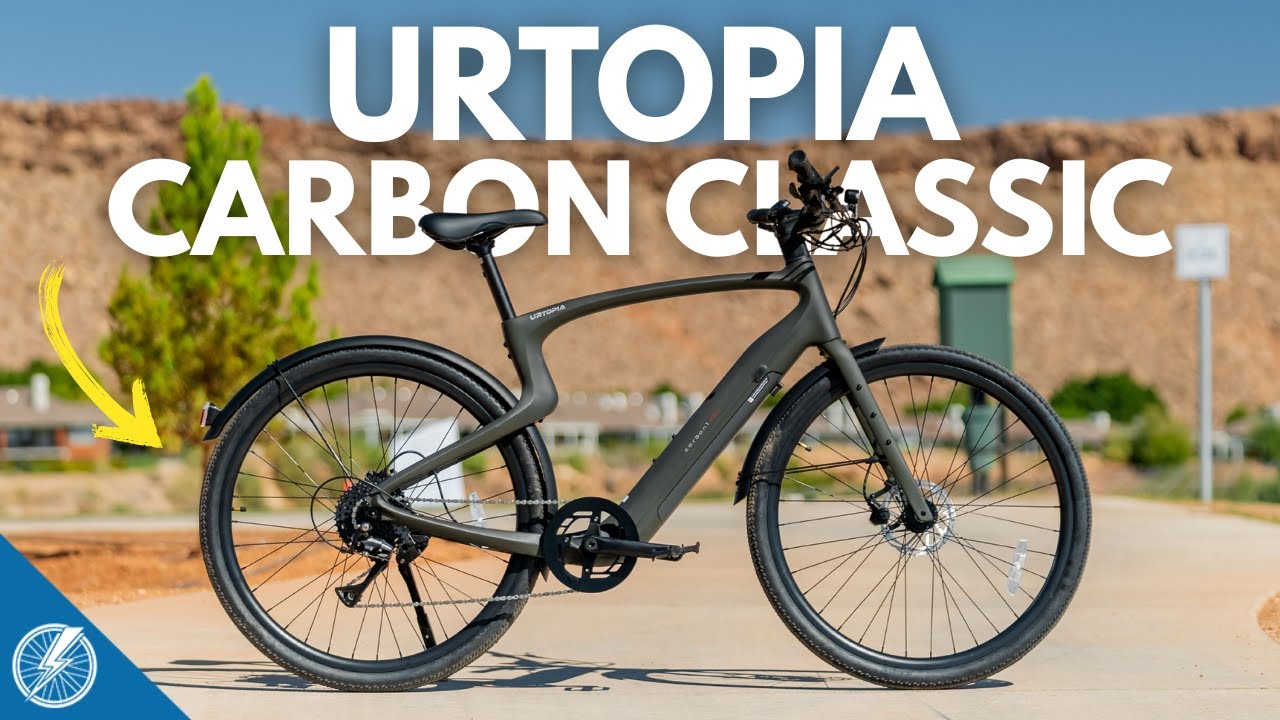
Hertopia kind of blew up for its AI powered ebike that grabbed headlines, but that tech story missed something bigger. The awesome carbon bike underneath. The Carbon Classic strips out the extras, keeps the good stuff, and might actually be the smarter choice for certain types of riders. Find out why in today’s review. [Music] [Music] Hey. Everyone, Griffin here with Electric Bike Report. If you’re into ebikes that blend smart design with real world performance, make sure to hit that subscribe button for more reviews like this one. Ertopia made a name for itself by cramming cuttingedge tech into its earlier models. I’m talking AI voice controls and navigation, motion sensors. It was all pretty wild, but for this one, they decided to take a step back. The Carbon Classic focuses on what really matters in a great bike like this. It’s lightweight. It’s got great performance, refined control, and very sleek design, and this simplified approach will make a ton of sense for certain shoppers. Look, when smart home gadgets first hit the scene, I was all in. I had voice controls for my lights, garage door, locks, the whole thing. To me, all of that was magical. To my wife, it was a strange way to spend money when we could just flip a switch or lock a door ourselves. Point being, the latest and greatest tech doesn’t appeal to everyone and to some can sometimes distract from products that already work perfectly well without it. Or at the very least, it’s a selling point that holds very little appeal. So that idea brings us to today’s bike, the Utopia Carbon Classic. A more simplified approach that just lets the bike shine for its great execution and traditional features without the AI bells and whistles on top of it. So let’s start with the foundation, the frame. This is a full carbon fiber build frame and fork, which gives it that signature sculpted look and ultra lightweight feel. At just around 38 lbs without accessories or 41 lbs as tested, it’s one of the lightest fullfeatured city and urban commuters we’ve ridden. Carbon fiber isn’t just about shaving weight. It also smooths out road vibrations, making the ride quieter and more refined and less jittery. It’s the same kind of quality you’d expect from performance road bikes, but tuned here for city commuting. Visually, the design is pure Utopia. Sleek lines, hidden cables, and that minimalist matte finish. It’s modern and unique with a little lightning bolt vibe with this top tube and seat stay area, and it absolutely turns heads on the road. Now, let’s talk about the motor system because that’s where this bike really surprised me. The Carbon Classic uses a custom 350 W rear hub motor that can peak at 750 watts and deliver up to 60 N me of torque. It’s a fitting pair to a lightweight bike with its torque sensor. It feels incredibly natural while helping you move along speedily. The torque sensor reads how hard you’re pedaling and adjusts motor power in real time, so you never get that onoff surge that cadence sensors can cause. It just feels seamless, like you’re suddenly in better shape. You get four assist levels, eco, tour, boost, and turbo, plus a smart mode that automatically adapts to your riding style. We’ll dive into the data later, but the smart mode is surprisingly good at keeping you in the sweet spot between effort and assist. Powering everything is a 353Wh hour Samsung battery certified to UL2271 standards. It’s removable for easy charging and Otopia claims up to 65 miles of range depending on how you ride. Our test came close to that number which is impressive for a battery this size. Charging takes between 2 and 1/2 and 3 hours with the included 4 amp charger. Quick enough to top off between commutes or over lunch. Now one of the big changes from the Carbon Pro is the display. Gone is the large LED dot matrix AI unit. In its place is a clean three and a half inch color LCD that shows all the essentials, speed, battery assist level, and trip info with a few customizable settings. That design swap opened up space for one of my favorite features, an adjustable stem with 90° of range. Combine that with three available frame sizes, and you can truly fine-tune the fit. Whether you want an upright, comfortable ride or more aggressive posture, the Classic adapts easily. Oh, and those frames fit riders from 5′ 3 to 6’5. and a max payload of 240 lb. Now with the drivetrain, the Carbon Classic runs a Shimano Asera 8-speed setup paired with a 44 to chain ring and an 11 to 40 to cassette. Braking comes from Tekkro HD E3520s, hydraulic disc brakes with two piston calipers and 160 mm rotors. The tires are 700x 40C and strikes that perfect balance. Fast rolling yet wide enough for a bit more comfort than road bikes and grippy enough for mixed pavement and light gravel. Both fenders come standard and the rear light is integrated right into the fender itself which keeps your visibility high even if you mount a rack or paneers. The headlight up front kicks out 30 lux to be a bit more visible on the roads. So you get a mild sweep and rise on the 720 mm bar. It has trigger shifters for changing gears and included over the bar throttle and a bell to let people know that you’re passing. Other touches include ergonomic lock on grips, a squishy topia saddle, and alloy platform pedals. At a retail price around $17.99, this bike undercuts most other carbon ebikes by a wide margin. You’re getting real carbon performance, torque sensor smoothness, and practical commuter features all in one lightweight package. Now, tariffs are still all the talk of the industry and could possibly change. So, click the link down below for up-to-date pricing and to support our channel should you choose to ultimately buy one. Thank you in advance for the support. So, now that we know what it’s packing, let’s take it to the road and see how the Carbon Classic performs in our testing. All right, jumping straight into our class two speed test here on the Carbon Classic. Um, it’s a bike that moves very easy. This is very comfortable and easy pedaling at about 10 and a half, just about 11 miles per hour here. Just going in fourth gear. Let’s go ahead and kick that motor on, though. And then I like this display. Gives you a little idea of the motor power versus rider power. Always kind of cool to see that. Um, but hey, motor comes on pretty quickly. Doesn’t get very loud at all. um has a little hum to it, but nudging me along speed. Moving up about 13 miles per hour or so. Let’s move one more time into tour. So, yeah, after a couple turns of the pedals, feels lighter effort. Able to move into sixth gear here. Has no problem moving, I’ll tell you that much. Very lightweight, easy ride. Motor noise hasn’t picked up substantially. We’re going about 17 miles per hour. We’re going to skip over the smart mode as that’s a little bit more adaptive. Gives you access to a broader range. You’re in boost though. Yeah, motor’s doing pretty easy work here. I’ll move into my eighth and final gear. You can see it’s still going pretty hard on the motor power up to 20 mph. So, should be the ceiling of the bike. Let’s move into turbo. And sure enough, it’s holding just a little above 20 mph. keeping things relatively in check. But so yeah, overall um not a bad start. Let’s go ahead and try some faster class 3 speeds and see what we get. All right, jumping straight into the class 3 test here and in eco mode. You know, things are starting out fairly similarly, moving up into fifth gear. Um quiet motor noise, pretty gentle but noticeable engagement. So we’re climbing upwards of about 13 14 miles per hour. See the motor kind of dip down once it hits around 14. Let’s go ahead and move now up into torque. Same as before. Just feels a little bit lighter, easier to kind of like push ahead, move through the gearing, keep some tension in that chain, take full advantage of the torque sensor. Uh, moving pretty comfortably up here about 18.2 mph. Able to kind of sync up with my rhythm. Good pedal cadence right here. We’re feeling about 19 mph or so. Once again, I’m going to skip over smart. Go straight into boost. Move up a gear as well. A little bit speedier and easier here on your left. That motor is still working full steam ahead. Climbing upwards of 22 23 miles per hour here. Holding. And then let’s go ahead and move into turbo. Finish things off. And then yeah, this is just sailing. No problem at all. Top speed in this is 25 miles per hour. It’s getting close to about 24.6 mph is I think where I’ve seen it in peak. So maybe just a tad bit under the 25 m per hour limit, but not by much. And overall gauged really nicely. But let’s break it all down in the studio after a quick throttle test. Okay, here’s the 0 to20 throttle test. And you have to hit it twice on this one. So on your mark, get set, go. It starts out fairly gently, I’d say. Starts picking up a little bit of momentum, building a head of steam. Climbing, climbing, climbing, and there’s 20. Oh, and still kind of keeps going. Let’s see where this wants to settle. It does look like it’ll go a little bit faster than the 20 m perph limit. I’m getting just under 23 here, but all right, that’ll do it. In class 2 without motor power, we averaged 10.8 mph. From there, eco climbed to 13.6, to 17.2, boost reached 20.3, and turbo topped out at 20.8 mph. Switching to class 3, we saw a bit more breathing room between levels. Eco at about 14 mph, tour at 18.6, 6 boost at 23.2 and turbo topping out at 24.6 mph. So, acceleration felt natural and fairly quick, especially for a modest power hub drive. The torque sensor deserves a lot of credit here. It’s fast to respond, sinking quite well to your pedal pressure, so the assist always feels proportional and intuitive. What I really like is that you can even customize each assist level’s output through the bike settings menu. So, if you want a punchier eco or a mellower turbo, you can tune it exactly how you like. As for that smart mode, it’s surprisingly good. It’s not perfect yet, but for an adaptive hub drive system, it’s one of the more impressive ones that I’ve tested. Now, the throttle test you saw in there, just a couple of thoughts on it. I’m always happy to have a throttle, but this could use some finetuning. I’m not a fan of the double tap feature. I’m fine with safety guard rails, but think they should be something you can switch off easily. So, I wish settings had that option. and its speed seems tied to the bike’s max speed. So, that could be buttoned up to cap at 20 while you pedal to 25 just to make sure there are no compliance issues in states where that’s becoming more of a focal point. Range is always one of the biggest questions we get. So, let’s break down how the Carbon Classic performed in our testing. Claims up to 65 mi of range under ideal conditions. And while we didn’t quite hit that mark, we came impressively close, especially considering the bike’s modest 353watth battery pack. In our max power test running the bike in turbo mode, the Carbon Classic lasted 25.2 mi before the battery tapped out. On the opposite end of the spectrum, our eco mode test delivered 56 mi before shutdown. So, that’s a pretty solid real world showing, especially since our route includes a mix of rolling hills, flat stretches, and moderate wind resistance. And to me, range performance isn’t just about hitting a number. It’s about whether the bike still feels lively and efficient throughout the ride. And the Carbon Classic nails that balance. It’s the kind of bike that feels helpful even in low power and not overbearing in high power, giving you the sense that you’re doing the riding just with a little electric boost in your back pocket. Giving constant help in either mode while spitting out that kind of mileage is pretty impressive. And taking a closer look at the numbers, the Carbon Classic averaged about 6.3 watt hours per mile in eco and 14 watt hours per mile in turbo. That is some top tier territory in our testing, placing it amongst the most efficient bikes we’ve ever seen come through our doors. So, it can give you a lot of miles off a pack this size. That all comes down to smart engineering. It’s got a lightweight carbon frame, narrower road tires, and that precise torque sensor working together to stretch every watt. And when it’s time to plug in, the 4 amp fast charger gets you back to full in about two and a half to three hours, which makes daily use feel effortless. [Music] All right, time to see how the Utopia Carbon Classic handles the seep stuff. Our hill test takes place on a climb we call the devil’s backbone. It’s a half a mile long with an 8% average grade and 217 ft of elevation gain. In other words, it’s no joke. Most unassisted cyclists would end up walking this one. So, it’s a great benchmark for real world climbing ability. So, we run the test twice. Once using only the throttle and once in the bike’s highest pedal assist level. Let’s take you to Justin to see how it did. All right, we are out doing the hill test on the Ertopia Carbon Classic and this city kind of urban commuter doing the throttle test. I’m to be honest, I don’t have much hope or I guess expectation is a better word for it. A lot of times these super lightweight city commuters, they’re just not necessarily built to throttle up a hill like this. Um, we got to about 14 15 mph before this first section. We down to 7.3, 6.5, 5.7. See if it’s got a lot of low end torque to kind of keep us going, but we’ll see. 4.2. Come on. Might make it through this first section. 3.3 3.0 2.6 It’s going to be close. It’s going to be close. I don’t think it’s going to make it, but it’s close. 2.1 2.0 1.6 and that’s what we’re going to call it. So, didn’t quite make that up again as expected. Um, but we’ll turn around and now do the pedal test and see how it does. Hey, we are back out on the Topia Carbon Classic now doing the pedal test and feeling pretty peppy at the start. I’m in seventh gear. got me to 19.6 miles per hour before this first hill. I’m going to shift down to sixth. Again, it’s that lightweight, super lightweight. Um, city urban commuters don’t have high expectations for speed up this hill. Um, so see how it does. Right now, it kind of bottomed out. We’re at about 13.7 mph on that first section in six gear. Going to stay there for right now. back up to 17.1 miles per hour. As we make this turn, I’m going to downshift to fifth just to keep a good natural cadence. We’re 13.1 12.6. Looks like we’re going to kind of bottom right about 12.6 mph. Now shift to fourth as we make this turn and see what we get back up to before this first lamp post here. We’re 13.3 kind of like in this fourth gear right now. We’re going to cross that right at 12.7 m per hour. Now in terms of motor noise, incredibly quiet, much better than average than what I would expect. The engagement feels very natural. And, you know, I am having to pedal a bit more than a lot of the other, you know, hub motors that just kind of designed to like push up the hill. But, and it’s feeling pretty good. I’ll let you listen now as we go through this next section. So yeah, I I mean I’m going about 12 miles per hour. Don’t think you’re going to hear much there. You’ll notice I’m breathing a little bit. It’s more natural feeling obviously. very lightweight and not overpowered, but still getting to the top of this hill way better than I would on a normal bike. So, we’ll see how it does as we finish riding 10.1 mph. Now, in the throttle only test, the Carbon Classic didn’t make it to the top before tapping out. But honestly, that’s not surprising. Amongst all the city and urban commuter ebikes we’ve tested, only one has ever finished this climb on throttle power alone. So, we’re definitely not holding that. Did not finish against it. When we switched to turbo mode and added some pedal input, the results were much more encouraging. The Carbon Classic reached the summit in 2 minutes and 22 seconds with an average speed of 12.8 mph. That’s just a bit slower than our all bike average of 207, but remember that list includes a lot of higher powered motors. So, when we compared to similar bikes in the 250 to 350 watt hub drive category, the average time jumps to 2 minutes 36 seconds, meaning the Carbon Classic actually outperformed most of its peers. Though, you’re still getting your heart rate up a bit in the process. The takeaway here, this bike fits perfectly into rider engaged theme. It doesn’t do all the work for you, so if you’re looking for a hill dominator, you’ll want to look elsewhere. But, it gives you just the right amount of help to make challenging climbs totally manageable. For everyday city hills or moderate grades, the Carbon Classic is more than capable. And even big ones like Backbone, if you’re okay with putting in a bit of work, can totally be done. [Music] Next up, let’s talk about stopping power. All our brake tests are done the same way. I personally bring the bike up to 20 mph, then apply the brakes in a steady, controlled stop while keeping the bike balanced and in line. We repeat that three times to get an accurate average. On the Utopia Carbon Classic, we recorded an average stopping distance of 22 feet 5 in. That’s just slightly behind our all bike average of 22 ft, which is a pretty solid result. The Tekro HD system uses two piston calipers and 160 mm rotors and felt predictable, easy to modulate, and confidence inspiring throughout testing. Stopping felt smooth rather than abrupt. Now, a small but thoughtful detail. The rear fender light doubles as a brake light, so you stay visible even if you add paneers or a rack. I thought this was an improvement from the seat post mounted unit on the Pro model, which doesn’t come with fenders. Techro’s hardware is also a plus for maintenance. It is common, reliable, and easy to service nearly anywhere. [Music] You know, it’s been kind of a busy year for us with Ertopia bikes. We have tested out a lot of them, nearly all of them in the lineup to this point. And for me, I feel like I’ve just been more and more impressed with the brand the more I have tried them. And what they’ve got cooking here on the Carbon Classic might be my favorite one yet, as it’s the one that kind of sizing wise has fit me the best, but also it’s just a very, you know, well executed concept, really neatly executed design. It’s got all of those, you know, great features to it. the things you’re seeing in the headlines, the lightweight carbon frame, the, you know, good motor power, usable range, all that stuff. This really does culminate in a bike that feels great. Um, just terrific to ride. I think this is going to be like a very good transition for people who have been longtime cyclists or even for somebody new just picking it up. Like there’s a lot to enjoy with what they’ve done here. So, let’s kind of break all of it down bit by bit. So, starting things off in terms of comfort. Like I kind of mentioned, I’m 6’1, 230 lb. Uh 6 6’1 with 32 in inseam. I’ve got all of the, you know, leg extension that I really need on this bike. Um I really like the handlebar width here. I believe it’s 740 mil. Um but good size handlebar. Um you know, a little bit of a back sweep and a little bit of rise to it. And it’s on this adjustable stem. So, I’ve got a little bit more forward kind of leaning into more, you know, that city road bike type of body posture, but it’s adjustable stem. You can like raise that up like 90°, make it for far more uh comfortable and straight back and relaxed if that’s the ride you would rather have. But, like I said, overall just pretty nice design. I do like the sizing options. Couple different uh frame sizes to pick from to find what fits you best. Now, another thing I do appreciate here, the uh tire choice has been doing pretty nice. It’s a fully rigid bike. So, I mean, you get some, of course, you know, carbon itself does pretty good with uh vibration dampening in terms of just like the actual material, but obviously when you don’t have um a suspension fork or seat post or anything like that on your left, you know, you have to kind of make up for that in some other areas. The 700x 40C tires are pretty nice. They’re not as narrow as, you know, some more dedicated road tires, but the 40C is pretty good width, and it does accommodate up to 45. So, you can go a little bit wider, get you just under 2 in. Uh, pretty comfortable experience, doing a good job with the road tread of uh, staying planted on the road and just again, this just feels like a really nice, simple ride. It’s the bike you kind of remember growing up with. It’s got very good, crisp handling, that fork up front with the through axle. Uh just looking down to the fork like you know it’s very confident it’s doing it’s doing its job cuz everything’s kind of working and flowing just right. I do like that you get you know all the optional uh you got the mounts on the fork in case you do want to add some extra gear. Get a little more utility out of this. But of course it’s nice that you do get some standard features with the fenders and just overall really good usability. Just a good solid ride. Uh really enjoyable to take out. Now, in terms of the motor power, again, this is going to be a really nice ride. It’s really easy to get up to faster speeds up to the 25 mph top speed limit that the bike has. No issues with the drivetrain. It’s got all the range you need to really work in sync and work in tandem with that torque sensor. And then when it comes to climbing hills, again, you’ve got the gear range you need. You’ve got enough of a leg up in motor power. This is the type of thing where it’s not going to do all the work for you, but it’s going to make the work that you have to do much easier, much more simple. Just all in all, it’s a pretty good all-around ride and I’m pretty impressed with, you know, what you’re getting in terms of the value. Again, Ntopia is trying to really make their mark, really put a stamp on being the affordable carbon option in ebikes and doing a great job across the models I’ve tested. But let’s wrap up a few more uh thoughts back in the studio. Bottom line on ride quality, the Urtopia Carbon Classic really nails the balance between comfort, control, and versatility. Right away, the fit options stood out. You’ve got three frame sizes to choose from, which is a big win, especially for a carbon bike. Gives riders a proper fit whether you’re on the smaller or taller end of the spectrum. Plus, the adjustable stem lets you dial in your posture anywhere from upright and relaxed to low and sporty. The flexibility is something that was lacking with the big display unit used on the Pro model, which was also the stem. And it completely changes how the bike feels depending on your setup here. Now, out on the road, the handling feels sharp and confident. The wider handlebar gives more leverage than I expected them to spec on this bike. And it really helps the bike feel stable, but able to still tap into a sharper and more responsive side. And then there’s the value side of things here. By going with the classic instead of the Pro, you’re saving a few hundred while keeping that same premium vibe and feel of a full carbon frame and fork. Rotopia is doing something really important here. They are making traditionally higherend materials accessible to more riders. The Carbon Classic delivers that clean, modern ride feel at a price that’s hard to beat for what you’re getting. Just look around at similar city bikes made of carbon. One, there aren’t very many, but two, what’s there is very pricey by comparison, so I like that we’re getting carbon more of a thing for more people. [Music] All right, let’s wrap things up with some quick pros and cons to give you the big picture on the Carbon Classic. Starting with the positives, the bike’s biggest strength is its lightweight carbon construction. The full carbon frame and fork keep weight low while soaking up vibration, giving you a smooth, confident ride. Handling feels sharp and precise, and that stiffness translates into great responsiveness when you’re carving through corners or navigating tight city streets. The fit adjustability is another win. With three frame sizes and the adjustable stem, you can tailor your riding position to be either relaxed and upright or more aggressive and sporty. It’s a rare level of flexibility in this price range. The motor system also shines. That 350 W hub motor with a torque sensor feels incredibly natural. It’s responsive, balanced, and proportional to your effort. It showed strong numbers in our range, hill, and brake test, proving it’s both efficient and capable for its class. And at well under $2,000, it’s one of the more affordable fullcarbon ebikes that you can buy, period. Now, for the downsides, the double tap throttle safety delay can feel clunky in stopand go traffic, and the throttle speed can exceed class 2 limits. Something to keep in mind depending on local regulations. Otherwise, it’s a well-rounded, great feeling urban bike that punches far above its price point. The more I ride bikes from Rotopia, the more I am impressed with how far the brand has come in a pretty short amount of time. Their lineup has always leaned on carbon fiber for its strength and lightweight feel, but I think the urban commuter category is where that design philosophy really shines, and the carbon classic might just be the best expression of it yet. This bike looks fantastic, feels incredibly responsive, and the torque sensing motor pairs beautifully with your natural cadence. Acceleration feels lively but controlled, giving every ride that perfect balance of ease and engagement. I also really appreciate the fit flexibility here. With multiple frame sizes and the adjustable stem, it’s easy to fine-tune your position for comfort or efficiency. It’s a thoughtful touch that makes the bike adaptable to a wider range of riders. And while I do enjoy tech in general, I actually love this streamlined approach. By skipping the oversized display and AI integrations from the Pro model, Rtopia kept what matters most, ride quality, fit, and everyday usability while keeping the price comfortably below 2 grand. So, in short, the Carbon Classic is approachable, efficient, and stylish. It’s a fantastic option for riders who want all the benefits of carbon fiber without breaking the bank. That’ll do it for this review. What did you think about the Carbon Classic? Let me know in the comments or whatever lingering questions about it you have. I’m Griffin with Electric Bike Report and I’ll see you on the next ride. [Music]
Current price: http://ebrdeals.com/UrtopiaCarbonClassic
Written review: https://electricbikereport.com/urtopia-carbon-classic-review/
Looking for a lightweight carbon e-bike that focuses on the ride—not the gimmicks? The Urtopia Carbon Classic trims away the AI extras from the Pro model to deliver a simpler, smoother city ride with premium feel and surprising value.
In this video, we put it through all of our standardized EBR tests:
⚡ Speed Test – Class 2 & Class 3 performance
⛰️ Hill Test – 8% grade challenge
🔋 Range Test – Eco vs Turbo results
🛑 Brake Test – Real-world stopping power
🚴 Ride Quality – Handling, fit, and comfort
Whether you’re a commuter, fitness rider, or just someone who loves the idea of a sub-$2K carbon e-bike, the Carbon Classic delivers the look, feel, and efficiency of high-end carbon fiber without the high-end price tag.
✅ Highlights:
-Lightweight full-carbon frame (under 40 lbs)
-Smooth torque-sensor assist and great motor feel
-3 frame sizes + adjustable stem for a custom fit
-Strong test results and quick 2.5–3 hr recharge time
-Excellent value in the carbon e-bike category
#UrtopiaCarbonClassic #ElectricBikeReport #EbikeReview #Urtopia #CityEbike #CarbonFiberEbike
00:00 – Intro
00:50 – Overview
05:52 – Speed Test
11:11 – Range Test
12:45 – Hill Test
17:59 – Brake Test
18:56 – Ride Quality
24:11 – Pros & Cons
25:24 – Conclusion