MAZDA’s FUTURE EXPLAINED BY ENGINEER and CHIEF TECHNOLOGY OFFICER // IS MAZDA RX-7 COMING?
Hi guys, this is David from Moto Press. I have the privilege and honor to meet a very important person at Mazda. Uh we call him Umean for short and he’s a chief technology officers or CTO at the Mazda head office right here in Japan. We’re at the Japan Mobility Show and what a honor to be able to spend some time with them. So I’m going to ask him some tough questions but also some questions about the future. Easy one, please. Easy one, please. Just easy ones. Okay. Um, but I think do you prefer that I do in Japanese with you or English? Whatever. English is okay. Oh, there you go. That’s that’s even easier. So, we can do English and we might switch back and forth with uh Japanese as well. Um, but first, I think that our viewers are very curious about the Mazda iconic SP that was shown two years ago because it might signal the return of RX7 or X8. And so, people are asking what’s happening to that car because we’re not seeing that this time. actually that uh thank you very much for asking that the master’s people internal master people is also has a big passion about that car and right after that presentation we reestablished that what we call that the rotary engine development group uh that was 204 February mhm February okay yeah since then they have been working on developing been improving the mainly the emission capability of the rotary engine which is more difficult it’s more difficult actually especially for US market it’s very difficult and the iconic SP that concept car had the rotary engine as a generator as a generator yes that’s right yes yes and with electric motor as a primary power source yes we are developing that okay But Mhm. Please imagine that our real passion is rotary engine to be used as a drivetrain. Yes, of course. That’s what we want. That’s what we want. So that we are taking the two steps approach. The first one is rotary engine to be developed as a generator that clears the the global tough emission regulations. Right. Okay. The second steps is develop that rotary engine as a drive drive train as a power plant power plant with with the rotary engine as the only power plant. Would it could it be like a a hybrid with the water engine or is that possible that we do have several alternatives? Several options. Yeah. But but in the near future what I would say is the combination of the rotary engine supported by the motor motor. Okay. Is a really good combination, right? Okay. Okay. Okay. So, this is important because all along we’ve been hearing about uh the rotary engine acting as a generator, but we can flip that. What you’re saying is it’s possible to flip with the rotary engine as a primary source and battery electric as a I guess mild hybrid or some kind of hybrid system. Let me explain where we are. Okay. Sure. that that as I as I said the first step approach is to improve that rotary engine as a generator and we do have a very good focus that we can pass the global emission that we can very soon I believe step into the mass production development. Okay. Okay. But the drivetrain one requires more capability. For example, that since the the RPM range is wider. Yes. Right. Than the generator. Mhm. So we need more development research. You need a little bit more time. Yes. Time to do that. But that that that team is step by step going forward working toward that. So, so either way, whether it’s rotary engine as a generator or rotary engine as a main source of power, either way, could could we see the iconic SP come to market? Are you able to say anything about that? I cannot promise anything yet, but please support us. I need fans to say that. Yes. Yes. Yes. So, you guys have to put in the comments that will make it real. Okay. Okay. If there’s sufficient feedback from everyone like like the viewers and they said please make it happen then it could happen because consumer demand is very important. Yes. Yes. But physically and engineering wise it’s possible to make that into real car right engineering wise it’s possible. It’s more of a market feasibility. Oh yes. I see. Please support us. So that’s a very exciting news. Um but what about these concept cars? at the um Japan mobility show this time you shown cross coupe and cross compact. Yeah. And both are quite different. Yeah. Quite different. And there’s not much information about them other than one is a plug-in hybrid, right? Uh so c can you tell us again is that foreshadowing or previewing some real models that’s coming from Mazda? Actually that uh that’s a very good question. Thank you very much for asking that that we call those two as vision model not concept model. Okay. Okay. In our world the the vision model means it all or says something about the next generation. Okay. Okay. Okay. So is it either styling wise? Yes. Technology wise, it has something for the next generation. Okay. So, the there is some kind of intention. Yeah. To make that tie to a future model, right? Okay. So, um because it’s a very pretty it’s a very long car, right? Oh, yes. So, could could that signal like a return of a Mazda 6, for example? Is that possible? Technically, it’s possible. Yes. We need to talk with the market with the market. I see. But the the vision cross the important element is not the styling or the body style. Okay. No, sorry. The styling is a very important body type is not what we want to discuss. Okay. Okay. But technology wise that has a lot of meaning. Okay. So that’s the plug-in hybrid that the in the very unique message of that or the concept of that is the everyone talks about battery EV when we discuss the the the global environment right but Mazda has a Mazda is very keen on internal combustion engine okay yes and that car has a rotary engine Right. Turbocharged. Turbocharged. Yeah. With plug-in hybrid. With a plugin. So, and that runs with carbon neutral fuel. Fuel. Okay. Is that same as synthetic fuel? E fuel. Actually that concept is saying that bio fuel produced from micro algae microorganism and yes. Okay. And that is master’s development. Oh no. We are researching on that researching. Okay. I see. And that is the one big concept of that car that realizes let’s say the 90% of the CO2 free that the reduction 90%. Wow. Okay. Theoretically the second concept big concept of that car is what we call CO2 capture system. Okay. Okay. Okay. Now from that exhaust that we do have a special unit. M that captures CO2 from the exhaust gas. Okay. Yeah. And theoretically speaking that can reduce 20% of that CO2. Okay. Interesting. So it’s capture 90% by fuel. Okay. And 20% by CO2 capture capture system. In total we can reduce 110%. Oh wow. That means theoretically carbon negative as you as you drive. Yes. Yeah. Cleaning air. Okay. So I I don’t know if everyone understands the significance of this but but right now everybody’s working to reduce carbon or become carbon neutral but what you’re saying is that it is possible in the future to actually clean the air. Right. So as you drive so spitting the the exhaust is actually cleaner than the air outside. Yeah. And that’s something that you guys will continue to work on. Yeah. And would that go to how far exciting? That’s exciting, right? It’s cleaning the air, but how far into the future is this technology? Concept car is imagination around 2035. 2035. Okay. With a with a bofuel and carbon capture. I see. Okay. But the way it’s um positioned, it’s um plug-in hybrid with rotary engine turbocharged as the generator. Or is that power plant? Power plant. Oh, with the power plant. Okay, I see. Okay. So, that’s a big deal already. Uh 510 PS, 160 km of range in the plug-in hybrid if I recall correctly. Yeah. So, so I I understand now. So, it’s it’s the technology behind the car that’s the important thing. Yes. Not so much the shell of the body because that that could change. Styling. Styling. Yeah. It signals the future also. Yeah. Front and back. I shouldn’t say anything too much. Please accept a lot from that car to the future generation. Okay. Well, that’s very exciting because it looks good. Very sleek design. I was just saying almost like uh Ashton Martin offer Romeo European design, you know, very European design. Yeah. very that theme of that generations that the vision cars uh design styling is what they call that neo authentic neo authentic I see okay very very cool um the other important thing for Mazda for Mazda buyers cuz I I have very loyal Mazda buyers in my channel okay is that um even when even when I drive your cars your driving feel is very different so even your CX-5 even the current CX-5 the steering feel the handle very close to Porsche Macan cuz I have a 2018 Porsche Macan and if you drive two, it’s very close. The only Japanese manufacturer that can do this is Mazda. Yes. Okay. So, I’m curious in the future, would we still have that Mazda feeling for driving cuz cars are getting lighter and lighter and less and less feel? Oh, we never do that. We never do that. Okay. That we do have a very important concept in our uh engineering that is jimbe. Yes. That is one is between car and driver. Yes. And that is always the catch word a keyword in our R&D engineering. Yes. So instead of what specs do we have in the car, we always ask ourself is it gimm enough? Jim enough. I see. Okay. Well, I’m glad because I don’t want uh Mazda to lose that because other they never lose that. Other big uh companies Toyota, Honda, they make many many cars but not so fun to drive. You know, Master Cars have a really all all the Mazda cars 690, 70, 65, 650, Mazda 3, they all have that feeling. So, I I I hope that that carries on. So sounds like that’s going to carry on with mass even for that that this time’s display for the next generation CX5. Mhm. That is even even more so. Okay. Beautiful. Beautiful. Um what anything else that’s important to Mazda for the future next 3 to 5 years? What else is important for you guys? Now actually that uh in short term what we presented for the next generation CX-5 this time is the new generation what we call Mazda E architecture plus. Okay. Okay. The electric and electronic architecture. Okay. That now we have the the big screen that is 15.6 in or something. Yeah. The biggest in in in the class, right? Yes. Yes. And capable of voice recognition, voice commanding and that touchscreen and also that our ADUS system is improved. Okay. Yes. And also that we do have autonomous feature. Oh yes. Autonomous driving feature. And also that big news for that is Google automotive service. Yes. Yes. So it has Google Map, Google Assistant and probably Google Play and probably in the near future we do have a plan to introduce the Google Gemini. Gemini or Gemini? Yes. Yes. Okay. So it has a lot of improvement in technology improvements. Well, you’re in charge of technology, so you you’ll be most excited that it’s evolving to with more technology, right? Um what about um just changing the subject a little bit? I know you guys have um did a number of partnership with Toyota. Yeah. Uh and where is that going? Would it become strengthened closer or what would the future looks like with I believe that uh our relationship with Toyota is very wide. I shouldn’t say anything specific. Sure. I understand. But understand we are working on many things. Many things together. Yes. Yes. Lots of rumors from like the best car magazine. Oh yeah. Mazda and Toyota maybe. It’s not our announcement. No, no, I understand. But but the point is that you guys learn from each other idea and also the lower cost. Yes. Yes. We share the same passion for cars. Yeah. But the approach is different, right? So let’s say let’s let’s go into like production manufacturing which you’re also in charge of. Toyota production system is you know famous for efficiency and I’ve been to your factory many times. I think more than more than 10 times. Okay. Thank you very much. Yeah, both the Hova plant and the Hiroshima plant and you have a very flexible manufacturing that others don’t have. You’re avoiding background. So I appreciate it. What would the future look like for manufacturing? Yeah, for for example that as I as you said that we do have a very flexible manufacturing system because the historically speaking ma has been a very small player. Mhm. So it was necessary Mhm. to invent that. Yes. Yeah. And now it’s a strength for us and we’ll continue that I believe because you can produce many different models in the same line. Right. Actually any models, right? Even Yes. MX5 all the way to 690 can be produced on the same line. Yeah. CX5 comes right after MX5 or something like that. Yes. And no one else is doing that because all the other car companies build similar cars in the same line but not small car and big car in the same line. So I think that’s your very much your strength. Um what else are you excited about in the near future? What’s exciting for you guys coming up? What’s next? The we are discussing that uh we need to refresh many cars in the near future. Okay. Okay. So please stay tuned. Okay. Well, we’ll get to drive the CX-5 I think sometime next year. Oh yes. So there will be a drive a media event for that. So we’re looking forward to that. Uh and then uh well I guess last question maybe is for is the tariffs changing the strategy because of tariffs going to Canada, US, Japan y is that changing the the model mixture of models would that change is it changing the model mix is depend on the market requirements or market needs. So we do not see a big shift in that area. Mhm. that the tariff is impacting us a lot but still US market is the biggest market for us. Market that is very important for us as well. Right. Um but do you think now that the EV sales are somewhat flat? Mhm. Do you think Mazda and other companies will begin to do more gasoline less EV because the market changed so much? that what I should say is the master’s unique about our strategy is what we call multi-solution strategy right okay we are preparing and improving the internal combustion engine gasoline diesel and rotary and hybrid system and plugin hybrid system and EV as well right actually whatever the situation in each market. Mhm. We are developing those approved market as planned. Okay. I see. I see. So for example, the battery EV Mhm. we do have a dedicated uh development team. Mhm. The what we call EMA. Okay. Established. Yeah. Established back in 2002 23 November. Right. And that team has been working on the next generation our in-house battery EV and I already drive that the first functional prototype and it is it has a real good Jeep. Okay. Beautiful. Yes. Please looking forward to that. Um I forgot to ask you your second concept car here. Oh yeah. Vision car. Yes. That vision cross compact. Cross compact. Can you just tell a little bit tell us a little bit more about that? That that is very eye-catchy, lovely and very exciting small car. Very small car. Yes. That uh I need your feedback. Mhm. And actually most of our internal engineers and designers asking me to introduce that to the market. Oh, okay. So because people like it. Oh yeah, people like it. small, cute, funky kind of almost like a mini kind of idea a little bit. Yeah. But what about they say it’s a friend AI? It’s a friend. Yes. Actually that that’s another story about master that the master has been working on. This story is related to Jima as well. Okay. We are keen on what drivers feel. Mhm. Okay. that feeling of the driving that rather than specs. And we’ve been doing that probably back since back in 2000 no the 1980s or ’90s right yes starting with the first generation MX5 right and we’ve been do developing that improving that step by step step by step and now we have uh what we call hito and concept model okay okay and that is already modeled right we can simulate that what people can feel when driving. Oh, interesting to do that in the computer. Yes. The feel and not 100% but we do have some of that capability. Okay. And the concept car is if we can combine that technology with AI. Yes. That package can be a very good friend of yours. Okay. Okay. While driving. So it’s like have kind of like a charge GPT but in integrated into the car. Into the car. I see. Okay. So that especially for younger people if that can be a very good intimate friend of the driver that would be great. I see that’s the idea behind the concept car, right? Yes. Is AI um changing how you guys work like in terms of R&D, manufacturing, how is the AI being used? AI will be changing our way of developing a lot. Okay. Okay. Yes. But they can do some of the work right some of the human work that that the AI will drastically improve our efficiency in the simulation world. Okay. And I guess it will have a longer impact everywhere else as well. Okay. Well, thank you so much. We took so much of your time. Very fascinating to hear about Mazda’s future. We’re very excited. We’re a big fan of Mazda and we wish you the very best. Thank you very much. Thank you. Thank you so much. Thank you. See you guys.
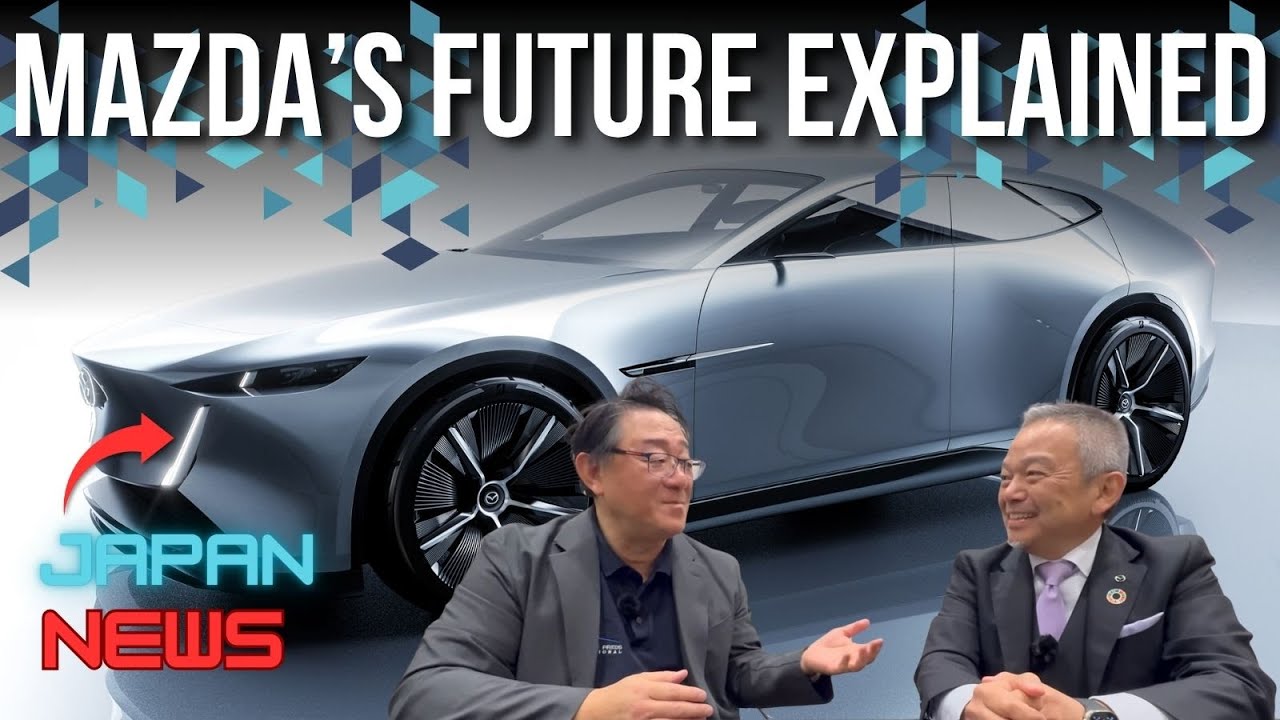
An Automotive Engineer David Chao and Mazda’s Chief Technology Officer Mr. Umeshita discuss the future of Mazda, including topics about the possible return of the Mazda RX-7. David and Ume-san go over almost everything about Mazda’s future strategy in this exclusive interview with the Mazda executive.
Automotive Press is owned and managed by David Koichi Chao, a global expert in the field of automotive evaluation, engineering, and strategy. With over 35 years of engineering experience, David is able to review vehicles from unique perspectives utilizing technical and specialized methods. David is a board member and a Vice President at AJAC (Automobile Journalist Association of Canada).
David is known around the world as an authentic specialist of Lean/Agile Thinking, and travels all around the world to review vehicles and teach latest engineering methods. Born and raised in Japan, David has an engineering degree from University of British Columbia and post-graduate executive education from MIT and Harvard Business School in Boston.