A Legend – The BMW M1 | Neue Klasse Origins.
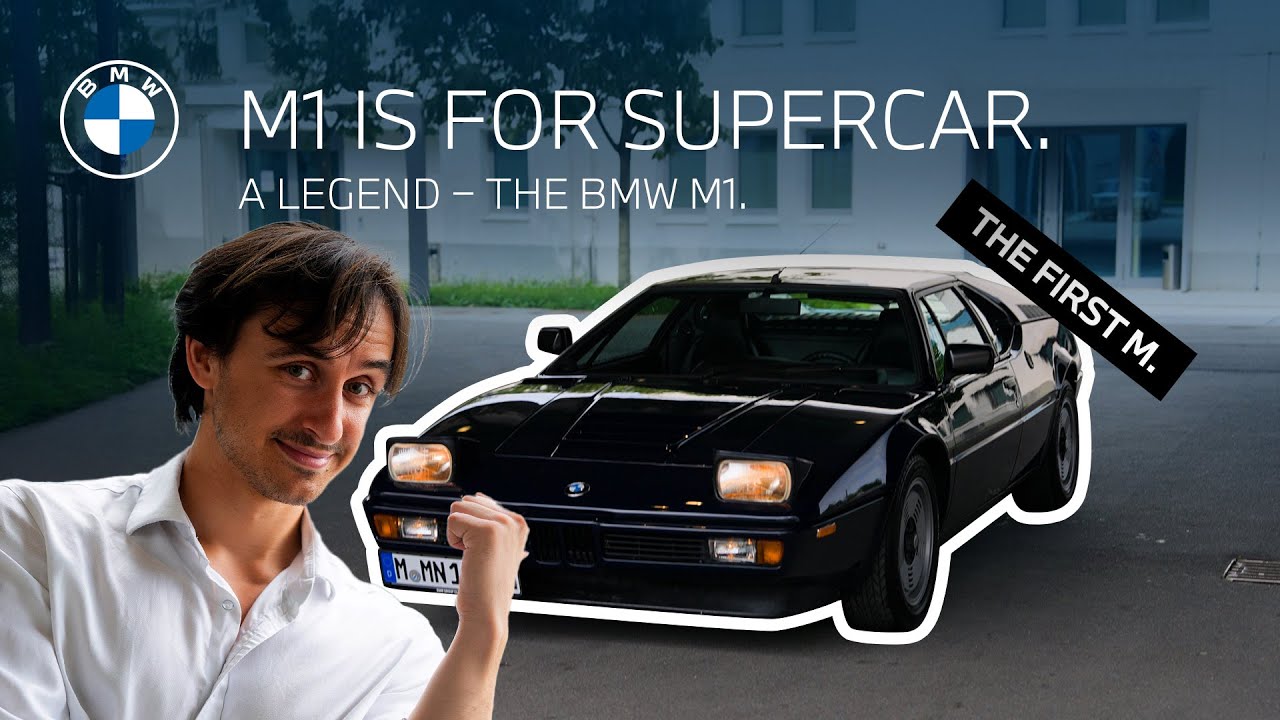
When we talk about important milestones in BMW history that lead up to the now upcoming newer Classer, we have to talk about this thing. My name is Mike. You’re watching BMW’s YouTube channel. And buckle in because there’s a lot of history to get tucked in here with the M1. And we got a lot to cover. [Music] When the M1 arrived in 1978, it was a promise to the world, a promise to Freder and the ultimate driving machine. Think of it as an ancestor to the newer classic of today. But how did it do this? How did it have such a long-lasting impact on the brand? The M1 was born out of competitive desires. You see, by the 70s, BMW already had the sports sedan segment taken care of. They had their motorbikes and their luxury cars, but they wanted more. Also, their rivals over in Stgart were dominating the hottest race series of the 1970s, Group Four. BMW wanted a piece of the action, so decided to enter their own car. But in order to enter that race series, you had to make a race car. But in order to make the race car, you had to homologate it. Meaning, you had to make roadgoing versions of that race car. This is exactly what that M1 is. BMW had to make 400 versions of this roadgoing race car. Naturally, making the M1 didn’t come without its challenges. BMW really wanted this car to be competitive, so they had to make sure that the drivetrain layout was perfect. So, they settled on a mid-enine layout. The only catch is BMW never made a mid-enine car up until this car. So, they had to reach out to somebody for help. They decided to look to Italy and partner up with Lamborghini. A fun marriage, I know. And to make things even better, they decided to get it styled by Georgto Jaro Mado. Now, but just as the first chassis prototypes, designs, and final drawings of the car were finished, Lamborghini’s financial situation began to fade, as did its involvements with the car. Eventually, Lamborghini pulled out. However, fortunately, BMW managed to keep hold of the designs, which is why today we have this incredibly beautiful, sleek mid-enine shape. This thing is a proper supercar. Look, it gets pointy as you go forward. To reveal this tiny little nose and pop up and down headlights, it’s a supercar, but for the engine and the dynamics, BMW turned to their internal team at BMW Motorsport. Today they’re much better known as BMW M. But in the 70s it was BMW motorsport and they were wellversed in making hot BMWs. But this thing here, this would be something new. This would be their own brand new first ever internal end project. And as such, it was named that. This was called the BMW M1. The inside is exactly what you’d expect from a racing car. And I mean just off the bat, wow. This thing is low. If you hop inside though, it’s designed for motorsports. You sit very low down. Your elbows are bent at a 45 degree angle and everything is very simple and very easy to read. The pedal box is set up for fancy footwork as well. This thing is a driving machine. To ensure maximum competitiveness, the weight of the car had to be kept as low as possible. The whole thing is based on a tubler steel frame chassis and the body panels are made of fiberglass. This stretched over to the inside, too. Everything is thin and lightweight, which makes it very comfortable and very easy to spend time in. Overall, though, everything about this car is incredibly functional. And it had to be because you have to remember the purpose of this car was for it to be a race car. And you know how that reminds you of it? Oh, yeah. with the thing behind my head, the engine. The motorsport BMW derived in-houseubuilt in Munich BMW Straight 6 producing 277 brake horsepower, which is a lot for a car from the 1970s. The engine allowed the M1 to hit 60 in 6.5 seconds and top out at 165 mph. That is very much supercar territory for back in the day. But the most impressive thing for it in my opinion is just how silky smooth and usable everything about this car is. Unlike its competitors, it was comfortable. It didn’t give you tinitus. Some of them even came with a radio and aircon. And that is the start of that BMW M magic that we’re familiar with today. Very much part of the modern-day newer class of DNA that we expect from the future. The original phrase of Fredera Afan was translated in some US markets as the ultimate driving machine and the M division proved they can make a great driving machine, a great road driving machine. But the question is, what’s your favorite part about this BMW M1? Let us know in the comment section below. Until then, take care and I’ll see you in the next video. If you’ve enjoyed my BMW Classic deep dive, perhaps you’ll enjoy the other videos I’ve made here during my time at the BMW Classic facility. You can find those on this hand side of your screen. And as always, don’t forget to like, comment, and subscribe.
Born from 1970s racing dreams and engineering ambition, the BMW M1 wrote the first chapter in a performance legacy that continues to this day. This mid-engine marvel transformed “Freude am Fahren” from a promise into poetry on asphalt.
🎯 Key moments:
00:45 The origin of the BMW M1.
01:23 How to design a supercar.
02:28 The heart of every M: The engine.
02:57 Fiberglass! The interior.
04:30 Your turn!
🔔 Subscribe for more BMW content!
📱 Follow us on social media @BMW
#BMW #NeueKlasse #BMWClassics