
Inside the Rise of Chinese EVs (and What It Means for Us)
Would you buy a Chinese car? Well, if you ask the general public, they’ll probably say no, right? Yes, I think so. Yeah. Yes, of course. Yeah, why not? Would you buy a Chinese car? Definitely. Yes. Do you know what? I genuinely did not expect that. Loads of them love Chinese cars. I live on the internet, so I’m expecting completely different responses. Mental. If you’re a petrol head, that’s probably not the reaction you might have expected. But it seems that in today’s world, there’s a bit of a revolution in progress. Chinese car brands are becoming increasingly popular thanks to their competitive pricing, value, and high technology. And recent data suggests that 40% of people would consider a Chinese EV. That means legacy car brands might have their work cut out, especially as we move towards an electrified future. In today’s video, we aim to discover exactly what’s fueling this demand. But before we look forward, we need to take a look back. Back in 2001, Ford and Vauxhall ruled the United Kingdom. The Blue Oval and the Griffin were synonymous with automotive transport. In fact, they were so popular they were responsible for nearly a quarter of all new cars sold in the UK. If you bought a car in that decade, chances are it was a Ford or a Vauxhall. But in the decades that followed, Vauxhall and Ford’s reign began to fade. During the 2010s, consumers were seduced by new trends. They fell out of love with the large family saloons of the previous decade in favor of crossovers and SUVs with the likes of the Nissan Qashqai and Kia Sportage gaining popularity. The Germans, Volkswagen, BMW, Audi and Mercedes also grew in popularity marketing themselves as premium alternatives and this period marked a significant shift towards higher fuel efficiency and lower CO2 output which at the time were achieved using a transition to diesel engines. The government offered numerous diesel tax incentives and at that time favored the Germans who were able to innovate quickly. Diesels during this period accounted for more than half of all car registrations. But they didn’t have it their own way for long. Volkswagen’s American boss has apologized for the diesel emission scandal which saw software installed in millions of cars designed to cheat anti-polution tests. Meanwhile, German public prosecutors have raided the company’s headquarters in Wolsburg as part of their investigation. In 2015, there was a little thing called the Volkswagen emissions scandal, aka dieselgate, and the era characterized by VW dominance came to an end. Studies estimate that that led to a reduction in sales for all German brands, not just VW. And that left a vacuum and Vauxhall and Ford came storming back. No, no, they didn’t. They didn’t. But you know who did come storming back? The Koreans. In an effort to stimulate the British economy and convince the public to spend more money on new cars, the government introduced a car scrappage scheme, which offered consumers up to £2,000 in discounts, provided they traded in the old banger for new models. The Koreans, with their cheap, highquality vehicles capitalized, with cars like the Hyundai i10 selling in massive numbers. 2019 saw yet another scrappage scheme in a drive to improve air quality and drive adoption of even cleaner cars, including electric vehicles. Long story short, dominance in the car world never lasts forever. No matter how big or how successful you are, something always comes along to shift the balance of power. And right now, the balance of power might be shifting to the east. You going to drink that? [Music] To find out just how quickly it might be shifting, I needed access to some data. So, I spoke to this lady, Charlene Gavagenna, senior analyst. She studied the changing car industry using data and insights exclusive to Autotrader and knows all too well what changes are a foot when it comes to defining who might struggle and who might succeed. Charlene, data princess at Auto Trader. You know all about the numbers here, don’t you? I hope I’ve earned my title. Let’s see if I do it justice. Tell me, what is the country that you think is best placed to dominate the market over the next few years? I would definitely say China and that’s simply because they Chinese manufacturers have made a lot of big moves and they are really well placed to take advantage of the changing automotive landscape. That’s the thing, isn’t it? Nothing ever stands still. There’s always something that comes in to reset everything. What’s the next big reset point? Well, that reset point is already here. It’s electrification. And with the ZEV mandate in the UK, it’s basically pushing manufacturers away from selling internal combustion engine cars towards selling electric cars. What this ZE mandate does is it basically dictates how much of a company’s car sales must be electric and by when. So essentially, by 2030, all new cars sold in the UK must be electrified. And in order to succeed, manufacturers will need to bring some really exciting electric cars to the market. So surely though, they’re selling most of their cars in China, right? That used to be the case. Um, but where they’re producing so many cars, producing far more than their own domestic market. They are now exporting all over the world. And China have some big advantages over the competition. One of their key assets is a dominant EV supply chain. China controls over 3/4 of the world’s battery production capacity. It also leads the way in processing and refining essential battery chemicals like lithium, cobalt, and graphite. And that allows them to reduce costs. In China, EVs are 14% cheaper than internal combustion engine vehicles. But even with so many odds stacked in China’s favor, there are still plenty of obstacles to overcome if car lovers in the UK are going to go Chinese. That was my theory anyway. So, I went to have a look at what Chinese brands actually had to offer. This is the Richard Sanders Group dealership in Ketering. In the past, it’s a group that specialized in more traditional names including Renault and Peugeot. But in more recent times, they’ve gradually embraced Chinese brands including BYD, Ju, and Amoda. And from my initial impressions with the cars, not only are they very reasonably priced, but also generously speced. About as practical as you’d expect, and in more than a few cases, quite nice to look at, too. But that’s just me. What did real prospective buyers actually think about these cars? So Sean, what’s so appealing about these brands? What’s getting people to come through these doors? Price point mainly. Price point, the warranty, the look of the vehicles quality. You get all the quality of the big German brands. Like you get quality, the Land Rover, the looks of them, you get everything but more warranty. You get all the equipment as standard and half the price. Which brands are your biggest conquest group? So, you know, you mentioned Land Rover, for example. You seeing Land Rover customers come through here looking for these cars? Definitely. Um, the first batch of sales we were doing were all to Land Rover customers for the most part. We took in quite a few the Range Rover Evokes from customers changing them. They were getting quite fed up with having small issues and not being repaired straight away. They also weren’t too happy with the cost point of them and the interior quality compared to these cars. Half the cost, over double the warranty. Um, yeah, we just can’t fault them really. You get all the equipment as standard. Whereas if you went for a higher premium brand, you’d be paying on top of the basic price just to get all these, like I say, basic things like heated seats. That brings me to afterare. What is the afterare situation like when you buy a JCU or an a motor, very good from what we found. I say you get a 7-year warranty. You get 8 years warranty on the battery on any hybrid or electric cars up to 100,000 mi total. There’s no um limitations on mileage in the first few years. Um, but yeah, service and warranty have been very good. You’ve got a motor afterare. Um, you can just call them direct. They seem to be very responsive from what we’ve found. Parts availability don’t seem to be a problem. The service packages are very cheap. So, yeah, we’ve had no complaints on um on service recently. So, if I buy a Ju 7, for example, and something goes wrong with it, am I being put into an equivalent brand uh from JQU or a motor? From what we’ve found, um, we haven’t had any of these vehicles come in that the customers had to leave them with us yet. Reliability appears to be very good. We haven’t seen a single one come in on the back of a truck, um, which is always a good sign compared to previous brands I’ve worked with. Any of the problems that customers have had tend to be sorted on the same day. It could be something as simple as a software update. Um, we haven’t seen any actual mechanical failures yet. So, yeah, it all seems to be very good. It all seems to make sense, but of course, what would make even more sense would be to actually go for a drive in a Chinese EV to discover what it is that makes them so appealing. Time for a spin in a BYD Sea Lion 7. [Music] Okay, first impressions. I thought I’d be really biased against this car because of the badge. I will admit it. Yes, it’s not a badge that I grew up with and it’s not one that I’m used to seeing very often. And also cuz of the name. BYD stands for build your dreams. And who on earth names their car company after a motivational phrase? What’s next? The live laugh love ferret 12 or the hustle harder horse 16. Yeah, it doesn’t quite work for me. Do you know what though? I’ll be fair. It drives well. It really does. It drives all right. and also it is dripping with technology. We’ve got this enormous screen here and it’s pretty responsive and also quite feature-packed. But I think the thing that impresses me most is something that maybe isn’t so useful. It can actually rotate from landscape to portrait. So you press that button and look it spins around. I have no idea why it does that. But what a flex that. Yeah, that’s cool. I’ll tell you something else that’s really cool. The performance. We got 520 odd horsepower. So when you put your foot down, the thing just takes off. Yeah, it goes. It really goes. The thing that gave me the most trepidation getting into this car, I’d have to say, is what the quality was going to be like? The quality of the materials, of the fit and finish, you know, did it feel like it was something that fell out of a serial box or did it feel like a proper car? And it feels like a proper car. I’ve got to say, the materials look nice, they feel nice. This is certainly on a par and maybe in some cases slightly better than a lot of its more established well-known rivals. Right. Should we try out the self-driving feature? I’ll push the intelligent cruise control button and uh we’ll see how it compares to Tesla autopilot. Not turning on at all. There we go. Oh, look. It’s drive. That nearly crashed me into a pavement. Yeah, some work to be done. some work. So, not bad then. But as good as it is, there’s still the potential issue of trust. As Charlene rightly points out, do people trust Chinese EVs? And if not, what are they worried about? Some people do. However, it’s obviously a mixed bag and some people have very very valid concerns as people tend to with you know, new technology generally change, right? People don’t like change. No, absolutely not. So we we basically went to ask consumers what it is they’re concerned about and these figures here show it. So 39% of our respondents said they ultimately just don’t trust the quality of Chinese goods. We have 37% of our respondents who also said that they’re worried about the customer service and support that will come from these Chinese brands when buying cars from them. And then 32% of people are concerned about the safety standards of their cars. So it’s not all widespread. Um, a lot of this concern is fixed towards a particular group of people and that’s generally people over the age of 55. And when we look at the research as well, when you look at people under 40, a lot of those concerns aren’t necessarily shared. So, it’s generally the older people who are mostly concerned about these Chinese cars coming to market. But what about brand loyalty? Surely people are just going to buy from the brands that they know and love. Is that going to change? What we’ve seen is the tide is really changing. So for internal combustion engine cars, that loyalty is still very much there. So as we see here, over 40% of internal combustion engine buyers still buy from the same brand. Petrol people love petrol. Yeah. They love petrol and they love the brands they know. However, when we look at electric cars, that loyalty halves. So only 19% of EV buyers bought from the same brand. Back in 2021, the Ford Mustang Macke was the most considered EV on auto trade. Yeah. Massively important car. Yeah. And it was huge, right, when it came into the market. But if we look over to the next year in 2022, it had fallen to third place. And if we look further along, it hasn’t really been as hotly anticipated or, you know, shopped as consumers had done in the years prior. So, they’ve fallen off the top 10. No loyalty. No loyalty. And that’s that’s even easier to see if we look at the ID3 from Volkswagen. It was there in the first year in third place in 2021 and it’s not been in the top 10 since. And so what’s happening is as new EVs come to the market, consumers heads are very very quickly turned. And so that’s the EV challenge. They like shiny new things in the EV market. And so that’s how some of these Chinese new entrance are coming into the market and starting to grow really, really quickly. So, according to our research, two in five people say they’d consider a Chinese EV. That’s 40% of the market. There are, of course, some people who are still hesitant, and they will need some convincing. And the factors that will convince them is long warranties, having local dealers, and some good eco credentials from these new Chinese EVs. And it seems the people on the street are convinced as well. So the reason it I think the value price wise, you know, is much better options. I think the designs are really cute. I’m looking to be eco-conscious. I’m looking for an electric car. So yeah, you know, as long as they’re latest technology, I’d be totally for it. Yeah. Chinese cars seem reasonable. You get a lot for them. They’re usually pretty uh well stocked with um features. Features. Exactly. Yeah. Although maybe not everyone is convinced, the die hard might take a little bit of persuading. The thing is, I prefer diesels. I told everyone I know that I like diesels. And I also want to put out there, look, I wouldn’t get electric car cuz I prefer the diesel. Why would you only buy diesel? I don’t only buy diesels. Because torque, fuel consumption, and also I prefer knowing that my car can’t be shut down. Shut down. Where the button? Who’s going to shut us down? Where’s the conspiracy? I don’t know. I should get a diesel. Would you buy a Chinese car? No. So, it looks as if we’re heading for a totally new era. An era where the history of a car badge maybe doesn’t mean as much as it did in the past. An era where new players are starting to compete on a much more even footing. I don’t know if the question is will China take over. I think the question now is who’s going to stop them? [Music]
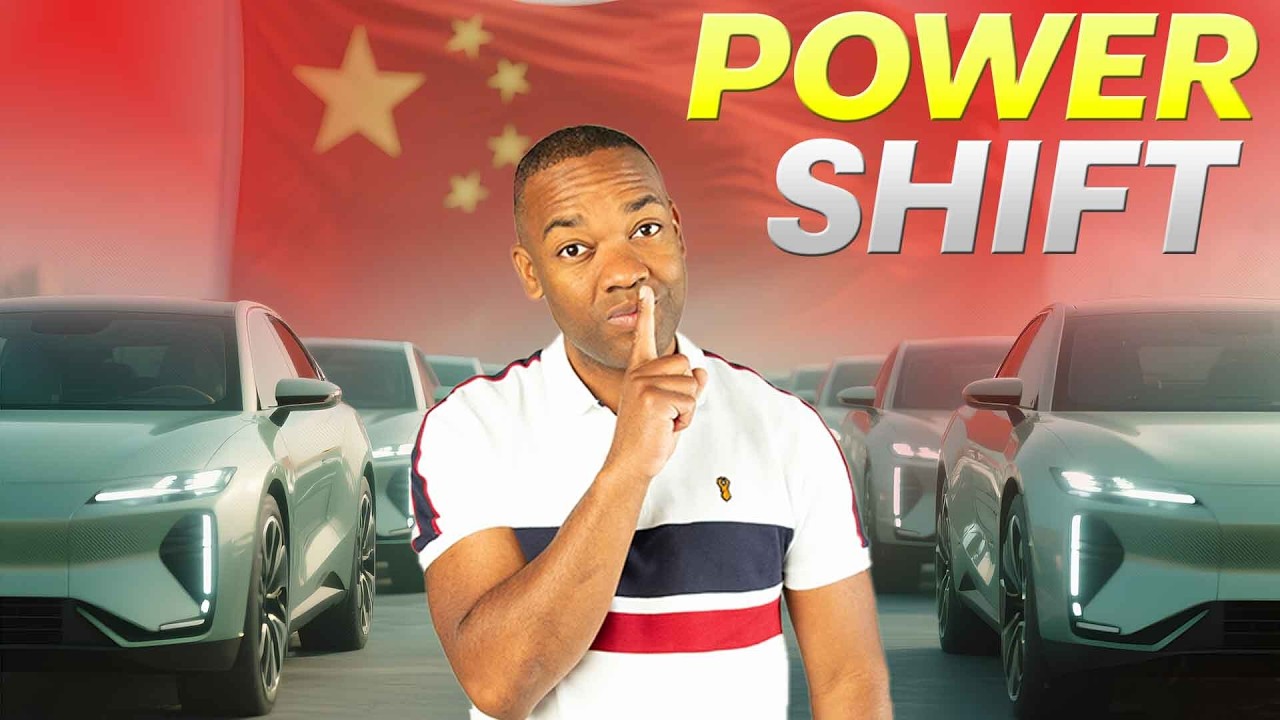
Chinese electric car brands are becoming more popular than ever, and the data proves it. Using insights from Autotrader, we track how interest in Chinese EVs has surged in recent years and what is driving that change.
From affordability and technology to design and range, Chinese manufacturers are starting to win over buyers who once preferred European or Japanese cars. This video breaks down the numbers to show how those habits are shifting and why.
We look at which brands are growing the fastest, what influences customer confidence, and how new perceptions around quality and innovation are shaping the market.
By the end, you will see how Chinese EVs moved from outsiders to serious contenders, and why more drivers than ever are choosing them over traditional options.
Looking for a new car? It’s time for Autotrader:
https://www.autotrader.co.uk/?utm_source=youtube_organic&utm_medium=video&utm_campaign=youtube_organic_brandplatform&utm_content=its_time_for
Chapters 📖
0:00 Would you buy a Chinese EV?
0:58 What happened to Ford and Vauxhall?
2:50 Who dominates the car world?
3:40 China rising in the market
5:22 The EV supply chain
5:58 What is so appealing about Chinese EVs?
8:56 BYD Sealion 7
11:04 Customer loyalty and trust
13:54 Is everyone choosing to change?
15:16 A new era
Deciding on your next car is hard, that’s why we’ve made it easier than
ever. With expert car reviews and recommendations free from jargon,
you’ll be able to find the car that suits you on our official YouTube
channel.
Autotrader: https://www.autotrader.co.uk
Check back for the latest new car reviews on everything from SUVs to supercars, plus
✅ the latest car reviews
✅ car advice and explainers
✅ used and new car guides
✅ head-to-heads
Subscribe for more from Autotrader UK: http://bit.ly/1AqiIny
Want to be the first to see our new videos? Enable notifications
Looking for more inspiration? 🚗
• Autotrader: https://www.autotrader.co.uk
• TikTok: https://www.tiktok.com/@autotraderuk
• Facebook: https://www.facebook.com/autotraderuk
• Instagram: https://instagram.com/autotraderuk
• Pinterest: https://www.pinterest.co.uk/autotraderuk/
Autotrader Limited (Firm Reference Number: 735711) is authorised and regulated by the Financial Conduct Authority and is a credit broker and not a lender. Contract Hire is subject to status and approval and is only available to UK residents aged 18 and over. Vehicle must be returned in good condition to avoid further charges. You will not own the vehicle. Excess mileage charges and return conditions apply.