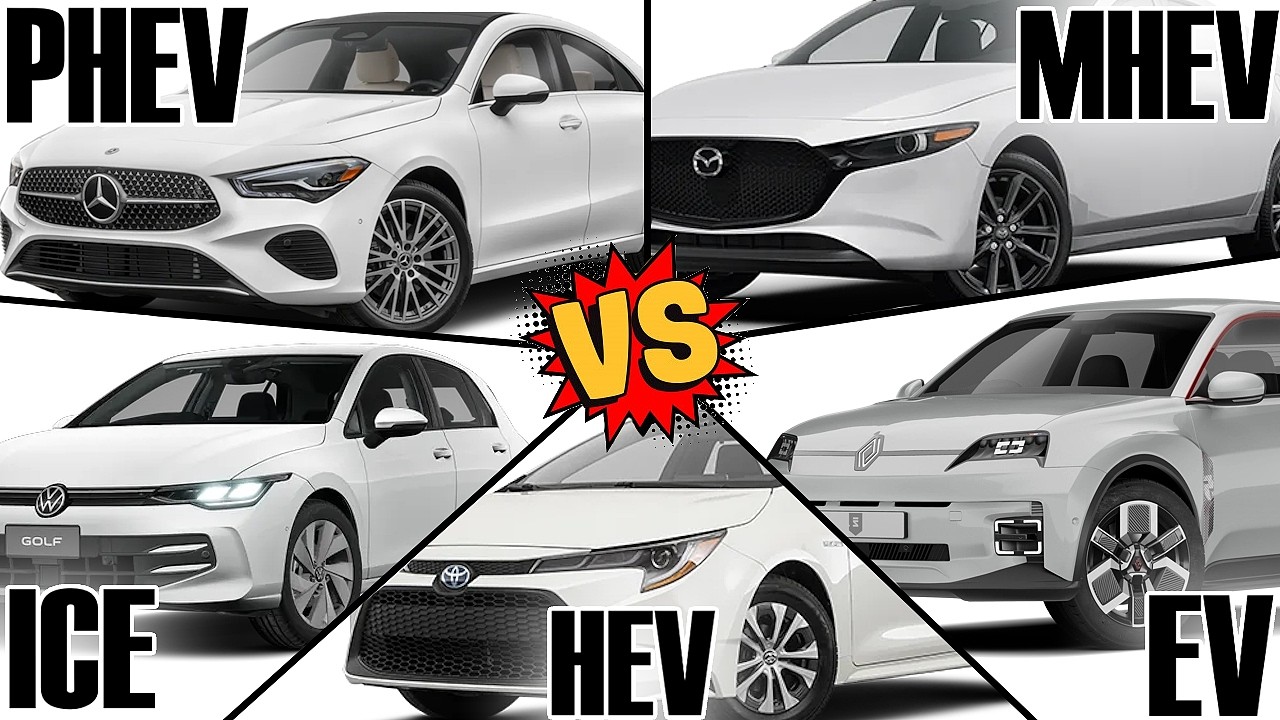
What To Buy? MHEV vs HEV vs PHEV vs EV vs ICE + Best and Worst Models From Each Category
So, what is a mild hybrid? Is it the kind of hybrid that white people order at an Indian restaurant? No. A mild hybrid primarily serves one purpose, and that purpose is to lower the fleet-wide CO2 emissions of manufacturers so that they could meet regulations and keep selling their cars. It’s more of a statement than technology you can actually feel. A mild hybrid is essentially a combustion car equipped with an additional
slightly larger battery, usually lithium ion and an electric motor. The batteries are either 24 or 48 volts and usually smaller than 1kWh They are often comparable in size and weight
to a typical 12V lead-acid battery, which is also still present in a mild hybrid vehicle. But the lithium-ion battery will usually have a five to 10 times larger energy punch. The alternator on a mild hybrid is now called an ISG or integrated starter generator. In most cases, it’s just a larger, more powerful modified version of the traditional alternator. But there are also instances where the ISG is packaged between the transmission and the engine, and is actually integrated into the flywheel. This is a more efficient system that eliminates belt-associated losses and makes the engine more compact, but it is more difficult and costly to replace if there are problems. The first benefit of a mild hybrid system is that braking energy is no longer just wasted as heat. When the vehicle breaks, some of that braking energy is captured by the generator and then stored in a 24V or 48V lithium battery. And then when you step back on the throttle pedal, the battery powers the motor, which now assists the crankshaft and provides a small power boost to the vehicle. This helps reduce fuel consumption and can also improve acceleration a bit, although the effects are usually very small, ranging between 5 to 10% or even less. The other benefit of mild hybrids is that the start stop duty is now handled by the integrated starter generator, and this reduces vibration and makes restarting faster and smoother. Overall, since the electrical system on a mild hybrid is larger and more robust, they tend to avoid some of the costly start-stop system repairs that occur on combustion-only vehicles, which strain the pinion-based starter motor all the time. The ultimate little benefit of a mild hybrid is that the mild hybrid system can be combined with an electrically assisted turbocharger or an electrical compressor to completely eliminate turbo lag. So what is the difference between a mild hybrid and a proper hybrid, like let’s say a Toyota Prius? The difference is that on a mild hybrid, the electrical system is too small to be able to move the vehicle at all on electric power alone, which makes the usage of the word hybrid in mild hybrid somewhat questionable. Overall, a mild hybrid is a low-risk, low-gain choice. It’s still pretty much as lightweight as a combustion-only vehicle. The driving experience is pretty much the same, and of course, there’s no range anxiety or infrastructure dependence. At the same time, you can fool people who don’t know much about this stuff into thinking that you’re environmentally conscious, and you drive a hybrid, just like the dealership who sold you the mild hybrid fooled you. The purchase cost remains accessible, but also there are no major savings in terms of running costs because the combustion engine still needs to run all the time. Now, let’s see some highlights of mild hybrids that offer a good combination of resale value and reliability, and some other ones that are best avoided if you like sensible financial choices. Okay, now we’re getting properly electrified, and we can actually travel on electric power alone. Not far, but we can quietly hum around the neighborhood to impress friends and family. A hybrid, also called a self-charging
hybrid or full hybrid, is just that, a hybrid of combustion and electricity, relying on both of these power sources to operate. And it can often travel on either of these two power sources alone. But at the same time, it does not need to be plugged into the
electricity grid to recharge. If we say that a typical mild hybrid is 48V and 0.5 to 1 kWh battery capacity, then a typical hybrid has 200 to 300V and 1 to 2.5 kWh capacity. The result is that a full hybrid can move the vehicle on electric power alone, with the range typically being just a few kilometers of slow-speed travel. Additionally, the electrical system is also tasked with starting the engine and can offer a noticeable boost in power when needed. Hybrids can be split into two main categories: series hybrids and parallel hybrids. In a true series hybrid, the engine is never connected to the wheels and thus cannot drive. Instead, it only acts as a generator using its rotation to produce electricity, which is then used to charge the batteries and/or drive the electric motor. True series hybrids are actually very rare on the market, and the only mainstream currently available non-plug-in series hybrid I can think of are Nissan e-power vehicles. The main selling point of a series hybrid is that when acting as a generator, the engine does not need to operate over a wide range of RPM. Instead, it can always operate at a set specific RPM where it’s most efficient. Nissan claims that their e-power engines have a constant thermal efficiency of 50%. And because the engine never has to drive the wheels, you don’t need a complex transmission. Another benefit for some buyers is that series hybrids offer a shiftless, smooth, instant torque delivery of an electric vehicle, but without the range anxiety. A counterargument against series hybrids is that when the batteries are charged and you’re driving around, then the engine and the fuel tank are just dead weight, reducing efficiency. Why not use all that space to add more batteries and create a battery electric vehicle with more power and more range while getting rid of the maintenance of a combustion engine in the process. So whether a series hybrid is a brilliant or a stupid idea is thus dependent entirely on perspective. On the other hand, in a parallel hybrid, both the electric motor and the engine can drive the wheels. They can drive the wheels individually or combine their power for more flexibility and a higher peak power output. So, how do we manage how much power each of these two power sources transfer to the wheels? This is done by the transmission, which is the key component of every parallel hybrid, and there are two main approaches. The first one is a planetary gear set, famously mainstreamed by Toyota. This system uses three inputs, a combustion engine, an electric motor, and a motor generator to drive the three shafts of the planetary gear set. The result is a triumph of mechanical engineering and a very elegant and reliable yet also very flexible system capable of many different modes of operation. The only downsides are that we need two electrical motors and that it doesn’t feel sporty. The system behaves like a CVT, which it actually is. And so there are no shift points, and the engine speed feels disconnected from vehicle speed. For a more traditional, direct driving feel, we have the other main approach to parallel hybrids, and that is to take an electric motor stator and rotor and integrate them into an existing automatic transmission either dual clutch or torque converter. In this approach, we need just one electric motor, and we get to retain the traditional sporty gear-based driving feel. Although in theory this system sounds more simple and more conventional, it is actually Toyota’s system that has proven itself as the more robust and reliable approach. Overall, hybrids are best suited for someone focused on reducing their running costs, but at the same time without access to home or work charging. Savings will be higher the more stop and go in city traffic you do because this is where the engine can be off most of the time. There’s a lot of slow-speed movement that can be done on electric power alone, and there’s a lot of braking to recharge the battery. When it comes to highway driving, hybrids tend to be less impressive because they are usually equipped with somewhat lethargic Atkinson or Miller cycle engines, which rely on electrical assistance to make them feel more lively than they actually are. And during prolonged highway driving, there’s not a lot of braking, so the batteries are quickly depleted, leaving you with an unimpressive economy engine, which is going to struggle to make quick progress. If you like to do long highway trips and want to maintain impressive speeds for prolonged periods of time, and want to have incredible autonomy with impressive fuel economy, then an inline 6 diesel from Germany is still your best bet. Because they contain more technology and components, hybrids tend to have a higher purchase cost than combustion-only or mild hybrids. But at the same time, they retain their value better than any other vehicle type because they are independent from the charging infrastructure while at the same time reducing running costs. Now, let’s see some hybrid resale value and
reliability highlights and some flops. Plug-in hybrids are easy to explain but difficult to rate. From one perspective, they are the do-it all vehicles. The convenience of combustion with the running costs of electricity. An easy answer for people who can’t quite figure out what they want. From another perspective, however, they are silly and inefficient. As I said, they’re easy to explain. In terms of anatomy, they are just like the parallel hybrids we already covered. We have a combustion engine and an electric motor, and both of them can power the wheels. The only difference is that now the batteries are much larger, and therefore, a plug-in hybrid can cover greater distances at greater speeds on electric power alone. Some newer models can do in excess of 100 km of electric-only range, whereas most older models can do something between 40 to 60 km of real-world driving. Because the batteries are larger, it of course means that regenerative braking is no longer sufficient to recharge them. So unlike mild hybrids and full hybrids, plug-in hybrids need to be plugged in to be charged. Surprising, isn’t it? What that means is that they are infrastructure dependent. So, if you do not have access to reliable charging at home or at work, then it’s not a good idea to get a plug-in hybrid, and it makes more financial sense in the long term to actually go for a combustion-only, mild hybrid or full hybrid vehicle. But there’s another problem with plug-in hybrids, and I’m going to explain it with a concrete example. This is my current family car, a 2015 Kia Ceed station wagon. Here are the specs of this car. This is the car I considered buying, a brand new 2025 Skoda Superb station wagon. I would buy a station wagon again because I have two kids, and station wagons are practical. Also, I refuse to buy a crossover. I think it’s a stupid trend that needs to die. You get increased ride height and worse aerodynamics in exchange for zero off-road abilities and the same interior space as a regular hatchback. No, thank you. Okay, here are the specs of the Skoda station wagon. And so, as you can see, I get a car that’s half a meter longer, but I get less boot space because the big batteries inside the Skoda, they take up some of the boot space. My driving is realistically split between 50% city and 50% highway driving. My running costs in the city will definitely be reduced. But when I’m on the highway, I almost always cover more than 100 km. And in that scenario, the battery is depleted, and I end up with a 150-horsepower engine that has to move 1,900 kg. The power-to-weight ratio is actually 30% worse in the Skoda, which means that my fuel economy will be either the same or worse than in my current 10-year-old car. So, to sum it up, the more you drive in the city, the more money a plug-in hybrid saves. But at the same time, you can’t drive around the city too much because if you deplete the batteries, then a plug-in hybrid becomes worse than a combustion-only car. Something else that’s annoying is that when you drive around on electric power alone, you should ideally keep the fuel tank almost empty and then refuel only before a longer trip to be truly efficient. Of course, that’s not convenient, and it’s easier said than done. And another drawback is that plug-in hybrids don’t quite hold their value as well as regular hybrids because they’re infrastructure dependent. So, they’re not suitable for everyone. And evolving battery tech can make older models obsolete more quickly because the electric-only range seems to increase by about 30 to 40% from one generation to the other. Overall, I really don’t think that plugin hybrids are as stupid as my oversimplification here makes it seem. They are truly the only vehicle type that gives you two powertrains in one. They are uniquely versatile and can be adapted to a very wide range of circumstances. And if you’re an efficiency nerd, it can be also kind of fun to plan your daily commutes and chores, and road trips around the abilities of your plug-in hybrid drivetrain. And even if you plan poorly, you won’t end up stranded because there’s no real range anxiety. Instead, you just pay a small efficiency penalty. So, now let’s see some plugin hybrid highlights. Finally, we are getting fully electrified.
And that can only mean one thing. Real range anxiety. Actually, no. I think that
most people realistically overestimate the importance of range for their driving. How often do you need to cover a large distance in one day? Is it really every week, or is
it actually just once per year when you go on holidays? Accurate answers to questions like this are what decide whether an EV makes sense for you or not. It’s all about buying a car for 90% of your driving rather than buying a car for a once-in-a-year scenario. If you only need autonomy when you go on holidays, then it makes far more financial sense to rent a car when you’re on holiday and drive an EV for the rest of the year because the cost savings from an EV are going to make up for the rental. Actually, they’re going to make up for the costs of multiple rentals because not only do you get rid of the fuel costs, you also get rid of the oil changes, most of the filters, your brakes, and brake discs, they’re going to last longer because of
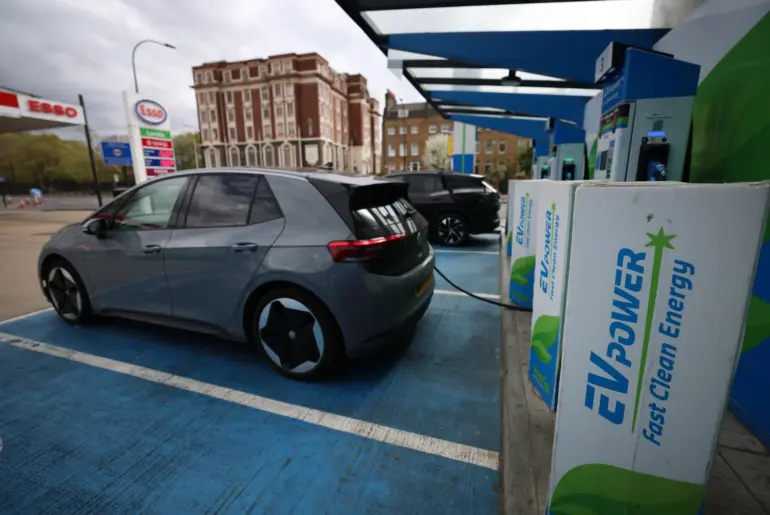
region braking. In most countries, you’re going to pay less tax and registration. Your tires aren’t going to last as long, but still, electric vehicles are the category with the lowest running costs. Something else that’s great is that the landscape of EVs is finally starting to change. No longer are we forced to choose between kind of expensive, depressing, minimal range, and really expensive, sort of acceptable range. Now, we are finally getting attractively priced EVs that look fun and are also fun to drive. We even have EVs that are all about fun. Now, I’d like to ask you for a moment of silence for the wallets of early adopters and government budgets that made this possible. Of course, being fully electric, EVs are fully infrastructure dependent. So, it’s obviously a bad idea to buy one if you can’t charge at home or work reliably. Also, it’s important to know about the local infrastructure, the one in your city, country, or region. Last year, I was traveling with my family for vacation to the south of Portugal to the Algarve region. Along the way, we stopped for gas. It was a really nice gas station. It had four charging posts and all four were taken up by EVs. And then there was another row of nine more EVs waiting to charge. It was August. Imagine waiting for hours in the heat of the summer with the AC capabilities of an EV and two hungry, tired kids in the back. I don’t know about you, but for me, that’s a scenario from hell. I never felt more powerful and privileged holding a pump handle in my hand as I refueled my 10-year-old irrelevant Kia. All the dads from the EV death row that were looking at me, a tear rolling down their cheek as they handed over a brain-rot emitting iPad to their kids to get them to finally shut up. Of course, I’m exaggerating a bit. It wasn’t nine. It was only six cars waiting to charge. What I’m trying to say is that infrastructure is important, and I’m sure there are better and worse places than Portugal in this regard, but it’s something to be informed about before making the commitment. So, okay, they don’t make the best holiday vehicles. And if you really do spontaneous long-distance road trips all the time, an EV might make you feel constrained. But for the kind of driving that most of us do most of the time, and that’s boring day-to-day commuter city driving, an EV is actually better for the average person. It’s easier to drive. It’s silent. It’s vibration-free, and it offers instant smooth torque delivery. If an electric car fits your lifestyle and your infrastructure, then the only real drawback is the depreciation. A lot of people are still skeptic towards the technology, and the technology itself is still evolving, so there’s risk of a model becoming obsolete more quickly, and also everybody’s worried about battery life. So the more you drive your EV, the more money it saves you. But at the same time, the more you drive it, the more exponentially it loses value because everybody’s worried about battery life. So, what makes the most financial sense is to buy a used, minimal mileage EV and then drive it into the ground until your battery capacity is dramatically reduced and your EV is worth next to nothing. Depending on your luck, your climate, and the model you chose, that’s going to take anywhere between 15 to 25 years. But if you make it to the end of the 25 years, an EV is going to save you €34,750 over a combustion-only car. It’s practically going to pay for itself. And I didn’t include reduced costs of taxation and registration in that calculation. But imagine, imagine pushing a button to indicate for 25 years. Now for some EV highlights. Despite the growing competition of
electrification, combustion-only cars remain a familiar, proven, and popular choice for many. Overall, they have less moving parts, less electrical components, and are lighter than hybrids, but need the same or even more frequent maintenance because the engine runs all the time. They are noticeably lighter than an equivalent battery electric vehicle, but at the same time have more moving parts and need more maintenance. In the USA, they are overall more plentiful and are still perceived as the default choice by most buyers, whereas in Europe now, they usually occupy the lowest and the highest spot in the price range, with everything else in between being hybrids. A more worrying trend is the decrease in the long-term reliability of engines. This occurs because manufacturers are obliged to make ever cleaner engines, which results in ever more numerous and ever more complex emission systems. At the same time, manufacturers are not legally obliged to make these systems robust, reliable or easy to replace and service. So, stuff like water-cooled EGR, ultra-thin timing belts, timing chains, timing belts submerged in oil, non-reborable, non-rebuildable engine blocks, ultra low tension piston rings, diesel
and petrol particulate filters, excessively long service intervals combined with ultra-low viscosity engine oils and stuff like that are making ownership of combustion engines outside of warranty potentially risky, because maintenance can be such a large percentage of the value of the vehicle that it simply doesn’t make financial sense to keep owning that vehicle. But this is a wider trend and not one unfortunately exclusive to combustion engines. An interesting side effect of this phenomenon is that select old models that have been identified and that are perceived as robust or reliable or easy to maintain, their price has started to increase on the used market despite their usually very high mileage. Another phenomenon is that older cars, V8s or sports cars that have an iconic status, their price is also increasing because of their perceived extinction in the future, making them a potentially pretty good
investment. When it comes to diesels, diesel passenger vehicles are now becoming a sort of niche product in Europe because it’s getting very hard to justify them financially unless you do a lot of highway mileage annually. By a lot, I mean 30,000 kilometers or more on the highways. Otherwise, the increased vehicle price, taxation, registration, and increased maintenance are going to far outweigh the fuel savings. In general, it’s a good idea to do a lot of highway miles with a diesel because it ensures the long-term reliability of your diesel particulate filter, which, as we know, is an expensive service item. Overall, combustion-only cars are less vulnerable to market trends and technology changes. So, they tend to depreciate less compared to EVs, but they can’t quite match full hybrids because they don’t have the same perceived long-term savings. So, now let’s see some combustion-only highlights, and then we’re going to end the video. Let me know in the comments section if you agree with my highlights choices and my ratings table or don’t. It’s entirely up to you. As always, thanks a lot for watching and I’ll be seeing you soon with more fun and useful stuff on the D4A channel.
Support the channel by shopping through this link: https://amzn.to/4fatbMb
Patreon: https://www.patreon.com/d4a
Become a member: https://www.youtube.com/@d4a/join
What are mild hybrids?
A mild hybrid is essentially a combustion car equipped with an additional slightly larger battery, usually lithium-ion, and an electric motor. The batteries are either 24 or 48v usually smaller than 1kwh, they are often comparable in size and weight to a typical 12 volt lead-acid battery which is also still present in a mild hybrid vehicle, but the lithium-ion battery will usually have 5-10 times more energy. The alternator on a mild-hybrid is called an ISG or integrated starter generator. It’s a larger, more powerful, modified version of the traditional alternator but there are also instances where the ISG is packaged between the transmission and the engine and is actually integrated into the flywheel, essentially replacing it.
So what is the difference between a mild-hybrid and a proper hybrid like a Toyota Prius? The main difference is that in a mild hybrid the electrical system is too small and thus is unable to move the vehicle on electric power alone.
A hybrid, often called a full hybrid or self-charging hybrid is just that, a hybrid of combustion and electricity, relying on both of these power sources to operate, and is often capable of traveling on either of these two power sources alone but at the same it time it doesn’t need to be plugged into the electricity grid to recharge.
If we say that a typical mild hybrid is 48v and 0.5 to 1kwh battery capacity then a typical hybrid has a 200-300 volt and 1-2.5 kwh capacity. The result is that a full hybrid can move the vehicle on electric power alone, with the range typically being just a few kilometers of slow-speed travel.
Hybrids can be split into two main categories series and parallel.
In a true series hybrid the engine is never connected to the wheels and thus cannot drive them. Instead the engine simply acts as a generator, using it’s rotation to create electricity which is then used to recharge the batter and/or drive the electric motor. True series hybrids are actually very rare on the market. The only currently available mainstream example of a non-plug-in series hybrid that I know of are Nissan e-power vehicles.
On the other hand in a parallel hybrid both the engine and the electric motor drive the wheels, they can combine their power or drive the wheels individually resulting in more flexibility and higher peak power. So how do we manage how much power each of these sources transfers to the wheels? This is done by the transmission which is the key component of a full hybrid vehicle and there are two main approaches. The first one is a planetary gearset, famously mainstreamed by Toyota in their hybrid vehicles.
For a more traditional and direct driving feel we have the other mainstream approach to parallel hybrids which is to take an electric motor stator and rotor and integrate them into an existing automatic transmission design, either dual clutch or with a torque converter. In this system there is only one electric motor needed and we retain the traditional, more sporty gear-based driving feel.
Plug-in hybrids are very easy to explain but can be very difficult to rate. In terms of anatomy, a plug-in hybrid is super easy to explain. It’s just like the parallel hybrid we already covered. The only difference is that in the plug-in hybrid the batteries are much larger and the motors more powerful so they can cover much greater distances at higher speeds on electric power alone. Some new plug-in hybrids have a range of 100km or more. But with increased battery size also comes the need to charge them externally and buying a plug-in hybrid is not a good idea if you do not have access to reliable charging at home or work.
Finally, we are fully electrified and that can only mean one thing….Real range anxiety! Hmm, maybe not. I think that most people overestimate the importance of range for their driving. How often do you really need to cover a large distance in one day? Is it really every week or is it actually once per year when you go on holidays? Accurate answers to questions like this are key when deciding whether a purchase of an electric car will make sense for you. It’s all about buying a car for 90% of your driving rather than buying a car for a once-per-year scenario.
A special thank you to my patrons:
Daniel
Zwoa Meda Beda
valqk
Toma Marini
Cole Philips
Allan Mackay
RePeteAndMe
Sam Lutfi
Cakeskull
#d4a #hybrid #ev
00:00 What is a Mild Hybrid?
02:44 Difference between Mild Hybrid and Full Hybrid?
04:01 How do full hybrids work?
05:04 Series vs Parallel Hybrids
06:49 Toyota Hybrid Planetary Gears vs Automatic Transmission Integrated E-motors
10:06 Full Hybrids vs Plug-in Hybrids
11:31 A problem with Plug-in Hybrids
14:31 How to Make the Most of an EV?
18:18 How to Escape EV Depreciation
19:46 Combustion only trends and reliability issues