Tesla Model 2 With Aluminum-Ion Battery – 7Min Charge, 647 Miles, Under $12K! Musk Did It Again!
In October 2026, while most eyes were on the delivery of the first Tesla Cybert trucks in Europe, a discreet movement at the Fremont factory caught the attention of the most attentive. It wasn’t an official launch, nor a bombastic announcement from Elon Musk about the X. It was just a glimpse, a strange prototype emerging from a side warehouse with something no modern Tesla has ever had. The doors. These weren’t ordinary doors, and they didn’t appear to be just another version of the Model X’s traditional Falcon Wing styling. Something was different, and it had an air of the future. The model, informally nicknamed Cyber Cab by fans, looked like something straight out of a science fiction concept. Small, low, aerodynamic, and with a door opening system that simply defied convention. The hinge followed an upward movement, wide yet smooth, immediately recalling the classic butterfly doors seen only on McLarens or Ferraris. But why, after all, would a car that seemed designed for urban use, like an affordable robo taxi, have something so bold? It was enough to set off alarm bells in the Tesla community. Discussions exploded on forums, videos, and social media, especially after Elon days later cryptically responded to a post simply saying, “Butterfly, maybe model 2 needs to fly, not walk.” And as always, when Musk makes an ambiguous comment, the world tries to decipher the codes. The theory that gained traction, this prototype was the embryo of the production model 2, and those doors would be its big differentiator. Now, think about it. Does it make sense to put doors like this on the brand’s cheapest car? The Model 2, officially announced to cost around $25,000, didn’t seem like the kind of vehicle that would receive such an extravagant feature. But that’s where Tesla’s genius comes into play. The choice wasn’t just aesthetic. It was strategic. After all, in cities where every inch matters and where parking is a daily challenge, an upward opening door can be the difference between frustration and practicality. But there’s another point that few have discussed. Visual impact. Since the first Roadster, Elon Musk has understood that electric cars don’t need to look like appliances. They need to inspire, create desire. And putting butterfly doors on an entry-level car is almost like shouting, “Even affordable models can be exciting.” This breaks the logic that luxury and innovation belong only to premium segments. And that’s exactly what Elon wants to change with the Model 2. This decision ultimately also reveals a lot about Tesla’s current positioning. The company no longer competes solely on performance or range. It competes on experience, style, and street presence. And nothing draws more attention than a compact car that opens its doors as if from another planet. Its marketing embedded in the design. And the most curious thing, it doesn’t seem like an exaggeration. It seems like a clever provocation to the status quo. During testing, engineers were seen adjusting sensors and timing the opening. But something curious. The same external sensors weren’t visible on the Model X. This raised a few eyebrows. Had Tesla developed a new mechanism, simpler, cheaper, and even more efficient. Suspicions grew, and when internal sources confirmed that the prototype used a compact double joint system, the tables were turned. It wasn’t just style, it was function. And then came the technical details. What seemed like a simple, stylish touch turned out to be a true engineering solution. The Model 2’s butterfly doors not only attract attention, but were designed to solve an everyday problem. The lack of space in cities. Unlike traditional doors that require free lateral space, these open upward in a 65 to 70° arc, like gentle wings gliding upward. And this changes everything. Parking in tight spaces, exiting the car on narrow sidewalks, opening the door without scraping the wall, everything becomes simpler. The secret lies in the off-center double pivot hinge combined with an electric actuator and a compact hydraulic piston. This combination allows for a fluid and nearly silent opening movement. It’s as if the door glides effortlessly through the air. And best of all, there’s no need for scattered sensors or crazy mechanisms like those on the Model X Falcon Wing, which used up to seven sensors per door. Here, less is more. and it works better. A sort of natural evolution from past mistakes. The opening requires only 780 mm of lateral space. This represents a reduction of over 30% compared to a typical sedan door, which is around 1,00 mm. And for those who live in cities where parking spaces barely fit a car, this difference is a real relief. It’s no exaggeration to say that this type of door could transform the experience of urban living with an electric car. It’s the kind of innovation that seems exaggerated on paper, but makes perfect sense in practice. Another interesting detail is the systems balance. The electric actuator used is capable of withstanding up to 18,000 opening and closing cycles. This means on average over 10 years of daily use without failure. The hydraulic piston provides a lifting force of up to 2.1 kontons. Enough to gently lift the door even on inclines or in crosswinds. And all this without requiring any effort from the user. Just press the button and let the magic happen. And here comes another curious point. Energy costs. Many people think this type of system consumes an absurd amount of energy. But in practice, each complete cycle consumes only 0.15 kil clutters. This represents just 0.02% of the Model 2’s 40 kW battery. Or if you prefer to think in terms of distance, it’s the equivalent of the energy needed to drive 120 m over 10 years with six openings per day. This adds up to just 330 kW. In other words, absolutely insignificant compared to the car’s total range. Lightness is also part of the equation. Each door weighs between 24 and 27 kg thanks to the use of 7075 T6 aluminum alloy, a material used even in aircraft. For comparison, Model 3 doors weigh 36 to 38 kg. This 30% reduction not only makes opening easier, but also reduces the load on the hinges and extends the life of the mechanism. Less weight, less wear, less noise. It all contributes to durability. By the way, it’s worth mentioning that Tesla also considered safety. The doors were tested with lateral force of up to 6.8 konton, exceeding conventional door standards by 15%. And once again, the secret lies in the reinforced hinges, which connect to the A-pillar and roof rail, distributing the impact more efficiently. The aesthetics may be impressive, but the structure is designed to protect, not just delight. The beauty of design only holds true when it finds balance with production numbers. And this is where the Model 2’s butterfly door design truly shines. The system developed by Tesla managed to reduce the number of parts by about 62% compared to the elaborate falcon wing mechanism used in the Model X. This simplification means fewer points of failure, less weight, less maintenance, and most importantly, lower costs. It’s not just about reinventing the look, but also reinventing the manufacturing process, which, let’s face it, Elon Musk loves to do. The estimated cost per door is between $1,200 and $2,500. This may seem like a lot at first glance, but when you remember that the Falcon Wing system easily exceeded $5,000 per side, the difference becomes obvious. And we’re talking about a mainstream model, not a luxury SUV. Elon and his team have managed to democratize a feature that was previously exclusive to supercars and premium models. This in itself is already rewriting the rules of the market. Much of this feat is due to the use of an aluminum alloy called 7075T6, a material commonly used in the aircraft industry. It combines lightness with extreme strength. While traditional automotive steel has a tensil strength of around 370 MPa, this alloy reaches 570 MPa and yet it’s 40% lighter. This not only reduces the energy cost of opening the door, but also reduces the load on the engine and the car’s structures as a whole. With this weight reduction, the system becomes more efficient and cheaper to maintain. And here comes another key point, maintenance. Tesla predicts that only a small adjustment or recalibration of the system will be required every 80,000 kilome sanators. This is practically nothing compared to previous systems which required constant and expensive maintenance. For the average consumer, this represents real savings and less hassle with repair shops. More than that, by reducing the number of components and standardizing the manufacturing process, Tesla created a scalable system. That’s the magic. Making a beautiful door is easy. Making a beautiful functional door that can be produced in millions of units per year without weighing down the consumer’s wallet. That’s a true market differentiator. This is the kind of engineering few can deliver. The system was also designed to be highly modular. This means the same mechanism base can be adapted to different models or body variations. This opens the door, literally, to future city cars, autonomous taxis, or even electric vans that want to leverage the same hinge and actuator structure. Elon isn’t just thinking about the Model 2. He’s setting a new standard for affordable electric cars of the future. Another interesting fact, the average installation time for the butterfly door assembly decreased by 47% compared to the Falcon Wing system. This directly impacts assembly speed on the production line and consequently the number of units manufactured per hour. It’s this kind of detail that makes the car cheaper for the end consumer. It’s a domino effect that starts at the hinge and ends in your wallet. If the aesthetics and cost were already striking, the impact this butterfly door can have on the lives of people with reduced mobility is even more surprising. Many older drivers or those with physical limitations face real difficulties getting in and out of a traditional car. That forced bend in the spine, the effort to bend the knees, the infamous dive into the low seat. All of this can be a real daily torment. And Tesla, perhaps without fanfare, ended up offering an unexpected solution with this new design approach with an opening that reaches up to 1.6 6 m high. The butterfly door allows the driver to exit the car without having to bend too much. It’s like getting up from a chair rather than crawling out of a hole. This reduces lumbar compression by up to 38% according to internal ergonomic models used by Tesla itself. For those with herniated discs, chronic pain, or even back surgery, this difference is monumental. And the most curious thing, this gain wasn’t a bonus, but a direct consequence of the chosen design itself. The seat has also been repositioned. It went from the traditional 460 mm to 490 mm in height, putting it within the comfort zone recommended by biomechanics institutes. This makes it easier to get in and out of a vehicle, avoiding the common imbalance many elderly people experience when trying to get out of a low-slung car. The body remains more aligned, and the feeling of control when moving increases. It may seem like a technical detail, but anyone who lives with joint pain knows how much of a difference this makes. Another benefit lies in the entry angle. Getting into the car now requires only a torso tilt of about 22 straddies compared to the 40 to 50 gzers in conventional vehicles. This gentler angle reduces pressure on the vertebrae and hips, making the routine of getting in and out of the car much less stressful. Tesla has transformed a repetitive mechanical gesture into something more natural and fluid. And for many, this is almost a therapeutic relief. It goes even further for those with knee problems such as osteoarthritis or meniscus tear. The new opening angle also reduces the torque required to move the leg when entering and exiting. Tests by the biomechanics institute of Berlin conducted with people aged 55 to 70 showed that the average entry time dropped from 4.2 seconds to 2.8 seconds while the range of motion improved by 18%. Less time, more comfort, and less effort. It sounds like magic, but it’s pure engineering. Even the angle between the hips and torso has been optimized. With the bench’s elevation and more direct access, this angle reaches 100 or 105°, which according to the American Society of Biomechanics is ideal for reducing strain on the lower back. And this isn’t just for the elderly. Overweight people, pregnant women, or anyone with mobility issues automatically benefit from this configuration. An interesting side effect is the reduced risk of falls. Many domestic accidents involving elderly people occur when trying to exit a car, losing balance, slipping, being unable to stand up firmly. All of this happens when the vehicle’s design doesn’t respect the body’s limits. Tesla, without advertising it, ended up creating a solution that can prevent accidents and improve the autonomy of thousands of people. And it all started with a simple upward opening door. If there’s one thing many forget when talking about automotive design, it’s the impact that small details can have on a vehicle’s overall efficiency. And the Model 2’s butterfly doors are a prime example of this. By reducing door weight, friction in the opening system, and even lateral volume when opened, Tesla achieved real gains in the car’s energy performance. And all this in a feature that would normally be seen as merely decorative. This is where design meets physics. And magic happens. Each full door opening and closing consumes an average of 0.15 k. Sounds small. It is, but let’s put it in perspective. This represents just 0.02% of the model 2’s total battery capacity estimated at 40 kw. In other words, even opening and closing the door 6 times a day for 10 years, the total energy loss would be about 330 kilos. That’s less than the annual consumption of an efficient refrigerator. The impact is practically zero. And yet, it’s monitored and calculated down to the smallest detail. The door’s lightness helps even more. With about 30% less weight than the Model 3’s doors, the entire system operates with less effort, and consequently consumes less energy. This load reduction has a cascading effect. It demands less from the actuator motor, reduces wear on parts, and even relieves the vehicle’s suspension system during prolonged use. It may seem exaggerated, but this kind of savings on a scale of millions of vehicles becomes a huge engineering advantage. And then comes the icing on the cake, the aerodynamic impact because the doors are narrower and cause less turbulence while moving when closed. Of course, wind tunnel tests revealed a zero to air5 drop in the drag coefficient, the famous CD. This translates to a gain of up to two or three kilot per full charge. Doesn’t sound like much maybe. But for those who make this trip every day, this extra distance could mean fewer recharges throughout the month. And let’s face it, every kilometer counts. And that’s not all. This slight reduction in CD also helps maintain performance at higher speeds. The car cuts through the air more efficiently. The engine works less and average energy consumption per kilometer stabilizes better. This improvement is especially noticeable on highways or in regions where crosswinds interfere with driving. It’s the kind of finetuning that few manufacturers bother to apply to entry-level models. The choice of 775 T6 aluminum in addition to strengthening the structure helps reduce vibrations and wind noise at the door body joint. This improves interior sound insulation without the need for additional reinforcements or rubber, which once again reduces weight and cost. The driver feels like a quieter, more comfortable car. And it all starts with the door. Another interesting detail is that by using fewer components and avoiding parts that create internal drag in the mechanism, Tesla also managed to reduce friction points during the opening and closing process. This results in a more fluid experience and as a bonus less heat generated by friction. Less heat, less wear and more durability.
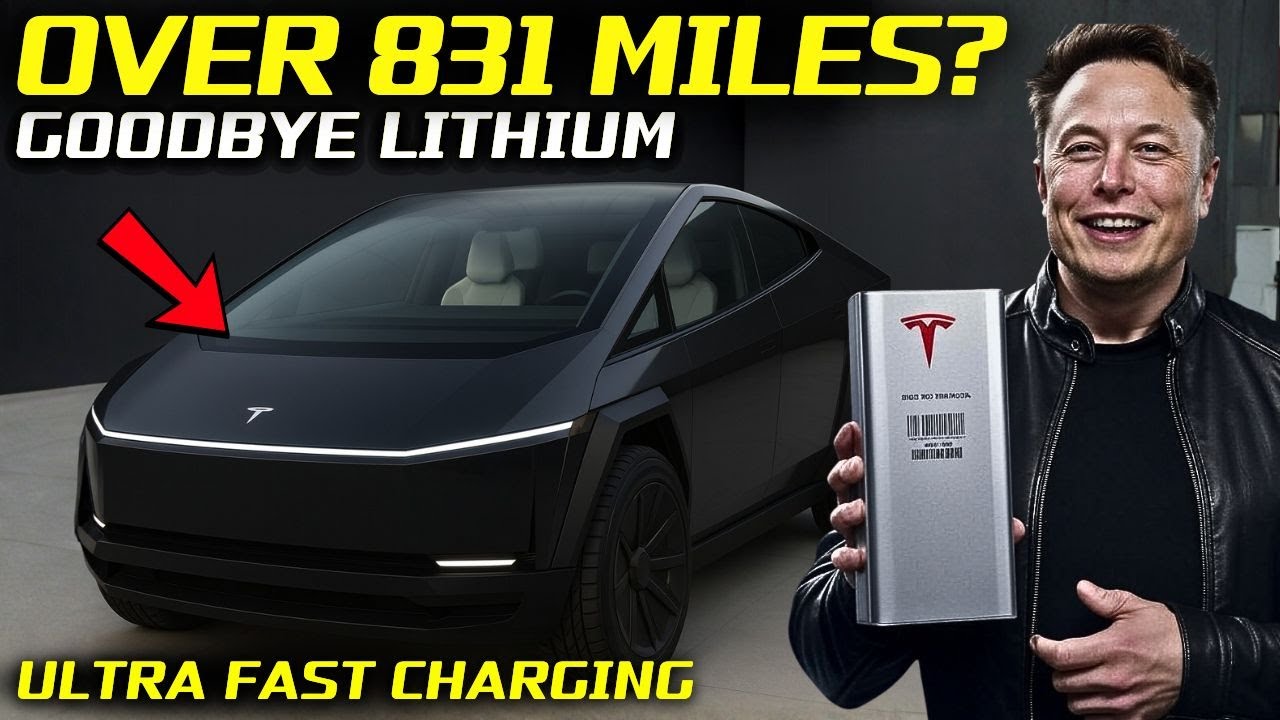
Tesla is ditching lithium dominance with a new aluminum-ion battery: full recharge in ~7 minutes, up to 647 miles of range, and lighter, cheaper cells that cut costs dramatically. At the center is the Model 2, a compact EV targeting sub-$12,000 in the U.S. with incentives—super range at motorcycle money. The chemistry is non-flammable, low-degradation, and designed for high-cycle life, turning charging anxiety into a non-issue.
Inside Giga Texas, a structural aluminum-ion pack and unboxed manufacturing slash parts count and assembly time. The result: safer thermal behavior, potential weight reductions of 30–50% at pack level, and faster throughput—all while enabling a global push for affordable EVs. This video breaks down the cell design, vehicle integration, and geopolitical impact of lithium independence—plus why legacy automakers should be very worried.
___________
Here on the EV Briefing channel, you’ll get the latest updates on Elon Musk, Tesla, new Tesla Model 2, Model 2, Tesla Model Y, Model Y 2025, Tesla Model S, Model S, Model X, and Model 3. Our focus is to bring you everything about each Tesla EV, whether it’s an affordable Tesla, a potential Tesla cheap car, or a new Tesla car on the horizon. We cover daily Tesla news, EV news, Tesla update, and tech advancements coming straight from the Gigafactory.
If you’re into electric car, future EV, Tesla 2025, improvements in Tesla battery, increased Tesla range, and everything involving Tesla innovation, you’re in the right place. We also track every Tesla reveal, Tesla launch, and of course, all major Elon Musk news and developments shaping the world of electric vehicles.
_____________
#tesla #elonmusk #teslamodel2 #teslamodely #modely #gigafactory #electricvehicles