New 2026 Toyota RAV4 Goes Fully Hybrid and Adds Performance GR Sport
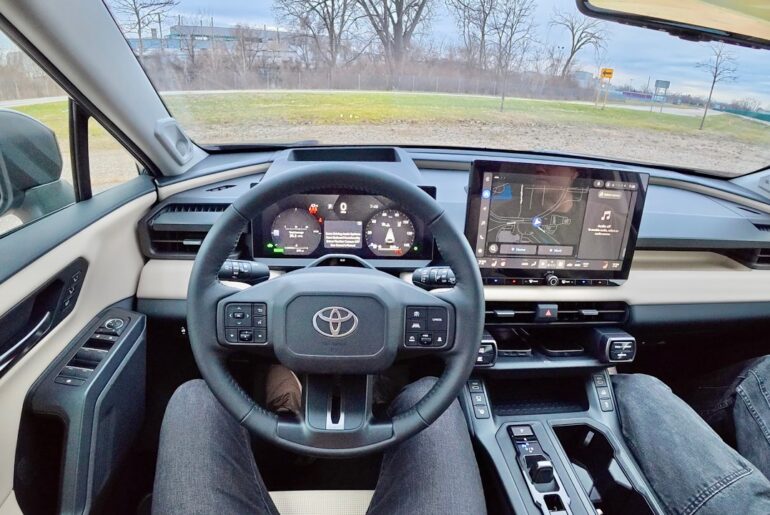
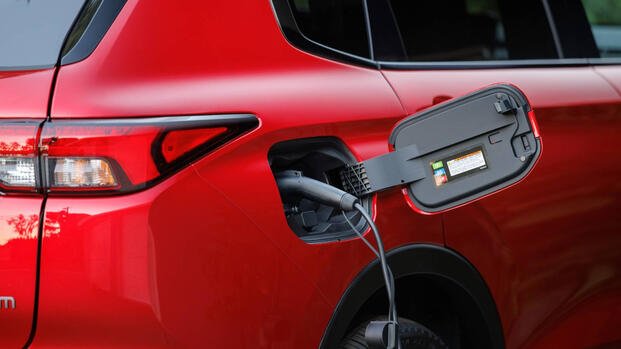
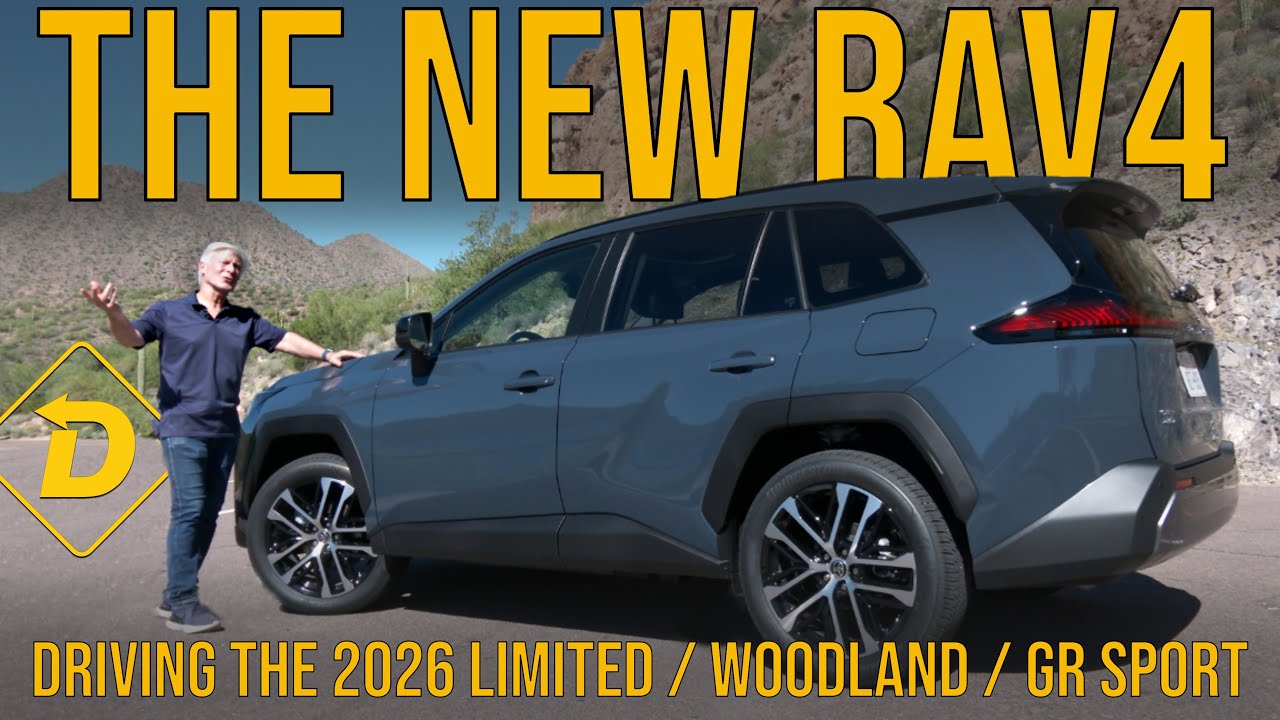
The big kahuna of the automotive world, Toyota’s RAV 4 is new for 2026. Why watch my video? Because I’m taking you through the entire core lineup, mainstream, performance, and off-road. And like always, I will not waste your time. Let’s get to it. [Music] Three is the magic number. In the automotive world, brands need vehicles to cover the tripod of the market, as it were, mainstream transportation, sporty enthusiast machines, and off-road prowess. Toyota’s magic number seems to be four, as in RAV 4. The new 2026 model is trying to be all things to all buyers. I’m at a Toyota sponsored event outside Phoenix, Arizona to check out the sixth generation. Uh, the RAV 4 is now available and sold in over 180 countries across the globe. RAV has always done well with mainstream buyers. Those will gravitate to LE, XLE, SE, XSSE, and Limited. The big T is gunning for a wider audience with a more capable, adventuresome woodland. GR Sport is for on-road enthusiasts. The big news, like Camry, RAV is now all hybrid all the time. Traditional and plug-in hybrid. Both drivetrains are the latest generations with added power and efficiency. This is not an allnew vehicle. It rides on the same TGAK platform as generation 5 with some chassis modifications. Classic Toyota. If you didn’t know, RAV 4 is the most popular passenger vehicle sold in the United States and has been for a number of years. It’s essentially the new Camry. Toyota sells well over 400,000 copies annually. So, as you might imagine, it’s very important to the company. The sheet metal isn’t a radical redo. Styling remains familiar. Most likely the chief engineer’s mission was don’t kill the golden goose. Overall, edges are crisper. The D-pillar has a heftier profile. Cosmetics are grade dependent. The noses are all unique, especially woodland that repositions the elliptical tea badge to the grill. Rear fasc. The fender garnish is similar across the Rav lineup, but with different textures. A shout out to the designers for not overdoing the cladding, even on woodland. The cabin is completely redone. The smaller 10.5 in interface screen matches the largest unit in 2025 models. It and this larger 12.9 incher run the latest version of the Toyota audio multimedia system. Love this new surround view camera setup that lets you scope out your domain. Lower tech includes these deep useful storage pockets and a center console that’s easy for both driver and passenger to get into. Plus, it flips from padded armrest to a tray. A good landing spot for a Mickey De’s lunch. There’s this trick with the cup holders, too. It’s kind of adjustable. The standard hybrid or HEV should see a take rate of around 85%. With all-wheel drive, it makes 236 total horsepower when combining the 2.5 L 4-cylinder and electric motors. That’s up by 17 horses. Toyota doesn’t offer total torque figures. Depending on grade, the ECBT transmission gets a traditional Prindle shifter like this or a shift by wire control found in the Limited. Uh neither of them save space on the console. Equipped with all-wheel drive, the back tires are driven by electric motors. No drive shaft running to the rear like Hyundai Tucson and Kia Sportage. Like any modern vehicle, there are drive modes. It’s very clear which one you’ve selected on the 12.3 in gauge cluster found in all RAV 4s. Woodland gets a couple extra for conquering the great outdoors. Hill descent control, too. The plug-in hybrid, formerly dubbed Prime, gets a solid upgrade for 2026. Rare as hens teeth in the past, Toyota claims it’s tripling production for 2026. The all-electric range rises from 42 to as high as 52 mi. GR Sport gets a level 2 J1772 port. Woodland and XSSE add a CCS socket for DC fast charging. Uh considering the gas engine always has your back. Not sure why that’s needed. The new sixth generation PV, also with a 2.5 L 4-cylinder, adds more powerful electric drive motors. So, it produces 324 horsepower combined in every trim that it’s dropped into. Again, no total torque figure is provided. All-wheel drive is standard, and like the regular all-wheel drive hybrid, the rears are driven by motors. The 22.7 kWh lithium ion pack is floor mounted. It takes up little cargo space. There’s still room for a spare tire. GR Sport gets standard paddles for simulated shifts from the ECVT transmission. Let’s get to driving. I’m doing the magic number thing, driving three versions, Limited, GR Sport, and Woodland. By far, the most popular powertrain will be the standard hybrid that comes in both front-wheel drive and all-wheel drive. To sample that, I’m driving an all-wheel drive Limited trim. Most of my impressions will be with this one since it’s part of the mainstream group of five trims. Woodland and GR Sport are more specialized. This new generation hybrid system has a little bit more oomph, 17 extra horsepower. I would say 0 to 60 happens in just over 7 seconds. Not bad. And remember, electric motors, they have instant torque, so this feels good off the line. Being a hybrid, there’s some CVT drone under hard throttle, but it’s well managed. That’s expected. Toyota does hybrid technology extremely well. Sportage and Tucson use a six-speed gearbox for those preferring that dynamic. A new electronic system called cooperative steering driving force control supposedly tames pitch and roll. Hard to evaluate on this drive route. For the record, I never liked the gas only power plant in the Rav 4. I always felt it was coarse. Um the hybrid was always the smoother choice. This, the next generation, is even more refined. You’ll definitely notice the difference. It’s quieter. There’s less road noise. There’s less wind noise. I’m not overly familiar with Arizona’s pavement, so pay attention on your test drive in conditions familiar to you. Not only is the hybrid a little bit more powerful now, it’s also more efficient by about 4 MPG. The average for most RAV 4 all-wheel drives is 44 MPG. The Woodland is less efficient. Toyota has adas technology covered. stuff like automatic emergency braking, lane keep assist, and blind spot warning. It’s the latest TSS 4.0. RAV 4 has that slightly raised seating position. The driving dynamics are very carlike. The steering weight is about perfect, not too light, not too heavy. It’s accurate. Uh no micro corrections, so this would be good for a road trip. Even better if it’s twisty tarmac. This the GR sport grade is new to RAV 4. And you know, often times when there’s a sport badge on a vehicle, it simply means stripes and trim. Not in this case. GR only comes with the plug-in hybrid system, which is more powerful. There’s 88 additional horsepower over the HEV, though the PHV is 545 lbs heavier. In addition to the sport cosmetics, there are unique dampers. Those are fixed, not adaptive or adjustable performance tires, too. It’s not hardcore performance. Toyota feels this is a gateway to the GR line. Maybe that’s why the badge is GR Sport. Not only do these exclusive 20-in wheels look awesome and badass, really fitting that attitude of the GR Sport model. Each wheel helps reduce 2.2 kg of weight, 4.8 lb each. Toyota had a table full of parts that are fitted to the GR to keep things buttoned down. This will be made in Japan, as will all plug-in hybrids. Other sport differences, there’s a functional spoiler. The interior is available in a rainbow of colors, as long as that rainbow is black with red accents. The seats get a little more bolstering and grippy fabric. You won’t forget you’re in the GR Sport. If you do, consult a neurologist. In pure EV mode, this isn’t going to be as quick offline because you’re not using all of the powertrain. But what does this have? An electric motor and those have instant torque, so it feels quicker. I would say 0 to 60 in 9 seconds. For the full GR mode, you are going to want to use both sides of the powertrain, gas and electric. That does make a huge difference. Let’s check it out. Yeah, definitely more oomph. I would say the 0 to 60 in that case is a solid 5 seconds. And there are manual shift paddles. Um, they’re simulated, of course. They’re fine. There’s a new electronically controlled brake system. Pedal modulation from power recuperation to using the actual physical binders is as seamless as it gets in the automotive world. That goes for every RAV 4 HEV or PV. Compared to the Limited, the driving dynamics of the GR are definitely different. Certainly, the suspension is firmer, though never uncomfortable or harsh. It’s a good setup. The steering weight seems to be firmer. Things seem to be more direct. This is a very good balance. It’s not overly sporty, but it’s definitely sporty enough. Pavement cracks are more noticeable with the lower profile tires. Is this a budget macon? Uh, no. It doesn’t connect to a driver’s cerebral cortex the way the Porsche does. I do suspect the German is a lot more expensive. GR Sport does add extra engagement over the core RAV 4s. It is perceptible. I suspect the PV’s heavy floor mounted pack drops the center of gravity, too. Always good. Once the pack is depleted and this switches into hybrid mode, which is seamless, by the way, Toyota estimates that the plug-in hybrid will return 41 m per gallon when running on dinosaur juice alone. All right, let’s move on to the next grade. If you’re not into washing your car, the Rav that looks best dirty is the Woodland. The third leg of Toyota’s Rav strategy is available with both powertrains. All-wheel drive is standard, so is a tow package. The aesthetics are more rugged. Duh. The 18-in wheels wear all-terrain tires. The steering ratio is slightly different, too. Ground clearance is up by 4/10 of an inch to 8 and 1/2. So, not a lot. Inside there’s a smattering of copper accents, nothing gay and faint digital camo pattern. Seats are softex material. RAV 4 is leather-free when it comes to the seats. The roof rack is standard. So, this isn’t severe off-roading. I would call it a a mild off-road experience. We’re in the plug-in hybrid powertrain. And then as we go down, we’ll activate the uh hill assist, downhill assist system, where you’ll find you won’t really even need to use the brakes. The car is going to do a lot of the deceleration for you. Heavy storms in the Phoenix area washed out the original off-road course. So Toyota pivoted to a smaller loop, but it does represent what owners might point their rav towards. Christian will be my guide to the course. You’re in trail mode, which activates kind of on demand all-wheel drive. Standard power is distributed 8020 mostly to the front, but in the uh in on demand trail mode, it’s a uh has the capability going up to 80% to the rear. Woodland is not meant to tackle extreme terrain. So, this Tacoma up here, I can see people taking it on terrain like this because, you know, that’s why people buy Tacomaomas. Uh, a Rav 4, not so much, but this is handling it pretty well so far. Yeah, Woodland’s main advantages come from the tires and two off-road drive modes. We’ve got the awesome camera system where we’re able to see um obstacles that maybe when we get up to top of this hill, we can’t see up over the hood. The extra 1/2 in of ground clearance isn’t a huge advantage. There’s no additional underbody protection either. Be careful around raised rocks. Praying that battery pack would get expensive. I drove the woodland some 8 miles to get to this course. The roof rack produces noticeable wind noise at highway speeds. If there’s added sound off the all-terrain tires, that drowns it out. But it drives well, a lot like Limited and much more carlike than 4ERunner. Passenger volume remains the same as the outgoing RAV. I’m focusing on the Limited’s interior. It’s the top trim and the fanciest cabin Toyota offers. There are some soft touch points where hands and elbows land, but the majority of the plastic is hard. CRV, Tucson, and Sportage offer a spendier looking interior. Door handles feel plasticky as well. It’s a functional space. Pockets and cubbies are everywhere. Like many vehicles these days, hard buttons are at a premium. At least the basics are here. It’s easiest to use natural voice prompts. They work very well. Hey Toyota, what’s my fuel economy? Your latest fuel consumption is 41.4 MPG. It does require a data plan once the trial period is over. Limited gets two phone charge pads. That might be better than marriage counseling. There’s wireless Android Auto and Apple CarPlay, too. Toyota has revamped its infotainment system. My time with it was short, but it feels like a big improvement. There’s more of a homepage now instead of stark fonts on a screen. A new Snapdragon processor significantly improves the touch response. Other than the switch to full hybrid powertrains, the interface might be the vehicle’s biggest upgrade. A lot of families depend on RAV 4 for transportation. This will do them proud. I’m 5′ 9. Headroom is quite good. Knee, leg, and foot room. No shortage of that. Although my size 11s are a little tight under there. Cushions are long and high enough for excellent thigh support. The door openings are a little bit small and the doors themselves don’t open very wide. Door pockets. Yeah, of course. And this cubby, which is actually kind of deep. No separate climate zone. There are adjustable vents and power ports to charge phones. There’s a small spine running through here. I’ve seen worse. Most measurements are exactly the same back here. Toyota did manage to carve out an extra inch of hip room in the 2026 edition. Three thinner adults will be okay for city excursions for road trips. That would get a little crowded. In this case, two is the magic number, not three. I’m at an event, and you know what that means? No TP trunk test. But I can tell you that the RAV 4 Prime, what this used to be called, can take on eight packs of softness and absorbency. Pretty good. The fact that there’s a spare tire impresses me. Those are becoming rare. At 33 1/2 cubic feet with the seats up, the PEV has 4 cubic feet less space than the standard hybrid. That’s acceptable. It’s a bit of a reach in. Remote releases would be handy. In max cargo mode, the plug-in hybrid offers 63 and 1/2 cubes against the hybrid 70 cubic feet. The cargo hold remains pretty much the same as the previous generation if you’re an owner. That brings me to pricing. Unfortunately, Toyota has not released that for now. It says RAV 4 begins at low30,000s for a front drive. For reference, a 2025 all-wheel drive hybrid starts at 34,300 bucks with shipping. Without real numbers, I can’t tell you what the value proposition is against the competition. Availability begins in December of 2025 for the HEV powertrain. The plug-in hybrid is expected in the spring of 2026. As you might imagine, with a vehicle this important to Toyota, it has really swept the details. It’s more refined. It’s got a better infotainment system. It’s more efficient. I would like a little bit of a nicer interior, though, this being the Limited. The competition keeps getting better and better. They’re worth checking out since any vehicle is a big investment. The sixth generation RAV 4 is exactly what you’d expect from the world’s largest automaker. A laser focused upgrade aimed at current owners. The GR Sport could get a few new customers into the fold. Mainstream appeal, some rugged ability, and a dollop of fun makes three the magic number for RAV 4. Hope you got something out of my first look at the 2026 Toyota RAV 4. all hybrid all the time. And before I go, it’s very important for me to let you know that Toyota brought me to Arizona, put me up, and fed me. But I do this because I want to give you information as quickly as possible, okay? It’s not about the free meal. Um because really, I could stand to lose an extra couple pounds. Thanks for watching. Hey, you’re here at the end. I’m assuming you enjoyed the video. So, subscribe, follow me on social media. I’m on all the major platforms. And if you do have a question, leave it in the comments. I am pretty good about getting back to people. Okay. All right. That’s driven. I’m Tom Vulk.
The new 2026 Toyota RAV4 leaves the ICE powertrain behind to go fully hybrid, both traditional HEV and plug-in hybrid with up to 52 miles of all-electric range. Plus there’s a new performance version, the GR Sport with RAV4’s most potent powertrain ever. Tom Voelk travels to Phoenix, AZ to drive three different flavors of the 6th generation RAV4, the Limited HEV, the off-road oriented Woodland with PHEV power, and PHEV-only GR Sport.
TURN ON NOTIFICATIONS BY CLICKING THE “BELL” BUTTON AFTER SUBSCRIBING!
FOLLOW TOM VOELK ON TWITTER / X ► https://twitter.com/TomVoelk
2026 Toyota RAV4 review, new 2026 Toyota RAV4 review, 6th generation Toyota RAV4 review, new Toyota RAV4 hybrid, new Toyota RAV4 plug in hybrid, new Toyota RAV4 PHEV, Toyota RAV4 PHEV all electric range, Toyota RAV4 plug-in hybrid all electric range, RAV4 Woodland, RAV4 GR Sport, Tom Voelk, Tom Volk, car reviews, Driven Car Reviews
About Tom: Tom Voelk is an award-winning automotive contributor to The New York Times. His podcast was the first to win an Emmy Award (and he’s won for photography, editing, producing and reporting).
00:00 2026 Toyota RAV4 Limited, Woodland and GR Sport Review
00:58 Grade Levels
1:56 Design
3:11 Standard Hybrid Powertrain
4:08 Plug-In Hybrid Powertrain
5:27 Limited HEV
7:48 GR Sport PHEV
11:23 Woodland PHEV
13:53 Interior / Interface Limited
15:18 Backseat
16:16 Cargo
17:01 Summary