Puckipuppy Boxer ST Review | Playing Fetch All Day Long
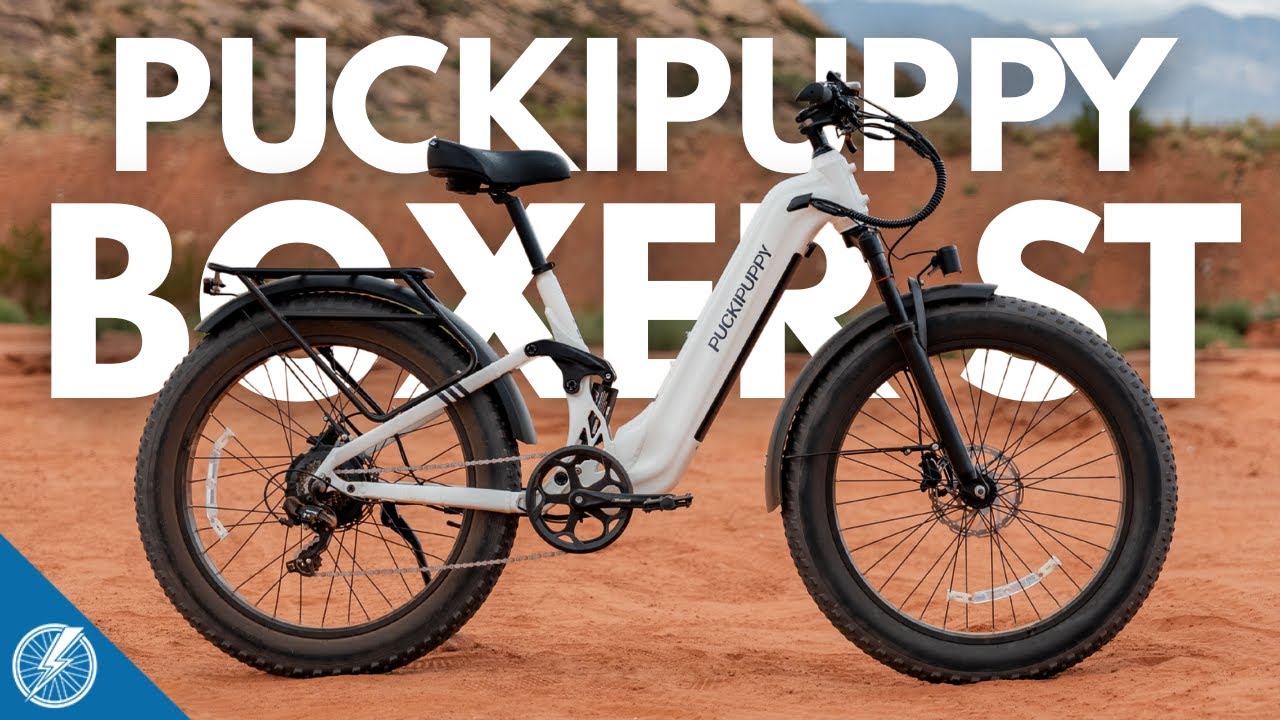
Is it really possible to get a comfortable, easy pedaling, sturdy, and stable full suspension fat tire ebike for around 1,500 bucks? The Puppy Puppy Boxer ST aims to make that a reality. And we tested the bike to find out how well it cools that off. [Music] [Music] Welcome in. I’m John with Electric Bike Report, and again, this is the Pucky Puppy Boxer ST. Right away, you can see that this bike looks like a bit of a powerhouse with full suspension, 4-in fat tires, and a powerful rear hub motor. It’s built for riders who want comfort, stability, and power, all without spending a fortune. Full suspension fat tire ebikes like the Boxer are popular for good reason. They are smooth, capable, and extremely versatile. The wide knobby tires give you great traction on everything from pavement to dirt and gravel, while the suspension takes the edge off bumps and rough terrain. Add in a capable motor with a cadence sensor, and you’ve got a bike that flattens hills and keeps you cruising comfortably. The challenge with this style of ebike is usually cost. Many models easily pass the $2,000 mark. That’s where Pucky Puppy steps in. They’ve been making affordable ebikes that ride like costlier machines, and the Boxer ST follows that same playbook. At around 1,500 bucks, it’s a full suspension fat tire eBike that feels like it should be priced at least a couple hundred more. On our first few test rides, a few things stood out right away. The suspension did a solid job of smoothing out bumps and rough pavement despite being relatively entry- level. And since the boxer is a class 2 and 3 ebike with five preset speed limits, it can be quick when you want it to be or a bit more relaxed when you don’t. The bike’s cadence sensor is another highlight. Instead of responding to how hard you pedal like a torque sensor, it provides steady power based on your chosen assist level. So, even with a light spin of the pedals, the motor kicks in and carries you up to speed. It’s an easy, loweffort ride that’s perfect for new riders, older cyclists, or anyone who just wants a laid-back cruise. With a 500 W rear hub motor that peaks at 960 W and cranks out up to 65 Nm of torque, the Boxer isn’t scary powerful, but it does have plenty of muscle for hill climbs or high-speed cruising. The boxer ships as both a class 2 and three ebike, offering throttle up to 20 mph and pedal assist up to 28. Power delivery feels smooth and steady, and the motor provides all the push most riders will ever need. In our testing, we also found the boxer to be impressively capable of long range rides. Our PAS1 range test produced one of the best results we’ve seen from among the dozens of fat tire ebikes we’ve tested. Pucky Puppy claims between 40 and 80 mi of range per charge. And well, we’ll get into the details later in this review. Our testing suggested that those numbers check out, and some writers might even go further. Let’s quickly run through the rest of the specs. The Boxer ST’s removable 48V 960Wh battery is integrated into its down tube, and that pairs with a 2 amp charger. The bike uses a 7-speed Shimano drivetrain with a 46 to chain ring and a 14 to 28 to cassette. It also has a set of Logan hydraulic disc brakes with two piston calipers and 180 mm rotors. And it rides on 26×4 in fat tires. The aluminum alloy frame features full suspension. There’s 130 mm of travel up front and a rear shock for extra comfort. It includes an LCD color display, integrated dual LED headlight, and an LED tail light. The bike’s aluminum handlebars come outfitted with cushy ergonomic rubber grips, and the bike features a thick cruiser style saddle. Our contact at PuckyPuppy said that at least at the time of filming, the brand has applied for UL certification, but the bike does not currently have either UL271 or 2849 approval. You can check the link to the bike’s web page in the video description below to see the current status of that. A few extra details, though. At 81.1 lb, the Boxer ST supports riders from 5’3 to 6’4 and carries up to 400 lb total. And finally, Pocky Puppy offers the Boxer ST in five color options, from a muted sage green to a bold desert camouflage pattern. Buyers can also choose from either a free spare battery or a free basic accessory kit that includes fenders, a cargo rack, side mirrors, and even a backpack and bike cover along with a few others. Bottom line, for its price, the Boxer ST delivers solid specs, a comfortable ride, and lots and lots of range. It’s easy to ride. It’s fun to handle. And overall, it’s packed with value. In the next sections, we’ll show you how it performed in our speed, brake, range, and hill tests, and how it stacks up against some of the more expensive competition. [Music] All right, we are here for a speed test on the Pucky Puppy Boxer ST. Start things off with no pedal assist and uh just a fairly casual level of effort. Here I’m pedaling at about uh 8 mph, maybe a little above just with my own leg power. Now I’m not putting a lot of effort in. I could get faster here, but I do want to see what the sort of preset speed limits are. So let’s go ahead and go up to PAS1. All right, motor engaged very quickly. Uh not too strong. Nice and helpful though. So I am going to shift up to I think fourth gear. pedal pretty casually with a cadence sensor here so that I’m not really, you know, adding too much to what the motor is doing. But let’s get around down here, see where we land. So, I am, you know, pretty much soft pedaling here just to see what the motor is going to do. And it looks like we’re cruising kind of right between 10 and 10 and a half miles per hour by the bike’s display. All right, let’s go up to PA2. All right, nice strong acceleration, but not not super punchy, just steady and uh capable. So, we are cruising quite a bit faster now up to kind of right around 15 1/2, maybe between 15 1/2 and 16. Yep. All right, let’s go up to PAS3. And we’re going to go all the way up to seventh gear here. All right, we are definitely picking up quite a bit of speed up to right around 21 miles per hour. Yep, maybe a little over. I’m going to wait till we get around the bend here to bump up to the next assist level. All right, let’s go ahead and go up to the AS4. All right. Yeah, this thing’s definitely starting to take off. Very powerful motor up to right around 26, maybe a little under. Yep, kind of right around that nose. I’m going to slow down a little bit and finish things off in PAS5. See how this thing takes off. All right. So, in order to keep up with the bike speed, I do have to pedal relatively quickly here. So, I’m just going to like relax and ghost pedal. Just keep turning the cranks and let the motor do the work. But, yeah, we are exceeding 28. So, we’re actually over 30 a little bit. Glad there’s uh, you know, not too much traffic out here today. All right, right around there. Let’s go ahead and check out the throttle. All right, then the second part of our speed test is going to be throttle acceleration where we see how quickly we can go from 0 to 20. Let’s go ahead and start in 3 2 1 go. All right, so you know, gradual start, fairly steady, picking up, not too punchy, not scary. Feels good. And we’re at 20, a little above. All right, let’s uh go ahead and bounce back to studio. As you saw in those video clips, I took the bike out on a flat paved section of our local shared use trail and rode it in each pedal assist level using only casual pedaling. That’s one of the nice things about this bike’s cadence sensor. It doesn’t need you to pedal hard. It just cares that the cranks are turning and then the motor handles the rest. My test showed that the motor delivers a smooth, linear increase in power as I stepped up through the assist levels. My average speeds were 8.1 mph with no assist, 10.4 4 in PAS1, 15.7 in PAS 2, 21.1 mph in PAIS3, 25.9 in PAS4, and then 30.4 mph in PAS5. As a class 2 M3 ebike, the Boxer ST is designed for throttle speeds up to 20 mph and pedal assist up to 28. Since my PS5 results pushed slightly past that, we’d encourage Pucky Puppy to dial in the top limit to stay within the standard class 3 rating and avoid any issues where local speed regulations are enforced. I also tested the bike’s throttle and found it steady and lively without feeling too punchy. Riders can fine-tune acceleration strength through the display settings, which range from one for gradual takeoff to five for maximum punch. Overall, the Boxer ST delivered balanced power, a smooth progression between modes, and plenty of speed for both relaxed cruising and sporty riding. All of which is pretty impressive considering the bike’s 500 W motor. Now, let’s talk about the range test. And again, this is where the Pucky Puppy Boxer ST really turned heads. Using our standardized testing process, we rode the bike in both its lowest and highest levels of pedal assist to see how far it could travel on a single charge from its 48volt 960watth battery. In its most powerful setting, PAS5, we covered 42.1 mi before the battery ran out. And then after recharging and dropping down to PAS1, we reached a remarkable 93.1 mi, which is one of the longest results we’ve ever recorded from a fat tire eBike, period. For context, similar bikes we’ve tested averaged around 35 miles in their max power tests and roughly 64 miles in their lowest assist levels. That means the Boxer outperformed its peers by about 7 mi on the high end and nearly 30 m on the low end. All of our testing was done at the local 20 mph speed limit, so riders who cruise closer to the bike’s 28 mph top speed should expect fewer miles. One reason for these results likely comes down to the boxer’s large battery. Competing models in this category typically carry smaller batteries that average 783 watt hours, which means less energy storage overall. But even more impressive is how efficiently the boxer used that energy in its PAS-1 test. The bike used an average of two fewer W hours per mile than its competition, which allowed it to stretch that extra capacity even further. To put that into perspective, only a small handful of the many fat tire ebikes we’ve tested have performed as well or better in both range tests. So, credit where credit is due, the Boxer ST isn’t just comfortable and powerful, it’s an endurance champ. So, whether you want to go fast or take it slow, this bike delivers exceptional mileage and efficiency for its class and price. [Music] Next up is our hill test, which we perform at a location we call the Devil’s Backbone. This is a half mile climb with an average grade of about 8% and roughly 217 ft of elevation gain. So, in other words, it’s steep enough to make even some powerful ebikes work for it. We performed this test twice. Once using only throttle power and again using the bike’s highest level of pedal assist. Let’s go see how things went when our test rider Justin took the bike up the hill and then I’ll see you back here shortly to talk about the results. All right, we are out on this Puck Puppy in PS5 doing the throttle test up the Devil’s Backbone and feels pretty peppy so far. 19.8 8 before this first section. 16.5 right now and we’re going to kind of bottom out right at 13 4 mph on that there. Now we’re starting to get back up to speed again. We’re 16.8 top right about 17 mph before this first turn. And we are at 13.7 mph. 13.1 12.8 12.6 12.3. So going to bottom right about 12.1 12.2. Tap those brakes and see what we get back up to before this first first uh light post. Um right now I’m at 12.2. 2 mph. We’re going to cross that lamp post right at 13.3 mph. In terms of motor noise, it I’d say it’s right about average. And I mean, I’m still hearing that rear hub, which I like to hear. Just makes it sound a little more natural to me. And the frequency is on the lower side, so I don’t I don’t hear it as much. Um, so I like it. Again, right about average. Terms of power output. felt very peppy um out of the gate. Climbing up the hill, I will see the results. Feels a little bit more controlled. Notice I do have this in safe mode, not free mode. So, you can put it in even a faster mode than this. And I’ll let you listen now for a few minutes or a few seconds. So, about 15.2 mph. Gets a little bit windy up here. So hopefully you can hear that a little bit. And we’re going to finish this right at 13 mph. All right, we are back on the Puppy Puppy doing the pedal test now. Getting pretty easily up to 20 mph before this first hill. I’m in seventh gear and again feeling pretty peppy off the start. So 17.0 16.5. Not feeling like I need to downshift yet. So, bobbed out about 16.4. Back up to 19.5. As we make this turn, I think I’m going to downshift just a sixth. So, just one gear down at 15.9. It’s going to bottom out right about 15 1/2 mph. car. I’m going to shift down twice with this turn. This steep section right here. So, I’m in fourth gear. We’re going to see what we cross this at. The first lamp post here. We’re at 15. We’re going to cross. We’re at 15.6 mph. Um, terms of pedal engagement, very, very natural actually. It’s feels pretty strong on the power output, but I do have to pedal. So, I can’t just soft pedal and turn the cranks. I’m having to put some effort in on my own, and I can’t go faster if I push harder. So, I like that a little more active feeling, but still powerful on the active side. Um, motor still pretty quiet. I’ll let you listen here. And not sure if you’re going to hear that. It’s a little bit quieter when I’m pedaling. I think we’ll have a pretty good result. So, we finished right at 15 1/2 mph. In the throttle test, our rider Justin made it to the top in 2 minutes and 16 seconds, maintaining an average speed of 13.3 mph. When pedaling in PAS5, he completed the climb faster at 1 minute and 57 seconds with an average of 15.5 miles per hour. When we compared those numbers to other fat tire ebikes we’ve tested, including Pucky Puppy’s own Labrador Pro, the Boxer ST came in close to average on the pedal test, but slightly slower on throttle. The category averages are roughly 1 minute and 55 on throttle and a minute 52 in the highest assist level. So, the Boxer wasn’t too far behind. Now, a couple of things help explain the results. The bike’s 81 lb weight is right in line with other fat tire models, but with a 500 W motor that has a peak of 960 W and 65 Nm of torque, it’s a bit less powerful than most other bikes we’ve tested in this category. The comparison group had 750 W motors with an average peak of around 1,160 W and 91 N of torque. That reduced power is likely one of the trade-offs for the boxer’s more affordable price point. But even so, this bike felt steady and confident while climbing. Its motor output also gave the ride a slightly more active feel than many similar bikes, but the experience was still very nice and easy. I do want to clarify one thing Justin said about the bike safe and free modes. We’ll take a look at this later when running through the display menu, but the bike essentially has two throttle modes. In free mode, the throttle will function from a complete stop, but in safe mode, the bike has to be moving in order for it to be engaged. To summarize this test, though, we’re ultimately satisfied with the Boxer ST’s climbing ability. It makes quick, capable work of steep hills and gives riders the flexibility to either throttle or pedal their way to the top. Moving on to our brake test. This one is performed by my colleague Griffin, who stands at 6’1 and weighs about 230 lb. For consistency, we bring every bike up to 20 mph, apply the brakes in a controlled manner, and then measure how far the bike travels before coming to a complete stop. We repeat that process three times, and then take the average for a final test score. The Pyuppy Boxer ST average 24 ft and 4 in, which lands within our expected range, but is a little slower than the typical fat tire ebike we’ve tested. Comparable models averaged around 21 ft and 10 in. So, the boxer came in about two and a half feet longer. This bike uses a two-piston hydraulic brake system from Logan, which is an entry-level setup, but one that’s appropriate for this category in price point. Under hard braking, we noticed a bit of shuttering from the rear suspension as the wheel moved slightly and lost some traction, and this is a likely factor behind its longer result. Overall though, the brakes felt pretty solid. At times, they were sharp and responsive. At others, a little bit softer, depending on terrain and speed. They stop the bike effectively for everyday riding, though we recommend leaving extra room to break, especially when traveling near the boxer’s top speeds. All right, let’s talk about ride quality here on the Boxer ST. So, of course, this is a full suspension fat tire eBike with a step through frame. Uh, now Pucky Puppy does offer a high-step model as well, but uh, you know, we’re pretty much strictly talking about the ST here. Um, so the recommended height range for this version of the bike is 5’3 to 6’4. Um, I believe, if I remember correctly, the high step is 5’4 to 6′ 6, but uh, you can check our written review or their website for that. In any case though, uh, at 5’11, I’m, you know, well within the recommended height range for this version of the bike. So, I’ll talk a little bit about what I’m feeling. Uh, let’s see. Leg extension is is pretty decent. I do have the saddle height maxed out. I measured about 5 in of adjustment there. Uh, so I do still have a little bit of a bend at the knee. And, uh, I don’t really mind that here though, just because the cadence sensor, you know, I don’t have to put a lot of work into pedaling. I’m I’m not pedaling with any real effort or strain. So, you know, my uh my knees aren’t going to get sore from that just with the amount of power that the motor does deliver. And then on the reach side of things, so we’ve got a uh standard threadless style stem up front and that uh is, you know, not adjustable there. So any changes to reach that you would want or or need to make, uh you’d have to either consider swapping out the stem or you can also make some adjustments with the rail on the saddle there. So uh that’s what I did. Just change the saddle uh position a little bit. And the reach feels nice and dialed in. So I’ve got, you know, a little bit of a forward lean here, but it’s not super aggressive. Uh it’s very comfortable. I’m putting a little bit of weight on the handlebars, but that’s really spread out well because of the ergonomic rubber grips. So, uh, you know, yeah, again, everything is just very comfortable. The ride itself is very smooth. Uh, and that really comes down to the suspension that we talked about. So, there’s a coil fork up front that has preload adjustment and a lockout feature. And, uh, Pucky Puppy advertises 130 mm of travel on that. Uh, but then, of course, we have the shock as well in the rear, uh, that smooths out bumps on your tail end. And, uh, yeah, I mean, you know, riding on pavement feels great. And then I haven’t done a ton of off-roading, but what I have done also felt pretty smooth. So, uh, very good in terms of overall comfort on this bike. You also do get a little bit of extra cushion from the tires. Those are 26×4 fat tires with Na’vi tread. Um, which again, you know, a nice wide stable base for riding and of course traction on both paved and unpaved surfaces. Uh, and then we have the rear hub motor with the cadence sensor that I mentioned as well as the easy pedaling. So, uh, we also at the time of filming here, uh, don’t know the nominal rating of the motor. I would guess that it is a 750 W just based on the power and and how it compares to similar models that I’ve tested, but uh, we don’t have that outright. It is a 960 W peak. Uh, and I don’t believe we know the torque rating as well, but you know, it does does uh feel very appropriate for a fat tire bike. Very much in line with our expectations. So, uh, overall pretty well put together bike. Let’s go ahead and bounce back to the studio and we’ll talk a little bit more. To run through the main ride quality takeaways, the Boxer ST felt exactly like what you’d expect from a full suspension fat tire eBike. It was stable, balanced, and comfortable. As is typical for the fat tire category, it’s not the most nimble or lightweight bike out there, but it’s incredibly steady once you’re rolling. I did notice a bit of frame flex, which is common with step through designs due to the lack of a top tube, but it wasn’t anything out of the norm. That open frame design does come with a nice perk, though. With a standover height of just over 16 in, it’s super easy to step through the frame and get on or off the bike with no need to swing a leg over the saddle. As for comfort, the full suspension generally did its job well. Both the front fork and rear shock absorbed bumps from pavement cracks and light off-road terrain, giving the boxer a smooth ride. These are entry-level components, though, so riders tackling rougher trails might eventually want to upgrade. But for everyday use on relatively smooth surfaces, they worked great. If there is one thing I’d change, it’s the over the bar shifter. It works fine, but it requires letting go of the grip with your thumb. Something that’s less than ideal on bumpy terrain. A trigger style shifter would feel more natural here, and we’d like to see the bike with this setup in the future. Otherwise, I like the boxer’s simple cockpit layout. The left handlebar houses the control panel, while the right side holds the shifter and thumb throttle, leaving the bars mostly clean and uncluttered. The center-mounted color display is easy to read and offers basic customization like adjusting throttle behavior, acceleration force, and the number of assist levels. Let’s go ahead and take a closer look at the boxer’s display menu and the ride data and customization options that it offers. All right, let’s go ahead and go through the display and the display settings menus here. So, as you can see on the left, we have our speedometer. We have a trip computer and trip time. And then, uh, right here where it says eco, that’s sort of like a related to your speed. As you go up in speed, that will change. And I believe the next setting is power and so on. Uh, but then we have sort of a boomerang shaped battery charge indicator with six bars that will drop as you use it. And then on the right side here, we have the current pedal assist level as well as sort of like a power meter that you can see will increase as I go through the five assist levels. Um, so there are two settings menus. The first one you can access by hitting the up and down arrow keys on the control panel here. And so this one is pretty basic. Just allows you to adjust the uh brightness. We are at the brightest right now. You have your units between metric and imperial. We have startup mode, which is basically your throttle. So, as I mentioned earlier, free mode lets the throttle start from a complete stop. Whereas, if you’re in safe mode, the bike has to be moving before you can engage the throttle and then you can reset the trip computer here. Um, so the power button is basically your enter and then the light button here in the bottom is to go back. So, we’ll just go back to the main screen. And then to get into the more complex display menu, you’ll hold the arrow keys and the light button for a few seconds. And then here you can adjust the throttle speed. So, again, the standard class 2 is 20 m per hour, but you can increase that if you want to. We have power assisted gear, which lets you choose between three or five pedal assist levels. voltage level, wheel diameter, and taco magnets are things that I wouldn’t necessarily recommend diving into and changing if you’re not familiar with that stuff. Uh, but then here in riding modes, we have the ability to uh have the throttle engaged, have the pedal assist system engaged, or have both functional at the same time. So, if you’re hitting a trail that only allows class ones, you know, you could do pedal only and then you’d be legal there. So, uh, but again, pedal and motor is, uh, the default. And then here is the intensity setting that allows you to change the bike’s acceleration force. The default is three. Again, one is very gradual. And then five, where we had things set, is relatively punchy. But then, of course, you can factory reset the bike if you need to. That covers everything, though. So, let’s go ahead and keep moving through the review. [Music] Before we wrap things up, let’s run through a few quick pros and cons for the Pocky Puppy Boxer ST. Starting with the good, at around 1,500 bucks, the Boxer ST delivers incredible value for a full suspension fat tire eBike. It’s just going to be very tough to find a better deal in this class. It’s easy and fun to pedal thanks to its powerful 960 W peak motor and cadence sensor, which provides loweffort, steady power up to speed. It’s also a long range champ. Our testing confirmed Pocky Puppy’s claims of 40 to 80 m per charge with some riders likely able to stretch even further. The Boxer blends a smooth, comfortable ride with a sporty and speedy feel, and ships both as a class 2 and class 3 ebike, offering throttle up to 20 and pedal assist up to 28 mph. Riders can also adjust the motor’s acceleration force through the display, choosing between five levels that range from gradual to punchy. The step through frame we tested has a super low 16.3 in standover height, and there’s also a high-step version available as well. Plus, this bike comes in five color options, including a rugged camo design for outdoor enthusiasts. On the other hand, we’d like to see Puppy Puppy swap out the over-the-ar shifter for a trigger style setup to make gear changes smoother and safer off-road. And finally, since the boxer exceeded its class 3 speed limit in testing, we’d encourage a stricter cap to keep it compliant with local ebike laws. Wrapping things up, the Pocky Puppy Boxer ST proved to be a pleasant surprise. Budget friendly ebikes often feel budget friendly, but this one stood out as feeling generally well-built and being a generally well-rounded machine for its price. For a full suspension fat tire ebike in the $1,500 range, it definitely offers a ton of bang for the buck. As we saw in testing, Pocky Puppy made a few understandable trade-offs to keep the price accessible, but overall, the Boxer ST delivers an impressive amount of performance for the money. Its braking power and hill climbing speed landed just below average, likely due to its rear suspension movement and modest motor output. But when it comes to range and overall ride quality, the Boxer really shines thanks to a massive 960Wh battery, good programming, solid geometry, and of course, the full suspension. Our main critiques were pretty simple. A different shifter and more strict top-end speed limits would round out the bike nicely. Beyond that though, the Boxer ST largely checks all the right boxes. It’s accessible, comfortable, and stable. Perfect for aging riders, beginners, or anyone who wants a smooth and capable on and off-road experience without breaking the bank. If you’d like to learn more or pick up one for yourself, check out the links to our written review and Puppy Puppies website in the description box below. I’m curious. Would you plan to spend more of your time riding off-road, or would you be more likely to stick to paved paths or roads? Let us know down in the comments section. Feel free to send us any questions you might have. Please be sure to like and subscribe if you found this review helpful, and please help to support us by using our affiliate link when making a purchase. But thanks for taking a ride with me today. Again, I’m John with Electric Bike Report, and this is the Pucky Puppy Boxer ST. [Music]
Current Price: https://ebrdeals.com/PuckipuppyBoxerST
Full Written Review: https://electricbikereport.com/puckipuppy-boxer-st-review/
Looking for a powerful, comfortable fat tire e-bike that won’t break the bank? Meet the Puckipuppy Boxer ST — a full-suspension Class 3 e-bike that combines smooth performance, great range, and a price tag around $1,500.
We tested the Boxer on hills, paved trails, and dirt paths to see how it performs where it matters most — in the real world.
⚡ Find out what impressed us, what could be improved, and whether this might be the perfect e-bike for your next adventure.
00:00 – Intro
00:41 – Overview
05:03 – Speed Test
09:49 – Range Test
11:39 – Hill Test
18:08 – Brake Test
19:22 – Ride Quality
24:31 – Display
26:59 – Pros & Cons
28:24 – Conclusion