
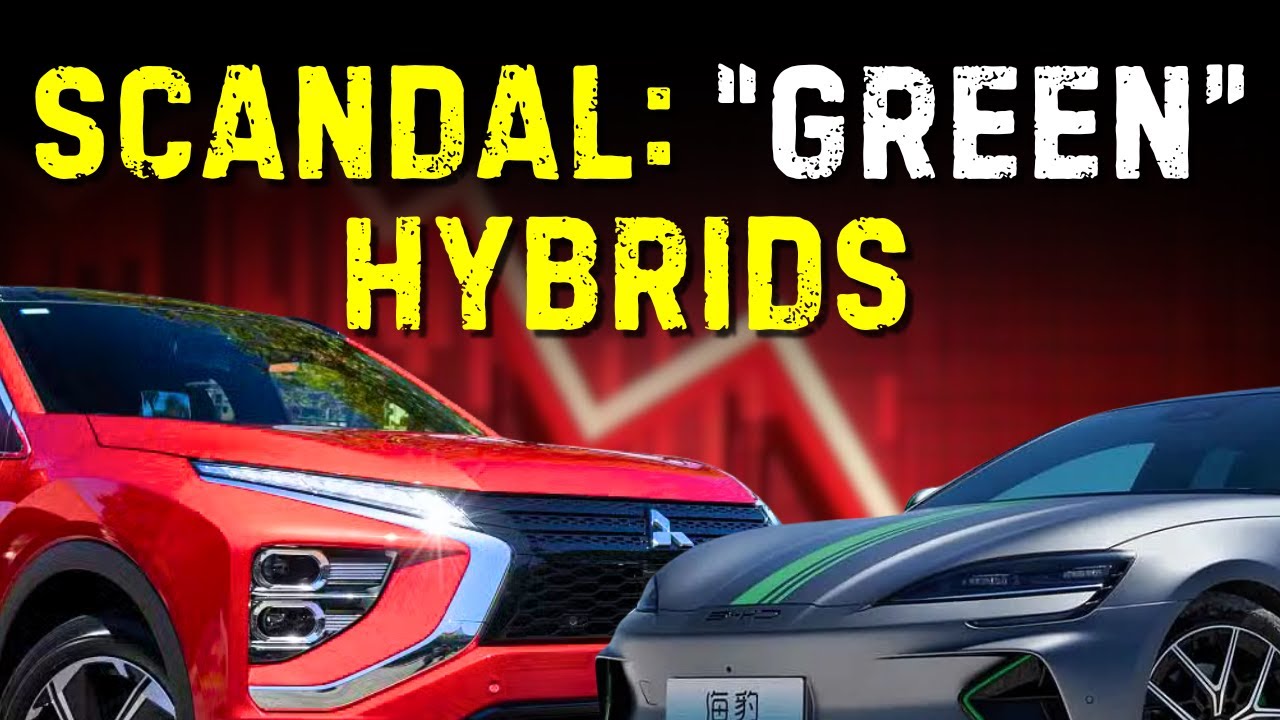
Plug-In Hybrids EXPOSED: They Pollute Almost as Much as Gas Cars!
A new analysis of real world emissions data from across Europe has delivered a sharp rebuke to the notion that plug-in hybrid electric vehicles, PHEVs, or a meaningful bridge towards zero emission mobility. According to the data, PHEVs emit nearly as much carbon dioxide per kilometer as conventional petrol and diesel cars, raising serious questions about their role in climate policy and industry planning. The headline numbers data from more than 127,000 PHEVs registered in 2023 show that the average realworld emissions of these vehicles are around 135g of CO2 per kilometer. By comparison, the average petrol and diesel-powered car in the same data set emits approximately 166 g of CO2 per kilometer. Thus, the plug-in hybrid group achieves only around a 19% reduction in carbon dioxide emissions relative to conventional vehicles. Even when operating in electric mode rather than pure engine mode, PHEVs burn fuel and emit on average 3 L of petrol per 100 km, translating into roughly 68G carbon dioxide per kilometer in that mode alone. That figure is more than eight times higher than what official tests claim for electric mode operation under statutory test regimes. Why such high emissions? The analysis identifies multiple factors behind this interperformance. First, the official regulatory tests such as WLTP assume relatively short distances on electric power, ideal conditions, moderate speeds, and optimized driver behavior. In contrast, real world driving includes high speeds, steeper gradients, heavier vehicles, and more frequent engine use. In the case of PHEVs, the internal combustion engine often takes over even during electric mode because the electric motors battery capacity may be insufficient for higher speeds or demanding terrain. The data suggests that on average, the engine supplies power during almost 1/3 of the distance driven under the electric label. Hidden costs for drivers. Beyond the climate dimension, the analysis points to a cost burden borne by PHEV drivers. The hidden fuel consumption associated with higher real world fuel use translates into around 500 extra per year on average compared with what might be expected under ideal conditions. In addition, the average selling price of a PHEV in major European markets, Germany, France, and the UK in 2025 is around €55,700, which is about €15,200 higher than the average for a battery electric vehicle, BEV, in the same markets. Thus, buyers end up paying more upfront and often more ongoing fuel, energy costs while delivering only modest emissions improvements. Industry pressures and policy implications. Automakers and industry representatives have long championed plug-in hybrids as a technology neutral path toward decarbonization, a compromise between immediate internal combustion engine continuation and full battery electric adoption. They have argued that PHEVs allow drivers to retain the flexibility of petrol diesel operation while gradually shifting toward electric power. However, the real world data challenge that narrative. The fact that PHEVs deliver only a approximately 19% reduction in carbon dioxide emissions and in many cases perform far worse than official claims suggests that they may act as a distraction rather than a stepping stone to truly zero emission mobility. In particular, the analysis warns that if policymakers continue to treat PHEVs almost equivalently to full electric vehicles in regulation, for example, in carbon dioxide target calculations or fleet averaging schemes, there is a risk of locking in a fleet of expensive, heavy, fuel consuming hybrids that slow down rather than accelerate the transition to zero emissions. Regulatory and technical issues on engine power. Automakers have argued that higher electric ranges improve the utility factor and thus make PHEVs more favorable under regulatory regimes, but the real world data show that heavier vehicles with longer electric ranges may perform worse in practice. Another is the debate over whether PHEVs should count toward zero emission categories in national or regional carbon dioxide regulations. The analysis argues that designating PHEVs as clean vehicles or allowing them to be treated as such for regulatory compliance would undermine decarbonization ambitions. It warns that weakening rules in favor of PHEVs would be akin to drilling a hole in the hole of comprehensive carbon dioxide laws for cars. From a technical standpoint, the mismatch between test cycle performance and real world performance is stark. For example, the average PHEV in electric mode emits around 68G carbon dioxide per kilometer, eight times higher than what the regulatory label suggests. That discrepancy undermines the credibility of regulatory testing and raises questions about the design of test protocols, the adequacy of battery, electric motor systems in real world conditions, and the consumer information provided at point of sale. The broader climate context. The transport sector is a major contributor to greenhouse gas emissions. Transitioning passenger cars away from fossil fuels is widely regarded as a critical pillar of climate mitigation pathways. In that context, the relative indoor performance of PHEVs matters. If substantial shares of the fleet are PHEVs rather than full BEVs, the pace and depth of emissions reductions will be significantly slower than estimated under regulatory assumptions. The real world data thus have implications for national and regional targets, fleet average carbon dioxide obligations, market share mandates for zero emission vehicles, and incentives for consumers and fleets. They also raise potential liability or reputational risks. If car makers and policymakers rely on PHEVs as part of the transition, the risk is of delivering an outcome that falls short on climate ambition and undermines the credibility of regulatory promises. industry reaction and strategic risk. Some automakers have responded to slow bev uptake by arguing for prolonged hybridization including PHEVs both to meet stricter carbon dioxide fleet average targets and to offer consumers a bridge product. However, given the data on indoor performance, this strategy may carry risks. For example, if fleets of heavy PHEVs fail to deliver promised carbon dioxide reductions, regulators may impose stricter penalties and investor or consumer trust may erode. The relative premium paid by buyers for PHEVs compared with BEVs combined with higher ongoing fuel costs may also affect market dynamics. If consumers realize that they are paying more but saving less, we may see slower adoption of hybrids and potential reputational fallout for manufacturers. The new emissions data underline a hard truth. Despite the marketing and regulatory convenience of plug-in hybrids, they currently underdel against their promise. With average carbon dioxide emissions only marginally better than conventional cars, higher purchase prices, hidden fuel costs, and heavy weight burdens, PHEVs may be a flawed bet in the race to decarbonize transport. For the automotive sector, regulators and consumers alike, the message is clear. If the objective is zero emission mobility, investment, policy, and consumer behavior must align behind vehicles that deliver measurable real world reductions. Plug-in hybrids might fit certain niche use cases, but treating them as a mass market solution or regulatory backs stop is increasingly untenable. The road ahead for climate, for industry, for consumers demands vehicles that deliver on the promise of electric driving, not those that only partially fulfill it. Thank you so much for joining us today.
Plug-In Hybrids EXPOSED: They Pollute Almost as Much as Gas Cars!
Subscribe to our channel ►
https://www.youtube.com/channel/UCCzKCB_rgknwx6YzKtWHj3w
Join as a member and support our channel:
https://www.youtube.com/channel/UCCzKCB_rgknwx6YzKtWHj3w/join
Here’s one free month of Starlink service! Starlink high-speed internet is great for streaming, video calls, and gaming in even the most remote locations on Earth. https://www.starlink.com/residential?referral=RC-DF-6906993-46869-73
Watch other videos on this channel:
Engines Exploded, Valves Failed — 8 Pickup Trucks You Should NEVER Buy
BYD’s Shock Move: Dropping Hybrids for Full Electrics
Global Car War: Tariffs in Washington, Chinese Cars in Paris
55,000 Orders in 48 Hours – Wuling Binguo S Shocks China!
Microwatts to Megawatts: The Rise of Nuclear Power Cells
Mercedes CLA EV Gets China-First Smart Driving System
$17K EV Beats the Odds – Chery’s Super V23 Stuns the World!
Mustang & F-150 Owners Furious Over Engine Failures
Buyers Rush Nio’s New ES8 — Orders Exceed Capacity!
BYD U9 Supercar – Record-Breaking Power! – Beast vs Ferrari!
IS KIA ABOUT TO DELIVER THE AFFORDABLE EV WE’VE ALL BEEN WAITING FOR?
Insider Shock: Musk Buys $1B in Tesla Shares Amid Suspicion
Elon Musk’s $1 Trillion Payday? Tesla Says Yes
Mazda’s Electric SUV Hits Showrooms – 20,000 Preorders!
BYD’s New e7 Sedan Hits Dealers – Interior Unveiled!
Why the U.S. Is Betting EVERYTHING on Battery Storage Now
From Booming to Broken: Ford’s Crisis EXPOSED
Tesla Shocked: Slate’s $20K Truck Changes Everything
Geely’s Starship 9 Crossover Targets Tesla and BYD in China
Lynk & Co Z20: A Premium EV Experience Without the Premium Price
CATL Sets New Safety Standard in EV Batteries!
Off-Road Test: Can the BYD Shark 6 Handle It?
New Strategy, New Models: Nissan’s China Comeback?
Global Recognition for Chinese EV Raises US Auto Industry Alarms
Lawmakers Take Aim at Elon Musk—Tesla Sales Model in Jeopardy
Avatr 11 Refreshed: More Power, More Style, $40K Starting Price
Tesla Expands Model Y: Extended Wheelbase Revealed!
BYD Shark 6 Pickup Unveiled in Thailand: Could It Arrive in Malaysia?
Tesla Cybertruck Struggles to Meet Production Expectations Amid Weak Demand
Xpeng Cranks Up Charging Speed in New P7+
Tesla Misses Targets—But Musk Promises a Robot-Powered Future
CATL Unveils Next-Gen EV Batteries: Sodium-Ion, 12C Fast Charge & More
Tesla’s Cybertruck Demand Problem Is Getting Worse
Polestar Roars Into 2025 with 76% Sales Spike!
Tesla’s Giant Eco-Park Sparks Controversy in Austin
Trump’s Tariffs Backfire, Boost China-EU EV Ties
$7,800 for an EV?! Meet BYD’s Seagull , Cheaper Than a Used Gas Car!
Musk vs. Trump: Tariffs Threaten Tesla’s Future
The EV Charging Race Just Got Real: BYD’s Megawatt Move
Lucid Gravity Charges Faster Than You Can Eat
2025 BYD Sealion 7: High-Tech, Well-Made, but a Bit Boring
Xpeng’s EV Boom! P7+ and Mona M03 Breaking Records
#evnews #electricsuv
This channel may use some copyrighted materials without specific authorization of the owner but the contents used here falls under the “Fair Use”
Copyright Disclaimer under Section 107 of the Copyright Act 1976, allowance is made for “fair use” for purposes such as criticism, comment, news reporting, teaching, scholarship, and research. Fair use is a use permitted by copyright statute that might otherwise be infringing. Non-profit, educational or personal use tips the balance in favor of fair use.