EV vs Gas Car: The Real 5-Year Cost of Ownership (Surprising Results)
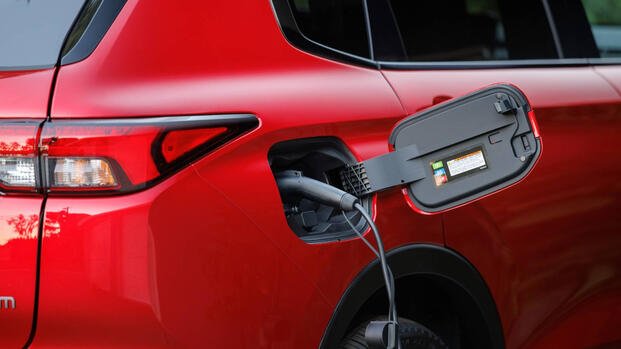
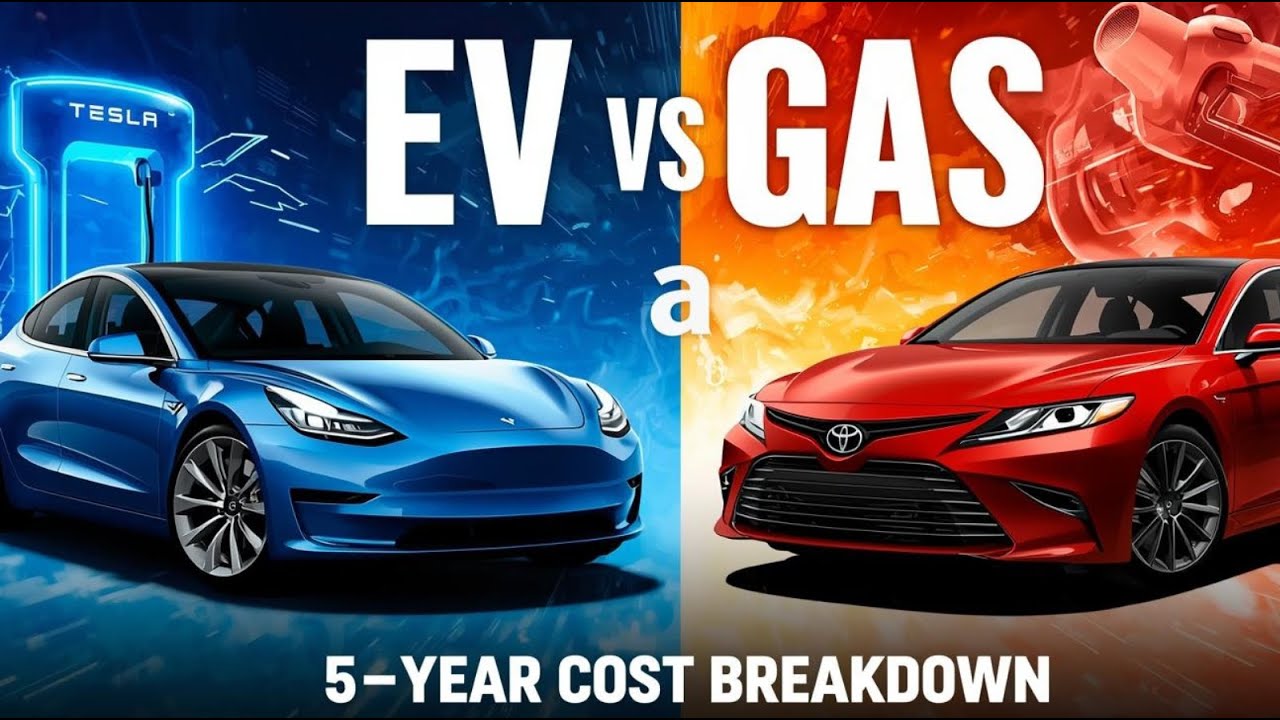
Over the last 5 years, an average EV costs about 12% more to own than a gas car. Let’s break that down. Everyone says EVs save you money, but do they really? Between higher, stickier prices, charging costs, and battery placements, the math might surprise you. Today, we’re breaking down the real 5-year ownership costs of an electric versus gas cars. To keep things fair, we’re going to compare an average EV and an average gas sedan using real US data from AAA Edmonds and the Department of Energy. Then we’ll test real world examples, the Tesla Model 3 and the Toyota Camry against each other. Let’s start where everybody’s wallet feels it first, the purchase price. The first number that scares people off in an EV is the stickier price. The average new electric car in the US costs around $55,000 while the average gas powered sedan sits closer to $48,000 according to Kelly Blue Book. That’s a 7 grand gap before you even put your hands on the steering wheel. Now, sure, EV fans will say, “Yeah, but you get tax credits.” And that’s true. Sometimes if the car is built in North America and meets battery sourcing requirements, you can score up to $7,500 in federal tax credits. But if you’re looking at a luxury EV or one that doesn’t even qualify like a Hyundai or a Polestar models, you get nothing but bragging rights. So, let’s do some quick math with incentives. That 55K EV might drop you around $4750, putting it at neck andneck with the gas car. That’s $48,000. But here’s where people forget something big. Financing cost. Most EV buyers roll the price into a loan. That means you’re paying interest on a higher balance over 5 years. That’s roughly $1,000 to $1,500 extra just in interest depending on your rate. So yeah, tax credits help, but they don’t erase the gap entirely. All right, now let’s talk about the cost that never stops. Fueling and charging. This is the one where the EVs usually start catching up. Gas prices love to play emotional games with us. One week it’s like $310 a gallon and the next week it’s flirting with the $4 range. The national average, according to AAA, sits around the $3.50 50 cent per gallon. Right now, the average driver logs about 13,500 m a year. If your car gets 30 m per gallon, that’s around 450 gallons per year, or roughly 1,575 in fuel cost. Not bad, but it adds up. Now, EVs run on electricity, which is a little trickier to price. The average residential rate in the US is about 15 cents per kilowatt hour. If your EV averages 30 kowatt hour per 100 miles, that’s about $67 a year to fill up at home. Pretty nice savings. You’re cutting fuel cost over by 60%. But, and there’s always a butt, not everyone has a garage or a home charger. If you rely on public fast charging, the cost can jump up to 30 to 40 cents per kilowatt, bringing you closer to the $1,200 a year, nearly double. And that’s assuming you can even find a working charger that’s not already occupied by a guy watching Netflix in his Model Y. So fuel-wise, EVs win if you charge at home and drive enough miles to make it worth it. All right, now that you filled up and plugged it in, let’s see which one costs more to keep running. So let’s look into maintenance time. The stuff no one wants to think about until that warning light pops up on your dashboard. EVs are marketed as no maintenance ever. Fewer moving parts, no oil changes, no transmission fluid swaps, no spark plugs. Basically, less stuff to break. But here’s the catch. Batteries. A healthy battery can last about 8 to 10 years, but out of warranty, replacing one of these can cost about 8,000 to $15,000. Suddenly, that car-free maintenance advantage looks a lot less dreamy. Ice cars, on the other hand, they do need oil changes, brake pads, spark plugs, and the occasional mysterious rattle fix by a mechanic who smiles and just said they found your wallet. But here’s the kicker. These costs are usually smaller, predictable, and spread out over time. Over 5 years, the average gas sedan spends about $3,500 on maintenance, according to AAA. EVs, maybe a,000 to 1,200, assuming no battery replacements, sounds great until that warranty expires. So, maintenance- wise, EVs are cheaper if you never need a new battery. But in the real world, ICE cars are predictable. Repair shops are everywhere, and there’s no scary $10,000 surprise hiding under your floor mats. All right, so the stickier price, fuel, maintenance, check, check, and check. But there’s more to cost than just running the car. Let’s talk about insurance and depreciation next because these are sneaky numbers most people overlook. These are numbers that quietly bleed your wallet without you noticing until you sell the car. Insurance first. EVs are typically more expensive to insure. But why? Repairs are more complex and pricier, and smashed EV fender doesn’t come with a cheap replacement panel. AAA estimates that ensuring your EV costs roughly 10 to 20% more than a comparable gas car. And what about ICE cars? Repairs are simpler, parts are everywhere, and insurance tends to be a little bit lower. It’s a little stuff that adds up over time. Next up, depreciation. EVs used to be really the golden goose for resale, but recent markets trends have changed that price cuts on new Teslas, revans, and other EVs mean your car’s value can drop faster than a gas car in the 2008 recession. Sometimes losing $10,000 or more in just a few years. Gas cars, on the other hand, have a steady used market. Toyota Camry, Honda Accord, these cars can hold their value well. predictable, boring, but reliable. So, when you add insurance and appreciating value into a 5-year-old tally, the EV advantage from lower fuel and maintenance can start shrinking a little bit or even disappear entirely. Okay, so we’ve gone through the purchase, the fuel, the price, the maintenance, insurance, and depreciation. It’s time to pull all the numbers together and see what actually costs more over 5 years. All right, time for the moment of truth. Let’s add up over all the five years using averages from EV versus a gas sedan and then comparing a Tesla Model 3 to a Toyota Camry. So, we got purchase price EV 55,000 ice 48,000. Fuel and charging 607 to 1,575. Maintenance 1,200 3,500. Insurance 6,5,000. Depreciation 10,000 8,000. Total 5-year cost, average EV, $72,87. Average combustion car, $66,75. Now, let’s compare a Tesla Model 3 versus a Toyota Camry. Tesla Model 3 purchase 47,500. Toyota Camry 28,000. Fuel and charging 607. Toyota Camry $1,575. Maintenance 1,200. 3,500. Insurance 6,5005,000. Depreciation 12,8,500. Total for a 5-year cost 67,87. $46,575. So, what does this really tell us? On average, EVs still cost a bit more over 5 years, roughly 12% higher, which matches what we said at the start. Even when you factor in federal incentives, cheaper charging, and lower maintenance, the higher purchase price, insurance, and depreciation can tip the scales back in favor of a gas car. Now, don’t get me wrong, EVs do have their perks. Zero tailpipe emissions, quieter rides, and the futuristic vibe that makes you feel like you’re driving a spaceship. But if you’re strictly taking over 5 years of cost, the numbers favor the combustion engines for most drivers, especially if you drive moderately, don’t have access to home charging, or care about resale value. So, there you have it. The 5-year real cost breakdown of EVs and combustion engines. I really appreciate everyone watching. We’ll see you in the next one on TorSavvy. Peace.
EV vs Gas Car — which one really saves you money? In this video, TorqueSavvy breaks down the true 5-year cost of ownership between an electric vehicle (EV) and a gas-powered car (ICE) using real data from AAA, Edmunds, and the U.S. Department of Energy.
We compare the Tesla Model 3 and Toyota Camry across every category — purchase price, fuel & charging costs, maintenance, insurance, and depreciation — to find out which one actually makes more financial sense in 2025.
💰 5-Year Ownership Categories:
Purchase Price & Incentives
Fuel & Charging Costs
Maintenance & Repairs
Insurance & Depreciation
Total Cost Breakdown
Spoiler: EVs aren’t always cheaper than you think. Between higher sticker prices, insurance premiums, and resale values, the numbers tell a different story.
⚡ Whether you’re team EV or Gas, this video gives you the real math behind ownership costs — not just the hype.
📊 Data Sources: AAA, DOE, Edmunds, Kelley Blue Book
🚗 Compared Models: Tesla Model 3 vs Toyota Camry
👉 Subscribe to TorqueSavvy for more data-driven car comparisons, performance breakdowns, and honest automotive insights.
🔔 Turn on notifications so you don’t miss our next head-to-head: Hybrid vs Plug-In Hybrid — Which Wins in 2025?
#EVvsGas #EVvsICE #TeslaModel3 #ToyotaCamry #CarOwnershipCosts #ElectricVehicles #TorqueSavvy #EVCosts #CarComparison #5YearCost #CarBuyingTips