10 reasons why I think Plug-In Hybrids are fairly s***
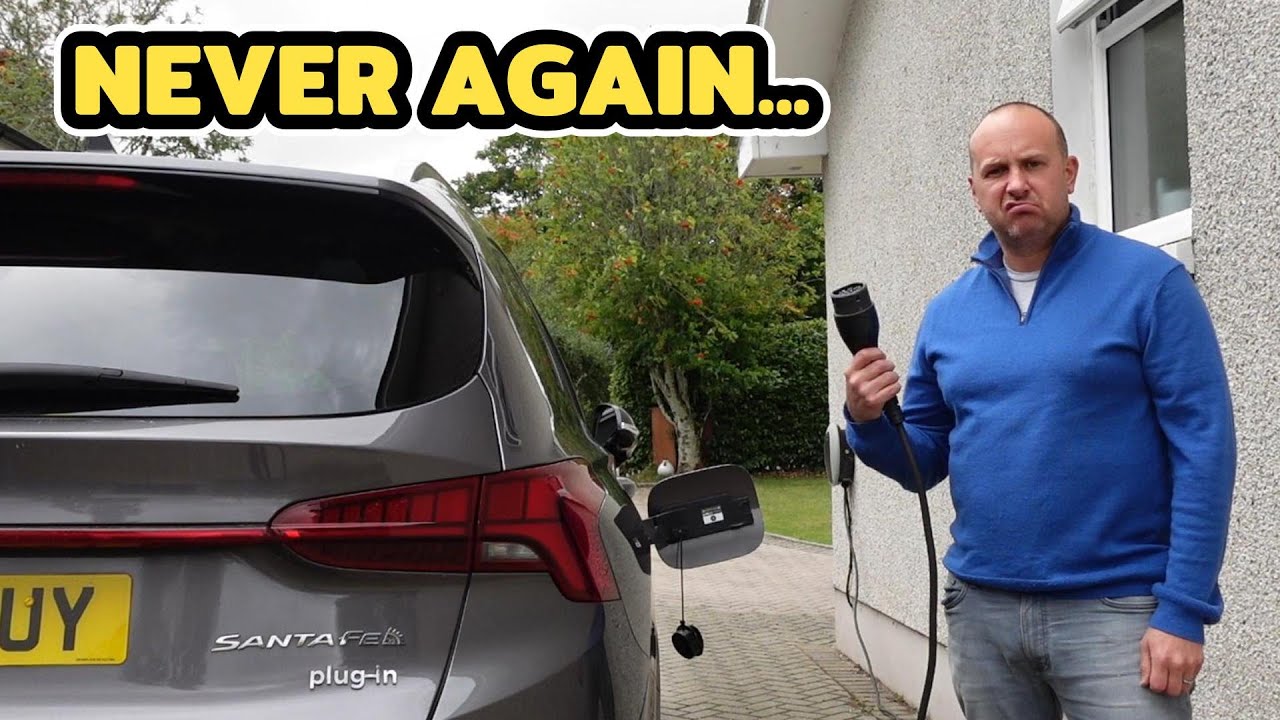
Welcome back to Carabble, guys. And today I want to make a short video talking about plug-in hybrids. Uh, and specifically why I think in most ways they’re a bit shite. And before I get dunked on in the comments by people that love plug-in hybrids and have one, I am not saying that they do not have benefits and will not suit certain people. If you are a company car buyer, you’re going to get better tax breaks from them. So yes, that’s obvious. And also, you will get some cheaper miles out of your car based on the fact that, you know, if you only do short journeys and you can be asked to charge all the time, yeah, you’re not really going to be using your petrol engine all that much. But that’s not really the point here. There is a lot more things about them that I don’t like. And, you know, some of them are my opinion and from my experience because I’m in my second owned plug-in hybrid. So, I have got a bit of experience and this is my wife’s Hyundai Santa Fe. And also, some of the points I’m making are definitely factual. So, it’s a bit of both here, but I basically want to give you 10 reasons why I’m not a fan. And if you do enjoy this video, please do give it a like and subscribe, share, all that stuff. It does really help with the algorithm, but it also tells me that you actually like what I’m doing, therefore gives me the motivation to keep making more videos. So, yeah, let’s get into it. So, the first point is acceleration lag, which has been a particular problem in this Hyundai Santa Fe, and it’s been an issue in other ones as well. In fact, it’s consistently been a problem. And essentially, when you’ve got two powertrains working together, an electric motor and a petrol engine, sometimes a diesel, but usually petrol, and then a gearbox, and you want the car to give it some oomph. Whether you’re at speed when you do this or going off the line, it seems to be consistently an issue that plug-in hybrids get a bit confused and just take a bit longer to kick into gear and get moving than they should. However, when I’m stationary, it’s an even bigger problem. And unbelievably, when I’m coming out of a junction, particularly when you’re trying to nip out in traffic or a roundabout or something, it can be downright dangerous because the time it takes for the gearbox to figure out what you’re doing and to actually get you moving is just too long. We’re talking almost a couple of seconds and then you get this jerk forward, which is not great either. But basically, it takes far too long to do that. And I find plug-in hybrids are just really bad for that. So my next point is on fuel economy for long journeys. Um which is considerably lower than the sort of WLTP sort of numbers that they give you as you know the the the book stats for the car. Basically once your battery runs out uh and obviously the size of the battery will determine when that’ll be and how many miles that’ll be. It could be anywhere from 20 to 50 miles potentially thereabouts. Um, yeah, once that runs out, it’s basically just a normal self-charging hybrid and you are using most of the petrol engine and your petrol and not the battery obviously. And so your fuel economy starts off looking great and then very quickly tumbles and you can be even in this thing which has only got a 1.6 turbo petrol in it. You know, if I’m if I’m out of battery and I’m on a back road and I’m maybe going up and down some hills, I’ve seen this thing down as low as like 25 miles per gallon. Now, that’s the sort of MPGs I’d expect to get out of a six-cylinder turbocharged petrol engine, you know, but it’s really not good. And so, if you do a lot of long journeys, the whole point of them is just completely out of the window. And so, yeah, obviously sometimes you can sort of say, well, what’s the majority of the type of driving I do? And base your car choice on that. But there are times in life where, you know, you just have different things you got to do. You might most of the time drive around town and get the benefit of your your motor and your battery. But when you do go on a long journey, all of a sudden your car is lumping a fairly heavy load in this case uh on a fairly small petrol engine and it’s absolutely chowing through petrol. And so all the gains that you seem to think you’re getting from all the times that you’re driving on cheap electricity, you know, it’s not the whole picture. You know, you got to really think about the fact that when you do your longer journeys, then you kind of give some of that back. And so it’s not quite as rosy a picture as it might look on paper. The cumulative MPG for this car over the time we’ve had it, which is nearly 3 years, is 61 and a bit MPG. And that’s come down quite a bit since when we first got it. And I don’t think that’s suggestive that we’ve done different types of driving. We haven’t. We consistently only do a few long journeys a year and most of our driving is 20 miles each way sort of thing to commute and stuff, you know. So we we don’t do a huge amount of journeys where potentially we would need to use that much petrol, but you know, a good 2 L diesel engine over its life will potentially be not miles away from that, you know. So that’s obviously the MPG on the car, but I’ve still got an electricity bill to think about as well. So when you really add the two together, are you actually saving much money over just having a diesel, for example? Probably not. This one’s a bit common sense based, but bottom line is a plug-in hybrid has more moving parts because it’s got two different powertrains. You’ve got electric more and then your petrol engine and a gearbox which may well be a CVT which is quite a reliable gearbox but it could also be a dual clutch gearbox and they are not particularly reliable out of warranty and there’s just a lot of things that could go wrong and there’s just more moving parts and you know to actually diagnose a problem or actually fix something under the bonnet. It’s potentially going to be more expensive and more timeconuming because there is just more components involved. So if you’ve got a plug-in hybrid warranty, this one thankfully has a 5year warranty. So, I don’t need to worry about it. But if you have one out of warranty, then potentially you’re going to have some more risk factors to consider there. And because you’ve got the weight of the batteries as well, then there’s a little bit more wear on your car suspension, too, and just stuff like that. So, they are definitely potentially more expensive to repair. They just are. And for me, this next one’s a really important one because I’ve got a family and a dog, a big dog, and practicality matters. And I just like to have a decent sized boot to maybe get my golf clubs in or whatever. And so, yeah, I want to have as much space as possible. And unfortunately, when you have a plug-in hybrid, the batteries have to go somewhere. And they usually go either under the floor, in the back seats, andor in the boot, under the floor. And therefore, they compromise the cabins of either or both. And so, basically, yeah, you just have less space. And usually the boots in plug-in hybrids are like 20 to 30% less. And so if practicality matters to you, then that could be a real problem or or at least just take the car from being the class of car based on size that you think it is down to the next class. And there’s lots of examples of that. But I really want my boot to be as big as possible. And actually in the Santa Fe, it’s less of an issue than a lot of others. But yeah, when you have a plug-in hybrid, you lose quite a lot of space. And that might be an issue. Now, with having a YouTube channel, you probably could have guessed that I enjoy driving and it’s, you know, it’s more than just a case of getting from A to B. And so if I can find a long way home that’s got a country road and I’ve got the right car for it, I’m going to take that road because it’s going to be something that’s going to put a smile on my face. I would be surprised if you could tell me anybody that owns a plug-in hybrid who says that it handles all that amazing, particularly compared to maybe a petrol or diesel equivalent of the same car. This one, I think even if it was the diesel, would probably still not handle all that great. But the reality is plug-in hybrids have batteries in them. So they are much heavier than their petrol or diesel counterparts. But if um you’ve got this heavy battery, it’s just going to make it roll more in the bench and just feel heavier and just a bit more cumbersome. And if you had like a BMW 320D or a 320i versus the 330e, which is the plug-in hybrid one, I’m willing to bet that the latter will not be as good to drive. So again, it’s another compromise that you get with a plug-in hybrid. And so I think if you are a driving enthusiast, then the plug-in hybrid options of a car are probably not going to be the one for you. And this next one’s going to be a bit of a rant because it’s just one of these things on principle that bugs me. But you know, on paper, plug-in hybrids are meant to be really low CO2. And so that’s one of the reasons, main reasons why they get tax breaks as company cars. And it’s a load of bollocks really because unless you are only doing short journeys around town where you can drive in electric mode. The minute you go long journeys, it’s back to being a petrol or diesel. So, the emissions shoot right up. So, if you’re somebody who’s buying one of these because you think you’re saving the planet, uh, think again cuz it really is an absolute load of torch. So, this next point is a really big one for me because I am a bit of a sky person and you know, I’m running late quite a lot and I’m just basically a bit of a shambles as a human being. And when it comes to things like remembering to charge the car, uh there are times where I forget. And I would like to think that most people that have a plug-in hybrid or electric car will occasionally have that problem. But when it comes to plug-in hybrid, I forget quite a bit. And the problem I’ve got is that this car particularly is really difficult to schedule the charging to. So when you plug it in, it only starts charging at 11:30 at night once the cheaper tariff comes in. I have to go into the app and manually do this every time. If I’m doing something wrong, I’ve said this before in my one of my videos. Somebody tell me, but it’s not like my Tesla where I can just easily plug it in and I know it will just wait till half 11 to do it. In the Santa Fe, it’s much more complicated than that seems. And so there’s a lot of times I go to plug the car in and then I walk in the house. By the time I’ve got into the house, I’ve actually forgotten to go into the app. And so I come out the next day and I go, “Oh no, I’ve just charged the car.” and I did it at the higher rate tariff because I forgot to then do the bit in the app. So, how good of an app you have to go with your plug-in hybrid can really matter in terms of your actual cost savings depending on what kind of person also you are. But just having to think about constantly charging your car. For some people, that will be a pain in the ass and something they’ll forget to do and ultimately it just erodess the value of having the plug-in hybrid because you are not making the cost savings that you should. And in my case, there’s been many times I shudder to think how much cost we’ve actually had more than we should have because you have either forgot to charge it and we’ve ended up just running with a dead battery or I’ve charged it on the higher tariff because I forgot to go into the app and schedule it for half 11 at night. So, that has been a real problem for me. Maybe less so for other people, but it really bugs the hell out of me. But on the performance side of things, I just don’t know why you would ever want a plug-in hybrid if that was your main aim. And you can get some really fast plug-in hybrids, but it’s a no from me on that front. But most mainstream brands offer plug-in hybrids, you usually have the battery and motor paired with a fairly small petrol engine. And so bottom line is once your battery is dead, you’re left with this little petrol engine pulling the car. In this case, a 1.6 six turbo petrol pulling this big car which sometimes is full of brim, you know, and when you go to overtake somebody, all of a sudden you’re really kind of wanting for more performance. And so that’s just another drawback, you know, you don’t on paper a plug-in hybrid be like, “Oh, it’s got over 200 horsepower. That looks really good.” But that’s the combined figure, you know, and so you don’t have that on tap all the time. And yeah, in this case, a lot of times that has been a problem. And talking more about uh repairs, uh I want to make a special mention about the batteries because a bit like an electric car, you know, everybody absolutely craps it that if they have an electric car out warranty, if the battery goes, it’s going to be an obscenely expensive thing to replace or repair. And they would be right to think that. And the reality is it’s not going to be quite as expensive in a plug-in hybrid’s battery, but if the battery goes in a plug-in hybrid, it’s still going to be mega bucks. So, it’s just another major risk factor to having one of these out with warranty. And so, yeah, you get a lot of people going for them through their company car schemes or whatever, but as used buys, uh, I don’t hear an awful lot of people buying plug-in hybrids. And to be honest, they probably still will sell, but I wouldn’t buy one. And finally, the list prices of plug-in hybrids is higher usually than the petrol or diesel equivalents. And that’s not a surprise on new cars because there’s more components in them. So, they’re more complicated to make. So, I get that. But, that’s where you kind of have to go if the reason why you’re actually buying a plug-in hybrid or leasing one or whatever is because of cost and you think that you’re going to save a lot of money by having one on your fuel bills, then that’s a big factor you’ve got to take into account there first and foremost. And then on top of that, what I’ve said before about your charging regime and discipline is so important because if you don’t really take that seriously and really make sure that you get the most out of it by plugging in all the time and charging in the cheapest tariffs, you can erode the value proposition very quickly. And that’s where you can easily then sort of look back retrospectively and go, yeah, it didn’t handle as well. So, I didn’t have as much fun driving it. I couldn’t get as much stuff in it. And that time we went on that really long journey, our petrol cost was miles higher than it should have been. And you start to tally up all these things and you go, m actually the plug-in hybrid, was it really all that worth it? That’s kind of how I feel about R1. So yeah, I’m not a fan. Won’t be buying another one. And I think for the most part, they are indeed a bit shite. So if you enjoy this video guys, please do give it a like, subscribe, share, all that good stuff. Leave me a comment below with your thoughts on it. And as always, humbled to be corrected if I’ve got anything wrong. And love to know your thoughts and your experiences of plug-in hybrids. And I’m sure there’ll be people that have got really, really good ones. Anyway, thanks for watching and I’ll see you in the next one.
As per the title – time to have a wee moan about plug-in hybrids or PHEVs!
And yes, there are some good points about them, I just don’t want to talk about them.
Let’s have a good debate about this one and if you enjoy this content, please do LIKE, SHARE and SUBSCRIBE. Thanks for watching!
Thanks also to www.bensound.com for the royalty free intro song and www.artlist.io for the background tracks.
Time chapters:
00:00 – Introduction
01:12 – 1. Acceleration lag
02:11 – 2. Long journey fuel economy
04:56 – 3. Maintenance complications
05:51 – 4. Practicality compromises
06:43 – 5. Driving dynamics
07:49 – 6. Real emissions
08:22 – 7. Charging regime
10:19 – 8. Performance compromises
11:11 – 9. Out of warranty batteries
11:52 – List prices
13:10 – Outro