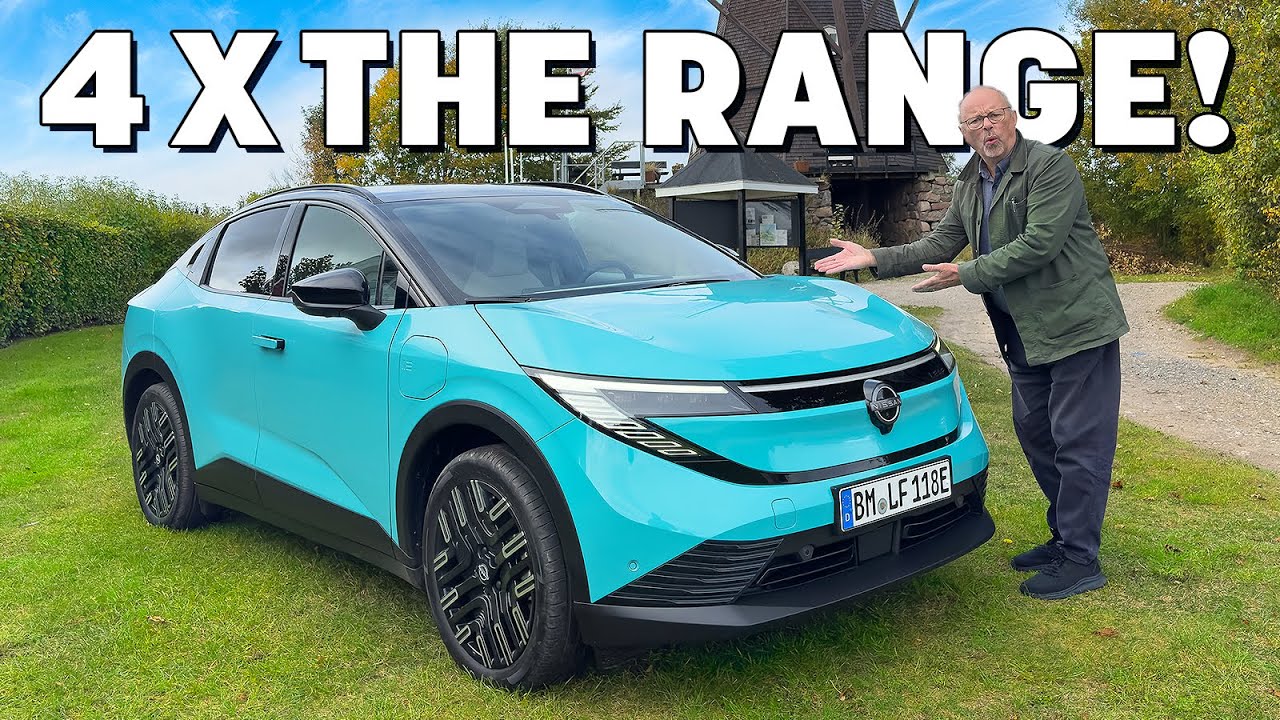
The Nissan Leaf Returns with Porsche Taycan Features!
[Music] 14 years ago, I came here to Denmark to test drive a really exciting new car. It was called the Nissan Leaf. It was the first production car that was built as an electric car, not converted from something else. I’ve come back now 14 years later to see this, the brand new Nissan Leaf. This is everything electric cars. [Music] Our three free YouTube channels on EVs and Clean Tech are funded by our fun-packed test drivetic events in Farra, London, the Southwest, the North, Melbourne, and Sydney. Next up, Everythingele Electric Melbourne. And you for UK viewers, you can buy a battery electric vehicle or more at everythingleelectric.store. Back to the episode. So, I think the original Nissan Leaf had a certain look, didn’t it? And it still does. They’re still on the road. Here’s an interesting fact. 75% of first generation Nissan Leafs, those were sold up to about 2012, are still on the road, still in use. There’s a bit of a clue at how wellmade this car is. But this is the new Nissan Leaf. Looks really, really different. Here’s the I think the key difference for me is if you had the original Nissan Leaf that I have, the 2011 one, and you drove really, really carefully in the summer, not on a windy day and not up any hills, you could get 85 miles out of it. you could do that. It was really difficult, but it wasn’t impossible. This car does 300 miles more than that. Now, to get to achieve that 385 miles, I think you’d have to drive this very carefully, not on motorways in somewhere like the Netherlands or Denmark where it’s quite flat. But the fact that they’ve managed to add 300 miles on a car that isn’t 300 times bigger or heavier is a really amazing illustration of how much this technology has developed. So this car represents that full kind of leap of technology from back in 2010 when the Leaf was really made and developed to now to 2025 where this car is just remarkably better and I love the original one. So this one being better is really special. I I when I first saw it I went, “Oh, it looks like all the other sort of bubbly, you know, cars of this era. It’s sort of basically the similar shape.” But it’s got a few key features. I I really do like the lights on the front I think work really well. Uh the the design of it. The um it’s got a opening and closing vents so if it overheats it cools it down. If it’s very cold it keeps it warm. All those things. It’s got some really clever heat pump technology for to minimize the uh energy use. But also in the original Leaf there was no heating or cooling of the battery which really compromised the range really compromised the battery. This has got everything susted. So there’s the battery heating. The batter is heated if it’s cold, it’s it’s cooled if it’s hot. They use the heat from the battery and the motors to heat the cabin or they use the air conditioning and the cooling to cool the motor and the uh and the batteries if it’s really hot. So some really clever uh you know one system that controls the heat and the temperature of the whole car batteries, motor and cabin which I think is genius. Very cool wheels and also interestingly because we’re doing a lot of work with them at the moment. Hank Coo tires. They have done they have kind of set the the bar for really good tires for electric vehicles. Longerlasting, quieter, really good grip, you know, just different materials they’re using in them. So, it’s fitted with Hookuks all round. So, the back, this looks really different to the original Thief. This incredibly blacked out window. It looks like you can’t see through it, but you can. But I think that’s really clever. the uh the the little little uh wing here is, you know, I’m sure it has enormous benefits for the aerodynamics. It has got a very very low drag coefficient. CD.25, I think it is. It’s very low. It’s very very slippery car. Uh one thing that’s also very different to the Nissan Leaf, it didn’t used to open itself. And also this is very very spacious, the the the boot/ trunk 3 437 437 L. Obviously, if you put the seats down and they go down flat, then it’s over a thousand meters. I don’t even know what it is. It’s big. It’s big enough to put stuff in. That’s for sure. And then I like that actually. That’s a good thing. I’ve used that on other cars. It’s got a close the close the lid or lock it. So, you can you can do either. But I think that’s quite a useful little feature. The lights are very nice. These have a really cool sort of 3D effect. I think it is actually deep lights, but it looks like there’s lights going off into the distance. It’s very It’s a bit Tron. Here’s one thing that the old Leaf had that the new one doesn’t. No, the old one had a rear wiper on the rear window. This one doesn’t. I assume that’s because this is super slippery glass that’s made of a new kind of material that doesn’t that that repels water and you don’t need it or they just didn’t want to put one on. I don’t know which way around that is. The one thing I’ve had to replace on my old Leaf two times is the rear wiper blade. They’re really expensive. Intriguing little detail here. The only other car that I can think of, and I’m sure people will comment, tell me all the other ones that have got this, but is that’s the the rear door handle. I’ve only ever seen that on the Renault Zoey. Well, these this car is kind of related. It’s a family relationship, probably cousins uh with the the original Renault Zoey because the Zoey came out slightly after the original Sun Leaf, and that had a little door handle up there. But I quite like the look of it because it sort of it just keeps the the bodywork really smooth. Here’s another little feature. So, this little symbol here on the charge door is an Easter egg that’s hidden all over the car, and it’s a thing that Nissan are really keen on. It’s basically two and three, which in Japanese sound a bit like Leaf. I can’t remember how it works. It was explained to me, but that having a charge port there, I think, is really good. And I like the fact that you’ve got doors as opposed to a little bit of rubber on a thing that goes that you cover one of them up. They both got little doors. Also, the position of this, just saying if you did drive into a Tesla supercharger, this is in a perfect position. Nose in, plug it in, job done. Very nice. [Music] So, [Music] get beginning to get you used to it. There’s a couple of little screen things I’d love to be able to find. I’m going to ask the the the people at Nissan exactly about this. Basically, like a little bit of just simple information about how much energy I’m using, how many miles I’m doing to the kilowatt hour, you know, 100 kilometers to the what, you know, all that stuff. Can’t quite find that on here yet. Uh, and I know it’s going to be there. That’s what’s frustrating, but I haven’t quite found it yet. Um, but I would say the ride is really, really comfortable and easy. The the speed control thing. I’m going over a little speed hump now. Oh, so it just deals with that so well. I mean, it’s just very, very confident. I think that is which I, you know, is not a big step up from the original Nissan Leaf because the original Nissan Leaf was really extraordinarily competent vehicle. It just didn’t go very far. That was its real drawback because that was dictated by the battery technology at the time. It had no heating and no cooling of its batteries. Hello, we all know that that’s very important. This does have that. You know, all those little drawbacks that it had have been completely, you know, they’ve completely disappeared. Yes, it’s firm, isn’t it? It feels very solid. That’s the thing. It feels very one single tight unit with some very nice flexible suspension. So, it doesn’t it it because occasionally still now you’ll come across a car that’s a bit I the only way I can describe it is, you know, it’s got a bit of a wobble and it’s a bit bibbly bobbly. This is like a chunk with some nice. Does that describe how the vehicle feels? because that’s what that is how it feels to me. Okay, so now this is in sport. Yeah, I mean it goes faster. Let’s leave it at that. It’s not breathtaking. It’s fine. And uh yeah, it has a lot more low-end warmth, but yeah, I mean, yeah, it’s not like you’re not if you’re buying this car to have a sports car experience, you’re going to be disappointed. That’s not what this car is about. So on eco mode, if I do the same thing, yeah, it’s very subtle difference. Um I think I would have it in eco cuz it’s one of the it’s also got a um throttle that you as when you press it all the way down, it feels that there’s a stop and then you’ve got beyond that you’ve got a little bit more. So it’s really good for overtaking. Um it gives you full power that last little little bit. And I don’t know there it’s bound to have a really cool name. So here’s a little bit of history for you. I’ll keep it as brief as I can. When the original Nissan Leaf came out, the cost to make a kilowatt hour of battery was about $1,500. And the today the cost of making this is just making the cells is not making the battery pack, but the cells cost about $1,500 back in 2011. They today the average price is between $60 and $80. So that tells you something. Massive reduction in cost. Now that they also have to be put in a pack. The packs are very sophisticated. They’ve got heating and cooling. They’ve got a massive amount of safety systems. Really important. But this uh Nissan Leaf has a 75 kWh battery. So that is I can’t work out how many times bigger. So it’s three times bigger. Three times bigger battery than the original Leaf. More than three times bigger. Uh but far more efficient. So the the way that the electricity is used from the battery into the motor is more efficient. All the hardware and software that controls the car much much more efficient. the heating when you turned the heater on in the original Nissan Leaf, you lost about 25 miles of range. Well, you didn’t have many miles of range to start with. So, you drove with thick gloves and thick coats and a scarf and you didn’t have the heating on in the winter because it just it completely shagged the battery. This one, when you put the heating on or turn it off, you cannot see any difference in the range. It doesn’t make it maybe does make a kilometer of difference, but it really doesn’t register. So that technology has moved on so much and it’s a really important point because so many people go still to this day say you throw the batteries away after 3 years and if you turn the heating on you can only drive two miles. Those both those were slightly fictitious even in the originally you never have to throw batteries away. That is the most absurd lie that Jeremy Clarkson planted and it’s still used to this very day 14 years later. It’s utter nonsense. But the heating systems in those early electric cars really did have a big impact on the battery. That is no longer the case. And in the case of this car, this battery that we’re sitting on top of is going to last much longer than the car. That is for certain. [Music] And what I’m doing here is I’m comparing it with the original Leaf, not with other cars that are being made at the moment that are of similar size, similar specs. Forget them. I’m not interested in them. I’m comparing it with the original Leaf. Turn it on. There’s an on button. It doesn’t just come on when you get in like lots of cars do now. Nice opening sequence. Nissan intelligent mobility. Very nice. So, I currently have 373 km of range, uh, 78% of the battery, and the satnav, which is Google Maps with all the additional software on top from Nissan, which tells you where charging stations are, whether they’re available, how fast they will operate, what the speeds they operate at, are, you know, all those things. That’s very clever. But, I mean, you know, I say it’s very clever. It’s really useful. I’ve got to say Tesla were doing that probably 12, 13, maybe for certainly 13 years ago, but that’s a different story because I’m not comparing it with a Tesla of any sort. Um, the from my fairly limited experience of driving it, it has one huge advantage over a lot of cars when you first get in them. It has two buttons that you press that one to to stop all the the pinging and ponging and warnings and everything. You press that one and okay, and it all stops. it doesn’t ping at you. So, legally the car has to have that for to to be homulgated to European safety standards. But the fact that it’s that easy to turn off is a huge blessing. In my MG4 that I drive regularly, I get in, I start it, I press the screen, there’s one, two, three, four presses to turn off the truly appalling lane keeping assistant. And that and you have to do that every time you get in the car. And it is a real curse on that car that there isn’t one button that you can turn off cuz basically it doesn’t work. This car one, you can turn that stuff off so that it isn’t annoying if unless you want it and you find it helpful. Obviously, you leave it on. But uh for example, the lane keeping assistant I experienced on the motorway when we come up here. Really good. It just goes on the steering wheel. It isn’t beeping. It isn’t boopping. It isn’t flashing things. It just reminds you to keep in the lane if you slightly veer out of it. So that side of it is very good. It’s got haptic buttons for heating and cooling, which I mean I, you know, they’re not they don’t annoy me too much. And this is an interesting that was pointed out for me, but there is this slight ridge here in front of it. So when you go to do something on the screen, you’re not accidentally touching that. You’ve got to really deliberately turn it off. That’s quite easy to use and it’s it does feel like you wouldn’t accidentally touch it. Screen is very very um quick, responsive, very. So there you can see where we are in Denmark. We’re actually up that way, aren’t we? No, we’re not. We’re up that way. We’re actually up that way. And we’re on this little bit of Denmark. And what we can see over the other side of the sea here is Sweden. Uh but you know, so those sort of things are, you know, that all works really well. And also it’s very, very familiar. I mean, 99% of people who drive the car are going to be familiar with Google Maps. It does have Apple CarPlay and Android Auto. I honestly don’t think I would use it if I was driving in this. This is really really good. And that and I use it mainly for uh for Google Maps. You know, that’s what I use on in the car. Uh really good dash in front of you here. It’s now warning me that I’m not fully paying attention. So, it does do that, but you just turn that off with one of the Okay, it’s got a really good heads up display. All these things were not available in the original Nissan Leaf. So, the heads-up display is really clear, very simple. It just gives you speed and directions. Basically, that’s that’s all it does. Um, I still, you know, I’ve seen other cars with more sophisticated uh interpretations of energy use of remaining battery of how you, you know, those sort of things. This is still I’m not thrilled overly thrilled with that. The drive, the drive stuff, no fancy stuff at all. It’s park, reverse, neutral, drive. Four buttons. It’s simple as that. You can change, it’s got really good e one pedal driving called, they call it e- pedal. was that the first car I ever drove with proper full-on one pedal driving was a Nissan Leaf and this has got it. You you really don’t if you’ve got that on, you don’t touch the brakes unless it’s an emergency. I think everything else is on the steering wheel and it’s pretty obvious. You know, you would take 10 minutes to learn how to use all of it really well. It’s all pretty simple. One of the things I noticed straight away is there’s a little speaker in the headrest that’s quite quiet for the rest of the car, but it tells you which is the the voice uh on the navigation which I I generally turn off, but it’s so discreet and the it’s an English woman’s voice and she does not make any attempt to pronounce Danish street names in a sort of Danish way. It’s just really clunky English description of very complicated names. Um uh though I think the materials in here I like this little touch the the the bit of cloth around here which sort of matches the color of the seats. Um this is all um you know pleather it’s all it’s not there’s not real leather but I mean I tell you the two things which are true about first gen Leaf and third gen Leaf this one. The seats are incredibly comfortable. Really really comfortable on a long drive. They’re just they are exemplary. And the the seats in my old car you know they’re battered. they’ve done, you know, getting on for 81,000 miles. It’s coming up to that. They’re amazing. The interior has been really badly looked after by by myself and my daughter now who drives the car a lot. Uh, you know, they’ve really held up incredibly well. And these seats, I’m just supremely comfortable. So, now the sunroof, I think, is really cool. The, uh, original Gen One Nissan Leaf didn’t have a sunroof. This has got a sunroof. Big glass roof over the whole all the whole cabin. And you sort of think, well, if it’s really hot and sunny, that’s going to be really intense coming through that. Well, no, because it’s because there’s no shade. You can’t pull a shade over. There is no shade. That’s too heavy. That uses too much energy in the motor. Nissan don’t like that. No, they have changed to a polymer disperse liquid crystal, PDLC. And that is inside the glass. And it’s an incredibly cool technology that I’ve only ever seen elsewhere on the Porsche Tyan, a really high-end luxury sports car. Now, I know that someone’s going to say to me, “The so and such and such Chinese car has got that and the car only costs four quid, but at the moment, that’s the first time I’ve seen it other than a tan.” And you can gradually increase or decrease the amount of glass that’s that’s opaque. Uh, I mean, it just it looks really good. And it says leaf on it as well, which is kind of cool. Let’s have a look in the back. Oh, old man gets in back of car without grunting. Ting, one point. Um, very comfy. Yeah, as I was saying about these this coloring, apparently this is not popular. I think it looks really nice. Not popular in Europe. So, you will be able to get this in a completely dark material without the the light bits. This is very popular in the States, apparently. Um, very spacious, very comfy. I mean, that is my driving position. I am now just under six foot. I used to be six foot in my youth, shrunk a bit, but look, loads of loads of room here. Uh USB uh ports there. Little Has it got a little little thing? I think it has. Oh, nice cup holders. Oh, that is nice. That’s luxury. Nice big pocket there. Plenty of headroom and also amazing sunroof. So, we’ve turned the special magical crystals off and so it’s clear at the moment. It’s very nice to see the beautiful Danish sky. Lovely. No, this is good. I really like this car. I know I often get criticized for saying I really like things, but this one is special because the Leaf holds a special place in my heart and I think they’ve done an amazing job bringing this to the to the 2025s and 26s. I think people will be really impressed with it. [Music] So, there’s two versions of the new Nissan Leaf. One has a 75 kWh battery. That’s the one we’re driving. 380 mile range WLTP. That’s what they claim. Uh, you know, I don’t think that’s very realistic unless you’re driving super super carefully. But I’ve read one report of someone who’s done over 350 miles on one charge and they did manage it. So, it’s clearly in that range. It’s well over 300 mi, which is incredibly impressive for a car of this price range. There is a 52 kWh uh version, which is cheaper. And that would with in the UK with the government grant that it will be eligible for eventually. We we haven’t heard definitively. That will knock it to under £30,000. And that will have around, I think, a 220 mile range. So, very very adequate even for a smaller battery. Um, I think partly that is to do with all the other technological advances that we’ve seen in the last 11 years in terms of efficiency, in terms of software sophistication, in terms of battery management, battery heating and cooling, the way the car is heated, all those things have had a really big impact on increasing the range. Plus, the tires, as I mentioned, the Hank tires, this is on very, very low uh rolling resistance, really hardwearing tires, plus the aerodynamics of the vehicle. All those things assist in increasing the range a great deal. Both vehicles charge at 150 kW max, which is a really important thing. The original Leaf charged at 50, so you it charges three times faster. So, the car is built on the CMF EV platform, which is a dedicated electric platform. It is the electric skateboard design. It’s the same thing. It has been used in the Nissan Ara. It’s a very similar design. And it’s got lots of tweaks, different suspension, different um you know there’s quite a few improvements they’ve made on that. But basically it’s a very well tried and tested electric platform. It’s it I mean it is new but it’s not not it’s it’s not like not been used. It’s been used a great deal. They’ve done enormous amount. They’ve done like millions of miles of testing on it. [Music] Well, we have had a really picturesque drive all over this particular peninsula in Denmark and it’s been gorgeous and we’ve had lovely weather. It’s just about to rain, so we’re really thrilled. I just really am blown away by this car. I’ve just checked the fuel economy and I’ve been getting 3.6 miles to the kilowatt hour, which is 17 kilw per 100 km. I just did the calculation. So that’s not brilliant, but it’s it’s an indication of the kind of real world range. So it’s it’s 300 miish is is this car is going to do. So that’s really good. There’s also a really good setting I really enjoy. You just pull the right-handed um regen lever and hold it and it does automatic regen and you go, “Well, what’s it doing?” And then you’re driving along a straight road, it’s not doing anything. If a car slows down in front of you, it uses regen to slow you down. It don’t you don’t touch the brake. It uses it effectively switches one pedal driving on and off. The rest of the time you’ll just coast if you take your foot off the throttle. You’re not using any getting any regen. But also it it uses the map to know when to slow down. So we were coming up to a T junction. The car slowed down. I did nothing. I took my foot off the throttle, didn’t touch the brake, the stopped. That is genius. I’ve not seen that in any other car anywhere else. I’m sure someone will tell me that it exists, but I don’t care cuz I like this one. Anyway, that’s all. Uh, please do subscribe to the Everything Electric Cars channel. Please come along to our live events if you’re anywhere near where any of them are going on. The next one’s going to be in Melbourne in Australia and it’s going to be amazing. There there’s loads of cars there. Sadly, not this one yet, but they in the future we’ll definitely get it there. Um, uh, tell your mates about it and as always, if you have been, thank you for watching. Now, visit electric vehicles.expert expert where you can follow everything electric and keep current with clean technica, the driven electric and many
14 years ago, the Nissan Leaf pioneered the EV revolution as the first purpose-built electric production car. Now, the all-new third generation is here, and it’s a monumental leap from its EV OG predecessor. In this episode, Robert returns to Denmark—the site of the original test drive—to see if the new Leaf lives up to the hype.
The 2025/2026 Leaf ditches the old hatchback look for a crossover shape built on the dedicated CMF-EV platform. With a new 75 kWh battery, it boasts up to a 386-mile WLTP range (over 300 miles more than the original!) and much-needed liquid-cooled battery thermal management. Robert was particularly taken by the incredibly cool dimming panoramic roof and the map-aware regenerative braking system. Let us know what you think!
00:00 Introduction: 14 Years Later in Denmark
00:46 About Everything Electric (Sponsor Break)
01:07 The New Look!
01:28 The Range Revolution: 85 Miles to 386!
02:48 Thermal Management
03:35 Efficiency Features
03:51 Exterior Details
04:18 Practicality
04:59 Farewell to the Rear Wiper?
05:53 The Easter Egg
06:12 Charging
07:14 Driving Impressions
08:29 Sport vs. Eco Mode
09:24 Battery Economics
10:20 Heater Impact on Range
11:44 Comparison to the Original Leaf
12:01 Infotainment & Interior
12:49 Quick-Off Buttons
13:56 Interior Design & Haptics
15:09 Heads-Up Display and Energy Use Interface
15:35 Drivetrain Controls & e-Pedal
16:05 Seating Comfort
17:18 Dimming Panoramic Roof: Porsche Taycan Tech!
18:22 Rear Passenger Space
19:50 Range & Pricing
22:29 Genius Feature!
23:24 Final Thoughts
Why not come and join us at our next Everything Electric expo: https://everythingelectric.show
Check out our sister channel Everything Electric TECH: https://www.youtube.com/@EverythingElectricShow
Support our StopBurningStuff campaign: https://www.patreon.com/STOPBurningStuff
Become an Everything Electric Patreon: https://www.patreon.com/fullychargedshow
Become a YouTube member: use JOIN button above
Buy the Fully Charged Guide to Electric Vehicles & Clean Energy : https://buff.ly/2GybGt0
Subscribe for episode alerts and the Everything Electric newsletter: https://fullycharged.show/zap-sign-up/
Visit: https://FullyCharged.Show
Find us on X: https://x.com/Everyth1ngElec
Follow us on Instagram: https://instagram.com/officialeverythingelectric
To partner, exhibit or sponsor at our award-winning expos email: commercial@fullycharged.show
Everything Electric FARNBOROUGH – Farnborough International – 11th & 12th October 2025
Everything Electric MELBOURNE – Melbourne Showgrounds 14th, 15th & 16th November 2025
Everything Electric SYDNEY – Sydney Olympic Park 6th, 7th & 8th March 2026
#fullychargedshow #everythingelectricshow #homeenergy #cleanenergy #battery #electriccars #electric-vehicles-uk