Ferrari Elettrica: Tech Details On 1000hp+ EV! | 4K
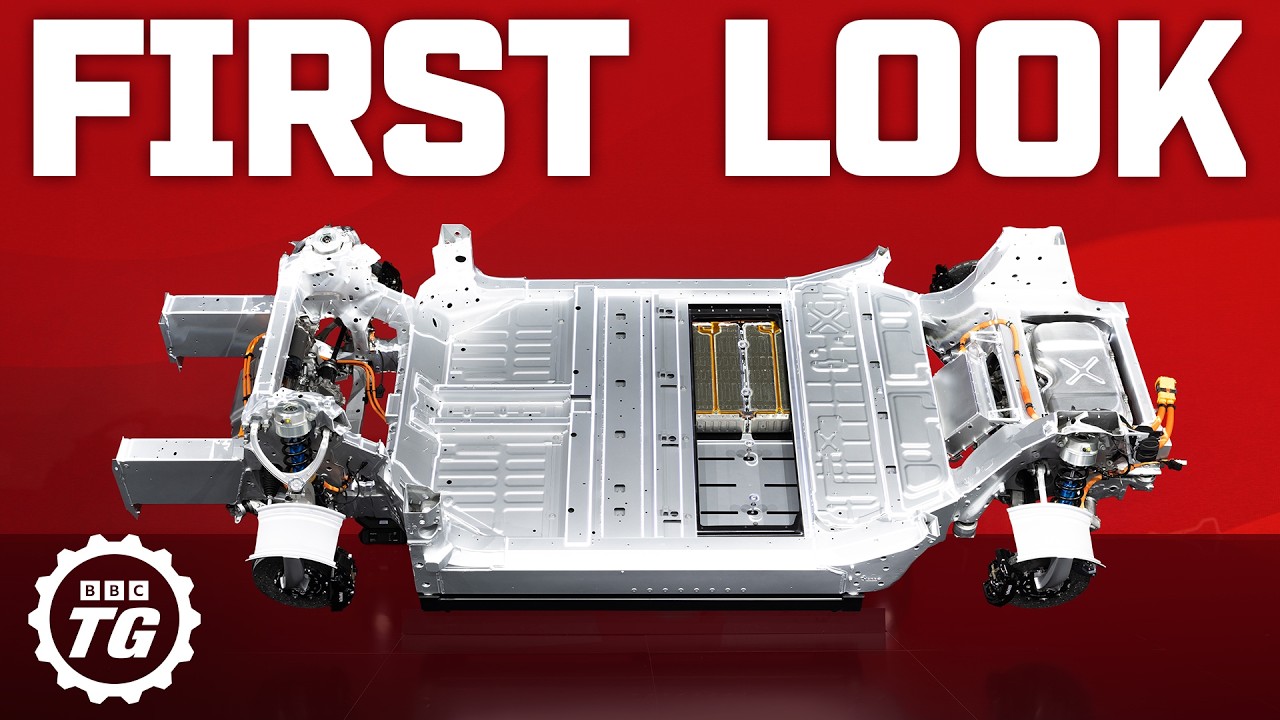
Listen carefully and you can probably hear Enzo Ferrari spinning in his grave like a crankshaft because the first ever pure electric Ferrari is almost ready for the world. But is the world ready for the first pure electric Ferrari? Well, today we’re inside the Ferrari factory and we’re going to be revealing the first official details on the Ferrari Electric. So, today we’re not going to be seeing the final design of the Ferrari Electric. That comes in the first half of next year when we’re expecting to see something that is GT like four doors, four seats, a cousin to the Ferrari Purangu perhaps. But today, what we’re focusing on is the technology. What lies underneath the chassis, the components that make the first full electric Ferrari tick. So, if you’re a fan of watching someone walk around and point at very complicated components, you’re in for a treat. So, let’s start with the motors. You have four motors on this car, two on each axle. They are permanent magnet synchronous motors with how array rotors. And if you know what I’m talking about, then you’re probably the guy that actually designed this car. All you need to know is they’re derived from Formula 1 and very, very closely linked to the electric motors that you find in the F80. In total, on the front axle, we have 282 brake horsepower, and then on the rear axle, we have 831 brake horsepower. Unfortunately, it’s not quite as simple as just adding the axles up. But Ferrari claims over 1,000 horsepower in total, as well as an absurd 8,000 new m of torque from the rear axle alone and another 3 12,000 new m from the front. Yikes. Few more facts for you. The motors at the front, they can spin up to 30,000 RPM. The ones at the back, 25 a half,000 RPM. And you have a clever thing in here, a disconnector, so you can switch between all-wheel drive and rear wheel drive. And that’s not really about doing big silly skids. That’s more to do with efficiency. So, when you’re driving at highway speeds, you can decouple the front axle and get the maximum range out of your batteries. Ferrari’s claimed performance figures are naugh to 62 mph in 2.5 seconds. So 0.4 seconds down on the F80 with a top speed of 193 m an hour at which point you’ll be drinking the 122 kWh battery at a hell of a rate. Okay, so looking at the batteries now, we’ll start with the headlines. This thing has a range of over 330 mi and can charge at up to speeds of 350 kW. It is an 800 volt architecture. And these right here have the highest energy density of any EV on sale. They are 195 W hours per kilogram, which probably doesn’t mean anything to you at all. But if you compare that to something like the Rimatz NEA that has a density of about 165 to 170 W hours per kilogram. The other interesting thing about this battery is you have connectors at either end. So you don’t have to have huge wires trailing up and down the car. You can just connect this end of the battery to the rear axle, the front end of the battery to the front axle. Now 85% of the batteries are here in the floor plan. They’re enscconced by the chassis which saves weight because the chassis adds the protection and adds the strength. Um 85% of them are as low as possible in the floor pan. But you’ll notice a little jump up here. Now these are the batteries that sit under the rear seats. By the way, confirmation from Ferrari there that this car will have rear seats. But it’s an interesting decision this one because you could just extend the wheelbase as so many EV manufacturers do and just have a longer battery. Longer wheelbase, longer skateboard battery, more range and everyone is happy. But this is a Ferrari. Handling has to come at the absolute top of the priority list. So they decided to bunch up the batteries here, keep the wheelbase short, and therefore keep the car as agile as possible. And the other interesting thing with this, it’s been designed from the outset to make the battery and the other components replaceable because a Ferrari is a car that should stick around forever. It should be handed down through generations and not something that’s thrown on the scrap heap when the battery fails. So in this, you know, who knows in many years to come, you could be dropping out your battery, clicking in a solid state one and getting twice as much range or a battery with the same range and half the weight. [Music] Focusing on the whole chassis right now, the uh the chassis and the body is made from 75% recycled aluminium, which is quite impressive and saves around 6.7 tons of CO2 per car in the manufacturing process. The other thing to note is because you’ve got all these batteries down here, the center of gravity is actually 80 mm lower on this car than you would get on a traditional combustion engineed Ferrari. And then round the back, this is the big story as well that I shall attempt to explain. This is the first separate rear subframe that Ferrari has ever made. Why is that significant? Well, normally they just hard mount it to the rest of the chassis, but in an EV, because it’s so much quieter, noise and vibration, all sorts of stuff filters through the back of the car, and you notice it because you don’t have a screaming V12 covering up all those vibrations and noises. So, here it’s mounted with a special bushing, elastic bushing down here that should filter all that out, make it a comfortable GT like car to drive, but also maintain the stiffness so you can have fun as you should in a Ferrari. Have they succeeded? Well, we’ll find out when we get to drive it. So suspension, we have a 48V active suspension system, much like the one that you found on the Purangu and the F80. Of course, it’s different here. It’s got a different tune, mainly because you’ve got such a low center of gravity on this car that it rolls less, so it needs a different set of parameters. But what’s really exciting is now you have individual vertical control of each wheel. You’ve also got four-wheel steering, so you can adjust the angle individually on each wheel. And there’s torque vectoring on each axle, so you can change the longitudinal load on each wheel individually. And this basically is an engineer’s dream because it means you can infinitely tune the driving characteristics of a car depending on the driving situation. Now, the car overall is going to weigh about 2,300 kg. Nothing new there. Electric cars weigh a lot. But I guarantee you it is this system or this combination of systems working together that is going to make it feel a whole lot lighter to drive. Ferrari has been dabbling in electricity for a while, mostly as a tool for turning up the wick on performance rather than any sort of eco claims. It started in 2009 with the hybrid era in F1. Then the V12 hybrid LaFerrari back in 2013 continued with the somewhat lackluster V8 hybrid SF90 in 2019 and was damn near perfected with the V6 hybrid 296 in 2021. We’ve since seen the SF90’s successor, the 849 Tesster Rossa 2. But the transition to pure electric is the giant leap and presumably a worrying one because demand for high performance EVs right now is somewhere between zero and none. Okay, the sound of an electric Ferrari. This must be the number one question that I’ve been asked whenever we’ve talked about electric Ferrari. What noise is it going to make? What’s it going to sound like? Certainly not like a V12, a V8, or a V6. But we now know, no, not a 458 Special at full volume. The noise that Ferrari is attempting to create here is authentic. They’re not just going to pipe fake engine noises through the speakers into the cabin. They want to extract the real noise that is happening in the power electronics of this car. So, this is the rear axle assembly. This is the inverter right here. And what you’ll find is a very high precision accelerometer attached to the case of the inverter. Now, the reason for that is in a combustion engine car, sound travels through the air. You can hear it right now, can’t you? Ripping through the air. But here, the sound travels through the metal. So they need to try and record those vibrations, those sounds and then amplify them and filter them back to the driver and the passengers. The way that Ferrari describes it is a bit like a electric guitar. You take those vibrations, the pickups, take those vibrations and then amplify them into a much bigger and purer noise. And pure is an interesting word because there are of course some unwanted vibrations and noises and wines coming from the powertrain here. So they can filter those out leaving just the real and authentic tones that are coming out of this electric motor assembly. What’s it going to sound like? We don’t know yet. I was hoping we were going to have a little clip or a video or something to show you, but we’re going to have to wait until next year to find out. It’s going to be fascinating. Okay, driving mode. So, this is where it gets really, really interesting because Ferrari hasn’t gone down the route of Highendai with the Ionic 5N and just done a fake synthesized approximation of a paddle shift gearbox, but they do have something called torque shift engagement, and I’m absolutely fascinated to give it a go. Essentially, the engineers have chosen five levels of power and torque. So when you’re accelerating and you pull the right hand pedal, it will increase the amount of power and torque that you have. So if you imagine being flat on the throttle in an EV, normally it’s just a singular wall of acceleration, quite bland, quite characterless, makes you feel a bit sick. Here you pull on the paddle, you’re actually getting more performance. So it’s shoving you harder in the back as you go up the different steps. And then when you get on the brakes, as you’re coming into a corner, you pull the lefth hand paddle, then it slows down, increases the amount of regen, and you’ll get that kind of sensation of coming back down the gears on a paddle shift gearbox. It’s going to be absolutely fascinating. Let’s be honest, it’s not that different to the way that Ferrari manages the torque between the gears in its combustion engine models. Then in terms of the driving modes, you got two dials on the wheel, the E- Manatino that has three modes, range, torque, and performance. That’s how you select between all-wheel drive and rear wheel drive and how much performance you have. And then the Manitino, we’re familiar with that one, runs all the way from ice for very low grip conditions all the way up to you’re on your own mate, ESC off. In fact, there are two systems that are left on in ESC off. You’ve still got torque vectoring across the front axle and you’ve also got the 48vt active suspension. So, you still do have some electronics on your side, but it’s going to be a lot of fun trying all this stuff out. Ferrari isn’t the only legacy supercar company grappling with an electric future. Lamborghini has shown us the Lanszador concept, but is dragging its feet and promising a production version by the end of the decade. Bentley has a new EV SUV coming soon. McLaren is working on the same unfortunately and Porsche revealed the Mission X hypercar in 2023 then quickly swept it under the carpet and is currently busy backtracking on the number of EVs in its range and keeping the combustion engine alive for as long as possible. But Ferrari is blocking out all that noise and uncertainty and taking the plunge anyway. Okay, so what have we learned? Well, we know it’s going to be obscenely fast. We know it’s going to sit on the bleeding edge of EV tech. We know it’s going to make interesting noises. The question is, can the world’s most thrilling car maker deliver an electric car that’s genuinely thrilling to drive? Well, on this evidence, I wouldn’t put it past them. But whether there’s demand for a car like this, that’s another matter entirely.
Ferrari’s first ever full EV will be shown in 2026, but it’s just revealed the tech details, from the production-ready chassis to the spec of the battery and motors. This is our first insight into the very first all-electric Ferrari…
🚗 Ferrari Elettrica
🎤 Jack Rix
🎥 Subscribe to Top Gear YouTube: http://bit.ly/SubscribeToTopGear
⏪ Subscribe to Top Gear Classic YouTube: http://bit.ly/SubscribeToTopGear
📖 Subscribe to Top Gear Magazine: https://top-gear.visitlink.me/YeyndO
🎧 Top Gear Magazine Podcast: https://topgear.podlink.to/Podcast
✉️ Top Gear Newsletter: https://www.topgear.com/newsletter-signup
Follow Top Gear ⬇️
Instagram: https://www.instagram.com/topgear/
Facebook: https://www.facebook.com/topgear
TikTok: https://www.tiktok.com/@topgear
X/Twitter: https://x.com/BBC_TopGear
This is a commercial channel from BBC Studios.
Service & Feedback https://www.bbcstudios.com/contact/contact-us/
00:00 Introduction
00:57 Four E-Motors
02:38 Big 122kWh Battery
04:57 New Chassis Tech
06:20 48-Volt Active Suspension
07:28 Ferrari’s Hybrid History
08:12 How Will It Sound?
10:04 Driving Modes
12:00 Rivals
12:40 Conclusion