Exactly How To Pay Less To Charge Your Electric Car
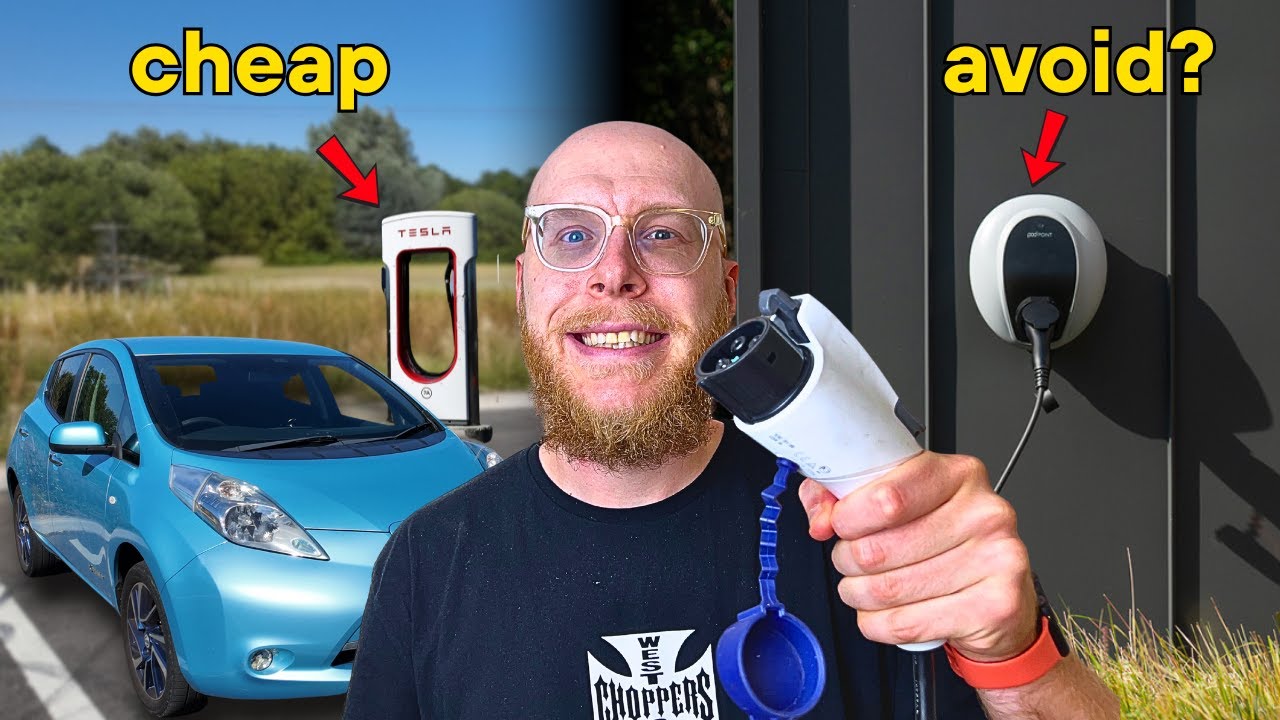
if there was a better and cheaper way to charge your electric car. In this video, I’m going to cover the main options that new EV drivers have to charge their electric car in the best, most affordable way. And I’m also going to share some ways that even experienced electric car drivers might not know about. Then I’ll tell you what I’ve personally done in my life to help make charging as cheap as possible. I’m Alex and I recently bought one of the cheapest electric cars in the UK. I did it because I had a tight budget and was disappointed to find no automatic petrol or diesel cars that were good enough. I was eventually going to switch to electric anyway, but this essentially forced me to. So now I’m on a mission to show you that you can live with an older electric car, no matter what your budget, and how best to run and maintain it with some financial responsibility, too. Anyway, new electric cars have been around for around 15 years now. And the advancements that they’ve made in that time has been incredible. In fact, June 2025 showed that it was actually 24.8% market share of new cars sold were electric. So now we can safely say that they’re already mainstream. They’re really great as company cars because they’re cheap to run. They offer great tax incentives. They’re smooth and refined and comfortable, and now a lot of them can do over 200 miles range on a single charge. What people don’t realize is that owning and driving electric car needs to come with a mindset shift. You do have to alter your patterns that you might be used to with a petrol or diesel car. And one of those patterns is obviously the way that you fuel it, which is with electricity, of course. So, let’s first explain what electricity actually is, how it’s measured, and how much it costs in the UK. Because if you’re like me, you might have seen all the buzzwords like KW, KWH over the years and might not know what that means. Especially with electric cars, you try and compare it to liters or gallons, which of course is very difficult because they’re not the same and can’t really be compared very well. A kilowatt, written as KW, is a unit of power. It’s how fast electricity is being used or delivered. And think of it like speed. If you’re plugging something in, the higher the kilowatt, the faster it’s using electricity. That’s what that means. For example, a kettle is typically between 2 and 3 kW in the UK. And when you boil a kettle, you’re pulling 2 to 3 kW of power from the electricity grid to power your kettle. But then there’s kilowatt hour, which is kWh. And this is the one that really matters for electric cars. A kilowatt hour, KW, is basically how much electricity is being used over time. So if you use 1 kow of electricity for 1 hour, that equals 1 kwatt hour. Now in the UK on typical energy tariff standard rates, you’re typically going to spend 4 1 kWh around 25 or 30. And these are the numbers you kind of see on your energy bill. So when you see a public electric car charger that costs 7580p per kilowatt hour, this is where problems start as an EV driver. At 75p, you’re spending three times more than you would at home. And there are much better ways to go about charging your electric car. But why is public charging so expensive? First off, there’s VAT. In the UK, at home, your VAT is 5% on electricity. But when you’re out and about using public chargers, the business rate is 20% for the electricity that’s used through that charger. So that alone will add 7 to 10p per kilowatt hour to the price of your public charger. And that’s just getting started because then there’s setup costs. Public chargers, especially the ultra rapid ones, the big boxes that you see are expensive to install. They need high voltage grid connections, road works, transformers, planning permissions with the councils. And none of this is cheap. So the cost of all these things get passed on to you when you go and public charge somewhere. And then of course you got the cost of actually running them. Every charger needs a team behind it. And there’s a customer service team that needs to be hired for 24/7 access. Then there’s apps that pair with the charger. There’s contactless payment methods you have to integrate. Then there’s the maintenance and anyone on hand to go and fix them as well in person. And all of that costs money depending on the size of the network and the provider. And don’t forget land costs. Most of these charges are built on retail parks, service stations, or private land. So the charger operators usually have to pay rent or have a small cut of every single charge that they have on the property and give that to whoever owns the land. Then you got the profit side of things. Some are still trying to break even while others want to maximize their earning income and charge more, so they change the prices. It’s a bit like an Uber or taxi service where supply and demand change. And when there’s much more demand and there’s only a limited amount of supply, then the things like surge pricing comes into place where at peak times, people will charge more for charging when there’s only certain number of charges and more people need it. But it’s not all bad. There are still lots of ways to save on public charging if you have to. For example, there’s an app called Bonnet, which was recently bought by OO Energy, which for a subscription fee gives you 10 to 15% depending on the level of subscription that you choose, a discount on your public charging. And they work with lots of different providers. And so, if you public charge a lot, you can save a lot of money by subscribing with this small fee. Then there’s Octopus Electroverse, which is an app that you can use to find charges. But if you’re an Octopus customer, you can get discounts on your charging. If you’re an intelligent Octopus Go customer, you save 8%. And if you’re a standard Octopus Go customer, you get 5% discount. Then there’s BP Pulse, which is another subscription, and it costs about £8 a month. And it gets you 20% discount on public charging on pay as you go rates. With the first month free, and you get £9 of charging credit for the next 5 months, so essentially for the first half of the year, you get paid to use the app and you get a discount on top, which is great. And there’s off- peak pricing. So some charge point operators will actually reduce the price if there is a low demand for it at night for example. So that passes the savings on to you which is good. So yeah, public charging is expensive. But now at least you know why and more importantly what you can do about it. This is just a reminder for me to hit that subscribe button as it really really helps out my channel. I’m trying to get 1,000 subscribers as soon as possible so I can make more exciting videos and help any electric car driver with their tips and tricks and how to save money on electric cars and what it’s like. So, I want to share with that experience with you. So, hit the subscribe button. It’ll really help out my channel so much. It’s free to do. Thank you. Now, workplace charging in the UK has exploded in recent years. The UK’s workplace charging scheme has funded over 61,000 charges in workplace car parks, which totals over 22.3 million pounds being spent on them, and over 2,000 sockets in schools with a grant funding of over £4.3 million. And it gets better. Through the workplace charging scheme, businesses can claim up to 75% off of installing charges capped at £350 and up to 40 sockets to be installed. Now, a lot of companies provide this free to their staff as a perk for working at the business. So, you can really save here if you know your workplace has got EV charging. No need to queue a motorway charger and spend 70 80 plus pence per kowatth. You can just charge at work. And over the years, that can save you hundreds or thousands of pounds. If your workplace doesn’t already have electric car charges, here’s what you can do. First, you just need to check if the site qualifies. It just needs off- streetet parking. You don’t even have to have an electric car in your fleet or owned by staff. You just have to have the intention of supporting them moving forwards. Then you need to talk to your HR team or anyone responsible for managing the building. Ask them to apply for the funding. Then back it up with stats to support your claim uh like the new sales figures of electric cars and the market share they’ve got. And then of course there’s a benefit in kind tax saving that you have when electric cars are used as company cars. There’s no benefit in kind tax if charging is available for all employees for the charges and the business can claim the installation costs as capital allowance. But obviously check your accounts first and make sure this is true. You get free charging. It’s a more incentivized thing for staff and potential new recruits that you might have as a selling point for the business. Plus, you can even save money. So, it’s a win-win really. So, my advice, don’t just assume that your company won’t provide your EV chargers if you want one. start the conversation yourself. You might be surprised as well about how many offices have actually charges available already in their car parks or are very close to installing them soon. Now, if you’re a bit like me and like bending the rules, I’m not saying you should do this, by the way, but there are some unethical ways, even free ways that you can charge your electric car. Some little Audi and Morrison’s locations still have free 7 kW chargers in their car parks. Not all of them, though, and it’s a bit hit and miss. If you find one that works and it’s still free, it’s worth stopping for half an hour while you shop. Next is hotels and Airbnbs. Now, this is a bit cheeky because people staying overnight might cheekily plug their electric car in if there’s an outdoor plug socket or if they can find a way to plug it into their accommodation when staying there. Hosts don’t always advertise electric car charging. So, it’s a gray area and it’s probably best to just ask the host if you can charge your electric car rather than risk it. But, it ultimately depends on your tolerance to risk. Even at gyms or any leisure centers that you might go to, they might already have electric vehicle charging for free as part of your monthly package. Now, it might not be obvious that there’s electric car charging available, but it’s always worth asking cuz they might be able to offer that service in the future. Then there’s finally one option which you can use is hospitals and libraries, but be careful obviously because these are publicly funded places. Some of these places have the standard three pin plugs on the outside of the building or proper wallbox chargers. Uh, so it’s a definitely a gray area and I wouldn’t recommend it. So, if you’re creative and keep an eye out, you can probably find somewhere that you can charge for free. For example, when you arrive at a pub and are a paying customer for a couple of hours, it might be worth going there for a top up anyway if you’re on a big road trip. Next is the best solution for everyone. But before that, a reminder from me to hit the subscribe button as it really helps out my channel early on. It’s totally free to do, so please hit the subscribe button and you’ll get way more value in the future from me all about electric cars and alternative ways of transport. So, those of you who have a bit more investment up front, the best solution is to get solar panels, a battery, and a home wallbox charger. I realize that’s not cheap, but the next tip I’ve got is something that I’ve recently implemented, and it costs you very little time and is completely free. So, stick around for that and I’ll tell you what the cheapest way to charge electric car is. But anyway, you can spend a few thousand on solar panels, a few more thousand on the battery, and then another thousand or so on a home wallbox charger. But as a result of all that, you get free energy from the sun, which also you can use to power your house and your car. Plus, some solar panels even allow you to export excess energy that you have accumulated from the sun that you don’t use in your house. You can actually export it to the grid and earn money back from it. Now, depending on the size of your house and your solar panels and how much energy you use, you can actually reclaim the cost back of your solar panels after about 12 years where essentially after 12 years, you’re getting free electricity. You just need to consider the cost of maintenance every year or so to maintain the system of the solar panels and the battery that you’ve got to make sure it’s all working correctly. But then essentially, it’ll be free electricity. Now, I’m not saying it’s for everyone, and you do need a driveway and some money. But if you’ve got a driveway, this is the next best combination you can do. Home charging is by far the cheapest and most efficient and practical way to charge your electric car. As the first thing that people do when they get electric car for the first time is to get a home wallbox charger installed. just plug it in overnight, wake up to a full charge, and that costs you just two or three pence per mile to run, which is obviously way cheaper than petrol. But if you’re living or renting a flat, don’t have access to a driveway, there might still be an option for you. Through the Office of Zero Emission Vehicles, there’s a £350 grant that you might be able to apply for to help cover the cost of a charger install. You just have to be eligible for it and find a suitable installer for you. But check the link in the description to see if you’re eligible and work out if you can apply for that scheme. But if you live in a flat or a busy street with no driveway, then you might not think home charging is available. But the government have recently introduced a scheme and some funding to help fix that. They’re putting £25 million into councils to help fund what’s called cross pavement charging. It’s basically a safe way to run cables from your house under pavements in little grooves to charge your car on the street. So, you’re still using your home energy supply and you’re not spending that 70, 80, 90p per kilowatt hour on public charging. For some families, this kind of setup could save over £1,500 per year on fuel costs by avoiding public charging and charging at home. But if, like me, you’re on a tight budget, there’s one more option you can do, which is what I’ve done recently. I don’t have a wallbox at all. I just use a standard three pin plug charger with this industrial extension lead that I bought, and I just switch supplier to actually get the cheapest electricity rates possible to charge my electric car. and to power my home. Right now, I’m with Eon and I get cheap electricity overnight. It’s actually specifically between midnight and 7:00 a.m. every single day. So, that means I just schedule everything to run at night. I plug the car in before bed. I schedule my dishwasher, my washing machine, and even my heat pump that I have installed in the past 18 months or so to heat the hot water at night. So I can use the cheap electricity rates of 6.7p per kilowatt hour to run all electronics and you know take the majority of my bill to be overnight and I charge my car with just a normal three pin plug with no spending on public charging or having a home wallbox charger installed. But obviously make sure this setup works for you before committing to it because a three pin plug on a very big electric car with a big battery will take a lot longer than my 24 kWh Leaf. But I definitely recommend shopping around different energy suppliers to try and get the cheapest rate possible for your area because of course remember we’re living in a cost of living crisis and we have been for a while now. So it’s time to be more financially responsible. So get control of your finances people. It literally took me less than 5 minutes to switch suppliers. And depending on your current situation, you might be able to just switch for free. I certainly did. And they take care of it all for you. So if you charge at home with a three pin plug, it works out cheaper. So, let me know which setup you have or which setup you’re thinking about in the comments below and watch this video next from me.
What is ACTUALLY the cheapest way to charge your electric car?
I wanted to delve deeper into what the best options are for those with and without a private parking space or driveway, and how you can save on extortionate public charging costs….
Did you know that all of these options were available? Let me know in the comments and don’t forget to SUBSCRIBE!
I’m trying to get to 1000 subscribers and over 90% of you aren’t subscribed so make sure to hit the button for lots more useful content coming in the future!
🌞 RESOURCES FROM VIDEO:
Workplace EV Charging Scheme: https://www.find-government-grants.service.gov.uk/grants/workplace-charging-scheme-2
EV Charger Grants for Flats: https://www.gov.uk/electric-vehicle-chargepoint-grant-household
FREE £50 For Switching to EON Energy: https://www.eonnext.com/refer-a-friend?referral=great-parrot-159
(Plus they offer the cheapest rates in the UK at the moment at 6.7p per kWh)
🍿 WATCH NEXT
What it’s Like Driving a Budget Electric Car After 30 Days
🔗 ELECTRIC CAR MUST-HAVES
1. Type 1 to Type 2 Adapter: https://amzn.to/4nsBKW8
2. Octopus Electroverse: https://apps.apple.com/gb/app/octopus-electroverse/id1535444463
ZapMap: https://apps.apple.com/gb/app/zapmap-ev-charging-points-map/id964082746
3. ‘Industrial’ Extension Cable: https://amzn.to/43Ue6dx
4. EV Charger Holder Bracket: https://amzn.to/4lfnkXC
5. Portable Air Compressor: https://amzn.to/4lqaJ3Y
⏰ MY FAVOURITE TOOLS & GEAR
Camera: https://amzn.to/3T75nhU
Tripod: https://amzn.to/3FShlcm
FREE CAR HISTORY CHECK: [https://motorscan.co.uk?ref_id=e4a7KXYagv&promo=referral&utm_campaign=Referral_Invite_Friends&utm_medium=Referral_Programme&utm_source=Link](https://motorscan.co.uk/?ref_id=e4a7KXYagv&promo=referral&utm_campaign=Referral_Invite_Friends&utm_medium=Referral_Programme&utm_source=Link)
FREE CASHBACK: https://www.topcashback.co.uk/ref/alexcars
🐦 My Other Socials
Instagram: https://www.instagram.com/alexcarsmedia/
👋 Who Am I?
I’m Alex, a British guy sharing all of my experiences in my 30s.
I was an automotive engineer, turned digital nomad and traveller. I want to teach you how to live a financially responsible life and going outside the norm.
I’m just starting out, so please do hit the SUBSCRIBE button to learn more about living with a budget electric car.
📖 Chapters
00:00 Intro
00:42 Why Electric Cars Are Now Mainstream
01:21 kWh Explained
02:47 Why is Charging SO Expensive?
04:34 How To Save When Public Charging
06:09 Workplace Charging Options
08:08 Unethical Ways to Charge for Free…
09:50 The ULTIMATE Setup
11:01 Fixing the Home Charging Issue
12:23 Getting Lowest Charging Price
🎵 Music from #Uppbeat (free for Creators!):
https://share.uppbeat.io/8ryasnm0fs85
PS: Some of the links in this description are affiliate links that I get a kickback from 😜