Porsche Cayenne EV Full Technical Deep Dive! Battery, Charging, Motors, Chassis, & More
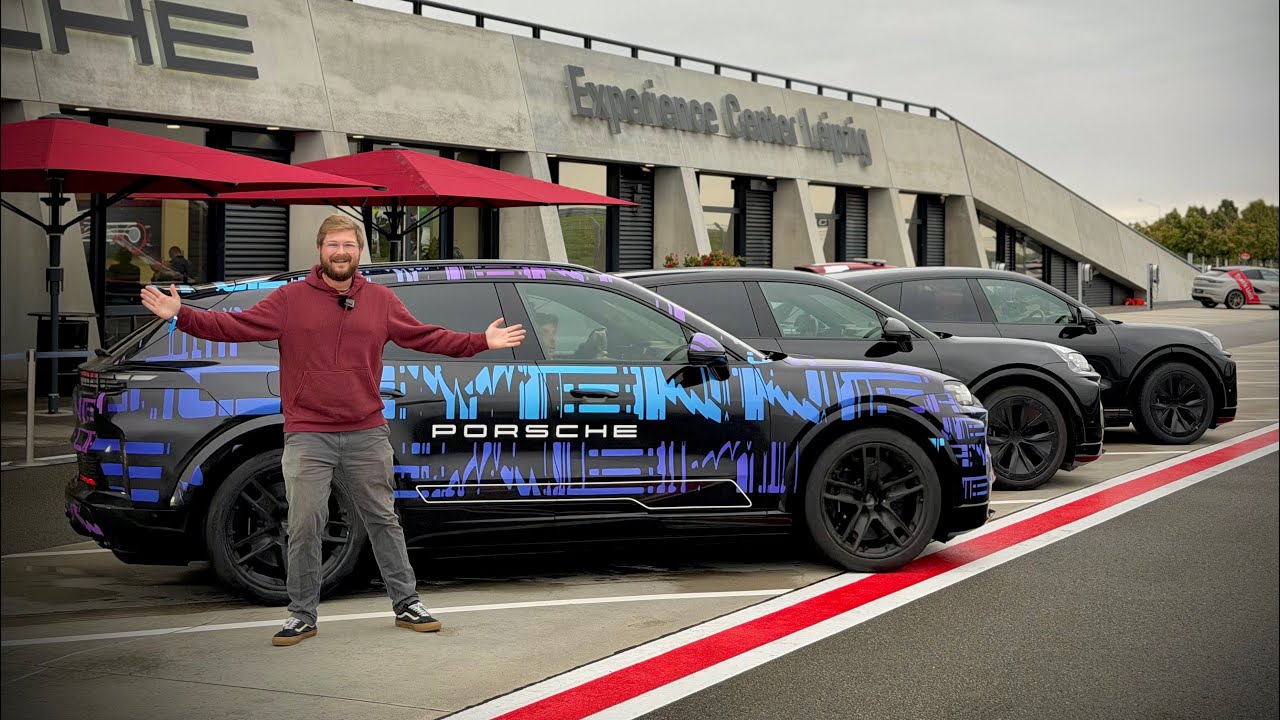
And now we get charging curves. How sick is this? A presentation built for out of spec right here. I’m going to let it rip. Okay. You all ready? Ready. And go. Well, we’ve done this for the TYON and Macan electric. It’s time to do a technical deep analysis of the new Porsche Cayenne. Yes, fully electric. And we are going deep in depth. wireless charging, VR presentations where I’m able to show you all of the battery pack and cell information with thermal management info. We’re talking super deep presentations in this upcoming video. Of course, we’ll discuss the interior and yes, we are going to rip it on track. Amazing. Feels awesome. Porsche Active Ride gives the Cayenne an insane character, of course, letting it rip onroad, but also be fairly capable off the road. In this video, we’ll be discussing, yes, the capabilities of the Cayenne, but also new technologies such as wireless charging and more. So, join me for a full deep technical analysis of the brand new E4 Porsche Cayenne Electric. No way. We are wirelessly charging. It didn’t get out of the car. Didn’t do anything. Nope. First time ever on this channel. Ramped right up to 11 kW pretty quick. Thank you to our sponsors for today’s video, Eaton, Ayana, Infy Power, and Dokian Tires. This video is brought to you by Eaton. Eaton is a one-stop shop for implementing reliable and innovative EV charging infrastructure at your site. Across all applications, Eaton’s EV charging infrastructure, hardware, and software gives you the scalability, flexibility, and intelligence you need to charge today and scale up tomorrow. Learn more at eaten.com/evci. This video is also brought to you by Ayanna, North America’s premier charging network. With unmatched commitment to elevating the customer experience, Ayana is opening America’s roads to all EVs, giving drivers the coverage they need, the reliability they deserve, and the amenities they crave. And Noki and Tires, a leader in safety and sustainability. The latest generations of Nokian Tires products come with the electric fit emblem that certifies they’re a seamless fit for electric vehicles. And most of those allseason and all-weather tires come from Nokian Tires awardwinning factory in the United States. Learn more at Nokientires.com/ev. Hello and welcome to another out ofspec reviews video. You guys join me in Leipzig, Germany, where uh we’ve shot a couple videos here for you guys. We’ve been here on road trips with TYON charging at the Porsche charging station over there. And we’ve also filmed, this was a while ago now, the entire technical analysis of the then new Porsche Macan electric, which we’ve done so much with over the years. Well, now it’s time to tell you about its big brother. This is the new E4 Porsche Cayenne. We’ve already made a few videos with this car over the last few months, demonstrating some of the wireless charging topics and others uh with Goodwood, with it at Goodwood and here in Leipzig. But in this video, we’re going to go on a deep technical tour. We’re going to look at battery capacity, battery design, motors, chassis topics. We’re even going to be able to go off-road in the car and go for a ride sending it around their cool little test track over here. So, join me for a deep technical review of the E4 Porsche Cayenne. Well, guys, here they are. the fourth generation Cayenne, the E4 electric Cayenne. Maybe I’ll show you these cars over here. It wasn’t long ago we were here filming the Macan technical presentation. That car has since gone on sale. And the same thing will happen with this. In just a few months, the Cayenne will be in series production, built in Hungary, and sold to the world. Now, in this video, I’m going to be basically telling you everything I like and dislike about the car, but more importantly, quantifying what is actually under the skin of this. Now, I can’t actually show you what the heck it looks like yet because the world premiere of the car hasn’t happened. So, a huge shout out to Porsche for inviting me here to Germany to get to experience this car. So, we’re going to be talking about the battery pack, layout, construction, cell type, cell chemistry. We will talk about the electric motors, type, performance, construction, thermal management. So much to go into this, including digital topics, interior software tour. So much to dive into here in the new fourth generation Cayenne. This one just came back from an off-road course. We’ll also take it off-roading and ripping around the Leipzig track. It’s going to be a long video. I’ll keep it chapterized. I’ll try to keep it somewhat fun to watch, but also educational. and I can’t wait to learn along with you about the new E4 Cayenne. It sounds like it is going to be the largest electric Porsche. And now there was rumors and some hope that the full size K1 Porsche would be battery electric. And it kind of sounds like well that’s going to be plug-in hybrid or combustion. Just the way things change, a little unfortunate, but the Cayenne is here and electric. I should also mention if you are not ready for an electric car, don’t like electric car, why would you be watching this video anyway? This probably speaks to no one. But in case you’re curious, Porsche will also sell the previous generation Cayenne alongside the new generation Cayenne for at least the foreseeable future. So E3 Cayenne and E4 Cayenne will both be on sale for a while, which I think is kind of a shame, but that’s just the global market conditions and uh it is what it is. At least you’ll be able to buy the electric one if you want it. So, I would It’s super cool. We’ll talk all about that and more coming up, but man, doesn’t this thing just look so good. Such a cool looking car. All right, let’s dig into the technical stuff. I don’t know in what order everything will come, but it’ll be a super nerd video. So, let’s freaking do it. Well, guys, before we get into the main bulk of the video, we are going to go section by section through this car. In fact, the next section will be a full interior tour discussing that new curved screen and also talking about front seat, back seat room, trunk space, etc. I want to at least tell you what the Cayenne is. Well, it’s built on PPE, which is premium platform electric. We know this essential architecture from the Audi Q6 Ron, A6 Ron, and Porsche Macan electric here now in the biggest size that we’ve seen so far. And it just seems like a whole another level from PPE. I’m honestly surprised that the PPE platform can handle all of the stuff they threw into Cayenne because it’s a whole another level above anything we’ve seen before. So, the battery pack’s 113 kWh gross, 108 kWh usable. Uh, it’s an LG NMC pouch cell pack. um which is similar to TYON being pouch cell, but this is a completely different cell with higher energy density and insane charging performance. We love charging on this channel. I’ll get into it. I’m going to show you the DC fast charging curves. Uh but this will do 400 kW charging and actually just a little bit more than 400 kW charging, which is insane. But we all know it’s not about that peak number, it’s about the curve. And it will hold over 400 kilowatt charging. Well above 50% state of charge. We’re talking you might be able to almost touch 60% state of charge. Still doing 400 kW. Insanely beefy charging performance here. It’s going to be crazy. On the same side of putting energy into the battery pack, uh 600 kowatt regen. So when you’re standing on the brake pedal, even through ABS, it can do 600 kow regen. there. Um, I should also mention 10 to 80% Porsche claims 16 minutes. We’ve seen a YouTube video online showing it under 15 minutes. 10 to 80% charging. Insane. Uh, two permanent magnet electric motors. There’s a standard version and a top version with more to come, I assume, into the future. Um, what’s interesting, for the first time on a Porsche, they have direct oil cooling to the rear motor in the topsp spec model. And so that’s good, but it’s like other electric cars, Lucids, others have direct oil cooling. Rivian does as well. So Porsche is finally catching up there. They’ve always had great thermal management, but now the peak to continuous ratio of the electric motor will be awesome. This thing will be able to rip as hard as you want it to go with the motors pretty much never overheating, which will be really great. Top speed over 155 miles an hour. Uh, it’s over a,000 PS, which is 986 horsepower. So, my guess is around 1,000 horsepower. And, um, good news, it can tow 7,700 lb. So, I just threw a bunch of stuff at you. You’re going to ask pricing. I don’t know. Can’t be cheap. With all that said, let’s jump into the interior. Then, we’re going to go through the technical deep dives uh through VR, which is going to be weird and new, but interesting. And um somewhere in there I’m going to throw in the wireless charging demo and the track session. There’s so much to get into. Let’s dive into the interior with my good friend Joel Feder from the drive. Welcome to a secret interior lab with my buddy Joel. What’s going on everyone? Uh what’s your impression of the outside of the car? Obviously camoed size. What do you think of just the Cayenne thing in general? I actually like it. I was talking about this earlier. Actually, I think I like it. This is of course camoed more than the Macan EV. I think the lines flow a little better. The proportions are a little better. I like the extra length in the wheelbase. Uh the camo does a good job of hiding some of this, but I kind of like the curvature in the doors. Really like these rear fenders. This reminds me a lot of the Cross Turismo, the wagon version of the TYON. So, I kind of like that. This is a little interesting. I’m still not sure how I just noticed this. So, I just discovered this on the when we were outside doing some uh off-road and I’m not sure if I’m in love with that part yet. So, that’s the active spoiler. Yeah. So, it’s you can have auto mode or you can push it up. Okay. So, I this is in push up mode. Uh but but in auto mode, it’ll come up automatically. Um I really like these the active the active vents. They only come out in uh launch control and they come out when you’re going to launch. Um but we learned that if you turn the car off once so if you put in launch control and then you stop the car, you turn it off, they’ll stay out that way. Oh, nice. Okay. Very cool. Let’s run around to the front really quick just so we can show everyone up here. It definitely feels more substantial than Macan. Like it’s another class of vehicle up. Totally. And and it’s just wider, right? The whole front is accented by this width down here. Like it there’s visual width added. Um you could work for Porsche. This is good. I really like the headlights. The headlights very much some TYON mixed with some Macan EV. I like the vents. Well, and I like that the headlights aren’t a split system. I think some cars look weird when you just do running lights here like Macan and then the main beam down there. I think this is better. I I like this better. Yep. Totally. And uh so now we can kind of show the interior. Yeah. The interior. Can we do the back seat first? Back seat review. Sure. Okay. So before we do that, why don’t you put the back seat as far back as you can cuz it is powered. And then I will show the trunk space back here. So very fast opening rear seat. I’m back as far as I can go. So that’s as far back as it can go. Dude, there’s a ton of room. Like I mean it’s a significantly sized class larger than the Macan. Yeah, it’s it’s definitely big. But I also like how I can fold the seat. I’m also reclined a little right now. Huh? Oh, yeah. But I wonder if I’m adjusting. No, I’m doing that. You’re doing that. I’m doing that. So, it must know that you’re there. But you can dump. Now you do. You’re doing that. Oh, now I’ve hit that one. Yeah, you’re doing that. Very cool. So, did it move the front seat forward to make room? No. Okay. Yes, it did. It just moved back. Yeah, it did. It just moved back. Nice. That’s good integration. So, now you can see it’s almost a flat loading floor, but there is a little lift. There’s definitely a slope here and it has to do with the seat bottom for sure cuz my seat bottom is contoured on the sides. So I can hit raise. So now it’s coming up. It moves pretty quick though. Oh yeah, that does it’s not like Tahoe Escalade quick but it’s quick. That’s That’s acceptable. I like how you can raise and lower the rear suspension as well for like a dog loading. You can also do that with a Volvo XC90. Yes, you can. Yep. Uh okay. This is right out of a regular Cayenne. How’s the room back here? I like how you can do heated and cooled seats. Very German. It’s a very German thing. Look, I won’t buy a car unless I can do that. Well, you’re not going to buy a car that’s not German. Uh, that’s true. I I like this. There’s a lot of There’s It goes long enough for my legs here. Definitely. How tall are you for the viewers? So, I’m 5’10”. This is absolutely what I was talking about how why it didn’t fold all the way down, right? But it’s contoured. It’s nice. I also asked someone earlier if all the seats are highbacked sport buckets, and they said they believe they are. Okay. Interesting. But at least they have a little net down there to put some things, which is good. Yeah. Uh, and the roof, does this one have the This one This one has electromagnetic. It’s It’s grayed out right here. Okay, cool. So, yeah, you can basically in sections like the TYON. And I’m 5’10. I got what, three, 4 in, 3 in. Yeah, I sat back there was really impressed with the room. It’s way bigger than Macan. Macon’s way bigger than a Macan. This is still like right here. This door cut out when I got earlier. It definitely can hit me, but like this is back here. And so, like I don’t think snow’s going to hit me. No, I think you’re good there. Also, shout out for the B-pillar vents and the vents down there. That’s awesome from from an HVAC standpoint. I was in one earlier that didn’t have this screen. It just had heated seats back there. So, if you spec the four zone climate, then you get that screen, I guess. Um, cool. This is a nice back seat. Let’s do Oh, yeah. Double pane all around and frameless. Um, yep. Cool. Let’s jump around. Front seat review. closed the trunk. I think it opens faster than it closes. So, this is cool. They’ve got They were really touting that. So, this this center armrest is heated. We got a problem. What? The key is not correct. The top button on a Porsche key like a 911 should be unlock. And this is front trunk. Listen, listen. Listen, Boomer. I would lose my key, my phone as a key. Oh, that’s true. This does have phone as a key. It says digital key. You’re not going to use the key. That’s right. You don’t need the key. So, this is heated. They told me that’s kind of cool. Probably optional. Oh, come on. It’s Porsche. But this moves and then this moves and you got this. This is actually cooled. They were telling me earlier and it’s independent of the climate control system. So, if you got heat blown out, they still blow out. Cool. Same as their other cars. Love that. Drops in a cup holder here that’s actually reconfigurable. That’s not in here right now. It’s over there. Right. They have two different levels of height you can lock it in at. I love how that made it in the presentation. Yeah. Uh, six USBs up to 100 watts. One, two, three, four, and there’s two in the back. Right. There’s only four of them that are 100 watts. They didn’t say what the other two were. I’m guessing the ones in the background are 100 watts. We can test that when we get it on on the long real buttons and knobs. You got to love You got to love toggles. Love. They feel really nice. They really feel nice. And you’ve got the roller. Yep. Uh these are obviously touch based, but when you touch it, it’s haptic, so you know, you feel it. Y um you know, navigation, music. These are is kind of like a Rivian Tesla, right? So, you got the there’s no there’s no actual manual there. There’s no physical control for the air vents. I know people feel mixed about that, but um I don’t know. This is actually really cool though cuz of the widgets down here. So, if you put CarPlay up here, you can reconfigure these and these can be your custom widgets. They were showing me earlier. So, like you can have the customized drive settings and pull up a pre-production car, right? So, this So, this button would pull up all the safeties. You can turn off active safety. You can turn off certain things. We got toggles. We got a knob, right? For I love the the toggle like actual click click click. This is called the ferry pad, right? They call this the ferry pad. And your your hand goes here, which is kind of nice cuz you got, you know, just sitting here. I don’t know. I OLED OLED not OLED. So like same same resolution, not same resolution. So that’s Yeah, this is a bit weird and it’s optional to get it. But then it’s also interface is this. Yes. But then what’s also weird is if you don’t get this, it’s just a black PL, you know, straight piano black staring at you. Don’t like that. Don’t like that. But I love the curved display. We haven’t even mentioned that. I really like this curved display. Like I really like the curved display. Uh and like the Well, so like I’m in Bluetooth like but you could scroll through things or whatever. And my hand rests here so it’s comfortable. It’s low set. Um I mean look, it feels and looks like Porsche. Like I think the screen should have come up to here. See, I actually kind of wish this just dipped down to here and I had better Yeah, I would take that. I would just drop this all right here. But yeah, definitely the air vent. I mean, you got to make room for air vents and it’s a great angle to come at you. But yeah, this does look a little bit awkward. I mean, you could have just put these here and then just see they should hire you. I you know, I was unemployed for like eight weeks. They had a shot. Everyone had a shot. Um, and then here in the center instrument cluster, this is very similar to TYON. Yeah. You know, some it feels more curved and it feels thinner almost. Yeah. And the buttons aren’t totally baked into the screen anymore. They they feel like this is on a separate They are. This So this is like you can feel Yeah, that’s right. That’s the screen there. There’s also a power button and I asked them why and they were like, “You mean like a start stop button? There’s literally a start to turn on and off.” And I Yeah, there’s a power button right here. I asked them about it and they basically were like, “Well, you know, some people won’t be able to turn off the car.” I’m like, “But when you get out and you walk away with your phone, the car turns off.” They’re like, “Yeah.” And I’m like, And then when I get in the car, the car turns on. They’re like, “Yeah.” And I’m like, “Why do you need a power button?” And they’re like, I was like, “Do you just need to have a button over there?” Cuz the portion is going on the left. And like they got really quiet. I’m like, “So some boomer was going to get angry if you didn’t have the average age of the person who could afford this car wants a power button.” Whatever. Lame. Unnecessary. This isn’t a fun interior. Like I rode in the one that was like the frozen berry pink. Yeah. That’s cool. And then the one over there with the what is it? Like hems tooth like the hounds tooth. Hounds tooth. I love that. You know, we also should just say this is the car that’s here to display the interior and they brought the most boring one. Well, they brought the most Porsche and Tutonic one. Like this is this is not This is the Germans love this. This is not the Matt Farah frozen berry edition. That’s right. They wrote in one earlier interior. Show I’m going to show the different materials you can get in the interior cuz that’s pretty cool. But like you can see there’s carbon in here and like this is all the crazy stuff. It’s got the Burmeister which is going to sound pretty good. Crazy massage. It’s got like wellness modes as well. We’ll do I mean like unlike a Silverado EV like this stitching is all like straight. That’s a fair point. Yeah, I think I think the layout’s perfect for everything needed here. Well, thanks Joel. Appreciate you joining the video. That was Porsche brought along a few display samples. This is the leather free option. So, it’s a race text and a bit of um they call it pepita I believe which is similar to like a houndstooth material. feels really nice and it’s not like imitation leather, which I actually kind of like a lot of the fake leathers that are out there, but this is a really nice leather-free option. Then you of course you can go interesting and crazy. So, different stitching colors, different center console materials, uh different leather, and and the list goes on and on. Of course, with any Porsche, uh there’s just a million different configurations that you can go for. So, nothing is unusual here, and certainly we will all be super busy when the configurator launches online. Can’t wait to play around with it so we can spec them out to insane unrealistic numbers, but just for fun. Sometimes it’s cool to see how high you can go with the pricing, which certainly will be insane. Guys, we have found ourselves a Mike Van Conter. How are you doing? Good. How are you? Yeah, doing well. Always seeing you again. This is the second time this month. Now it is. Um, we’re talking wireless charging again with Cayenne. If you haven’t watched it, Mike and I did a video with the debut of this. Yeah. At the IAA. But this time, we actually get to show it working. Exactly. And you’re going to try it for yourself. Right. So, I’m going to drive the car on the pad. So, let’s show everyone this. This is the new E4 Cayenne in the flesh. And this is the same car that was at IAA. Right. Exactly. So, it has the cool light up paint and everything. This is the charging pad. And it’s set up here in a typical garage setting, I guess, is the idea. Yeah, typically it’ be hardwired. You just have it into a red three-phase plug, but as long as it gets power, all good. Yeah. Uh, so the pad’s going to be here. We’ve already gone through the technical components. 11 kW wireless charging, 48 amp in the US and uh I guess 16 amps in Europe and efficiency around 90% which people had a lot of question in your comments because if you connected to a wallbox is about 94. It’s just a 4% gap in efficiency between inductive charging and a wall box. People can’t believe it, but it’s true. Yeah. So, that I think we need to do a video at some point in the future where we take, you know, put meters on the wall, do the wall box charging the car and this and then show the difference. Uh cuz I think that if it’s only really a 4% difference, that’s totally fine. Um we also just went into a presentation earlier about this, which was really cool that it can work if you have the Cayenne in full suspension height. It’s an extra 1% drop in efficiency they mentioned. But it’s smart enough to auto lower, but it doesn’t even go to the lowest suspension, just a standard. No, it’s it is in in the lowest setting. Oh, it is. It’s not in the lowest setting. So, the the smaller the gap is, the more the higher the efficiency is, but it will still charge. It’s to some degree, but the closer the gap is, it the more efficient it gets. Okay, makes sense. But they mentioned the difference is very little. It should be good. Not a lot. Um, so I guess we’ve already done the whole video. I’ll leave it linked. We just have to show it working now. Can we show this? Yeah, of course. Okay. So, this is the plate that’s on the car and the charger, right? Exactly. So, this is water cooled. The ground plate is actually air cooled. And this is where the inductive charging takes place. And this is the DC converter. And you had mentioned that uh I would don’t think we talked about this before, but the standard that you guys are communicating between the pad and the vehicle side is sort of an open standard. Exactly. It’s not a Porsche standard. So if other OEMs would like to jump on the same technology and use the same standard, the systems would be compatible. That’s really cool. It’s not It’s kind of like having a a J1772 port or a Knack port or something where you can use, you know, different vehicles, different plates, and hopefully the communication will all work out, but it’s still early days. Yeah. Um, let’s go see this work. I’ve never wirelessly charged a car before, so first time on the table. Exciting. Totally. Let’s try. Yeah, let’s give it a go. Okay, Mike, you join me inside the new Cayenne. This is really cool in here, by the way. We can mention it because the interior embargos at the same time. So, this is the interior, and it’s sick. Uh, this screen is amazing. Holy smokes. So, we have inductives ladden, which means inductive charging. I would imagine it does. And so, then inside the charging menu, there’s connected floor plates. And it’s Wi-Fi connected. It’s Wi-Fi connected. It’s like your router at home. You connect it once and then it will recognize you as soon as you get close enough and then the two systems are connected basically. Okay. And so it’ll know, okay, you’re getting home. It’ll pick up the signal from a I guess a pretty far away distance. Wi-Fi goes pretty far. Yeah. I think we’re claiming 7 and 1/2 mters. Okay. Well, that’s fine. Like in the garage space. When you get close enough, then how do we simulate what a person would do pulling in? We just put it. Let’s say we’re we’re in drive. Yeah. We’re pulling in. Do I need to pull up any extra menus? Um, it should work if we activate it. Yeah. Oh, okay. Working. So, every time you see the green lines, it’s working. And this will actually activate automatically when you get closer to the ground pad module. So, when you’re close to the ground pad module, the cameras will automatically come on and you’ll automatically have those additional green lines. And I mentioned there was an additional setting in the charging menu which is under inductive charging which is essentially just turning on the function. Yeah. This that’s and that’s default on so you never have to go into here once it’s all set up. Exactly. Cool. Then you can pull up the quick camera button which will automatically happen pulling in. And we just roll forwards and if you close you will see two circles. There’s one circle. This is the car. Okay. So, we’re going to line up this circle to hopefully another one. Oh, here we go. So, I should go a little left. Oh, you don’t have to. There’s some some variance there. Yeah. Okay. Very cool. So, we’re inching. We’re in the region. Boom. Oh, and the lights flashed as well on the uh communication light. And as soon as you put it in P, it will start. It will take 18 seconds. So, we hit start. So, it’s communicating um adjusting chassis height and we have some pretty cool stuff here. So, target charge reached at I guess that’s at the time it’ll be reached. So, 18 seconds. No way. Stop charging. We are wirelessly charging. We didn’t get out of the car. N didn’t do anything. Nope. First time ever on this channel. Ramped right up to 11 kW pretty quick. As easy as it gets. That’s really easy. So, in theory, if you have inductive charging at home and you don’t have a wall box and you only do AC charging, you might own and drive a Cayenne for multiple years without touching the charge port. That’s a wild thing to think about. And I’m sure a lot of customers that would be the use case. Yeah. Um, that’s really cool. I did not expect it to be that. I don’t know what I was expecting. It doesn’t feel like anything. There’s no noises, nothing. But just the way that it all integrated was super smart. And I love how the lights are going. This is going. Now, the fans on the plate should kick on from time to time, right? Or is that only if it gets really hot? It’s temperature dependent. Mhm. So, right now there’s no noise as far as I can tell. Yep. Yeah. I can also simulate a cat if I go too close to the pet. Oh, yeah. Let’s see what happens when you trip it. So Mike’s gonna, if you can show him over here, I’ll kick it with my foot. Kicked under the car. It’s already off. That was the cat moment. Now the cat is gone. The cat left. Mhm. What will happen then? Your batter is being charged gradually. So I guess that has some wait period for it to clear. And now it’s ramping back up. But what’s interesting is it didn’t seem like it was a a harsh discon disconnect and then had to go through recommunication. It just ramped power down. That’s really nice. You’re not like constantly ramping down and up. It’s a very smooth process. And uh we also just learned this communicates on ISO 15118-20, which is the open standard uh the newest version. So very similar to the DC charging handshake just happening here for wireless charging. This was really cool. Thank you for showing us. Um I’m going to look on the outside of the car and just see what that looks like. Can’t imagine we’ll see anything. A green light. different. How simple is that? That’s actually awesome. I’m kind of impressed. Here we are. We’ve got the Cayenne on the charging pad now with a green light. And I guess it’s blinking because it detected me, Mike. Or is it normally blinking? It’s charging. Okay. Charging. Charging. Got it. So, it’s white when it’s not charging. So, that’s literally the connection. There is no connection and it’s just doing 11 kow. Yeah. If it’s in standby, it’s white and it turns green as soon as the connection between the car and the plate. That’s actually kind of cool. So, this is doing 11 kilowatt charging with the charge port doors closed. Now, if we try to open the charge port doors, they won’t open. They will open actually. Oh, they will open. Always prioritize AC charging. So, if you plug in and start charging, we’ll stop the wireless charging station. Got it. So, you can even if you wanted to whatever if the pad was there and you’re doing it, you can still open the charging port or maybe the car is Yeah. And then it just prioritizes plugged connection. That makes sense. I think that’s a pretty cool feature. Here we go. And then you could just either DC charge or AC charge. Although probably you’re never going to find a DC charger in the same place that you’ll have a pad, right? Wouldn’t make sense. But always possible. Cool. That was awesome. Norally you only have your one screw and then you can open directly. So that’s the inside of the charger there. Yes. Uh the pad. So very cool. So, walk us through exactly what we’re seeing because I don’t know anything about wireless charging. This is actually the service fl. What you see is the power electronics. The the coil area, the primary coil area is underneath here. You can’t open that. But the the only thing you have here is pretty much the fan. And sometimes like if if the fan is going up and if there’s like dust or leaves or anything, you’ll have to vacuum it out. Mhm. But that’s pretty much it. That So, it’s as simple as that. And then to vacuum it out, you would just pull those screws. I mean actually you can make it underneath here. Oh, it would just be in this. Exactly. Oh, I see. I see. So, that’s really it. And then all the maintenance you’re required to do if depending on the installation side. Okay. So, it’s literally one screw there. Just kind of clean this area out once every couple years or something like that, right? Yeah. And um in terms of water resistance, we mentioned it’s watertight as well. It’s completely watertight. Technically, it would also work underwater. If like your garage is flooded, technically it could work if the safety functions are still active. Very cool. Yeah, this is a neat situation. I if I had a Cayenne, I would put this in at my house just to play around with it. And honestly, it was so easy just to park and walk away. I mean, it’s also easy to plug in a car, but this is even another step easier. So, very, very cool. Thanks for showing us this. So, guys, we’re about to head out to go for a rip in this topsp spec Ty uh TYON Cayenne Turbo. should be really freaking great. So, let’s take a look at the tire that we’re on. We’re on Goodyear D Eagle F1s. There should be an electric marking somewhere as well. And if we look at the size, it’s going to be cold and rainy out there. 31522s. Pretty cool. And up front, I really like this wheel design. I think it’s kind of a cool mix of Arrow. Very similar to Macan big wheel as well. Also, same tire up here, but a 27540 22 up front. This is a righthand drive car. So, this is Teemo. Teemo is going to take us for a rip in this Cayenne Turbo. Should be fun. A right-hand drive one. Yeah. Yeah. Yeah, sure. I guess you got to test it for all markets. Yes, sure. But, uh, normally I like more to sit on the left, not on the right. But, what is your responsibility? Uh, I’m tired. Oh, amazing. So, you’re the one of the fast guys then? Hopefully. Yeah, the tire testers always the fast guys. So, oh, maybe they have a lot of feeling. That’s also very important, the tire testing, of course. Now, we make two and a half laps. Uh, two two and a half laps. Yes. And, um, what we show you is the the active right of the of the car. Mhm. And also the launch control. We make it now here on this on this long straight. Very important. Please put the head on the on the seat. Yeah, of course. We’ll do that. Yeah. Okay. So now, and Teemo, we want to see everything this thing can do. Teemo’s going to let it rip. You ready? Ready. And go. Wow. Good traction control as well. Yeah. And because you know in the drive we have more traction again. Yes, of course. Yeah. So full off on stability control as it should be. Very nice. Already sliding it. proper driving. The sound is interesting. Yeah. So, this is quite a dynamic car on the throttle. Yes. SUV, but dynamic. Really nice. Yep. Through the chicane. Oh, whoops. Very nice. All good. Amazing. Feels awesome from my perspective. The And what you can see, we have not a lot of body movement from the chassis because in case of the active suspension what we have. Yeah, I was going to say the response of the active ride is insane. Yeah, sure. Absolutely. So quick. [Music] I love it. And it’s the powertrain is nice. The rear motor is the big stronger one. So it gets the rear out perfectly. Yes. Good ABS as well. It can feel like Absolutely. And also good grip of the really of the tires also in wet because that’s your job. Wet. No, no, in this case it’s the job of my colleague. Okay. For wet performance. Yeah. But um it’s good. You can drive also very quick in wet conditions. Yeah, the whole car feels unbelievably sporty. Yeah, I mean it stiff stiffens up. I just had Macan H2 on track recently. This feels even uh more better set up for the track. I know development is going further and further. So also with the new car, amazing. It’s crazy. It’s just so stiff with active ride and you can go very easy quick with the car. It’s And what’s your impression of the brakes? Should you go for the ceramics? That’s They are good. You have a good feeling on the pedal. Mhm. And uh also the performance is good. Just take care. Okay. Yep. Yeah. And the battery temperature amazing through here as well. It seems really good. My with Macan, it overheats a little bit quicker and so this should be even better than that. It’s okay. Yeah, feels good. Yeah. Yeah. I just can’t get over how stiff everything feels for such a big car. Natural of the car, so it’s really easy to control. And so, what is the tire recommendation for sporty driving that you think you should go with? Uh, sorry, please, please, can you repeat? When you spec a Cayenne, uh, when you want performance like we’re doing here, what’s the best tire that you’ll offer? It depends on the on the inch what you have on the car because, you know, uh, rubber is a bit different to steel because 90° is 90° angle on on on steel. But when you have a tire, you have some difference between the manufacturer. But what we are looking for is that all the tires are very in the same range and very close together. But maybe you have a tire maybe a bit better in the dry or is a bit better in the wet. But not a big difference. But what you never have in tire is that all the tires have exactly the same uh uh performance on dry and wet because rubber is different to steel. Absolutely. Yeah. And it’s always a compromise. Yeah. It’s always a compromise. But our job is to look that we are very close with the manufacturer together on every on every uh on dry handling on wet handling on comfort. So so that we have just slightly difference between between this. It’s always so impressive to me to see the first of all you can see how flat the Cayenne is going through there. Pretty amazing. Um, first of all, the fitment of your tires are always perfect. And especially from like E32, when you really went to that chunky sidewall, it looks amazing from visual. But for me, the only thing was important is that it works on a track. That’s a point. And so that was my second point was when I drive a Porsche spec tire, it’s so different from the standard tire. Yeah. Because we really we invest a lot of money for the tires and the development. So, and uh that’s why I think we have a good performance also on the tires because we invest a lot of money and time and development. So, always get the Porsche spec tire is what you’re saying. Nice. That’s right. Yeah, I think it’s it’s impressive. The whole car felt great from my perspective. Extremely sporty. Extremely sporty. Um totally different character than any other electric SUV that I’ve been in. and some of them are really fast and can put up some lap times, but this feels like a total system that is so impressive to me. So, really nice work uh to the team and nice work to you on the tires, especially in the wet. That is a rough condition for a tire to do the work. Yes, we have 9° on it’s crazy summer tire and we have really a good level of grip in the wet. So, uh that’s good. Yeah, totally agree. Well, thank you Teemo for the ride. This was really awesome. And uh I guess that’s the end of the taxi session. So, thank you. You’re welcome. Guys, you join robot Kyle. This is the Apple Vision Pro system. Kind of my first time really using it, but we have a sick opportunity where Porsche has essentially modeled their electric Cayenne here for us to play around with in the virtual world. And we also have this really cool iPad that is connected with this system. So, you’re able to have this interactive display with me, which is really cool. Now, I sat through a presentation uh from some of the engineers that worked on all of this and we’ve actually stuck around a little bit later in the day so that I’m able to present this to you. Would have been really cool to film their presentations, but I’ll do my best to try and give you the highlight of everything we’re working on uh and talking about here. So, this of course is the PPE uh platform like we’ve discussed, but it’s a larger version than Macan. And so the code name of course E4 Macon was H2 and we’re going to be going through the high voltage components in this segment of the video. So I guess the first thing we can discuss is over here on this side which is the high power charging port which is on the rear driver side which is a great location because that’s the typical native Tesla supercharger location. So I think a lot of people will be happy with this. I should also mention that this side for the US market cars will only be for DC charging. Now, this is my only complaint really with the E4 Cayenne, specifically for the US market, that the Knack port is DC only at launch. And I think this is kind of um going to be fine for people that understand what you know what a destination charger is versus a supercharger. Uh but however, the US cars will only be able to AC charge either through a wireless charging solution that we’ll talk about later in the video or through the right side, the passenger side uh charging port. Now, the charging power is going to be 48 amps for AC charging. And so that’s really good. You’ll get about 11 kW charging. That’s up from Macan, which is only 40 amps. And then the DC charging power through the Knack port is going to be insane. And later on in this presentation, I’m going to show you some charging curves, but we’re talking 400 plus kilowatt charging and a fat curve. You guys know it’s not just about the peak, it’s about the area under the curve, and this is going to be insane. Um, this car also does support 400volt charging. For example, native charging on Tesla Superchargers at 200 kW. And I’ve got a slide to show you that as well. So, I think it’s going to look a little weird, but I can pull up the next slide for you guys if I’m using this thing correctly, which I’m not. Let me pop over to this little hidden panel that I’ve placed here, and advance it. So, here we go. Now, you can see some cool stats flying across the top. Of course, it’s an 800vt system architecture. We could do the math to figure out exactly um what the nominal voltage is, and I’m sure we’ll find out in no time. So 800vt system architecture. You’re going to notice the 600 kowatt number coming across. That is the amount of regen you can throw into this. Huge amounts of regen from the two permanent magnet electric motors in this vehicle. And so you can really charge up under hard braking events with some serious power. Yes, you can regen through ABS, including emergency braking. Uh which is a really cool feature that u Porsche spent a lot of time tuning in this one. Uh the charging power I mentioned already to you is 400 kW which is a really juicy system uh for charging. Now just to walk you through what we’re looking at here. Up front we have a front permanent magnet secondary motor and that’s what’s down in here if I can point at that. Then we have all of the thermal systems exploded. And we’re going to talk a lot about the thermals, the battery cooling strategy. We have some insane slides to show you. This is such a cool way to present a car. You have your main battery pack, although it’s hard to call it a pack because it’s technically just six modules with no battery pack enclosure. So, it’s a totally different concept than anything we’ve seen from Porsche or even other automakers really where it’s sort of module to vehicle rather than a whole pack going in. It’s a super interesting idea with the crash structure along the side as well. Here you have sort of your PEM or your power electronics box. They have a specific name for it. I can’t remember, but this is what houses a lot of the U power electronics in there. Then on the rear axle, you have your main primary electric motor. This what’s visualized here is the turbo is the top model. It has a separate motor than the standard one with direct oil cooling to the windings. The standard motor only gets the water jacket cooling. By the way, the front motor in all Cayenne variants are only water jacket cooling. And I should also mention while we’re on the topic, silicon carbide inverters in both the base car and the turbo on the rear axle. However, you only get silicon inverters on the front secondary axle on the base car on the turbo. Then you get dual silicon carbide inverters. I actually don’t think it’s that big of a deal because the front motor is going to be used such a small percentage of the time that going with just the standard uh IGBT switching on the inverter here means very little losses uh because that motor is going to be not really in use. It is interesting dual permanent magnet, no clutch disconnect. We’ll get into all that stuff later on. Let’s advance the slides. I’m going to walk back over to this panel and try to use my pointing situation. Um, Calvin, could you try to advance it? Oh, here we go. Great. Um, now I’ve got this cool little slider to do an explosion of the battery pack. Watch this. How freaking crazy is that? Can we just do a whole video on this system? This is maybe the coolest vehicle presentation I’ve ever had the opportunity to bring you guys. So before we explode this thing out, I’m going to stop it right about there just to show you what we have coming out of here. You have your main spine, which probably houses um some high voltage cabling and BMS related topics. This I already mentioned to you is going to be your power electronics up in here. And then you can see the individual modules of which there are six. In terms of cooling, they are top and bottom plate coolid cooled. Coolid cooled and essentially um should mean you have very little gradient temperatures. Now, if you look closely, you’ll notice this weird little pattern that’s inside of this black plastic here. And there’s a reason why it’s different on this side versus the other side. We’ll get to that in a second. If you come on over here, I can show you what it looks like when I actually pull the cells out. And these are using, I believe, LG pouch cells. And it’s a totally new generation cell, not seen in another Porsche model. So, this is not the same cell that’s in J12 TYON. And you can see um there’s eight cells per module. I guess half a module, and then uh you basically line that up through the whole battery, and that’s how many cells that you have wired together in series. So really cool um presentation first of all but a really cool layout of going with this module situation rather than going with modules to pack pack to vehicle. It’s module to vehicle. And uh comment below if you know of another vehicle that does this type of construction. At least my first time today seeing this is is really cool. So let’s see if I can advance. There we go. To the next slide. Um oh maybe I’ve already hit that. Here we go. Boom. What do we have now? We’ve got some cool stuff to show you. So, we have in the uh Cayenne, of course, you can see the volume of the battery has decreased, but the usable capacity has increased versus the J1PA, which is J12 TYON. So, this is the current generation TYON, and this is the new Cayenne. So, you can see the cell has really improved. Now, what you’re seeing here are a lot of different factors that go into the thermal management of the Cayenne. And this is going to be something we have to play around with, especially in harsh weather conditions as this car hits the market and as we road trip it and do a bunch of stuff with it. Essentially, it’s going to factor in road conditions, weather, wind, um, you know, what type of charger that you’re navigating to, and what type of charging uh, range you’re going to be in. What I mean by that is are you going to arrive from the charging station to the charging station at 0% and charge to 100 or are you going to get there at 30% and charge to 60%? Because each one of those determines what type of arrival state of charge that you want to get to. And how does it actually do the thermal management? Well, that’s all mostly done up here from the HVAC system, which is a nonheat pump system. Surprisingly, it uses a typical AC chiller with also a separate resistive heater, but through a series of valves and switches can do heat scavenging and so it can take, you know, battery pack heat to the motors to the cabin and move it around. And in general, we’ve always found Porsches to be extremely efficient in harsh conditions. So, the fact that this doesn’t have a heat pump was a little bit surprising to me, but um you know, we know those guys really have some crazy efficiency targets. So, we’ll have to see how it performs in the wintertime. Could be kind of interesting. It does look like a lot of hoses and a mess of stuff going on up here. To be honest, I’m not an expert, but I also think this is fairly typical from what we’ve seen in most electric cars. Some big heat exchangers up front as well, and I’ll show you kind of the loop of how that works as we go. You’ll see cooling lines run down the central part of the battery pack over to the rear motor as well. And so, uh, basically that’s the entire layout of the cooling system, but it does go more in depth. So, forgive me as I’m looking at this chart for the first time as well. Let’s move to the next slide. There we go. And now you can see drivetrain cooling. Well, this is about what we care about on this channel, isn’t it? When we talk about performance driving especially, we’ll be doing more of that at the new track. And with long distance driving, charging, driving fast, charging over and over, can put a ton of stress on the entire system. And here you can kind of see the loop of how it’s all laid out. You can see the hot air is exchanged out of here, which then cools itself into cool air and then comes back into the system. Same thing with the motor back here. you have the cool water that comes back to the motor, goes through heat exchangers, and then it comes back up to the front to then uh dispel of that heat. So, pretty pretty simple concept, but just really cool to see it laid out in this type of situation. Let’s go to the next one if my eyes will work. The problem is with this system, guys, is it really requires a precise eye movement. And if you watch any of my videos, especially when I’m filming at night, you know my eyes don’t work. I think Calvin got it for us. Thank you. This is the coolest slide of them all. This is how the battery pack thermal management works. And I thought this was so dumb until I learned the explanation, and it might be the coolest thing I’ve ever seen. So, we’ve already gone through how the motor gets its cooling through the heat exchanger situation. Same thing here. You have, you know, hot air exchanged for cold air. The cold water comes in and it cools on the top and bottom plate of each of these modules. Now, you’ll notice that all of the coolant flows from the passenger side to the driver’s side, assuming a left-hand drive vehicle, of course, if you’re in the UK, reverse that. But essentially, from the right side of the vehicle to the left side of the vehicle, you have cold water that goes into each of these modules and then will heat up, of course, as it pulls the heat away. Now, this would be reversed in the winter time if you’re heating up the battery. the hot air would come in on or hot water would come in on this side, glycol, and then of course it would be colder over there. How is this possible? Because my initial reaction to seeing this was this is going to have the most amount of gradient temperature possible and it’s going to be insane. But no, if you actually look at the routing of the uh coolant here, you’ll see it’s got a fairly short distance to travel over here, which means you can have colder coolant, assuming we’re cooling the battery. colder coolant for less of time or less distance that it has to travel, which then slowly warms up and then you’ll see a totally different pattern here, which means you’ll have a little bit less cool coolant, but it gets more time to actually chill on this side. Now, we have to see how this works in practice, how the car handles repeated driving and charging events. Um, but it’s just such an interesting idea where they changed the routing on this side of the battery and some of the engineers said it’s no problem. This is one of the most uniform battery packs when it comes to temperature management and they were like you can rip on it all you want. You can charge it all you want. This thing is super robust. So, those are big claims and we’ll certainly be putting it to the test. But, I think it’s an interesting idea uh to go with this. Of course, on the underside, it’s basically a mirror image of this as well. So, a really interesting thermal situation where you have a quick hit of cold versus a longer hit of medium temperature on the other side. Really cool. Never seen anything like it. And um let’s just hope it works well in the real world. I’ll tell you later on in this video, we’re going to go out on track in this thing and you will see that um yeah, no no issues with battery temperature rise even ripping around track. Let’s see what else we have here. We have a display of Oh, yeah. Here we have uh uh Porsche basically discussing the cold temperature performance of this battery. The cell has been optimized to perform at over a,000 amps of discharge capacity, which is a ton. Uh but also a much wider range of performance in cold and hot weather, especially cold weather. So that’s going to be a really interesting uh thing to see how well this vehicle charges without preconditioning. We mentioned that the vehicle can precondition, but we also know a lot of EV owners sometimes just pop into charge at random times or use Apple Maps or non-native navigation, and this should be able to support a huge range of temperatures. Let’s continue through and boogie through this presentation. Uh, this is discussing that you can have up to 600 kW regen. I discussed on that earlier. Very cool to see that. And now we get charging curves. How sick is this? A presentation built for out of spec right here. Porsche claims 10 to 80% on a 108 kWh usable battery again 113 gross in less than 16 minutes. That means 15 and a bit minutes from 10 to 80%. And you can see here it’s holding 400 kW to around 55% state of charge or so. What’s interesting is even from zero, this vehicle will pull 500 amps straight from the charger, which is great because Macan goes through the through this really weird kind of soft period at the beginning of the charging session super low. And so you’re actually incentivized in Macan to get to a DC charging station at around 7% state of charge. This is much more similar to TYON, which is just ripping from the beginning, which is really great. And this chart doesn’t show the full 0 to 100. will of course have that coming to you at some point in the future. Uh I’ve also got a little slider to show it filling up. How about that? That’s pretty cool. So, uh when you get to around 55% state of charge, it actually starts to slow down. But this is because the cells have hit thermal limits in this particular example. If you plugged in at 20%, it might actually hold higher power even longer. But again, this is showing 10 to 80% charge in less than 15 minutes. So, this is more of a a boost charging. But even if you plugged in at 40%, this is what we’ll have to play around with in the real world. The engineers tell me it can hold over 400 kW to maybe even in this 60% state of charge range, which is just an insane monster curve. So, it’s not like you have to run it out to zero every time. In fact, with the pack voltage rising, you might be incentivized to plug in a little bit higher. It just seems that no matter where you plug this car in or what your starting and ending state of charge is, it’s going to be an absolute monster. And if you compare this with, for example, Lucid Gravity that charges at 400 kW. We’ve done a a video showing that charging curve. Yes, they both hit 400 kW. The Lucid comes off 400 kW somewhere down in this range. Look at the Porsche holding it deep into the charging curve. Absolutely amazing. Love this. We can end the video now. It’s going to be the ultimate road tripper. So sick. Let’s continue. Um what do we have now? Oh, this is super important for our market in the US. This is discussing 400vt charging. And so essentially rather than using the rear motor uh and stator and inverter to boost the voltage, Porsche did what Tesla does with the Cybert truck and what GM does, but they do it the opposite way to raise the voltage. They essentially split the battery pack into two um bricks wired together in parallel rather than in series. So you can basically have the entire voltage of the battery pack. This will mean that you’ll have around a 400vt uh nominal system architecture and it still does pull 500 amps through the knack port. So you’ll get 200 kW from a supercharger. I’m really pleased with this solution when compared to TYON which is 150 kW with the optional upgraded booster I think standard on J12 and with Macan only doing 135 kW. Macon only pulls 400 amps. This should be slightly higher voltage and pulling another 100 amps up to 500. It really will be super usable on a supercharger and that is key. Uh and it is the perfect combination because Tesla superchargers will only give 500 amps to non-Tesla vehicles and you’re at the maximum voltage that they support here with this architecture. So you’re really giving up nothing when you go to a supercharger. Yet, when you go to an Iona station, Mercedes charger, Electrify America, etc., etc., you’ll be able to then get the maximum high power charging performance in high voltage mode. So, no matter what you plug the Cayenne into, it’s almost no compromise. I think it’s really awesome. Uh, I can’t wait to go on a road trip in this thing. It’s going to be a monster no matter what network you use. Um, we’re going to get into the inductive charging later on in this video, but this can kind of show you where the car plate is installed down here, and I’ve got a whole segment coming on how this all works. Also, a whole video on out of spec bits digging into it. So, we’re just going to breeze through this section. Unfortunately, guys, my uh footage was lost uh for the rest of the VR portion, so you’ll just have to deal with this voice over from now on. But, we’ll get the same point in still the same cool graphics uh just without me in there. Maybe even a better thing. Anyway, you can see the top speed is greater than 250 kph, 0 to 100 kph in less than 3 seconds. So, it’s absolutely going to rip. And what you see pictured here is the top model, which means it has the big motor in the rear with the direct oil cooling going to it. This is an exploded view of that rear motor. Here’s where you can see the oil pump, the stator, the heat exchanger for the coolant uh to cool down the oil that’s inside of the actual motor. I can leave a link to uh some information later on that goes through the specific oil that they’re using, but it is lifetime oil change uh or oil service for the vehicle, which is great. Uh we’ve already discussed some of these points cuz it’s a little bit out of order, but 600 kW regen is just spicy. It’s really awesome. Of course, it will only happen at low state of charge. I should also mention uh no one pedal driving on the new Cayenne. It is just uh similar to other Porsches. Auto on or off and on is pretty limited. This is discussing Porsche’s traction management where they have a uh uh limited slip differential, but it’s more like torque vectoring in the rear axle of the vehicle. It’s super awesome to have that um you know quick response but also mechanical multiplication of torque vectoring happening on the rear axle. The front axle uses the brakes to do cross car torque vectoring. Uh, continuing on to Porsche Active Ride. Now, here’s where you can see they have that insane suspension system. We were on track earlier. You can see how it stiffens up the car, but what this also does is it completely removes the need for having uh sway bars in the vehicle. So, you essentially have uh a few hydraulic motors that are controlling the compression and rebound oil forces into the damper itself. You’re using a singlechamber air suspension with the active ride uh to sort of control the weight of the car and the ride height, but then the active ride is responsible for doing everything else. It’s um very very similar system that’s used in Panamera plug-in hybrid and also TYON. It’s probably going to be an optional extra as it is on those cars. It probably won’t be cheap, but it is transformative to the daily driving experience. just completely eliminating head toss in the vehicle, making it extremely compliant, but then extremely sporty um when you start ripping on it. And of course, pretty good in this off-road tuned application as well. Cannot say enough good things about active ride. If you can afford it, spec it. If you’re into cars, you probably are because you’re watching this video. It’s life-changing, I think. Uh here we come to the uh the steering systems of the vehicle. This is discussing the rear steer where the rear steers will turn out of phase up to 60 km per hour or excuse me 60 m per hour 100 km/h. That’s a very high speed to go with uh the turning force in the rear. Just a few degrees of rear steering, 3 to 4° somewhere around there. Nothing major but uh it should help. And then at high speed, they’ll actually turn inphase to shorten up the lane change. Um, uh, you know, basically to to increase the stability of the vehicle during a high-speed lane change, which is great. Well, guys, there’s a little more I would have liked to get into in the footage that was lost, unfortunately. But I’ll give you the gist of things and then sort of my summary of thoughts on the new electric Cayenne. In terms of power figures, we’re talking 800 kW of power. Like I mentioned early on in the video, that’s during a launch control situation. That’s the only way to get the,000 PS at least that we think cuz they say over,000 PS. We don’t know the actual power figure, but the only way to get maximum power is during launch control, 800 kW. If you’re driving and just matt the accelerator pedal, you get 600 kW. A massive step down in performance uh from wide openen throttle. There is a pushto pass button like we’ve seen on Tyon Turbo. Um, this is only for Cayenne Turbo, I believe, for the top spec. That will give you 100 kW more. So, you get 700 kW. So, driving normally, 600 kW power output. Hit the push to pass 700 kilowatt power output. Do a launch control 800. This annoys me because I just if you’re spending that much money on a car, again, we don’t know pricing. Wide openen throttle means one thing. It means give me everything you got right now. I don’t care about launch control, push to pass, blah blah blah. just give me everything you have. To me, I don’t understand how that implementation has become part of the Porsche DNA. It feels wrong. As an EV driver, I really don’t like it. Um, if you look at Lucid Sapphire, Tesla Plaid, or even Model X Plaid, for example, uh, you know, wide open throttle is everything the car can do given the current conditions. And that’s that’s what I would prefer. Um, some other points just on the interior. The screen, I’ve noticed because this video is going up a couple days later than it should have, has developed a ton of controversy online, and I am fully aware and fully supportive that everyone should have their own opinion of the interior of the Cayenne. And a lot of people hate it. And I can see a lot of people hate it on the Tesla side, which are like, you know, our viewers that are used to having big screens in cars and they’re like, “Wow, this curve thing is really weird.” and it all seems discombobulated. And then of course you have sort of the traditional car guys that are like screens aren’t premium. I want hardcore buttons in the car and and whatever. Uh my personal opinion is I thought they did a really good job. Really love it actually. I loved the curved display. I’ve spent quite a bit of time with it and and just playing around with the menus and I thought it worked really well and I loved the layout and I love the feeling in the hand. Looking at photos and videos online, it looks terrible. It looks really bad watching it back, but in person, I I guess I don’t really care what you think about it, but my opinion is loved it. It’s actually one of the highlights for me about the new Cayenne is the whole operating system and the screen layout. Really like it. Of course, you can put CarPlay, Android Auto, all that stuff on there as well. Um, we didn’t really get into that in this video, but of course, when the car comes out, we’ll dig more into the infotainment system. Um, some some takeaways really about this vehicle for me in the segment is this is the new ultimate road tripper. Uh, it’s probably going to be a faster road tripper than TYON. If you guys know, we recently set the New York to LA Cannonball record in TYON. Again, it’s just an insanely consistent road tripper. This takes it to a new level. Yes, it’s going to be less efficient than TYON because it’s just a bigger vehicle, but uh the charging performance is is radical. It is totally wild. And while yes, there are other vehicles on the market that can hit 400 kW, Lucid Gravity, Tesla Cybertruck now can do 500 kW, both of those vehicles hold their peak power for much less time than the Cayenne does. The Lucid Gravity holds 400 kW and high power for a pretty long time, but at 50% Lucid Gravity is doing somewhere around 250 kilowatt charging. The Cayenne is doing 400 kW charging still at 50% with some headroom to go. Look, both cars can be updated and and uh improved over time. The Lucid Gravity versus Cayenne Roadtrip race is going to have to happen. I don’t know what the efficiency of both cars are running in sidebyside conditions. I’m sure the gravity’s going to be more efficient. It just feels that way. But time will tell. We’ll have to see how well Porsche did uh from an efficiency standpoint. And um it’s just really cool. The other thing to keep in mind is Gravity is a three row SUV. This is only two row. Gravity really competes with the Porsche K1 that’s going to come out into the future, but that’s not going to be electric anymore. So, it’s all getting pretty interesting out there. But the new Cayenne to me, holy smokes. I went to this presentation. And I spent a day with all of the engineers and I am left completely impressed with the vehicle because not only can it do a couple things really well, not only can it charge really well, not only can it handle really well with active ride, it’s got the total package and and yeah, you’ll probably have to option it up and spec it up to get everything you want. And yeah, price is always the downside with Porsche, but that’s a Porsche. They are expensive. And um I I just think it’s kind of the one car solution. It’s going to be really interesting for me to put this up against some other highlights in the EV industry. Lucid Gravity comes to mind in every conversation. It’s what I’ve been talking to my friends about and that requires a full detailed comparison test. Even though the Gravity is a much bigger vehicle on the inside, so much more to get into with this, but I have to say I’m totally left impressed with Cayenne. The two major issues, no dog mode. Totally crazy. I can’t imagine launching a car in 2025 without a way to keep climate on, monitor it from your phone and watch the interior cameras also from your device. Dog mode, pet comfort, whatever you want to call it, it’s a mandatory feature, at least for me. That seems crazy that that’s not in there. And also the Knack port being uh DC charging only, at least at launch. I don’t know what that means, but I would imagine not forever. That’s what they told me. Don’t know when it’ll get updated. Probably not worth waiting for it because you have an AC charging port on the other side, but some cool speculation there. Uh, Maxport DC only, I think, sets customers up for failure. Uh, and they’re going to roll up to a Tesla wall connector, plug in, and it’s going to go, “Oh, can’t do that.” Mercedes CLA, same problem. New Nissan Leaf, same problem. It actually makes the customer experience worse switching to Knack in my opinion. With all that said, that’s the new E4 Porsche Cayenne. Sorry for a convoluted video and for it being a couple days late from the embargo, but hopefully you learned something about it. I learned a ton and I’m left deeply impressed with this vehicle. I cannot wait to drive it. Cannot wait to road trip it and to do all of the testing for you guys with it. It seems like a great package. I’m sure at a very high cost. Thanks for watching. See you in another one again soon. Bye-bye.
Kyle heads to Leipzig, Germany to learn about the E4 Porsche Cayenne! In this video he takes you on a deep technical tour of many sub components of the vehicle, goes for a couple laps of their track, and experiences wireless charging for the first time. Enjoy!
A big thank you to Joel Feder from The Drive for joining me on the interior review: https://www.thedrive.com/authors/joel-feder
Shoutout to our sponsors for more information find their links below:
InfyPower:
https://www.infypower.com/about-us/
Ionna:
https://www.ionna.com
Eaton:
https://www.Eaton.com/EVCI
Nokian Tyres:
https://www.nokiantyres.com
Join this channel to get access to perks:
https://www.youtube.com/channel/UCVRZKu68-4tQIk7_3CJ_wKA/join
We would really appreciate it if you subscribe to our channel! The more subscribers we have, the more awesome opportunities we will be able to bring to you!
Rivian Referral Code: KYLE1997381
Tesla Referral Code: https://www.tesla.com/referral/garrett10952
Find all of our Amazon must-haves here:
https://www.amazon.com/shop/influencer-3317696d
Kyle on Twitter: @itskyleconner
Kyle on Instagram: @Virtualkyle
0:00 – Hello & Welcome!
3:47 – Background Information
9:45 – Interior Space / Review
20:11 – Wireless Charging
30:36 – Track Driving
37:45 – Technical VR Segment!
1:00:32 – Extra Info & Final Thoughts
For more behind the scenes content:
Twitter: @Out_of_Spec
Facebook: https://www.facebook.com/outofspecreviews
Instagram: @OutofSpecReviews
Inquiries: info@outofspecstudios.com
TeslaFI Referral: https://www.teslafi.com/signup.php?referred=kconner5
If you liked this video, we recommend checking out some of our other channels!
Out of Spec Motoring: http://youtube.com/outofspecmotoring
Out of Spec Reviews: https://www.youtube.com/outofspecreviews
#porsche #cayenne #ev