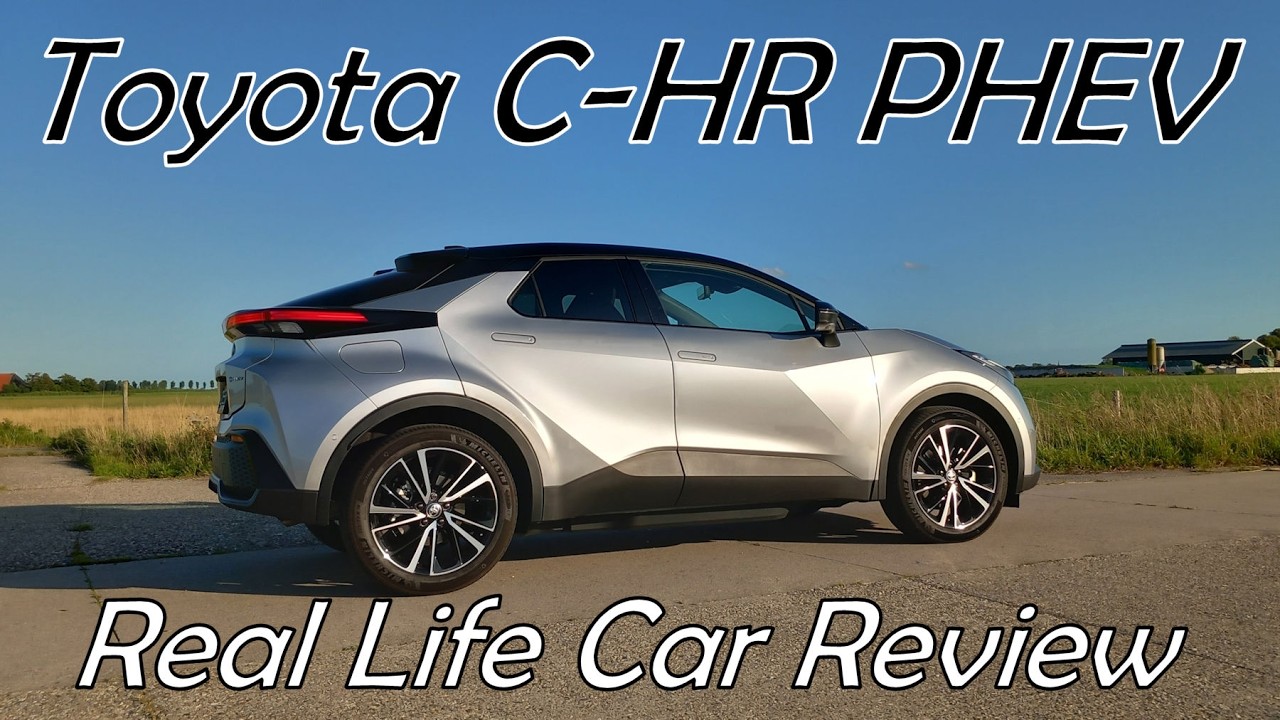
Toyota C-HR PHEV – Proving the critics wrong – Real Life Car Review
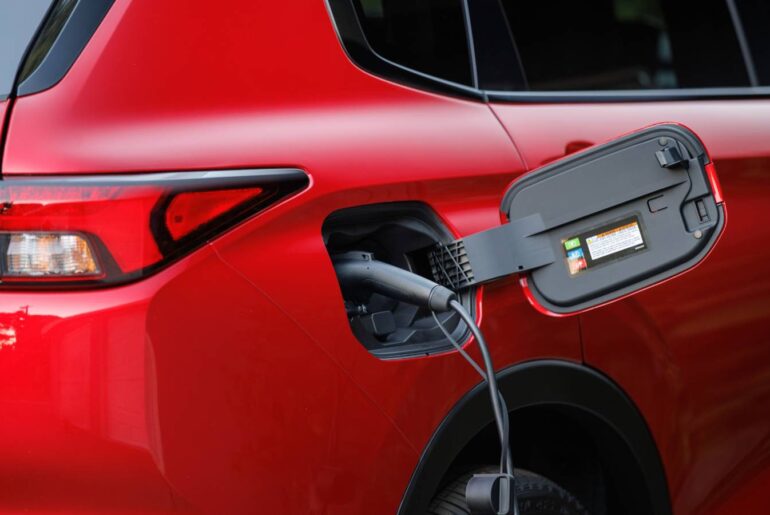
Hello everybody. Welcome back to the channel and welcome to a new real life car review. Even though this will be a real short car review. Reason is I have already done a detailed and in-depth review of the Toyota CHR. However, that was the regular hybrid version. This is the plug-in hybrid version. It’s a pretty popular car, and I know a lot of people are debating choosing between the hybrid or the plug-in hybrid version. So, I want to go over the details, the pros and cons of the plug-in hybrid version. And also, I took this car on a 3,000 km road trip through the north of Germany and the entirety of Denmark. And I gained some valuable and useful insights, which I want to share with you. And as per usual, I want to start off by having a peek under the hood and go over the differences in the drivetrains. No gas struts, only a hood prop. So, this is a plug-in hybrid powertrain, and it’s not much different than the 1.8 8 regular hybrid version. There also is a 2 L non-plugin hybrid version, but Toyota dropped that from the sales list over here in the Netherlands. So, we we have to choose between the 140 regular hybrid and the 220 horsepower plug-in hybrid version. And the differences between the internal combustions themselves are pretty minute. Both have a bore of 80 12 mm and the 1.8 8 has a stroke of 88.5 mm and the 2 L version just has a larger stroke, so a different crankshaft and the stroke of this engine is a 97.6 mm. The main difference for the plug-in hybrid over the 2 L hybrid version is that the motor generator too, so the main electric drive motor is more powerful leading to a higher uh overall power output system output I must say. It is powered by a 13.6 6 kWh lithium ion battery that lives under the cargo floor. When you look at it, there aren’t many differences between the 1.8 and this plug-in hybrid version. Everything basically looks the same. I always like to complain a little bit about the under the hood design. They could have put a nice cover over here so it looks neatly, but the only thing that Toyota owners need to open the hood for is to fill the washer fluid. I did notice, however, when I looked into the groceries is that Toyota sticks to a 15,000 km oil change interfall or every year. And I think that’s a good thing. It’s different than the 5,000 mi oil changes that the Americans seem to be addicted to. But for us, 15,000 km oil changes never led to any problems. Coming to think of it, I know a lot of Toyota hybrid owners who think that the wear on the oil is very limited because either the engine doesn’t run all that often or they do only short distance driving. But you have to keep in mind that hybrids have a very long warm-up period and yeah that takes a load on the oil. It has a long warm-up cycle as said and what you have you get a lot of inclusion of moisture and blowby gases, exhaust gases that get trapped into the oil. And when the oil doesn’t warm up to its operating temperature, those stay included. And when you pull the dips, they can look at the oil, it basically looks brand new. But when you smell it, you can smell the petrol oil. And that’s because of all the inclusions over there. So even if you don’t drive a lot and only do short distance driving, it’s very important to do your yearly oil change even though the miles or kilometers aren’t on the oil. And other than that, yeah, there isn’t much to see here. No big differences between the regular hybrid and this plug-in hybrid. However, that’s a different story when we go have a peek in the trunk, and that’s because the hybrid battery lives in the trunk. Of course, you do have an electric trunk opener, but it is kind of slow. You see that the trunk floor is level with the opening, and that’s very convenient. It’s actually pretty deep, but you have to keep in mind that the CHR is a car for a twoperson family. It’s not a family car. If you need the practicality and seating space, you better off with a Toyota crawler hybrid. So, as said, the trunk floor is different in size because the battery, the hybrid battery lives underneath here, and we left with a 350 L uh cargo capacity. It’s pretty practical, but you always have this large basket over here with the charging cables. I do notice that we have a plug over here, a 1500 watt uh AC outlet. So that’s a normal wall outlet. And underneath here, we have a nice rubberized floor vent, which is pretty nice to have. You have a little bit of cargo space on here. Um, in the regular hybrid, you can lower the trunk floor, so you get more cargo space. But then again, you don’t buy this car for it practicality. You can fold the rear seats down, get a little bit more cargo space, but you have to keep in mind that you have this sloping tail end, and that very much limits the practicality of this car. But then again, for a family of two, me and our son went on a road trip, this was more than spacious enough for us. So, let’s close up and let’s have a peek in the interior to see what difference we have over there. Now, before I hop in, I want to point out these door handles. I think I mentioned that in a previous review, but they pop in and when you lock the car down, they smack in. But they do it with a lot of noise. It’s real hard smack. And every time you drive off, they fold in with a smack. And I noticed that every time bystanders were looking at the car to see what was happening, and that’s the door handles. It could be a bit more subtle. So, looking at the differences, and let me power up the car. As you can see, the seat slides forward in this trim level. There’s electric adjustment on the driver seat in the top trim levels with an easy ingress egress function, which is nice to have. Now, let’s start off with the main differences for the plug-in hybrid versions. The interior is basically exactly the same except for this cluster of buttons for the EV and hybrid mode. You can force the car into hybrid mode or EV mode. So you can save the battery charge if you want to go into a zero emission zone or go slowly and quietly through a city center and you can force the car into EV mode uh to save fuel if you have any charge left. So looking at the interior, those are the only differences. The infotainment, the climate control, everything is the same. This trim level also has a wireless charger, but as said this is a top of the range trim level. During our road trip, I noticed that the navigation isn’t optimal. So, we used uh Google Maps and Android Auto for navigation. And I must say, this is a press car. So, there is no uh subscription connected to me that fire it to. And when you have that, you’ll get the connected car and online or live traffic information. But overall, I didn’t like the navigation system in this car all that much. audio system with the optional, let me show you, JBL audio system is pretty decent. Uh, one thing that I hope Toyota will change is the way you set up the uh, your preferences for the advanced driver assistance because if I want to drive off and I have to set up this system to my preferred setting, it takes 20 clicks with this little button clusters in the screen to get my preferred settings. And as as we have seen in more recent reviews, a lot of manufacturers have managed to put it with under a single push of the button. So really hope Toyota can improve on that. What I did like about this car are the seats. The seating comfort is pretty good. Support is pretty good. It’s non-fatiguing. I said this trim level comes with an electric seat and also with a lumbar support which is pretty nice to have. I will say that I would have the seat but would rather have the seat in a bit lower position but then again this car the CHR is farm over function and the overall visibility of this car isn’t great. I will close the door so I can show you. We do have a real need and high resolution around view monitor. So when you start driving and maneuvering uh you have a very good overall visibility, but you really need that camera system to have good overview of the car. I’m a quite experienced driver. I hold my commercial driving license, but I do have some issues with the overall visibility and this is a car that’s bought by a well overall but somewhat older buyer demographic. uh not the tallest people and I can’t imagine that they have issues with oversight of the bodywork and you really need the around view monitor during parking and maneuvering. Another thing that I want to point out uh is a remark that I made in the previous review of the Toyota CHR and that has everything to do with a glass roof. I mentioned that it doesn’t have a blind and I when I tested that car, it was early spring and I could tell that the glass roof would soak up a lot of heat and I wondered how that would be in summer. Well, I’ve been in full summer, late July, early August on a road trip with beautiful sunny weather and the sun was right above us, but I didn’t feel the heat radiate from the sun into the car. So, the UV protection and reflection of this sunroof is very good. And even on the brightest days, I didn’t really notice that I had a glass roof over me. I think it’s somewhat of a gimmick. I would prefer a regular just slick top roof. But, uh, yeah, it comes with this trim level. And the only negative I would say is in winter time that you can feel it soak up heat and then you really miss a blind to close it off for a bit more heat insulation. Anyway, these are the important differences between the hybrid and the plug-in hybrid version, which is mainly this cluster of buttons and my experiences from driving this car in summer. I think it’s about time we go on a drive. Okay, ready for a drive. I set up the assist driver assist systems. And now listen, that’s the smack of the door handles you get every time when you drive off after just gotten into the car. So, as long as the battery is charged, the car always will drive in EV mode. So, every time it automatically switchs to EV mode until the battery is fully depleted. And fully depleted mean that it is about 20% state of charge left and it uses that to keep the hybrid system up and running. So the car can act as a regular hybrid. So let’s give a little bit of way over here. But anyway, I said I always get the advertised 66 km of range in this car, which I think is pretty decent. Admittedly, the driving circumstances weatherwise are ideal at this moment. So yeah, it’s pretty easy to get, but as soon as you start switching on the HVAC or the climate control, it eats up a little bit of that range because it all it uses the electric power too. Um, one thing that I did notice and which I think is very important to note is the fuel economy of this car. As soon as the battery is depleted, I said there’s always electric power left to keep the hybrid system up and running. And basically it means that a hybrid battery is much larger than you get in a regular hybrid. So even though with a fully depleted charge you have a much larger battery for to yeah you have to capture the energy of regenerative braking and it can offer so much more support. That’s the big benefit of this plug-in hybrid version in when when you don’t charge it, you have a much better hybrid system than in the regular hybrid. And that is really visible in the uh fuel consumption. So I said I went to Denmark and I couldn’t charge the car over there for two reasons. My charging card didn’t work over there and often times the chargers had a different uh connector uh to them. So this car has a type two connector and in in Denmark I found a lot of CCS connectors. So, I drove around 2,000 km without ever charging the car and the fuel economy, and here comes it, was 4 L per 100 km over the entire test. So, I’ve been driving in this car for 2 weeks now. Did my road trip, and the average fuel consumption is 4 L per 100 km, which is much better than the 4.7, which I got in the regular hybrid of the hybrid version of the CHR. Now, admittedly, I said the driving circumstances at this moment are ideal weather-wise, and when I tested the hybrid version, it was early spring, so really needed the heater, which is mostly powered by the internal combustion engine. So, that’s a big difference. But I am willing to say that the plug-in hybrid version, even without charging, gets much better fuel economy. Now, when it comes to driving itself, there aren’t big differences between the hybrid and the plug-in version. The only thing is this car is around 200 kilos heavier, which is quite substantial. As tested, this car weighs 1,725 kilos, which I think is super heavy, but during driving, you don’t really notice it. Admittedly, the comfort, especially in the rear suspension, is better over the regular hybrid. There is more suspension comfort. The springs seem to be a little bit softer. Dampening is a little bit better. But overall, this car leans more toward a sportier driving setup. But it is a pretty comfortable car, too. And when you look at the drivetrain calibration of this car, it’s basically the same. with my driving style. If I would drive the hybrid and the plug-in version back to back, I don’t think that I would experience much differences in driving and drivetrain calibration. It’s really well set up. Now, just for fun, I’m going to switch over to hybrid mode. And now we’re in hybrid mode. The internal combustion engine started, and you don’t feel a thing. Don’t hear a noise. You don’t feel a slight shock or anything. It’s smooth and it’s seamless. Really goes to show how far Toyota has perfected this system. So, let’s build up some speed here. And now listen, I’m only doing 100 km an hour over here. You can already hear the wind noise over the Apillars. And it’s a quietest wind still day today. But that’s something that I noticed. And now I can also hear the tire noise entering the interior. The drivetrain itself is super quiet. It’s more that you hear the tires and the wind noise. Not sure how different that is when you choose a smaller wheel option with the 18in wheels. I think the tire noise, the road noise will improve a little bit, but it’s just a wind noise. And honestly, it’s so noticeable since the rest of the car is so quiet. But as said, that’s something I highly recommend you go test for yourself on a test drive if you’re considering this car. But anyway, I think I’ve touched upon all my talking points for the CHR plug-in hybrid. So, let’s head out to the middle of nowhere for the final thoughts on this car. See you in a second. The question is, when should you choose the plug-in hybrid version over the regular hybrid version? Well, there are a couple of things that you need to take in consideration. I think the plug-in hybrid version is best suited for people who have the availability of a charger at their home, at the driveway, maybe even with solar panels on the roof. It’s not worth buying a charging pass or get a subscription to a charging network, I think, because, and this is one thing that I didn’t mention, this car charges really slow. When I plug it into a public charger with an 11 kW output, it charges only at 6.6 kWh hours. It’s I think that’s the maximum for this car. So, it takes three and a half hours on a public charger to fully charge a depleted battery. On your regular wall outlet, it can run up to seven hours of charging time. But then again, if you have a charging possibility at your home on your own driveway overnight, you can fully charge a car. And depending on the weather and driving style, you’ll get up to 66 km of EV range the next day. But that’s something that you have to keep in mind. It is quite uh quite slow in charging. Another thing that you can take in consideration is the amount of time you spend driving on highways. For highway driving, I would prefer the plug-in hybrid version over the regular hybrid. It accelerates much more smoothly and more effortlessly. And yeah, overall it seems to be a bit quieter drivetrain wise on the highway. Another thing that you might take in consideration is the fuel economy. Um, even without charging, this car gets much better fuel economy than the regular hybrid. As I mentioned earlier in the test with the regular hybrid, the 140 horsepower version, I got a fuel consumption of 4.7 L per 100 km, which is pretty darn good for a car of this size and this performance. But in this car, it got down to 4 L per 100 km. You have to take in account that this car weighs 200 kil kilos more. So that may result in a penalty in road taxes on buying taxes maybe depending on where you live. But that’s something that you have to keep in mind. So even when you don’t charge your car or if you don’t have the possibility to charge your car at home, you will get better fuel economy with this car. But anyway, those are the things that you can take in consideration when you’re choosing between the hybrid and the plug-in hybrid version of the Toyota CHR. As said, I did a much more detailed and in-depth review of the Toyota CHR. The regular version, the hybrid version isn’t much different from the plug-in version. So, if you want to know more about the CHR, I highly recommend you go watch this video. I’ll also leave the link in the video description. And for now, I would like to thank you for watching. I hope you liked following me along. And if you did, please give me a like, subscribe to my channel, leave a comment if you have a question or any constructive feedback. And also, if you want to help out support the channel, you can do so by buying me a coffee. For that, I will also leave the link in the description box of this video. For now, I would like to thank you for watching, and I hope to see you on the next one. Bye.
Plug-in Hybrid Vehicles are the worst of both worlds, critics say. A compromised ICE car combined with a compromised EV. Despite that, many PHEV owners a very happy people. The Toyota C-HR proves that PHEV’s are pretty good cars, maybe even perfect to some people. I took this car for a spin and didn’t charge it. It’s fuel economy was better that the regular Hybrid…
I like coffees: buymeacoffee.com/arnoldsrepairs
0:00 Intro
0:47 Under the hood
3:35 Cargo space
5:11 Interior
7:37 Seat comfort
8:46 Panoramic roof
9:54 Drive segment
15:22 Final thoughts