Are Electric Motorcycle Torque Figures a Lie? | The Shop Manual
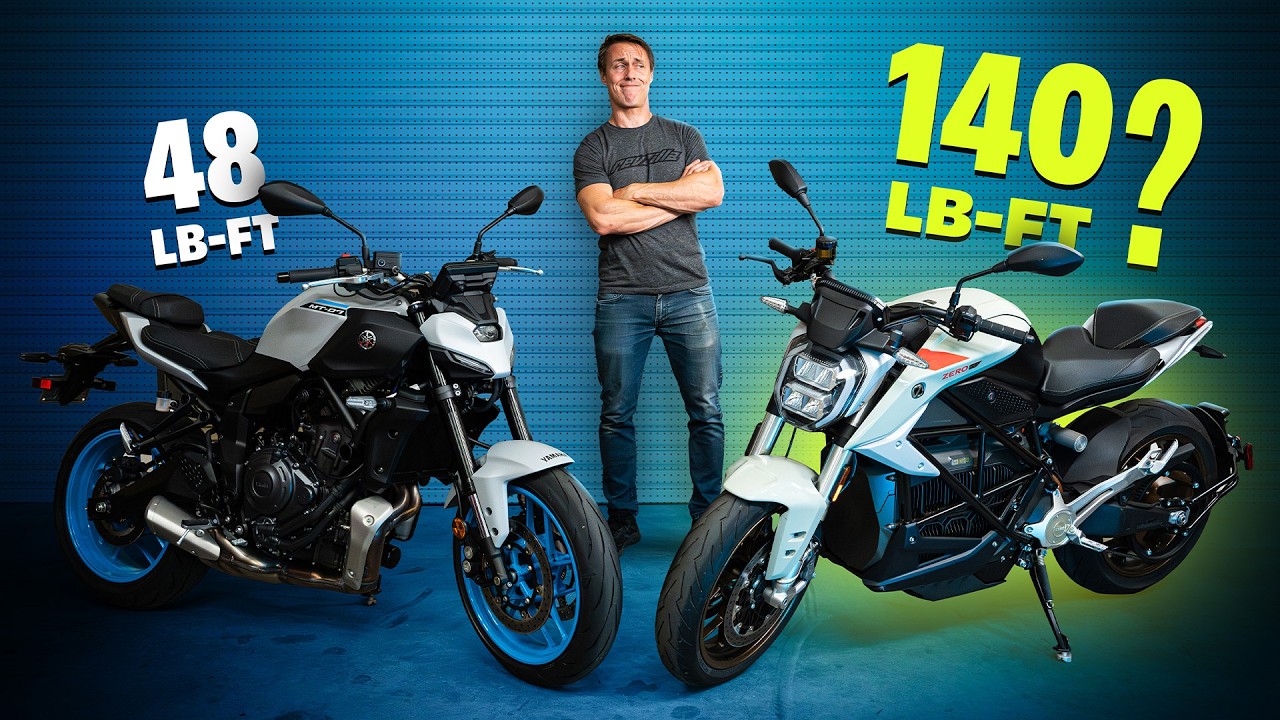
Electric motorcycles are known for their insane torque figures. I mean, Zero says this SRF makes 140 pound- feet of torque, while this Yamaha M07 only turns out 48. So, is 140 for real or madeup marketing BS? Let’s open up the shop manual and find out. [Music] This episode of the shop manual is powered by Duraboost batteries. Get 10% off your Duraboost purchase at revzilla.com with discount code 10 off TSM. Based on what we’re used to hearing, 140 lb feet of torque should melt the rear tire or flip you under your helmet almost immediately. Yet, this torque monster of a Zero is well behaved, and its off-the-line acceleration isn’t that much faster than this M07’s, even though the Yamaha seemingly only has a third as much grunt. [Music] Those are real world tested by me facts. So, the Zero’s torque figure has to be BS, right? Nope. It’s hard to believe, but the numbers aren’t fabricated or even exaggerated, and there’s no clandestine wheelie control or torque limiting off the line. The reason these two bikes have similar acceleration from a standstill, and the reason ebike torque is so hard to interpret in general is quite simple. Gas bikes have transmissions and electric bikes typically don’t. To understand why that matters, we have to talk about how motorcycle output is evaluated in the first place. Whether the torque and horsepower figures are gathered at the rear wheel using a typical chassis dyno or at the crankshaft via an engine dyno like manufacturers and regulatory bodies use, the objective is always to represent engine performance. And therein lies the problem. We don’t ride engines. We ride complete motorcycles that push the crankshaft’s torque through a series of gears that amplifies the engine’s output dramatically by the time it reaches the rear tire. For example, with a typical gas bike’s primary reduction, six-speed transmission, and final drive ratio, we could be talking about a multiplication factor of 14 to 15 in first gear. Meanwhile, electric motorcycles direct drive single reduction setup only multiplies motor torque by four or five. So, while the Zero and Yamaha have vastly different motor and engine outputs, thrust at the rear tire is far more comparable than you might think. Now, peak rear wheel thrust is certainly more useful than peak engine torque when trying to assess a motorcycle’s acceleration, but it’s still just a snapshot of one moment in time. For a more complete picture of how a bike is going to respond when you open the throttle, we should take a look at what’s called attractive force graph, which gives us thrust on the y-axis charted against ground speed on the x-axis. Here we can see that the 48lb foot Yamaha M07 briefly offers more thrust in first gear, but then the Zero SRF dishes out loads more from 45 mph on. Combine that with the fact that the Zero has uninterrupted acceleration. The ebike doesn’t have any gears to shift through because it doesn’t need any. And the SRF feels properly fast in the mid-range. In fact, it sprints from 60 to 80 mph twice as quickly as the Yamaha. Horsepower and weight are also factors here. They’re really big factors, actually. But the bottom line is that electric motorcycle torque figures are real. They’re just hard to wrap our heads around because our brains and butt dinos are accustomed to bikes with torque multiplying transmissions. If you really want to understand how an electric motorcycle or any bike for that matter compares to another bike, don’t only rely on horsepower and torque specs. Instead, try to find real test data like 0 to 60 time, 1/4 mile time, and top gear rollon times because that’s real world performance, not some motor metric that’s five or maybe 15 steps removed from what you actually get at the rear wheel. Thanks for watching another episode of the shop manual. This particular one was pretty enjoyable for me because it was an exploration in order to get the explanation for why electric bike torque numbers are so crazy and why they’re real. Now, if you’re confused about horsepower and torque in general, please scan that QR code on your screen. You’ll be taken to Common Tread and an article that gives you a primer on those two fundamentals of motorcycleycling. And if you like the shop manual and you like daily rider and you like CTXP, you know what you got to do. You got to support the shows by supporting Revzilla. Buy your gear and apparel at revzilla.com. And thank you.
Get 10% off a new DuraBoost battery at https://rvz.la/4nftU1E with discount code 10OFFTSM. Valid through 10/31/2025.
Electric motorcycles claim some truly insane torque figures. For example, Zero says its SR/F makes 140 pound-feet of torque, which is more than a 1340cc Hayabusa! So, is 140 for real, or are we being lied to? Ari dives in to uncover (and explain) the truth in this episode of The Shop Manual.
Read our gas bike versus electric motorcycle road-trip comparison at Common Tread. https://rvz.la/4nlZGtQ