
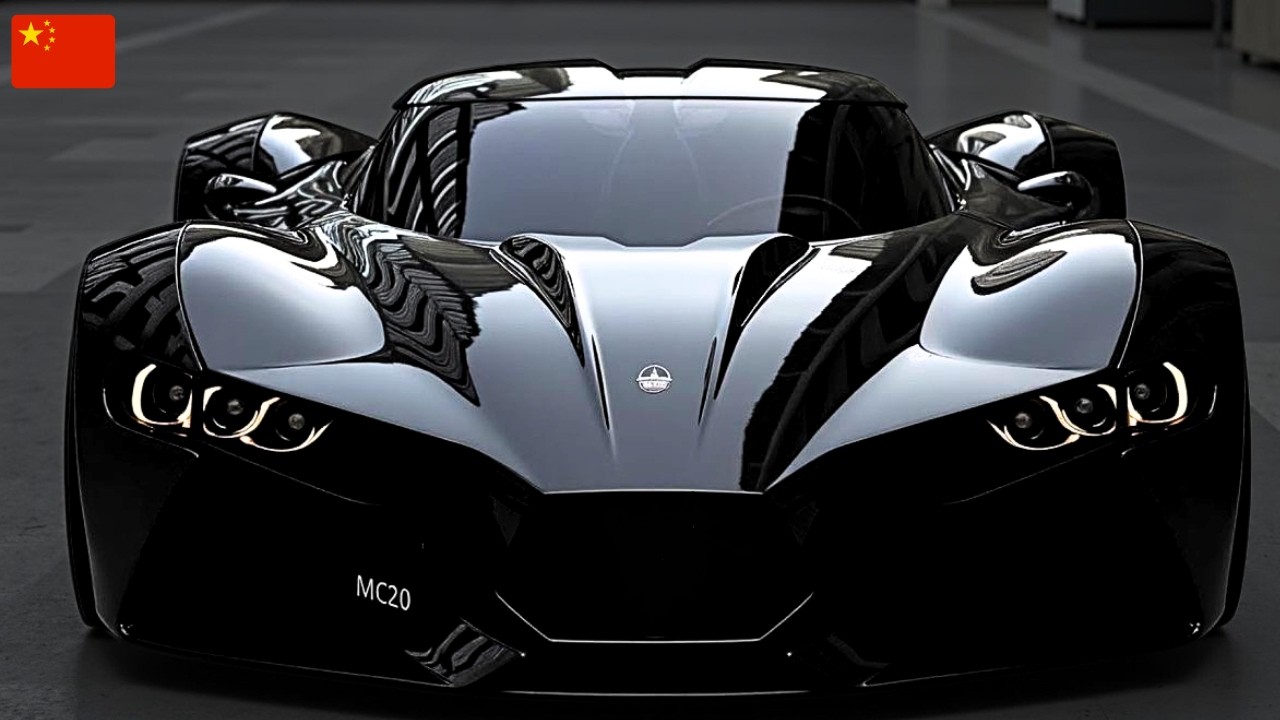
TOP 10 MOST INSANE Chinese Cars Coming to SHOCK the World!
What if I told you your Tesla is already outdated? Yeah, cuz China just dropped cars that look like they were teleported straight from the year 2050. These things don’t just drive, they dance, jump, and think for themselves. And hey, before we dive in, smash that subscribe button because trust me, you’re going to want front row seats for this ride. Especially number one on this list. A hypercar so insane it literally defies gravity. This is the countdown of the top 10 most advanced Chinese cars that are about to shock the world. Let’s start with number 10. And believe me, even this one will blow your mind. Starting with number 10, my Extra S800. Forget Tesla. Forget Mercedes. This Chinese luxury sedan just landed and it looks like it timeraveled from 2035 to embarrass every luxury brand on the planet. I’m talking about the Mestro S800, a car that makes you rethink what luxury sedan even means. The exterior is straight up theater. Let’s start with the front. A massive illuminated grill that isn’t just for show. It’s an LED matrix that comes alive when you walk up. Imagine your car greeting you with animations like a personal light show, while razor thin headlights slice across the nose like laser beams. It doesn’t just look futuristic. It feels like the car knows you. From the side, it’s long, low, and dripping with presence. You know how the Lucid Air and Porsche Tyan have that stretched, clean look? The 800 takes that and adds its own flare with a couplike roof line that flows into a fastback rear. The wheels, absolutely massive 22-in alloys with aerero optimized spokes that look like they’ve been sculpted by wind itself. And the door handles, forget chunky chrome pieces. They’re completely flush, popping out only when you approach. That alone makes it feel like you’re driving a concept car that accidentally escaped an auto show. Around the back, the tail light is one continuous glowing bar that feels like a piece of crystal. It stretches across the entire rear, perfectly integrated with a subtle spoiler lip. The car has that spaceship leaving the runway vibe. sleek, commanding, and absolutely impossible to ignore. Step inside, and this is where jaws really hit the floor. The entire dashboard, it’s just one giant uninterrupted glass screen. I’m talking wallto-wall display. It makes a Tesla Model S look like it’s stuck in the flip phone era. Front and center, the driver gets a high-res digital cockpit. In the middle, there’s a cinemmaized infotainment display. And in front of the passenger, yep, they’re on screen, too. Movies, browsing, games. Your co-pilot can basically binge Netflix while you’re cruising. Now, the seats. Oh, man. These aren’t car seats. They’re basically luxury lounge chairs. Plush quilted leather with heating, cooling, and massage modes that rival five-star spas. Even the rear passengers get treated like royalty with recline functions that make you feel like you’re in business class at 35,000 ft. Armrests fold down with hidden storage and wireless chargers. And of course, a panoramic glass roof floods the cabin with light. And just a flex, the Mestro gives you a customizable starlight ceiling. You can set the mood with glowing constellations, soft colors, or full-on nightclub vibes if that’s your thing. The whole cabin is wrapped in leather, suede, and wood accents that scream handcrafted detail. Technology-wise, it’s loaded. Face recognition unlocks the car. gesture controls for the infotainment and an AI assistant that actually responds naturally. You don’t just press buttons in here. You talk to the car and it obeys. Want to change the AC, lighting, or music? Just say it and boom, done. Now, here’s the surprise. It’s not just luxury for the driver. The 800 is a proper full-size sedan, meaning real space in the back. I’m talking enough legroom to cross your legs and still have space left. The trunk, massive. family road trips, airport runs, business luggage, it swallows it all. This thing doesn’t just look the part, it plays the part, too. Under the hood, or should I say under the floor, is a fully electric setup with over 650 km of range on the CLTC cycle, which translates to about 400 real world miles. The real flex, it’s 800 volt architecture. That means ultra fast charging from 10 to 80% in just 15 minutes if you find the right charger. Performance-wise, don’t let the size fool you. It’s packing dual motors and all-wheel drive with 0 to 60 in around 4.3 seconds. That’s faster than some BMW M cars. Smooth, silent, and ridiculously quick for a rolling luxury hotel. Now, brace yourself. This rolling spaceship costs around $140,000. Yep, that’s straight into Mercedes S-Class in BMW 7 Series territory. But here’s the kicker. You’re getting a level of tech and wow factor that those brands just don’t have. A car that makes even a 200k Maybach feel a little old. But here’s the million-doll question. Would you really drop S-Class money on a Chinese newcomer? Or would you play it safe with a German badge, even if it looks outdated by comparison? Drop your thoughts in the comments because up next at number nine, we’ve got a Chinese SUV so massive and over the top, it makes a Cadillac Escalade look like a family minivan. Number nine, Hongchi EHS9. Imagine an electric SUV so massive, so luxurious that it makes a Cadillac Escalade look like a family minivan. That’s the Hongchi EHS9, Chinese luxury tank on wheels. From the outside, this thing is just huge. like skyscraper huge. We’re talking over 5.2 meters long. That’s longer than a BMW X7 and right up there with a Rolls-Royce Cullinin. The front grill, forget subtlety, it’s this giant chrome waterfall that looks like a royal palace gate. And here’s the kicker, it’s fully illuminated with vertical LED strips running down like light pillars. The headlights are razor thin and tucked up high, while the daytime running lights form a sharp T-shape that screams modern luxury. From the side, you immediately notice the sheer scale. It rides on massive 22-in turbine style wheels with an upright stance that makes you feel like it owns every lane it touches. The roof line stays boxy and regal, not couplike, because this SUV isn’t pretending to be sporty. It’s flaunting power. Walk to the back and you’ll see a full width light bar that glows like a neon skyline at night. The vertical tail lights extend down into the bumper, adding even more presence. Chrome trims run along the sides and windows, giving it that old school luxury vibe, but with a futuristic twist. Honestly, park this next to a Lincoln Navigator, and the Navigator suddenly looks shy. Step inside, and this is where it goes full presidential. The Hongchi EHS9 interior is like a luxury yacht mixed with a tech lounge. The first thing you’ll see is screens. Three giant displays stretch across the dashboard. one for the driver, one for infotainment, and one just for the passenger. And yes, there’s also a rear seat entertainment setup, so nobody’s stuck staring out the window. The materials, premium leather everywhere, quilted with diamond stitching and accented with real wood and brushed metal. The steering wheel has this chunky, commanding look, more like you’re piloting a ship than driving a car. But here’s the real flex, the rear seats. Depending on the trim, you can have six or seven seats. And if you go with six, the middle row gets full captain’s chairs with heating, cooling, and massage functions. That’s right, even your kids could be riding in spa chairs. The cabin lighting is fully customizable with ambient glow running along the doors, dash, and even the roof. And because no Chinese luxury car is complete with drama, the panoramic roof is massive, basically the size of a small apartment ceiling. At night, it turns into a star-like display, just like a Rolls-Royce. Imagine being chauffeurred in this thing. It’s less car, more rolling penthouse. And yeah, it’s actually practical. Three rows, plenty of headroom, and a trunk that can handle family road trips without breaking a sweat. It’s the SUV you buy if you want to feel like the CEO of every highway. Now, under all that luxury is a fully electric setup. The EHS9 comes with dual motors, giving it over 500 horsepower and all-wheel drive. range around 300 miles real world depending on the battery pack. Charging isn’t as cutting edge as some of the newer Chinese EVs, about 30 minutes to 80% on a fast charger. But honestly, this isn’t about speed. It’s about silent, effortless cruising in a literal electric palace. And here’s where it gets wild. The EHS9 starts at about $80,000 in China. Let me repeat that. A full-size electric SUV with Rolls-Royce vibes for the price of a nicely speced Ford Expedition. Even fully loaded with all the bells and whistles, you’re still well under half of what a Rolls Cullinin would set you back at. But here’s the question. Would Americans actually buy a Chinese SUV this big and flashy? Or would they stick to their Escalades and Navigators? Drop your take below. And if you’re loving these mindblowing Chinese machines so far, make sure to hit that subscribe button because the next one on this list makes Tesla look like yesterday’s news. Now, imagine a car so sleek, so futuristic that it looks like it belongs in a Marvel movie instead of your driveway. That’s the Avatar 11, an SUV built by Huawei, CL, and Chongan. Yeah, a smartphone giant, a battery king, and a car maker teaming up to create a spaceship on wheels. From the outside, the Avatar 11 doesn’t even look like a traditional SUV. It’s more like a high-tech coupe that decided to grow muscles. The front end is razor sharp with ultras slim headlights that stretch across the face like glowing eyebrows. Instead of a bulky grill, you’ve got these sculpted air intakes and a clean futuristic nose that makes Teslas look dated. Move to the side and this is where it really flexes. The roof line flows down like a coupe, but the body has that wide planted stance of a performance SUV. Giant 21-in turbine wheels fill the arches, and of course, flush pop out door handles and camera mirrors instead of old school side mirrors. The proportions scream Lamborghini Urus, but with that extra sci-fi edge. At the back, oh man, a single blade of light runs across the width, curving into vertical accents at the edges. It looks like a neon strip ripped straight off a cyberpunk video game. There’s also a subtle active spoiler that rises at speed, giving it that sporty meets futuristic vibe. Honestly, park this next to a Model Y and the Tesla looks like a toaster. Step inside and the Avatar 11 feels more like a Huawei smarthome than a car. Front and center is a massive 15.6 in floating touchscreen with a driver’s display behind the wheel. And here’s the flex, a 10.25 in passenger display just for whoever’s riding shotgun. So yeah, no more fighting over Spotify playlists. The design language is clean and modern. Leather everywhere wrapped around minimalist panels with brushed aluminum and soft touch materials that feel premium without being overdone. The steering wheel, flat bottomed, sporty with touch sensitive controls. And the seats, sculpted, heavily bolstered, and finished in eco leather with optional suede. They’re heated, cooled, and of course have massage functions. The rear bench isn’t just an afterthought, either. There’s plenty of legroom thanks to the long wheelbase, and the ambient lighting running along the doors makes it feel like you’re sitting in a futuristic lounge. Huawei’s Harmony OS powers the entire cabin, so the car runs like one giant smartphone. Face recognition starts it up. AI voice assistant runs everything from music to climate. And overtheair updates keep it evolving. It’s less like you’re in a car, more like you’re in a living, breathing gadget. Even with the coupe styling, the Avatar 11 doesn’t punish you for having friends or family. There’s a roomy second row, plenty of headroom for adults, and a surprisingly big trunk for road trips, so it’s futuristic and functional. Underneath, you’re getting serious EV muscle. Dual motor all-wheel drive setup with up to 578 horsepower, launching this SUV from 0 to 60 in just 3.9 seconds. Range about 420 mi CLTC, which should be around 300 to 320 real world miles. charging. Thanks to CL’s battery tech, you get 750 volt fast charging, meaning 10 to 80% in roughly 20 minutes if you find the right station. That’s insane speed for a family-sized SUV. And here’s the wild part. All of this for around $55,000 to $65,000 in China. That’s barely more than a Tesla Model Y performance, but with way more tech, luxury, and design flare. It’s like buying a Bentley for the price of a BMW. But would you actually trust Huawei and a Chinese startup over Tesla or Mercedes? That’s the debate. Cuttingedge innovation or proven brand safety? Let me know in the comments because at number seven, we’ve got a car so radical it doesn’t even feel like it belongs on Earth. Wait till you see this one. Okay, picture this. An SUV so advanced it can literally drive through a flood without sinking. And if things get really wild, it can spin 360° like a tank. No, this isn’t a military prototype. It’s the BYD Yang Wang U8. From the outside, the U8 looks like the love child of a G Wagon and a Range Rover on steroids. It’s boxy, aggressive, and absolutely gigantic. over five meters long and more than 2 meters wide. The front grill is massive, shaped like a bold diamond with sharp LED headlights flanking the edges. And just to flex, the headlights have this wild sequential animation when you unlock the car. It looks like Iron Man charging up his chute. On the sides, you’ve got squared off wheel arches housing 21-in alloys designed for both city flexing and off-road dominance. The stance is upright, rugged, and commanding. You feel like this thing was designed to intimidate anything else in the parking lot. At the back, oh man, a single blade of light runs across the width, curving into vertical accents at the edges. It looks like a neon strip ripped straight off a cyberpunk video game. There’s also a subtle active spoiler that rises at speed, giving it that sporty meets futuristic vibe. Step inside and the U8 feels like a futuristic command center. Right in front, you’ve got a huge curved 23.6 in digital instrument cluster paired with another massive central touchscreen for infotainment. Even the passenger gets their own display just like in high-end Mercedes EQ models. The seats wrapped in plush Napa leather with intricate stitching, heated, cooled, and massage. Basically first class airline seats but with a steering wheel. The second row is equally luxurious, offering captain’s chairs in higher trims with their only touchcreens and full climate controls. And because it’s BYD, you get all the cool Chinese touches, customizable ambient lighting running through the cabin, a panoramic roof the size of a billboard and a 22 speaker premium audio system tuned by Dine Audio. Sitting inside feels less like an SUV and more like a luxury smart lounge. Despite all the tech wizardry, it’s still practical. The U8 seats up to seven people comfortably, has a spacious trunk, and here’s the kicker. It can literally float in water for up to 30 minutes in case of flash floods. Show me another SUV that does that. Here’s where it gets insane. The U8 runs on BYD’s E4 platform, meaning four electric motors, one for each wheel, pumping out a combined, 1180 horsepower. Yeah, you heard that right. 0 to 100 km an hour, about 3.6 seconds in a car that weighs over 3 tons. The battery is BYD’s signature blade battery, around 49 kW hours, paired with a 2.0 L turbo range extender. So, you get both insane EV performance and peace of mind with a generator on board. Real world range around 600 m with the extender running. Fast charging can take the battery from 30 to 80% in about 18 minutes. Oh, and remember when I said it can spin like a tank? That’s because each wheel is controlled independently. It can crab walk sideways, rotate in place, and even crawl out of ditches that would kill a normal SUV. and the price around $150,000 in China. If you’re loving these wild Chinese cars, hit that subscribe button. I’ve got even crazier ones coming up. And trust me, you don’t want to miss what’s sitting at number one. It makes Tesla look old. An electric Lotus SUV sounds weird, right? But this isn’t just Lotus dipping its toes in the EV world. This is the Electra, a hyper SUV so advanced, it’s making Lamborghini rethink what luxury performance should look like. Technically, it’s a British badge, but let’s be honest, this SUV is built in China, backed by Chinese money, and it’s a showcase of how China is reshaping even old school European brands. From the outside, the Electrate looks like it was designed with a samurai sword. Sharp, aggressive, and cut from pure speed. The front end is low and wide with this massive blacked out grill that doubles as an aerodynamic air channel. The split headlights give it that futuristic robotic stair, while active air flaps in the front bumper literally open and close depending on your speed to reduce drag. Move to the side and it’s pure supercar SUV drama. Huge 23-in wheels, muscular fenders, and a sloping roof line that screams coupe more than SUV. But here’s the kicker. Pop out LAR sensors hide in the roof and fenders. Yep, it’s scanning the road like a spaceship. At the back, it’s Bladeunner vibes. A razor thin light bar runs across the width, and underneath a full active spoiler rises and tilts like a race car wing when you push it. This isn’t just an SUV, it’s Lotus, reminding the world that they can still make jaws drop. Step inside and you’re hit with a mix of British luxury and Chinese tech since Lotus is now owned by Jile. The cabin feels futuristic but not overwhelming. The dashboard is clean with a long thin OLED strip for the driver, a massive 15.5 in floating center screen, and even a passenger display so your co-pilot can control media or navigation. The materials, suede, carbon fiber, and sustainable fabrics, all stitched together in this sporty yet upscale way. The steering wheel looks straight out of a hypercar. Flatbottomed, chunky grips with drive mode selectors right on it. Rear passengers aren’t forgotten either. You can spec the Electra with a two seat executive layout, giving you heated, ventilated, and massaging chairs with their own touchcreens. Add in the huge panoramic roof and customizable ambient lighting and you’ve got yourself a cabin that feels more like a private jet lounge than an SUV. And unlike a Lamborghini Urus or a Ferrari per a song, this thing actually works for families. It’s a full mid tolarge SUV with a giant trunk and proper rear legroom. So yeah, you can drop your kids off at school in a 900 horsepower spaceship. Speaking of horsepower, buckle up. The Electra comes with up to 95 horsepower in the Electra R model, blasting from 0 to 60 in under three seconds. Range around 370 mi on the WLTP cycle thanks to a 112 kWh battery. Charging with 800VT architecture, you can go from 10 to 80% in just 20 minutes on a DC fast charger. It’s AWD, it’s lightning quick, and yet it can cruise quietly for road trips. That’s hypercar DNA in an SUV. Now, here’s where jaws drop. Starting at around $100,000 in Europe, the Lotus Electra massively undercuts a Lamborghini Urus or Ferrari Parasang. Cars that cost well over 250K. You’re basically getting hyper SUV performance for the price of a Porsche Cayenne Turbo. Next, at number five, we’ve got a Chinese EV that looks less like a car and more like a spaceship. Number five, IM Motors L7. One of the most futuristic Chinese sedans out there. Imagine a luxury sedan so smart it practically drives itself, massages you, and still looks cooler than a Mercedes EQS. That’s the IM Motors L7. A car that feels less like a sedan and more like a rolling AI assistant. From the outside, the L7 doesn’t scream for attention, but once you really look, it’s stunning. The front has this ultra sleek, clean design. No big grill, just a smooth face with razor thin LED headlights that stretch across like a neon visor. When it powers on, the light signature does a little animated dance. You know, just to remind you that this car has more personality than some people. The proportions are long, low, and wide. Classic luxury sedan, but with futuristic edges. It’s about the same size as a BMW 7 series, but the curves and flesh door handles make it look way more high-tech. From the side, you’ll notice the dramatic sloping roof line that gives it almost a coupe vibe, but still keeps that executive sedan presence. The huge alloy wheels up to 22 in are sculpted with a turbine-like design, giving the whole car this feeling of motion even when it’s parked. The rear, minimalist perfection. A full width tail light bar glows across the trunk with sharp vertical fins that give an almost a spaceship vibe. Honestly, if you told me this was a concept car that somehow made it to production unchanged, I’d believe you. Now, step inside and wow, this is where the L7 flexes. The first thing that hits you is the gigantic 39in triple screen setup running across the entire dashboard. Driver display, infotainment, and passenger screen, all seamlessly connected into one sweeping glass panel. And yes, it’s voice activated, gesture controlled, and packed with AI features. The steering wheel is squared off, almost like a Formula 1 car, with haptic controls built right in. The center console is minimalist with hidden storage and wireless charging pads for both driver and passenger. But the real magic is in the seats. Plush Napa leather, heated, ventilated, and massaging with memory functions that adjust automatically when the AI recognizes you. Rear passengers, they got their own touchcreens, full recline options, and even a small fridge if you spec it out. Add in customizable ambient lighting and a panoramic glass roof, and it feels like a luxury lounge fused with a gaming PC setup. Despite the sporty look, it’s a proper big sedan. Loads of leg room, a wide rear bench, and a trunk large enough for serious road trips or golf clubs. It’s clearly aimed at families and executives who want space, but with tech bragging rights. The L7 is pure EV with dual motor all-wheel drive pushing out up to 576 horsepower. 0 to 60 just 3.9 seconds, which is insane for a full-size sedan. Range around 370 to 400 m CLTP depending on the battery pack. And thanks to its 93 kWh setup, you’ve got plenty of juice for long drives. Charging. With 400 kW ultra fast charging, you can go from 10 to 80% in just 20 minutes on a DC fast charger. It’s all-wheel drive. It’s lightning quick. And yet, it can cruise quietly for road trips. That’s hypercar DNA in an SUV. Now, here is where jaws drop. The IML7 starts at just around $60,000 in China. That’s right, a car that looks and feels like it could compete with a Mercedes EQS or BMW i7 for less than a Tesla S model. It’s kind of crazy that this much car costs less than some pickup trucks in the US. And here’s the kicker, but would people outside China actually trust an AIdriven sedan to handle their daily life, or would the tech feel too much? Drop your thoughts below. If this IML7 blew your mind, wait till you see what’s coming up. So, hit that subscribe button right now because number four looks like it rolled straight out of a sci-fi movie. And trust me, you don’t want to miss it. All right, let’s roll into number four. The Zeer 007. One of the most hyped futuristic sedans out of China right now. Imagine a car that can change its personality with a tap of a button. Front lights that dance, a face that smiles, and tech so advanced it feels like it’s alive. That’s the Zeer 007, a sedan that makes Tesla’s Model 3 look like last year’s iPhone. The Zeer 007 has this sleek, minimalist design that’s all about futuristic elegance. Up front, you won’t find a boring grill. Instead, you get what Zeke calls the Stargate light strip. It’s a full width LED bar that not only lights up, but also animates, showing patterns, messages, even emojis. Imagine your car winking at you when you walk up. That’s the level of personality we’re talking about. The headlights are razor thin and integrated seamlessly into the front fascia, giving it a cyberpunk vibe. From the side, it’s pure luxury sedan. Long, low roof line, flush door handles, and muscular rear hunch. The proportions are spot-on with a wheelbase that stretches almost as long as a BMW 5 Series, giving it that executive stance. At the back, you get another full width LED bar. But here’s the twist. It’s not just a simple strip. It has layered depth with crystalite detailing, so at night it looks like a glowing blade. Throw in the 20 or 21in wheels with aerodynamic covers, and the whole car looks like it was designed in a wind tunnel for a sci-fi movie. Now, step inside, and this is where Zeer flexes hard. The centerpiece is a 15.5 in 2.5K OLED touchscreen floating in the middle of the dash paired with a sleek digital driver display. But here’s the kicker. Zeer has integrated a voice assistant and advanced AI that literally learns your habits. Forget buttons, forget knobs. This car predicts what you want before you even touch it. The seats, plush Napa leather, heated, ventilated, and massaging with notes in the seats that actually pulsate to get into the groove of the music. The cabin design is clean and modern with soft touch materials, hidden air vents, and customizable ambient lighting running across the doors and dash. The steering wheel is compact, squared off, and futuristic, but still feels familiar enough to grab and drive. And for the back seat crew, tons of leg room thanks to the long wheelbase, plus optional rear screens and a center armrest with wireless charging pads. Basically, whether you’re driving or being chauffeurred, it feels like a luxury lounge on wheels. Unlike some sporty sedans, the 007 doesn’t sacrifice usability. You’ve got a roomy trunk, generous rear headroom, and foldable seats. It’s the kind of car you could daily drive without giving up comfort or space. Here’s where it gets spicy. The 007 comes in both rear WD and AWD versions. The topsp spec dual motor model pumps out over 600 horsepower, rocketing from 0 to 60 in just 2.8 seconds, faster than a Porsche Tyon 4S. Range, thanks to its 100 kWh key battery from CL, you’re looking at up to 500 m CLTP, one of the highest ranges in the game right now. And with 800 volt fast charging, you can get 370 mi of range in just 15 minutes. That’s insane. Now, here’s the crazy part. The 007 starts at just $35,000 in China. Let me repeat that. A luxury sedan with Tesla killing range, hypercar acceleration, and a party trick light show for less than the price of a base Toyota Camry in the US. Tell me that’s not mind-blowing. And hey, if that 007 made you jealous, just wait for what’s next. Hit that subscribe button right now because number three looks like it came straight from a design studio on Mars. Number three, Hi-Fi Z. Now, buckle up because this one doesn’t even look like a car. The Hi-Fi Z is less than a sedan and more like a spaceship that somehow got street legal. Seriously, if Bladeunner had a luxury car, this would be it. The Hi-Fi Z is one of those cars that makes you stop in your tracks because it looks too wild to be real. Up front, the design is dominated by its programmable LED matrix lights. Not just headlights, but pixel displays that can show animations, patterns, even words. Imagine your car literally talking to people on the street. That’s the level of personality we’re talking about. The headlights are razor thin and integrated seamlessly into the front fascia, giving it a cyberpunk vibe. From the side, it’s even crazier. suicide style rear doors that open backwards, flush handles that pop out like they’re from a sci-fi movie, and a floating roof design thanks to hidden pillars. The wheels are massive up to 22 in with this cyber mechanical design that makes it look like it belongs in a concept art book. And the rear, a full width LED light blade stretches across paired with vertical fins and animated light effects. It doesn’t just glow, it puts on a show. Park this next to a Tesla Model S, and the Tesla suddenly looks like a beige appliance. Inside, it’s just as nuts. The centerpiece is a 15-in floating OLED screen that literally swivels toward the driver or passenger on command. It’s like the car saying, “Who’s in charge today?” Then you’ve got a massive digital instrument cluster and a HUD, so every surface feels alive with information. The materials are ultra premium. Soft touch vegan leather, futuristic trim panels, and customizable ambient lighting that can pulse with your music. This steering wheel, more like a squared off spaceship yolk with capacitive controls. Now, the back seats, oh man, you can speck it with lounge style captain chairs that recline, heat, ventilate, and massage. There’s even a rear entertainment screen and an advanced sound system tuned by Meridian that makes the whole cabin feel like a private IMAX theater. And of course, there’s a giant glass roof so you can look up and feel like you’re cruising through space. Despite looking like a concept, it’s surprisingly usable. four doors, real trunk space, and tons of leg room in the back thanks to the long wheelbase. It’s not your typical family sedan, but you could absolutely daily this if you wanted to flex hard at school pickup. The Hi-Fi Z is a dual motor EV with 672 horsepower and all-wheel drive. 0 to 60, just 3.8 seconds. Range around 350 mi CLTC on its 120 kWh battery. Charging isn’t the fastest in the game, about 30 minutes to 80% with DC fast charging. But honestly, this car is about the show as much as the Go. And here’s the kicker. The Hi-Fi Z costs around $90,000 in China. Yeah, that’s expensive. But think about it. This is basically a drivable concept car for less than half the price of a Lucid Air Sapphire or a Porsche TYON Turbo S. You’re paying for pure shock value and tech insanity. And if you thought the Hi-Fi Z looked insane, just wait till you see number two. So go ahead and smash that subscribe button because this next car makes even Mercedes and BMW look behind the curve. Number two, Neo ET9. All right, picture this. A car so smooth, so tech-packed that it feels less like a sedan, and more like a firstass private jet on wheels. That’s the Neo ET9, China’s big swing at redefining what luxury EVs should be. The ET9 doesn’t scream for attention like some of the wilder Chinese cars. Instead, it’s got this quiet, intimidating presence. Up front, the headlights are razor thin, almost like the car is squinting at you. They blend into a clean front fascia with hidden air vents and subtle sculpting. And then you notice the high-tech trick, those roof mounted LAR sensors. Most companies try to hide them, but Neo leaves them visible like futuristic crown jewels, reminding you this thing is loaded with autonomous tech. From the side, the ET9 is sleek and elegant. It’s over 5.3 m long, longer than a Mercedes S-Class, with a stretched wheelbase that makes it look like it’s gliding even when parked. The flush door handles pop out smoothly. The lines are clean and unbroken, and the proportions scream executive luxury. Around the back, it keeps things modern but understated. A slim light bar runs across the rear, glowing with that signature neo vibe. And the sculpted bumper integrates seamlessly with the body. No crazy fins, no nonsense, just futuristic elegance. This is the car that doesn’t need to yell. It whispers and everyone listens. Step inside and it’s like boarding a private jet cabin. The dashboard is minimalistic but futuristic with a curved OLED screen in front of the driver, a massive infotainment panel in the center, and because it’s Neo, the friendly little AI assistant, Nomi, sitting on the dash, blinking at you like R2-D2. But the real magic is in the back seats. We’re talking full recline, leg rests, heating, cooling, massage, basically a lazy boy chair that moves with the car. Tray tables fold out, there’s personal screens, and the cabin lighting is customizable to set any mood. And then the panoramic glass roof stretches above you, turning the whole cabin into a rolling sky lounge. The sound system, 23 speakers tuned to give you theater quality audio. Watching a movie or even just listening to music in this car doesn’t feel like a commute, it feels like an experience. Despite being all about luxury, it’s practical, too. Four doors, massive interior space, and a trunk big enough for real road trips. It’s built for executives, but let’s be honest, families with taste and money could daily this without compromise. Underneath, it’s rocking dual motors with about 650 horsepower and all-wheel drive. That’s enough to move this luxury beast from 0 to 60 in under 4 seconds. Not bad for something this massive. Range. With Neo’s huge battery packs, you’re looking at 435 plus miles CLTC. And here’s the ace up their sleeve, battery swapping. Instead of waiting around for a charger, you roll up to a Neo station and in under 5 minutes, your empty battery gets swapped for a full one. That’s gamechanging. And get this, the ET9 is expected to start around $100,000. Yeah, it’s pricey, but remember, this is aiming straight at the Mercedes S-Class and BMW 7 Series, and it brings technology those guys don’t even have yet. You’re basically buying tomorrow’s car today. But here’s the debate. Would US buyers ever trust a Chinese luxury sedan over the German heavyweights? Or is Neo proving that the future of luxury might not come from Europe at all? Let me know in the comments. Because coming up at number one, we’ve got a Chinese car that’s so advanced that it might just outshine Tesla itself. [Music] Number one, BYD Ying Wong U9. Okay, this is it. The car that proves China isn’t just catching up, it’s ready to shock the entire supercar world. Meet the BYD Yang Wong U9, an all-electric hypercar so insane it makes even a Ferrari look nervous. The U9 looks like something Marvel would design for Iron Man. The front is low, sharp, and aggressive with a huge intake-like grill area sculpted into the bumper flanked by boomerang shaped LED headlights that look alive when they animate. The whole body is dripping with arrow. Deep side vents, flowing curves, and sculpted hunches that scream speed. The doors butterfly style, opening upward dramatically like any true hypercar should. From the side, it’s wide, muscular, and planted to the ground. The roof line curves tightly into the rear deck, and the proportions are pure supercar DNA. Long, low, wide, and mean. And at the back, a giant active rear wing that pops up at speed. Plus a full width LED light strip that gives it a futuristic signature glow. Park this next to a McLaren or a Lamborghini and honestly the BYD doesn’t just fit in, it stands out. Step inside and it’s not just race car minimalism. BYD made it feel futuristic, too. The cabin wraps around the driver with a mix of carbon fiber, Alcantara, and premium leather. The digital dash gives you fighter jet vibes with everything angled toward performance. But the center screen adds a modern EV touch. Big, sharp, and loaded with BYD’s DLink OS. The steering wheel, flat bottom, flat top, and squared off almost like a yolk. The seats are deep racing buckets with bolstering that hug you tight, but they don’t skip on comfort, heating, ventilation, and insane stitching details. Remind you this isn’t a stripped out track toy. And because it’s BYD, you still get a full sound system, ambient lighting, and premium finishes. It’s wild. A hypercar that doesn’t punish you for sitting inside it. Practical? Well, it’s still a hypercar. Two seats, barely enough trunk for a backpack. But let’s be real, you don’t buy a U9 to haul groceries. You buy it to drop jaws at every stoplight. Here’s where things go full madness. Four electric motors, one at each wheel, delivering over,300 horsepower. That’s more than a Bugatti Chiron. 0 to 60, just about two seconds flat. And then comes the real party trick, BYD’s Dissus X suspension system. This thing can literally jump off the ground. I’m not joking. Videos show the U9 hopping on command like a low rider. It can dance, balance on three wheels, even keep stable if one tire blows out. No other hypercar in the world does this range around 280 to 300 mi on a charge with 800 volt fast charging tech that juices it up super quick. So yeah, it’s as futuristic under the skin as it looks on the outside. And now the kicker, the U9 costs about $230,000 in China. That’s still crazy money, but think about it. A fully electric hypercar with over,300 horsepower and party tricks no Lambo could dream of for less than half the price of a Ferrari SF90 or a McLaren P1. That’s insane value in the world of supercars. And there you have it. 10 Chinese cars that prove the future of driving might not come from Detroit, Germany, or even Italy, but from Shenzen, Shanghai, and beyond. If you love this countdown, smash that like button and hit subscribe so you don’t miss what’s coming next. Because in the next video, we’re looking at the 10 cheapest Chinese SUVs that could replace your Ford or Toyota. Trust me, you’re not going to want to miss it. This is Wheel Factor signing off. And remember, the future of cars is happening faster than you
The EV revolution is no longer just about Tesla, BMW, or Toyota — China is rewriting the rules of the global car market. 🚗⚡
In this video, we count down the Top 10 Chinese cars of 2025–2026 that are changing the game forever. From budget-friendly EVs like the Wuling Bingo Plus and Geely Panda Knight, to futuristic machines like the NIO ET9, IM Motors L7, Zeekr 007, and Lotus Eletre, all the way to the insane BYD Yangwang U9 hypercar — these cars prove that the future of driving is already here.
What you’ll discover:
✅ China’s luxury EV sedans that rival Tesla Model S & Porsche Taycan
✅ SUVs and hypercars with range, tech, and performance at half the price of Western brands
✅ Why Chinese automakers like BYD, NIO, Zeekr, IM Motors, and Xpeng are expanding into Europe & the USA
💬 Question: Which of these Chinese cars would YOU actually buy? Drop your choice in the comments — I’m ready for the debate!
👉 Subscribe to Wheel Factor for weekly Chinese car reviews, EV news, and global auto market insights. The next chapter in the EV revolution is coming fast.
#car #automobile #electriccar #luxury #electricvehicle #chinesebrands #chinesecars #carreview #tesla #bmw #mercedes
📜 Copyright Disclaimer
This video is for educational, commentary, and review purposes only. All footage, images, and information about Chinese cars belong to their respective owners and brands. Credit goes to the original creators and manufacturers. We do not claim ownership — all rights remain with their rightful owners.