Electric Vehicle Charging Safety Concerns? EVject 2.0 Offers An Escape Route
While an electric vehicle is plugged into a charging station, any charging station, level one, level two, or DC fast, it cannot be put in gear and driven away. That goes for all electric vehicles. That’s a safety device so that the owner can’t accidentally drive off with the cable attached to the vehicle. We’ve all seen people drive away from a gasoline pump with the nozzle and the hose dragging from the back of the vehicle. Well, you’ve seen it on videos. You might not have seen it in person, but it does happen from time to time. And the pumps are designed today at least. They weren’t in the past, but they’re designed for the hose to break away from the pump without creating a tremendous amount of damage as we saw in the past with explosions and fires and and the pump dragging down the street. So, the the gasoline stations designed them now to alleviate the damage happening when people drive off. But with electric vehicles, that’s not the case. Uh you cannot drive away. uh the vehicle won’t allow it. It’s built into the logic of the vehicle. Now, that led some people to be concerned about safety. Basically, while you’re sitting there in your vehicle and charging in public, you don’t have to worry about this at home. Well, at least I hope not. You’re kind of like a sitting duck because if somebody were to come up to the vehicle quickly when you weren’t paying attention, you can’t drive away. You you have to confront that person one way or the other. Um and and that concerns some people. So uh you know wherever there is a need or a perceived need industry takes over and creates something that uh will alleviate that need. And uh company called EVject came out a couple of years ago. They developed this. It’s the EVject escape connector. Basically what it does is it allows you to drive off while your vehicle has a plug attached to it. Now, it does it safely by first shutting off charging and then this uh connector breaks in half. Half of it stays in your charge port. The other half remains on the end of the connector. In most instances, it remains on the end of the connector. And uh initially it just worked with Tesla vehicles. Tesla vehicles are the overwhelmingly majority in in the US are Tesla vehicles. So, it made sense that the company came out and made this for Tesla vehicles first. Uh, I did a full review on this product last year on July 10th and basically came up with the conclusion that it works. It appears to be safe. Uh, I don’t think everybody needs to buy one. It’s not something that I say everyone should have one of these in their in their vehicles, but if you feel like you’re uncomfortable at time to time from public charging or if you’re worried for any reason being in public charging, it doesn’t hurt to buy one and use it. It might just give you that extra level of comfort when you’re sitting there charging in public that if something bad were to happen, you could put it in gear and just drive off, not worry about having to confront um who’s ever out there. And let’s face it, the world is getting it seems more and more violent by the week these days. So yeah, I I said that I think that this was a decent product if you felt like you needed it. However, 2 weeks after I put out my review, Tesla contacted EVJ and basically told them, “Why don’t you remove our name from your website? You’re using our trademark uh you know, without our permission.” And then they followed that up with suing EVJ to stop selling the product. They claimed that it wasn’t safe. So EVJ went back to the drawing board. They addressed Tesla’s issues and they came out with their EVject 2.0, which I have here today. We’re going to review this guy and we’re also going to talk to the founder of EVject, Craig Peeler. I’m going to ask him about the instance with Tesla. What happened there? How did they resolve the problem? What did they do to make Tesla happy with uh the second generation of the product so that they don’t uh continue to sue them, which they’re not anymore? EVject is selling this product. Tesla seems to have backed off. And while they won’t endorse it, just the fact that they’re not uh telling EVJ that they can’t sell it anymore is kind of a endorsement in itself. So, today we’re going to talk to Craig Peeler. I’m also going to demonstrate how you use it. I’m going to get a Tesla and we’re going to use it uh in a uh a faux escape scenario and then we’ll talk a little bit about my thoughts on this product. So, let’s get into it. [Music] All right. So, first let’s open her up and see how the new EVject 2.0 looks. Okay. Okay, we’ve got some instructions here, a guide, some uh safety terms. They give you a nice little bag to hold the EVject in. And I suggest using that any adapters or connectors. I always recommend using the provided bags or cases that they come with because you don’t want this just sitting in your car. Uh dust and dirt can get inside the pins and eventually foul the pins. So, you always want to keep your adapters and connectors, whatever you have that you take around with you in your vehicle. You want to keep those in some sort of a case or a bag. Uh, you’ll thank me in the long term for that. Okay. So, here’s the new 2.0. Here’s the original one. So, actually, I’m holding them the wrong way. Here we go. Okay. Initial impressions. So, 2.0 you know, has the new J3400 end, whereas the original one has the Tesla Knack end. This is how Tesla used to make the end of their uh connectors. They’ve transitioned to this J3400 end here. You’ll see this end on the new Tesla V4 Supercharger connectors. And eventually, they’ll swap out the cables and connectors, and they’ll have this end here because this is the new J3400 standard. Also, the top of it seems a little bit different. This one tapers down a bit, whereas this one just goes straight. And that’s about all I can tell. Okay. This one also has the first generation, you could see all the screws, whereas the second one, they’re covered. Uh, so the screws aren’t exposed. That’s a cleaner design. That’s about it. Oh, and the only last thing is that’s interesting on the version one. Uh you can see the uh metal connectors and on V2 here they’re not metal, they’re plastic. So we’ll talk to Craig about why they did that. But that’s the uh that’s the difference there. Other than that, they look pretty much the same. They’re the same size, feel about the same weight. Um and uh you know, they just had to make a few improvements, I think, to make Tesla happy. And Craig will outline all those. But first, I’m going to travel up to a Tesla Supercharger. Now, we’re going to use this here. We’re going to see how it breaks away. And uh then we’ll get into the interview after I explain to everybody how exactly use this. And by the way, you can use it on DC as well as AC uh Knack charging stations. But first, we’re going to head up to a uh Tesla supercharger and we’ll uh see how this guy works. Okay. So, I’m up here at a supercharger with the EVJ. Let’s go over how you use it. First, you grab the connector of the supercharger and you put it in the EV jack. Now, open your charge port, put it in the car, but then you have to press this tab on the bottom here that locks it onto the charge port. The EVject wasn’t locked into the charge port like the connector usually gets automatically. You have to pull that tab in. Now, I get in the car and I charge. And if there’s some sort of an incident or if I feel threatened in any way, I can escape. So, let’s get into the Tesla now and we’ll simulate uh an event that made me feel uncomfortable and I had to pull away. Okay. So, I’m in my Tesla now and I’m charging and something’s going on here that I’m not comfortable with and I want to escape. All I have to do is press the unlock charge port button on the center screen. Charging stops. I just heard it click. Now, when I put it in drive, I can pull away and the EVject will break in half. So, let’s do that in drive. And here we go. And it broke away. And I’ve escaped. So, um, now let’s back up and check out what the EVJ looks like when it’s, uh, broken in half. Okay, so the EVJ worked. It allowed me to escape. Now, the interesting thing that we have here is, if you notice, the connector doesn’t have the other half of the EVjected on it. Let me holster it. Every time I’ve tested this before, this half ends up on the end of the connector on the ground and only this half of the EVject ends up in your car. So, oops. You actually have to hit unlock charge port because at this point now it’s still locked to the car. But this half here uh usually is the only half that’s left in the car. And then this part is on the end of the Tesla connector. So, it worked. I was able to escape. And what I would do now is unlock the charge port. The car is trying to close the charge port because it it it’s not sensing there’s a connector in there. And I can remove this half of the uh EVJ. So, I’m going to do that now. I’m going to uh uh unlock charge port and then I’ll come out and pull this thing back out again. Okay. Now, here’s the other half of the EVject. As you can see here, it’s pretty much all intact except it’s split in two halves and uh all the pieces are here. But this is not reusable. But as we said earlier, uh if you do ever feel the need to use this all you have to do is contact EVject and tell them, look, I felt uncomfortable, so I used it, please send me another one. They have that guarantee. If you ever use it, they’ll send you another one for free. You buy one and it’s good forever. So, uh that’s pretty good deal. The EVject also works on level two chargers with Knack connectors. Now, you wouldn’t use them as often because with level two charging, it’s slow and people aren’t typically sitting in their car waiting for it to charge. But if you were at a Tesla destination charger, for instance, just because you needed a little bit extra to get to your destination, you might be sitting in your car and you might want to use the EVJ. So, works the same way as if it were you were at a supercharger. You connect it in, put it in the charge port, pull that handle in to lock it, and within a couple seconds, the vehicle is going to start charging. As you can see, we got the green flashing light now, and the Tesla wall connector is charging. Now, to end the charging session, you press the tab on the Tesla connector, or you can shut off charging from within the Tesla app or inside the vehicle. And uh the only problem is now I can remove this. But I can’t remove the EVJ. You have to go in the vehicle and hit the unlock charge port, which I’m going to do right now. Once you hit the unlock charge port, EV check comes out. You can close your flap and move on. State of Charge is powered by Cumerit, North America’s premier installer of electric vehicle charging equipment. After I’ve helped you decide which charger to buy, follow the link in the description of my videos and have Q Merritt install it. And if you do follow that link, Qmer will wave the $150 installation deposit. But this is an exclusive offer for State of Charge followers. So, in order to get that offer, you must follow the link in the description of my videos. All right. So, I’m here today with Craig Peeler. He’s the founder and co-inventor of EVJ. Craig, thanks for joining us here on State of Charge. It’s great to be here. Thanks for having me, Tom. Okay, so before we get into this new 2.0 version, the second generation of your product, could you maybe quickly give me an overview of what inspired you to create a product like this? Well, we were actually working on an automated charger, an autonomous one that could plug in your vehicle and unplug it every morning, so you have to juggle your your drink and your bag and everything and just get in and get into your car. We were working on that. We filed a bunch of patents back in 2021. And in the process, we realized we had some control over the charging communication. And uh so we had filed patents on this idea of having a tip that could be replaceable on a charger. And then a few months later, we heard Zach and Jesse on the Tesla Time News show uh talking about how there’s this real safety concern for people at public chargers that they can’t drive away while plugged in. And they’re like, “Someone needs to solve this.” And so we actually sent them one prototype of an ejecting uh version that would actually push the the charging cable out of the charge port. And that has some mixed uh results and some complications with it. And then we evolved to the kind of adapter form factor that everybody knows today. And we sent that in and they loved it and they started driving pre-orders and it was kind of uh kind of interesting. So we uh longterm we want to actually build autonomous accessories for vehicles. We have a a thesis that most vehicles are going to be autonomous in the next 10 years. And we actually have patents on an autonomous trailer hitch, an autonomous charger, and a whole variety of components that make uh the autonomous vehicle feature more extensible, more more usable for the rest of us. Cool. Okay, so here’s the first generation of your product. I I bought a few of these and I used them. I even made a video out of it. The second generation looks really similar. The only difference, obvious difference you could see would be the uh the J3400 tip is a little bit different than the original Tesla uh tip. Um but so you you you made this unit, you sold a bunch of them. Uh I made a video uh on it back then. You know, a lot of people were talking about it online. Then you hit a little bit of a snag. Yeah. So the snag was that uh we didn’t have any built-in thermal protection. Uh but really it was a roundabout way of um you know Tesla kind of kicking the tires and trying to see what they what they thought of this EVJ product. Uh because we had reached out to them before we ever introduced the product. We said hey we we have the patents on this. We’d love to collaborate on some solutions that we think will be really important for the safety of people while they’re charging. And we didn’t get much of a response. And so we’re like well we’ll just launch it and we’ll we’ll you know send it to Zach and Jesse. And it was on Tesla Time News and we got all these pre-orders. And so we jumped into it. But what we knew was that Tesla has a thermal sensor in the charge port of every Tesla. And on every supercharger, they also have thermal monitoring on the charging cable. And so our thesis was as long as we made our product more robust and resilient than any of the the Tesla components that they would kind of throttle the the charging rate to make sure that their temperatures were safe and therefore our device would be just fine. And at this time there was no J3400 standard yet. Uh there was no UL standard uh for the 2252 um safety protocol or safety standard by UL. And so there was no requirement for it to have a thermal sensor. And because we didn’t know exactly what Tesla was going to be doing with V4 superchargers and everything else, we thought let’s just let’s make this product really simple. It disconnects communications. Um but there wasn’t really going to be a concern about uh any type of thermal management. Okay. And they weren’t happy with that. They sued you and told you to stop selling it. Yeah. In fact, their first they sent us a cease and desist. It’s a little more nuanced than that. Uh the cease and desist they sent us was about a trademark infringement. They didn’t like the fact that our website said the safest way to charge your Tesla because they said we were implying that it was unsafe to charge without an EVject. That’s kind of an interesting claim because that’s like saying uh well the salad is the healthiest lunch you can order. are you now saying that burgers were unhealthy? Well, by extension, but uh they they didn’t like that. And so we went through within a few hours, we removed every reference to Tesla off our website and changed it to EV, the safest way to charge your EV. Uh and the only references to Tesla now on our site are referencing the specific models and makes of, you know, the the different years of the vehicles. Um and that’s fair use. And so we complied with that request. They wrote back and they said, “Wow, great. Thank you.” and they we thought that was the end of it. Um and then uh a few months later they asked for us to send 12 demo units to them and they they ordered them um and they ran them through some tests and in those tests they basically did some uh they put sensors on our device and saw that it would get hot when they charged for up to 90 minutes at 420 amps and it got hot. Well, so did their equipment. In fact, their equipment actually melted and the EVject was unaffected, which is in the report. But, um, and through all that, um, when that test was published and the lawsuit was made public, we weren’t going to even talk about this publicly, but when the lawsuit was made public and the test was published, um, we felt like we had to respond. And so, we pointed out that, uh, there were there was not really a battery in that test. They had just shorted out the terminals and they were just pushing 420 amps through the connection and it was not actually a real world situation with a, you know, thermal managed charger. There was no liquid cooling. Everything was turned off and of course it would get hot. Everything’s going to get hot if you just push 420 amps through it. But what they’re trying to prove was that there was no thermal sensors on it, which we already knew. And so anyway, that that post when uh when I replied and and highlighted that test, that post went more or less viral and uh Elon saw it and he responded said he would look into it. Uh just a few days later, I got contacted by some of the Tesla team and they said Tesla and Elon asked us to reach out. Uh we’re here to be helpful. Let’s do this together. So that was that was a great post uh to get that response and uh to get that kind of engagement. They were they were definitely a lot more collaborative at that point. They told us that they were actually impressed with the device and that the biggest thing they wanted is that we would be compliant with future protocols. And so we said absolutely. And so we we signed an agreement saying that any future devices that UBJ uh sold would would have thermal management built in. And so since then, we’ve been working really closely with UL and the J3400 group uh to make sure that we’re following all the the latest safety standards and and all the protocols there. But to date, we still have not had any complaints about V1 u being hot or overheating. It simply won’t get hot because um the the charger and the vehicle are always monitoring that. So, it’s not really a risk, but um it’s a voluntary recall. Anybody who notifies us gets a free replacement, but uh they’re not even required to send in the old one and they can continue to use it. I compare it to cars with airbags. You can go buy a 1950s uh Ford that has no airbags, but Ford can’t sell you a car today that’s new without airbags. Something very similar happened with a Toz EV with their next to CCS1 adapter. Their first generation had a manual switch which was not a good design and the company was already working on an automatic locking switch when they got a cease and desist from Tesla and Tesla threatened to sue them and so forth and so on and uh um you know they they a Toz sent them tons of reports on their testing they did and Tesla didn’t even want to read it. They just said we don’t like it you know fix it or you know we’re going to come after you. And uh when after they redesigned it to have this automatic lock, Tesla it’s like, “Okay, go right ahead.” Now, now they won’t endorse the product. I’m sure Tesla isn’t endorsing your product, saying, “Oh, yeah. This is something that we we’d like to see our customers use.” But they’re the the silence on not coming after you is the endorsement. You know, it’s saying, “Okay, you can go sell it. Uh we’re not going to threaten to uh you know, go after you.” Well, and the other big thing that’s changed is there are now standards that are in place that weren’t in place a year ago. And so I think Tesla has kind of passed the baton to SAPE and UL to kind of regulate this space a little bit more. Whereas a year ago Tesla owned and operated Knack. It was really their proprietary tech, right? Um and so I feel like they’ve kind of taken the backseat where they’re not having to believe be the policemen of Knack products anymore, right? But it is their network and if these products are interacting with their network, they need to be cognizant of what’s out there and absolutely what what’s safe and what’s not. So what what what are the exact differences you made? I mean, like I said, it looks exactly the same. What’s the difference? I’ve got both right here. I’m sure you have both as well. Uh they look very similar, but uh yeah, like you said, we have the J3400 uh form factor at the tip uh which is true, you know, the same as they have on all V4 superchargers. So, it looks familiar that way. We made the barrels uh much more solid. And so, one of the complaints was that the earlier versions, those those pedals could kind of spllay over time and not make great contact. And so, now the barrels are very solid uh and they have u the contoured heads that make a really nice fitting. The only challenge with that is they they fit very tight the first few times you use them. And so we tell people you got to break them in like new shoes or or a baseball mitt uh to make it easier to unplug. Just, you know, plug and unplug it a few times, fix them. We covered all the screws in the front as you can see here side by side. Um the screws are exposed on V1 and they’re covered in V2. Uh we changed the contour of the side where the trigger drops down uh so that it will fit in a early Model S and X which have the side flap charge ports. The back pins are covered. So, if you look at the rear, they’re just exposed silverplated copper pins. And so, when when you’ve charged the device and you know, any charging equipment gets hot, but if you were to touch those, it could be uh, you know, a burn place. So, we put plastic caps on those, so you can’t physically touch the metal pins anymore. Uh, and then inside we have the thermal sensors. And so, uh, as the device reaches, um, 100° on the power pins, it will send the first signal, which actually tells it to derate the charge. And then the next signal is, if the temperature doesn’t start to drop, then it actually will will pause the charge. And your your device is still connected, your vehicle is still there. It’s just waiting for the temperature to drop and then it will resume. Um, so NJ3400 is supposed to have that two-step thermal sensing, which is what we have. two stages. Uh and the first should be the signal to slow down the the amps, you know, reduce the amps in that charge rate. And then uh the next would be if it continues to climb in temperature to to pause the charge. But uh not all chargers follow that protocol yet. So we’re hoping that over time um all the all the chargers out there will follow it. So right now um it could pause your charge just as kind of the first step depending on how the charges react to that that signal. I remember when you had the first version out, you were also making a CCS version of it. You actually sent me a prototype. I never made a video on it, but you sent me a prototype. Um, is are you planning on doing that now? I um I I haven’t seen anything on your website. And and the second part of the question is, so I charge my CCS vehicles on a Tesla Supercharger with an adapter like this one here. This will fit just finely on this end here. Um, will will this work? Yes, if I use it 100% it will work to charge. If you pull the trigger on the EVject, that will conduct and everything will work just fine. But you don’t get any escape protection. There’s no way to trigger the EVject because our mechanism is locked. It is activated by hitting unlock charge port. And so, uh, there’s no way through that adapter to initiate that. Therefore, yeah, it works basically as a one-inch extension cord, but but it doesn’t do anything beyond that because there’s no way to activate it. All right. I figured that, but I wanted you to explain it. Yeah. So, for that reason, we’re collaborating with some different adapter companies. Uh what we’d like to do is license our patents and technology to adapter manufacturers. We don’t want to be an adapter company. Uh we don’t want to compete in that space. And so we would rather license the the breakaway technology to uh adapters like the one you held there in your hand where it could be integrated and have the ability to drive away. Right. Um as far as your question about the CCS1 unit we had on our website, we took a bunch of pre-orders. Uh to be honest, we got a few dozen orders and so we’ve refunded those because it just wasn’t enough demand. Uh, I think some people are just like, “Well, I’ll wait till my next car that has a Knack port because everyone knows the the North American automotive space is all committed to go to Knax and so I think a lot of them are just waiting, you know, for their next Rivian or their next Ford to have a Knax port and then they use our Knax Eject. How would you stop the charging? Would you by pressing stop charging from within the vehicle before you pull away? Because every vehicle has different Yeah. software on how it ends charging. So, the version we sent you uh has a key like a key fob. You push that button and it opens the communications and the vehicle believes it’s been uh unplugged. So, that works. We have prototypes we’ve used for that. We’ve done breakaways with Fords and Hyundai and Rivians. It it works just fine. Uh but there is that key fob you have to keep track of and a lot of people don’t like that. So, we have a new version where it actually is detecting the the voltage as it passes through and when that voltage stops, then it would open up the communications and let you let you drive away. The problem with that is it’d be pretty easy to inadvertently drive away uh without intending to, right? You hit stop charge like, “Oh, I’m good to go.” And someone who may not be familiar with charging uh might entirely forget to unplug and drive away without intending to. So, we uh we’re building some logic there. We have some new solutions coming that would work for both CCS1 and CCS2 which is what they use internationally and that is on our website. You can pre-order CCS2. That’s a much bigger market. That’s all the EVs in Europe, Middle East, Asia and uh CCS2 is is one that we are definitely working on and and we’ll be rolling out soon. When I did my first video, uh a lot of comments were about like, oh, this is fear-mongering. I’ve been charging for all these years. Never had any problem. And to be honest, I’ve never had any problem either, but you don’t know when that problem could happen. Um, you know, I think that there’s a uh a market for this for sure. Do I think everyone should have one in in in their EV? Probably not. Just like I say, everybody doesn’t need an adapter, a knack to CCS or CCS to NAX adapter depending on what vehicle you have. But it’s it’s I think it’s a product that if you think you might need it, then maybe it’s a good idea to have it. What’s your thought on that? like is this something you think everyone should use every time they charge in public or is it something that you need to decide when and where you’re going to use it? Yeah, a couple parts to that answer. Uh first of all, just because I’ve never had to use a fire extinguisher doesn’t mean they shouldn’t exist, right? U everyone is, you know, has a fire extinguisher, smoke detectors in their house, but a lot of people have never experienced a need for them. Um, and so I don’t I don’t consider it fear-mongering just to raise awareness that, you know, houses could burn down. You should have a fire extinguisher. I think it’s a preventative measure. As far as who needs it, um, I think there’s a benefit to EVJ separate from just driveaway safety. Uh, a lot of people have brand new Teslas. You go get a brand new Model Y or Cybertruck, you have a nice new, uh, charge port, uh, and then you roll up to some public charger that has a pretty fatigued, uh, charger. The nice thing of using an EVJ is you’re actually only inserting your EVJ into your car and so it keeps your charge port very clean and it doesn’t put that wear and tear on there. So, that’s one advantage I like. Uh, also just for my home charger, you know, when my kids unplug my car, anything like that, they just drop it. Uh, and the EVject on the end, it actually absorbs all that abuse so that the the charger stays brand new. So, those are a couple advantages, but beyond that, I would say anybody who charges in public, uh, definitely should have this as an option because there’s sometimes when you roll into a charger and everything’s okay and then all of a sudden you come out from the restaurant and there’s nobody else there and the the lights may or may not be working and there could be kind of a a bad situation. And, you know, there was a situation in Canada a year ago where it was broad daylight. It was middle of the day at a mall and there were 12 other vehicles charging around her and four guys with guns came in and and grabbed her as she got out to unplug. She saw them coming and she got out to unplug so she could drive away and that’s when they grabbed her. And so, you know, that was a rare situation, but she definitely would not have expected that in the middle of broad daylight at a mall surrounded by other cars. And so, you just it’s a crazy world out there and I would rather have it and not need it than need it and not have it. And so I mean that’s the philosophy with uh you know second amendment rights and all kinds of other things is you just want to have options to stay safe and use your best judgment to to protect yourself and have options to to drive away. So the way we say it is we think everyone should have the freedom to flee. You know you should be able to have the the freedom to uh use your vehicle like a vehicle. And unfortunately when you’re plugged in your car is no longer a vehicle. There are no vehicle features uh to to that car when you’re plugged in. it’s completely disabled. You’re effectively sitting on a parked battery pack and even if you put in neutral, which you can’t um you couldn’t get away. So anyway, so that’s why we recommend it. Uh I definitely wouldn’t want my daughter or wife to to charge in public without it. Um but it’s everyone’s personal choice and it’s something that we just we wanted to make sure there was option for people who wanted to um have their own uh options to stay safe and protect themselves and their family. As I said, I might not feel like it’s something that everybody needs to have, but if you feel that you need to have it, if for whatever reason you ever felt uncomfortable, it’s a nice product to have in in your toolbox. So, but you do have to get into the habit of using it because if you selectively use it, you know, that one time when you do have a problem is going to be the time that you were like, “Oh, no. Today I don’t need to use it today. It’s broad daylight. Everything’s, you know, the there’s other people here and everything.” So, uh, you know, I would recommend if you are going to get one to get in the habit of using it all the time when you’re in public. So, you you know, it’s it is there being used when, uh, when you need it. One last question. I remember when when I did the video, uh, God, it was maybe more than a year ago at this point, I forget. Um, you had a, uh, like a, um, a deal where if somebody ever used it in public, you’d replace it. It was kind of like you buy it once and you never need to buy it again because if you ever needed it and you used it, you’d give them another one. Do you still have that that deal? I thought that was an extremely generous deal. Yep. That that is still in place. We call it our emergency uh replacement plan and it’s right on our homepage and we have had people use it. Uh people have used it, especially during the kind of the anti- Elon movement. There was a lot of angry people coming after people in Cyber Trucks and they’re just like, I just want to get out of here. And so people have used it and we’ve sent them replacement units. Um we do not require that they send back the broken pieces because part of it stays behind anyway. Uh you leave it with the charger. All all we ask is that they contact us and let us know what happened. We we want to hear their story and we want to, you know, make sure that the product worked as expected and then no questions asked beyond that, we just send them a replacement. So yes, that that’s still in place. You only have to buy it once. That’s that that that’s a good deal. And we hope and we hope nobody has to ever use it, right? We would we would ideally just like your fire extinguisher, we hope you don’t have to use it, but we want it to be there as an option. Excellent. Well, listen, Craig, thanks for coming on today. I really appreciate it. Good luck with the product. And I know you have something else in development um which I don’t know if you want to talk about now or not. We could maybe do a dedicated video later on, but if you want to tease uh to let the uh state of charge community know what you have coming down the pipeline, here’s your opportunity. Well, we have an affordable autonomous charger. All the autonomous chargers we’ve seen that are out there are advanced robotic arms and things like that or they’re, you know, some type of wireless charging pad, um, which aren’t really available yet, but we have a method that, uh, I’ve used to plug in and unplug in my garage and it will be under $2,000. And so, we’ll be announcing that in the next few months. Um, we think that’s that’s something that’s going to really change the community, especially if you charge your vehicle somewhere further away from your house, maybe down to like a carport around the corner or you’re using the robo taxi network eventually. You could send your car to go charge and come back and pick you up or pick up other, you know, passengers. So, we think it’s going to be a pretty revolutionary product. Sounds like something I’ll need here in the state of charge garage. So, we’ll talk about that later. Listen, thanks thanks for coming on. I really appreciate it and good luck with uh EVject and uh what you have coming down the road. Well, thank you Tom for all you do for the community and and helping us all learn more about uh the state of charge. Okay. Well, that’s pretty much what I have here today on the EVJ 2.0. The big upgrade is the fact that it has two temperature sensors inside of the unit. To me, that’s the big upgrade. It’s nice that it has the J3400 end and that the screws aren’t exposed anymore and they redesigned the top a little bit so that it fits some of the older Teslas. But the real big issue I think that Tesla had was the fact that it didn’t have thermal sensors. Now it does so good on EVJ for making those improvements. And as I mentioned, the fact that Tesla doesn’t seem to be going after them now to say stop using this on our network. uh to me speaks volumes into the fact that they believe that it is safe. Now, if you have one of the original EVJs, it still works fine. And uh you know, EVJ mentioned to me that you know, they they wouldn’t have sold it initially if they weren’t comfortable with the fact that it was safe. So, you don’t need to upgrade, but you can if you want to. uh you go to EVject uh forward slashupgrade, fill out your information, and they will send you one of the new versions. That’s still uh valid. Uh and don’t forget, if you ever need to use this product, they will send you another one. It’s kind of like a lifetime guarantee. You buy it once and then uh you don’t have to buy it again. And uh I mean, that’s good because it’s expensive. The regular price is $299. It’s currently on sale for $249. I don’t know how long they’re they’re going to have that sale, but they’ve had it for a while. It might be one of those things where they have a set price and then discount it frequently. Um I haven’t followed the pricing that closely, but it’s available for $249. I also have a discount code here, state of charge, one big long word. You get an additional 10% off. So that brings it down to about $200. So, for $200 and the fact that you have a lifetime uh pretty much guarantee on it if you ever need to use it, they’ll send you another one. I think it’s a pretty good deal. Um so, you know, I think Eevee is uh got a decent product here. Again, everybody doesn’t need this. You know, if you need it. If you feel like sometimes you’re uncomfortable charging in public and you’re concerned that somebody might uh sneak up on you or whatever and you won’t be able to get away, it I think it makes sense to get one. But if you do, you have to use it every time. Don’t just pick your spots because you know if you have one and if you ever have a problem, it’s going to be that one time that you said, “No, I don’t think I need to use it now.” So, get in the habit of using it. But it’s also really important of walking through the steps of what you need to do to shut off charging and then uh drive away. Now, Teslas are easy. you know, they have that one button right on the screen that uh you you press to and to stop charging and then you could drive away. But this will work with other Knack equipped uh charging inlets on other electric vehicles are now starting to come standard with the Knack inlets. Uh they might have a different not might, they do have a different procedure to stop charging. So practice that procedure so that if something ever happens, understand you’ll be under stress if something happens quickly. You want to have that process, you know, ingrained in your reflexes that you know, okay, press this, shut off charging, put it in drive and drive away. Just practice that because it would be a shame for you to have one of these and then have an instance where you you you felt like you needed it but you panicked or you forgot what you had to do in order to drive away and have the EVJ jack do its thing and break in half. So, um that’s my advice. Uh does everybody need one? I don’t think so. uh you know if you need one, but if you do need one and you get it, use it every time and practice how you use it so it becomes second nature. If you ever have some sort of a problem and you’re out there charging in public uh and uh you think that you uh want to use it and get away, go right ahead and use it and get away. Um that’s pretty much all I have here. Um except one last thing actually I forgot to mention. Some of the older Teslas have slightly different charging ports. Uh, you know, we talked about that in the interview earlier with Greg. So, uh, go to the EVJ website if you have an older Tesla and look at which one you have to order because he has a special designed one for a few of the older Tesla models. So, make sure that the EVJ that you order is the one that’s compatible with your vehicle. If you have one of the newer vehicles or if you have a a Knack equipped vehicle that’s made by another automaker, you don’t have to worry about getting one of those. The the new 2.0 0 will work. But if you have an older Tesla, go to the website, just check to make sure you know which one to order for your model year so you don’t get the wrong one. And uh that’s all I have here today. If this is your first time here at State of Charge, please hit that subscribe button and ring the notification bell so you don’t miss any upcoming electric vehicle news and reviews. And as always, thanks for watching. [Music]
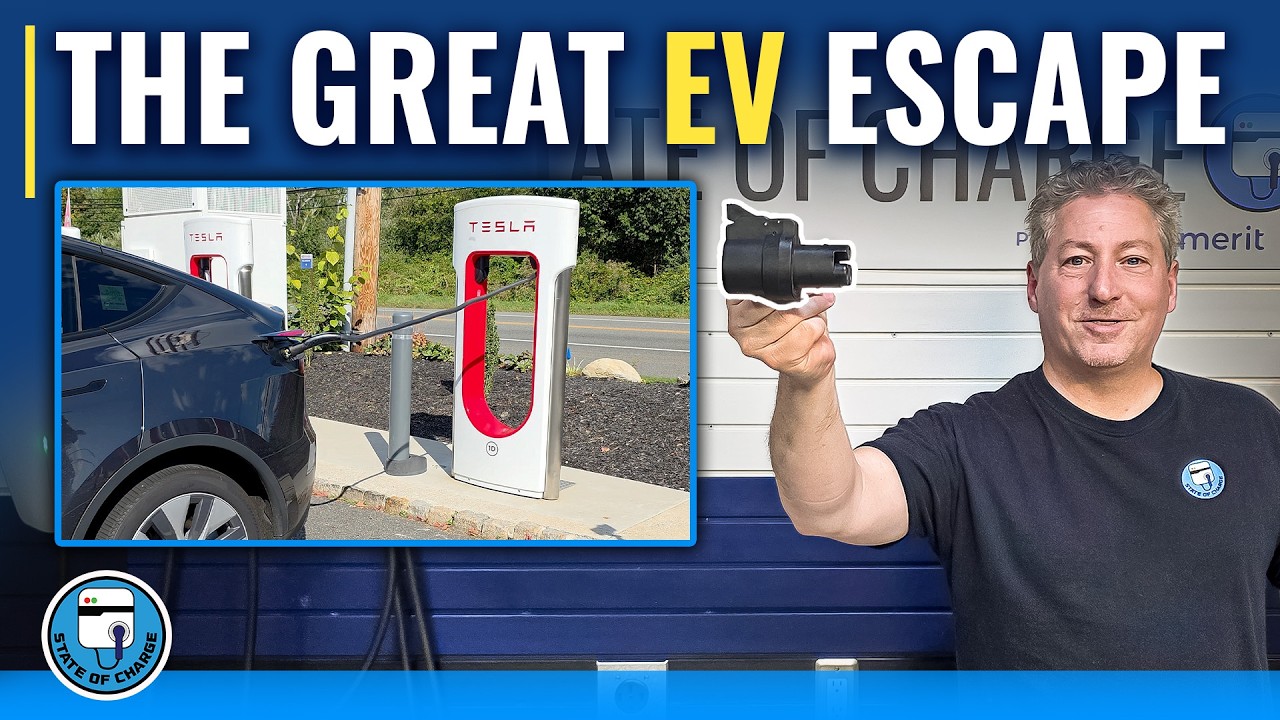
EVject, the EV charging Escape connector, was temporarily shut down while the company dealt with a lawsuit based on safety concerns from Tesla. But it’s back now and better than before.
In this video, I explain what the company did to improve the product and speak with the founder about the issue and its resolution.
Save 20% on EVject!
Use the “stateofcharge” code when ordering: https://evject.com/products/evject
My EVject review from 2024: https://youtu.be/B9by5iJWKbY?si=FtPSC6VoBqBTeYRT
This video is powered by Qmerit, North America’s leading provider of installation services for EV charging equipment. Follow this unique link, and Qmerit will waive the $150 deposit: https://qmerit.com/ev/charge
Use my “STATEOFCHARGE” coupon to save on your NACS adapter here: https://a2zevshop.com/?ref=lsh8xAcYPbdmNg
Order the Lectron Vortex NACS adapter here: https://shareasale.com/r.cfm?b=2540907&u=2912074&m=96492&urllink=&afftrack=
Check out my new EV charging website: https://evchargingstations.com/
Order one of my currently top-rated EV chargers:
Grizzl-E Ultimate 48-amp: https://grizzl-e.com/products/grizzl-e-ultimate-48/?hr=KRHU2MRQGI2A
Grizzl-E MINI: https://grizzl-e.com/products/grizzl-e-mini/?hr=KRHU2MRQGI2A
Emporia 48-amp: https://amzn.to/3EgDRGS
ChargePoint Home Flex: https://amzn.to/2V3Ye79
Wallbox Pulsar Plus 48: https://amzn.to/4fTQqbR
Autel Maxicharger W/Integrated Holster: https://amzn.to/3TVd20G
EVIQO 48-amp: https://eviqo.io/?ref=c0nLwakF8tvZBN
Tesla Universal Wall Connector: https://amzn.to/3DZWKBx
Chapters:
00:00 Intro
05:01 Unboxing
07:44 Using EVject at a Tesla Supercharger
11:03 Using EVject at a level 2 charger
12:59 Kreg Peeler, COE and Founder of EVject
34:43 Summary
39:35 Outro
Note: I earn a commission on sales from the above links.