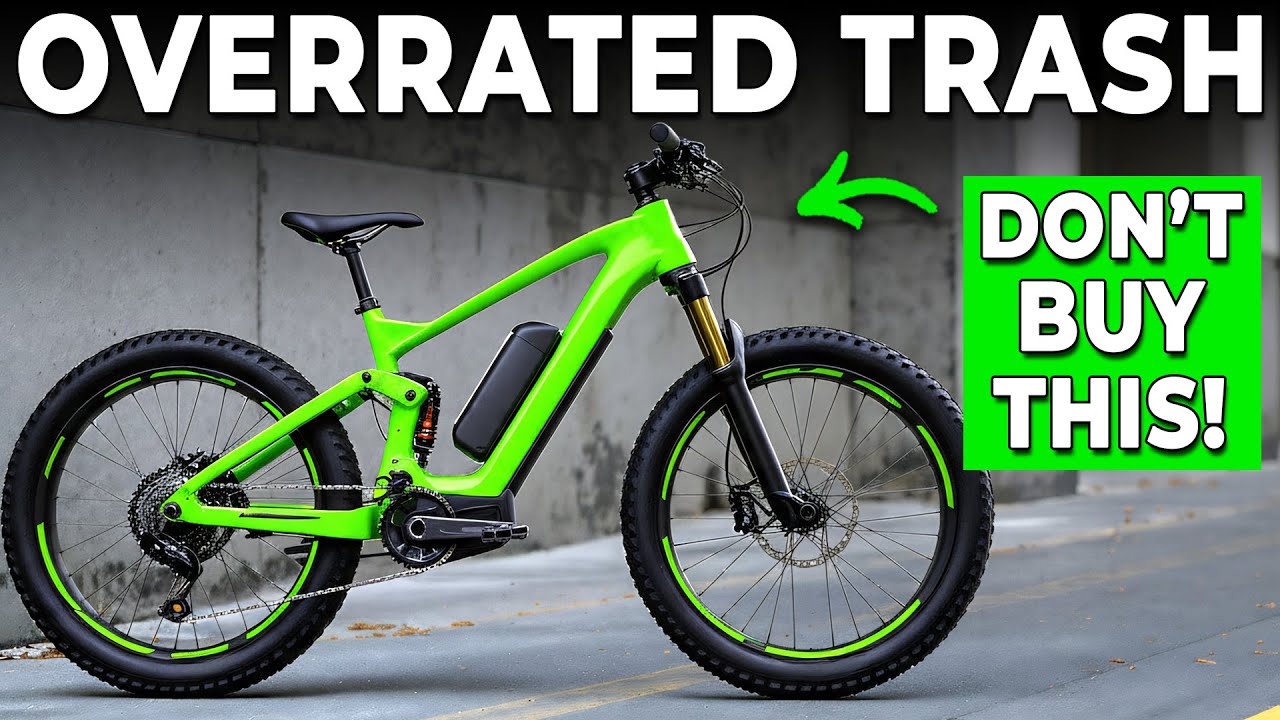
12 Popular Electric Bikes That Just Aren’t Worth It
Electric bike manufacturers don’t want you to know that their safety certifications are complete fiction. What if I told you that the bike advertised as safe will have your house burning down after just one charge? That’s not fear-mongering. One charging cycle and you’ll understand why the fire department responds to 250 ebike fires every year. Imagine dropping $2,000 on what looks like the perfect commuter bike only to discover it’s designed by people who clearly never cared about your safety. In this video, I’m counting down the 12 popular electric bikes that will ruin your life in 2025. And trust me, number one might shock you. It’s so dangerous that the government issued emergency warnings telling people to stop using it immediately. Stick with me to the end because this isn’t just a ranking. It’s your financial and physical survival guide to avoid the death traps disguised as premium ebikes. Number 12, generic unbranded Amazon special ebikes. Starting our countdown at number 12, we have the entire category of generic unbranded Amazon special ebikes. And these represent the wild west of electric cycling. You know the ones. Bikes with random generated names like Kwi, Hesso, Coswill, Totem, Same Bike, and dozens of others that sound like they were created by throwing scrabble tiles at a wall. They flood Amazon, Walmart, and eBay with prices under $500 that seem too good to be true. Here’s why they’re not worth it. These bikes cut every possible corner to hit those aggressive price points. The batteries are typically uncertified, meaning they haven’t undergone UL safety testing. This creates a direct fire and explosion risk in your home. The quality control is catastrophic. Users report flimsy components, messy welds, and bikes that arrive with parts literally falling off. When something breaks, and it will break, good luck finding customer service. These companies often operate without clear websites, physical addresses, or any way to contact them. The specifications are consistently overstated. Claims of 80 mile range and 750 W motors rarely translate to real world performance. What you get is a bike that might work for a few months before becoming an expensive paper weight. The hidden costs are brutal, frequent repairs, impossible to find replacement parts, and the frustration of owning something unreliable quickly negate any initial savings. You’ll spend more fixing these bikes than buying a quality one from the start. Number 11, Fido X. At number 11, the Fido X represents a perfect example of why discontinued models should stay dead. The Fedo X was once praised for its compact folding design and sleek aesthetics, making it attractive for apartment dwellers and urban commuters. But there’s one fatal flaw that makes it completely worthless. It’s been discontinued. When an ebike gets discontinued, you’re not just buying a vehicle, you’re buying an orphan. No manufacturer support, no warranty coverage, no software updates, and most critically, no replacement parts when something breaks. Ebikes rely on specialized electrical and mechanical components. When your motor controller fails, your battery dies, or your display stops working, you need exact replacement parts. With a discontinued model, you’re gambling that you can find compatible parts from third party sources or that nothing major will break. The discontinuation itself signals market failure. Companies don’t stop making products that sell well and satisfy customers. The Fedo X likely had underlying issues that made continued production unviable. Issues you’ll inherit as a buyer. Even if you find one at a discount, remember that any significant component failure could render the entire bike irreparable, turning your purchase into expensive garage decoration. Number 10, Async A1 Pro. Number 10 brings us the Async A1 Pro. Another victim of the discontinued model curse, this bike was marketed for its futuristic design and cuttingedge features, including a 5.5 in display, Bluetooth connectivity with LTE, GPS tracking, and a find my bike feature. It even catered to riders who preferred full-time throttle use with minimal pedaling. But all those advanced features become worthless when the company stops supporting them. The Async A1 Pro is now discontinued, meaning every high-tech component that made it special is now a potential point of failure with no recourse. Modern ebikes depend heavily on software for performance optimization, security updates, and bug fixes. A discontinued model will never receive these critical updates, potentially leaving you with degraded performance or security vulnerabilities. The advanced display and connectivity features that made this bike appealing are precisely what make it risky. Now, these sophisticated electronics are most likely to fail and hardest to replace when manufacturer support disappears. The pattern is clear. When companies discontinue ebikes, especially ones with advanced technology, they’re often cutting their losses on products that had higher warranty claims or manufacturing issues than anticipated. Number nine, Apass C1 electric bike. At number nine, the APASS C1 proves that impressive specifications on paper don’t always translate to real world quality. The C1 Plus was marketed as the ultimate city commuter with a 1,100 W Bayang subbrand motor, claiming 90 newton meters of torque and a 62m range. The marketing emphasized high strength alloy construction and Samsung battery cells with UL certification. Here’s the reality. The build quality is terrible. Reviews consistently mention poorly executed weld lines and most alarmingly a bent frame triangle that makes the rear wheel crooked. This isn’t a cosmetic issue. It’s a fundamental structural defect that affects handling, tire wear, and safety. The motor and battery are significantly overrated. Despite the impressive 1100 watt claim, real world performance shows the bike struggling to achieve advertised speeds and range. The battery was described as super small relative to its claim capacity. The bike isn’t suitable for larger riders. Despite claiming wide height compatibility and 400 lb payload capacity, the design creates discomfort and impracticality for heavier or taller individuals, limiting its appeal to a narrow range of users. For a bike positioning itself as premium urban transportation, these fundamental flaws in build quality and performance make it a poor investment compared to other options in the same price range. Number eight, GeForce A electric bike. Number eight features the GeForce AE, a folding mini eBike that exemplifies the dangers of choosing size over substance. Marketed as versatile transportation for both urban commuting and off-road adventures, the GeForce AE claims a 400 watt motor, 48volt battery with 80 m range, and 220 lb payload capacity. The 14-in wheels and folding design emphasize portability. The performance reality is shocking. Realworld top speed maxes out at just 7.99 mph, slower than most people can run. For adult riders, especially those approaching the 220 lb weight limit, the bike struggles through all of it, feeling severely underpowered. The ride quality is miserable. The small frame forces adult riders into uncomfortable positions with knees too close to handlebars. The frame itself shakes during riding, indicating poor stability and build quality. Safety becomes a serious concern in traffic. A bike that can barely reach 8 mph is dangerous in urban environments where you need to keep pace with traffic or quickly navigate intersections. You become a moving obstacle rather than a vehicle. The misleading specifications are egregious. A 400 W motor and 80 m range that translates to 8 mph performance represents false advertising that could put buyers in dangerous situations expecting real transportation capability. This bike might work for children, but marketing it to adults is fundamentally dishonest about its capabilities and limitations. Number seven, Rad Powerbikes Rad Wagon 4. At number seven, we have the Rad Powerbikes Rad Wagon 4. Proving that even established brands can produce problematic models. Released in May 2020, the Rad Wagon 4 became popular as an accessible cargo ebike for families. But a major safety recall and outdated design choices have made it a regrettable purchase. The official tire recall is severe. On November 3rd, 2022, approximately 29,300 units were recalled due to misaligned rim strips and defective rib sidewall tires. These issues caused unexpected tire blowouts and flats, leading to 137 reported incidents and eight injuries, including broken bones. The unique 22-in by 3in tire size creates long-term problems. This proprietary size limits replacement options and makes it impossible to buy specialized tires like studded winter options from third party manufacturers. You’re dependent on Rad Power bikes for all tire needs. For a cargo bike, the design is surprisingly outdated. Mechanical disc brakes instead of hydraulic ones mean less stopping power and more maintenance. critical issues when carrying heavy loads or children. The cadence assist sensor creates delayed motor engagement from stops, exactly when you need power most with cargo. The high stepover height and difficult kickstand make daily use frustrating, especially when loading cargo. Modern cargo bikes have solved these ergonomic issues, making the Rad Wagon 4 feel obsolete. General reliability concerns across Rad Powerbikes models include dead batteries, water damage controllers, and quality control inconsistencies that suggest systematic manufacturing issues. We’re nearly halfway through our countdown of electric bikes that will waste your money and potentially put you in danger. The top six are where things get really scary with recalled bikes that literally catch fire and companies that vanish with your warranty. Make sure you’re subscribed because what’s coming next could save you from making a $2,000 mistake that ruins your faith in electric bikes forever. Number six, Hayike Tyson Ranger S. Breaking into our top six at number six. Hey models like the Tyson and Ranger S demonstrate how appealing specifications can mask serious operational problems. Hey markets powerful motors. The Ranger S features 1,000 watt peak power with 80 Newton meters of torque, while the Tyson boasts,400 watt peak output. Both claim 28 mph speeds in 55 mile ranges with TUV certification to UL2849 safety standards. The customer service nightmare is legendary. Users consistently report the worst customer service ever with 24-hour delays between email responses or complete unresponsiveness. Even more alarming, Hey Bike allegedly withholds refunds unless customers provide fake five-star reviews on Trustpilot. The electrical and mechanical problems are persistent and dangerous. Motor controllers, batteries, and pedal assist systems frequently shut down unexpectedly midride, requiring riders to stop and restart the bike. This is particularly dangerous in traffic where sudden power loss could cause accidents. When parts are sent for repair, they’re often incorrect, leading to extended downtime. Users report frame flex and severe shaking when riding with one hand, indicating structural integrity issues. The range claims are significantly overstated. Despite advertising 70 mi ranges, realworld users report achieving only 24 miles, representing a massive gap between marketing and reality. For bikes that look impressive on paper and carry safety certifications, the combination of terrible support and persistent mechanical failures makes them unreliable transportation that could leave you stranded or in danger. Number five, Electric Bike Company EC Model S. At number five, the Electric Bike Company Model S proves that Americanmade marketing can’t cover up fundamental quality and service problems. EBC markets the Model S as premium American manufactured transportation with extensive customization options. The bike features a 500 watt nominal motor with 750 W peak output, various battery configurations claiming up to 200 mile range, and hydraulic disc brakes starting at $2,299. The Better Business Bureau tells the real story. 25 complaints in three years with many remaining unanswered or unresolved. This represents a pattern of customer service failure, not isolated incidents. Product quality issues are severe and systematic. Bikes arrive with missing parts, incorrect components, and poor assembly. Users describe the bikes as surprisingly wobbly and surprisingly weak, struggling on hills despite the advertised motor power. Some owners report their non-electric bikes climb hills easier than their EBC. Battery problems are widespread. Reports include premature failure, inability to hold charges, and warranty terms that allegedly change after purchase, leading to unexpected charges of hundreds of dollars for replacement batteries. The dual battery configuration was so problematic that EBC stopped offering it due to instability issues that caused dangerous shaking when riders tried to stand and pedal. Customer service is consistently described as terrible with reports of companies ghosting customers, refusing refunds for canceled orders, and providing misleading information during sales processes. For a premiumbumppriced American brand, these systematic quality and service failures represent poor value that contradicts the marketing promises. Number four, Super 73, S1, S2, and RX models. Number four brings a Super 73, where moped style aesthetics hide serious safety defects and poor value propositions. Super 73 has built a cult following with their distinctive retro inpired design that blends bicycle and motorcycle aesthetics. Models like the S1, S2, and RX Command premium prices up to $3,600 based on their unique styling and brand image. The frame crack problem is well documented and dangerous. Numerous reports detail dozens of broken frames with cracks appearing in critical stress areas like axles and head tubes. These failures occur during normal riding, not extreme use, leading to sudden loss of control and potential severe injuries. Battery fires add another layer of danger. While statistically rare across the ebike market, their occurrence in premium priced Super 73 models suggests compromised battery quality or management systems that shouldn’t exist at this price point. Customer support is ironically poor for a premium brand. Users report being ghosted when trying to resolve frame crack issues and experiencing significant difficulties obtaining timely replacements or repairs. This unresponsiveness for fundamental safety defects is unacceptable. The value proposition is questionable. Many consumers describe Super 73 bikes as crazy overpriced relative to actual performance. Limited range, less torque than competitors, and excessive weight make them cumbersome to handle. Older models with single-speed drivetrains become completely useless if the battery dies. You’re paying premium prices for distinctive styling while accepting serious safety risks and poor performance. A trade-off that makes no sense when safer, better performing alternatives exist for less money. Number three, Vivy ebikes multiple models. Entering our top three at number three, Vivy ebikes represent a massive safety failure that affected tens of thousands of riders. Vivy positioned itself as the budget-friendly option across major online platforms including Amazon, Walmart, and eBay. With prices between $365 and $950, they attracted budgetconscious consumers seeking affordable electric transportation. The massive recall is unprecedented. On July 17th, 2025, approximately 24,000 units were recalled because their lithium-ion batteries overheat and catch fire. Vivy received 14 reports of overheating with three escalating to actual fires. The root cause is uncertified batteries. These batteries explicitly lacked UL certification, the fundamental safety standard for ebike electrical systems. This isn’t an oversight. It’s a systematic decision to cut costs by skipping essential safety testing. Beyond the recall, quality control is catastrophic. Users describe experiences as nothing but trouble with warped components requiring zip ties for fitment and electrical systems where phase control wires literally weld together due to extremely lowquality wiring harnesses. Customer service is non-existent when problems arise. Users report ignored return requests, refused warranty claims even for basic components like chargers, and general unresponsiveness that leaves buyers without recourse. The visual appearance of batteries raised concerns even before the official recall with users describing them as looking like they would catch fire just sitting on the table. This suggests the fire risk was apparent to observant users before regulatory action. For budget conscious buyers, Vivy represents the worst possible outcome. Paying money for products that could literally burn down your house. Number two, Fang QSF7 Pro electric bike. At number two, the Fung QSF7 Pro demonstrates how online marketplaces can become distribution channels for genuinely dangerous products. Sold exclusively on Amazon from May 2024 through December 2024, the F7 Pro appeared to offer reasonable value at $700 to $1,200. The blue colored bike with Fung QS branding seemed like a budgetfriendly option for new ebike riders. The danger is extreme. The CPSC issued an urgent recall for approximately 100 units on July 24th, 2025 due to lithium ion batteries that overheat and ignite. Fungs received 13 reports of bikes catching fire with two incidents causing $4,000 in property damage. What makes this worse is manufacturer non-ooperation. The CPSC took the extraordinary step of issuing a public warning because Shenzhen Fenis Car Industry Co. limited refused to agree to an acceptable recall. This means the manufacturer knew about the fire risk but wouldn’t take responsibility. The government warning documented nine fire reports, including $12,000 in property damage. When a manufacturer refuses to cooperate with safety recalls, it demonstrates complete disregard for consumer safety and legal responsibility. This case perfectly illustrates how online marketplaces can distribute dangerous products without adequate vetting. Amazon’s platform gave this fire hazard direct access to consumers without the safety checks that traditional retailers might provide. The Fung QSF7 Pro isn’t just a bad ebike. It’s a product so dangerous that federal regulators had to bypass normal procedures to warn the public about immediate fire and burn risks. Number one, Ascend Cababrio and Minouret electric bikes. Taking the top spot as the worst popular electric bikes you can buy are the Ascend Cababrio and Minouret models, proving that even major outdoor retailers can sell dangerous products. Sold through Bass Pro Shops and Cabelas from January 2023 through November 2023, these bikes seem like legitimate entry-level options from trusted outdoor retailers. Priced between $1,400 and $1,500, they offer 250 watt motors, 375Wh batteries, and 45 mile ranges. The recall reason is terrifying. Pacific Cycle, Inc. recalled approximately 1,700 units on January 25th, 2024 due to defective wiring harnesses that manage battery charging. This defect creates substantial overheating and fire risk during the charging process. The real world consequences are severe. Three reported incidents include batteries actually catching fire with one consumer suffering secondderee burns. This isn’t theoretical danger. It’s documented injury from a fundamental safety defect. What makes this the worst is the trust factor violation. Bass Pro Shops and Cabelas are established outdoor retailers that customers trust for quality and safety. When these stores sell ebikes with fire hazards that cause burns, it represents a complete breakdown of the consumer protection that retail vetting should provide. The swift recall action demonstrates the gravity of the safety defect. When manufacturers and major retailers immediately pull products and offer full refunds, it indicates they recognize the danger is too severe to risk additional incidents. The Ascend models prove that price point, retailer reputation, and legitimate branding can’t guarantee safety. Even when buying from trusted sources, critical safety defects can turn your new ebike into a fire hazard that could seriously injure you or destroy your property. But if you’re ready to move beyond dangerous ebikes to real electric performance, there’s a whole world of legitimate electric motorcycles that deliver the power and safety these cheap bikes promise, but never deliver. Check out my breakdown of the 17 best electric motorcycles you can buy in 2025 to see what proper electric two-wheel transportation actually looks like.
Electric bike manufacturers don’t want you to know that their “safety” certifications are complete fiction. What if I told you that the bike advertised as safe will have your house burning down after just one charge? That’s not fear mongering – one charging cycle and you’ll understand why the fire department responds to 250 e-bike fires every year. Imagine dropping $2,000 on what looks like the perfect commuter bike only to discover it’s designed by people who clearly never cared about your safety.
▶️ Watch more videos from Tech Charge: 🔋
_____________________________________________
The UGLY Truth About Electric Cars…
_____________________________________________
When Will Electric Cars Become Affordable
_____________________________________________
The INSANE History of Electric Cars
_____________________________________________
This Tiny EV is a HUGE SUCCESS
_____________________________________________
First EV to Reach 1000 MILES Range
_____________________________________________
The First EV to Reach 1,000 km Range
_____________________________________________
🔔 Subscribe: https://bit.ly/30vR5eV