Government Red Tape Is Blocking Our Plug-In Hybrid Trucks
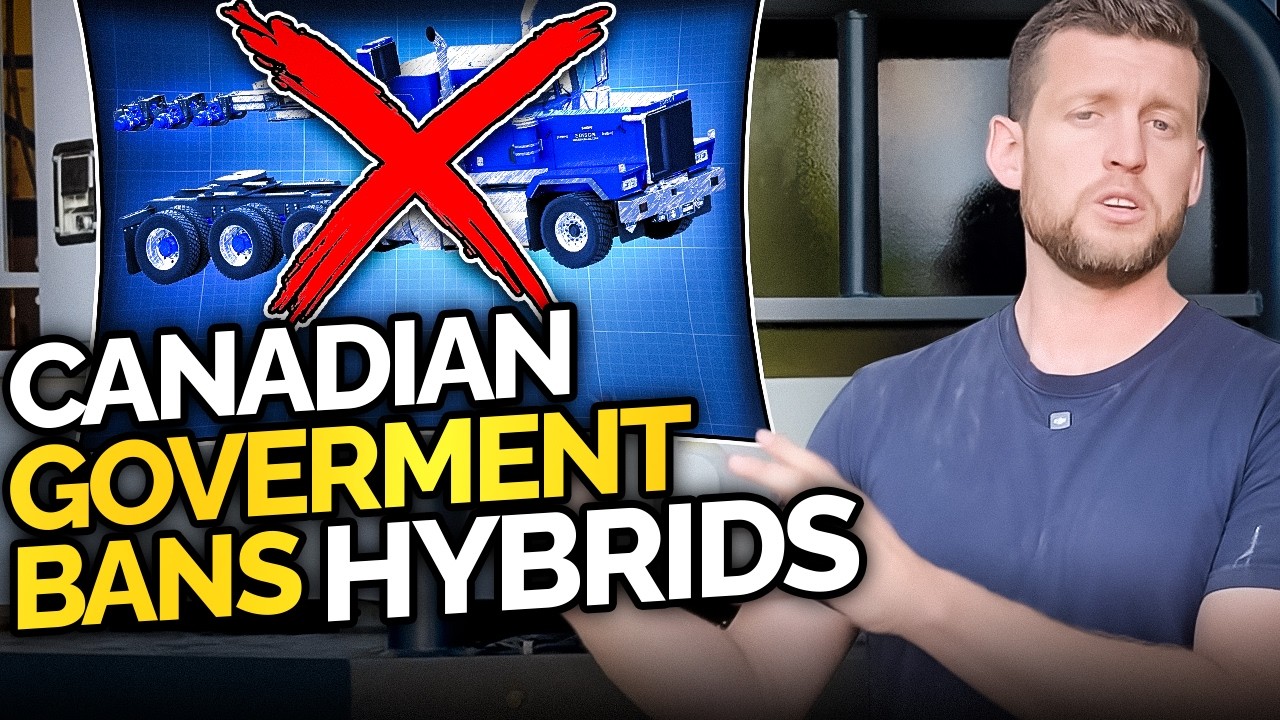
So, I’ve got some bad news. The government of Canada has now stopped us from building diesel electric semi-truckss. So, let’s take a look at why they did that and how stupid these EV mandates really are. Environment Climate Change Canada won’t allow us to build a plug-in hybrid semi-truck. It has to do with the engine we have selected and it has to do with the fact that they haven’t made enough regulations. Yes, they made rules that by 2035 100% of vehicles have to go plug-in hybrid, but they haven’t made the rules to allow plug-in hybrid. The crux of the issue is in the engine we selected and how it works. So, our vehicles are for all intents and purposes 100% electric. They have batteries that drive electric axles, but then when the batteries get low, the generator fires up and recharges the battery so that you can keep moving. It’s awesome. We even showed them like, look, it’s we’re running a much smaller engine. Instead of a 15, we’re running a 9. We’re running a flatline RPM. It’s better for the environment. We’re reducing less fuel. We kind of showed them all this. They’re like, “Yes, that’s exactly why we want plug-in hybrids, but because of this, we had to use a generator.” And that’s where the problem lies. They came back in our application and said, “Hey, you can’t use a generator because those are classified as offhighway emissions tier 4 final. You need an onhighway emissions tier 4 final.” And we said, “Nobody makes an onhighway generator certified because we’re one of the first people building plug-in hybrids. There’s no other engine manufacturer building onroad because the demand isn’t there. Can we use an offhighway as a generator? It’s they’re both tier four final. It’s better for the environment. They said no because that’s what the rules is. You need on highway. And they asked us why can’t you use an onh highway engine. And we said because it doesn’t work the same. A generator senses a load coming onto the back of the alternator and the governor increases the fuel to match that load. An onh highway truck engine. You step on the throttle pedal, it dumps fuel in the engine and you get mechanical power. So one you send fuel to get load. The other one senses load and adjusts fuel accordingly. So we can’t use that. So we asked what do we do? And they basically after a few weeks of deliberating said yeah you can’t build a plug-in hybrid semi-truck. We have no legislation that allows you to do that right now. So we’ve been trying to go ahead with getting our plug-in hybrids ready for the market, but we’ve hit a little bit of a hiccup with the um Environment and Climate Change Canada. They’re not allowing us to use the generator as we expected since it’s only speced for offhighway use, not on highway. So now we’re going to have to go get our emissions mark starting with the mechanical trucks and the Cumins engines instead of the generators that we want to use for the hybrids. when you have a targets for 2030, all of the vehicle fleet being either electric or plug-in hybrid and not being able to actually have a Canadian manufacturer make these plug-in hybrids makes it really difficult to be able to meet that and doesn’t make a lot of sense when we have a system in place that has less emissions than a diesel engine and yet we’re being forced to move forward with that diesel engine instead. It’s really tough to be able to move forward with the hybrid vehicles just because they’re not allowing us to get our emissions marked. So, we can’t actually sell these hybrid vehicles until we have that emissions mark. We’ve been in contact with the minister’s policy staff and we’ve been reviewing any potential exemptions or any changes to the legislation itself. But, if we aren’t able to arrive at anything to get that generator used in the trucks, we’re going to be forced to run all of the testing and certification on our own dime to be able to get these hybrid electric vehicles into the market. How’s that affect us as a small company? Yikes. That’s a lot of money. It’s really prohibitive and it’s an ondue burden for us when we’re really just trying to push the needle forward in driving sustainability. So, I’ve been working super hard up here in the office. We got a bit of a quagmire. Funny enough, Transport Canada is pretty cut and dry. You just basically go through the compliance and you make sure that all your parts match up. But emissions regulation is kind of a mess when it comes to building a hybrid because there’s no legislation that exists. and we’re trying super hard to work with the department. Uh but we’re kind of having issues, right? They don’t seem to get that the engine that we’re using is actually a generator, not a on-road certified engine or a mechanical one. So, we’re trying our best to kind of educate the government right now, but it’s just been a lot of back and forth, hoping that, you know, we can get access to some ministers to help and kind of get some common sense going because the last thing we want to have is emission regulation getting in the way of building EVs. You know, I’m a pretty polite guy, pretty reserved, and I think out of all the interactions we’ve had the last year with government, uh, the emission department is the only one I’ve actually sworn at because it’s so frustrating, right? The department that’s trying to help with the environment is the one stopping us from building EVs. How stupid can you be? For the government right now wanting to stimulate Canadian business and make sure that we’re eliminating red tape, I think it’s kind of an overreach that the government won’t come to a compromise and get us fasttrack to production here. Right now, we actually cannot build hybrid vehicles to the point where we might just have to drop it all together. So really urge anybody to go out to their ministers, go out to their MPs and get them educated on this subject because we definitely need an exemption. You know how frustrating it is for the last 3 years I’ve been working my butt off on trying to help the environment and build electric vehicles in Canada, but right now East Triple C is actually recommending that we build 18 speeds and mechanical engines. It’s freaking stupid. You know what’s funny is the government themselves have given a grant to build a truck and their own department for emissions is stopping us from delivering the truck. It’s crazy. But you know what? I work every day tirelessly to get through the red tape because it is worth it. We want to build the best electric vehicles for heavy duty applications and I’m not going to stop until we freaking get it. All right, don’t worry. It’s not all doom and gloom. We got some great plan A, B, and C. Plan A, there’s exemptions that the government can give us to do this. There is uh exemptions for financial hardship exemptions, low vehicle volume manufacturing exemptions, Canada unique exemptions. There’s some hybrid exemptions, although the hybrid ones don’t apply to generators being off-road, even though that’s what we need. So, they could amend that. They asked it could take one to two years to do that, which is unfortunate. It’s not going to delay us too much. we can get a little bit creative on how we do the testing with our customers because we’ll still be able to test our trucks. And number two, Environment Climate Change Canada said, “We have no problem with you building 18-speed transmission with 15 L diesels. Build a mechanical because they gave the example of a Cumins X-15. They just certified another one last week. They look at them all the time. They have no problem with those motors. It’s tried. It’s proven. It’s on highway. And thank God sometimes things just work out. We were already looking at the mechanical route because the hybrids are still experimental. We want to get to production. We can sell trucks, use the profit from those trucks to fend to fund the development of the hybrid. So we were already going down the route of mechanical which means we have engine differential rear ends. We have all the parts ready to go. We are currently submitting that right now. We actually just submitted that a few days ago for the mechanical truck that they told us to build. frustrating, but that keeps us going for the next two years. It’s not the end of the world. We’re going to still be making trucks. It’s just very, very frustrating when the government of Canada says, “We like what you’re doing so much that in 10 years everybody’s going to have to be doing what you’re doing, but you can’t do it.” Government bureaucracy, EV mandates make absolutely no sense. They’re making rules before technology exists. and rules don’t exist because the technology doesn’t exist, but they’re mandating the end thing. Just government bureaucracy. We’re getting through it. We will get through it. We’re going to continue to make trucks. I’m just annoyed.
We set out to build Hybrid Semi Trucks in Canada, but our project has almost been shut down by Environment and Climate Change Canada. In this video, we dive into why the current emissions regulations make it almost impossible to develop and launch Hybrid Electric Trucks, despite their clear benefits in using less fuel and producing fewer emissions.
We’ll break down:
* The generator classification issue.
* How there’s little to no legislation for on-road hybrids.
* What these challenges mean for small manufacturers who want to innovate in sustainable transportation.
There’s a huge opportunity for Canada to become a global leader in this sector; creating jobs, attracting investment, and reducing emissions in a key industry. This approach aligns perfectly with Mark Carney’s call to cut unnecessary red tape, diversify our economy beyond the US (especially as American standards are being weakened), and build a stronger Canadian economy.
We want to work with regulators, industry leaders, and innovators to move this forward. Will they work with us?
Join this channel to get access to perks:
https://www.youtube.com/channel/UCUEzfzqf2fx3C1vs0MlgShA/join
00:00 – Why Canada Blocked Our Hybrid Truck
00:53 – How Our Plug-In Hybrid System Works
01:25 – No Emissions Path for Hybrid Semis
02:53 – Forced to Use Diesel Engines
04:51 – Frustration with Emissions Department
06:16 – Possible Government Exemptions
06:55 – Moving Forward with Mechanical Builds
07:52 – Final Thoughts on EV Policy